The best traffic-free bike rides around Brugny-Vaudancourt
4.6
(9)
95
riders
22
rides
Gravel biking around Brugny-Vaudancourt offers a diverse landscape for cyclists. The region is characterized by vineyard-laden hills, expansive forests, and picturesque valleys, including the notable Brugny forest with its serene ponds. Cyclists can explore the "Chemins Blancs" or white chalk trails that wind through vineyards, providing traffic-calmed routes. The varied topography features slopes, valleys formed by streams, and continuous vineyards, creating engaging routes for outdoor enthusiasts.
Best no traffic gravel bike trails around Brugny-Vaudancourt
- The most popular no traffic gravel…
Last updated: July 6, 2026
4.5
(2)
14
riders
50.0km
03:14
410m
410m
Moderate gravel ride. Good fitness required. Mostly paved surfaces. Suitable for all skill levels.
12
riders
38.9km
02:46
560m
560m
Hard gravel ride. Very good fitness required. Mostly paved surfaces. Suitable for all skill levels.

Sign up for free
5.0
(1)
10
riders
29.8km
01:54
330m
330m
Moderate gravel ride. Good fitness required. Mostly paved surfaces. Suitable for all skill levels.
3.0
(2)
4
riders
34.0km
02:24
270m
270m
Moderate gravel ride. Good fitness required. Mostly paved surfaces. Suitable for all skill levels.
5.0
(1)
11
riders
38.2km
02:21
330m
330m
Moderate gravel ride. Good fitness required. Mostly paved surfaces. Suitable for all skill levels.
Get access to more routes and recommendations from other explorers.
Sign up for free
Already have an account?
Our route recommendations are based on thousands of hikes, rides, and runs completed by other people on komoot.
Start today with a free account
Your next adventure awaits.
Login or Signup
Popular around Brugny-Vaudancourt

Tips from the Community

The market had just ended - cleaning was underway - chairs and small tables were set up in front of the town hall, the building providing shade after lunch. A beautiful square with good restaurants - a very pleasant, lively atmosphere. Aÿ-Champagne is a twin town of Besigheim! The mayor walked past us twice into the town hall and greeted us warmly - a pleasant man.
0
0
Some of the buildings are monumental and an expression of capital - but even the small winemakers have very good champagnes to offer that are in no way inferior to the big houses!
1
0

This church was built on the site of an older building around the 15th century. Listed as a Historic Monument, the Gothic church of Aÿ, built on the foundations of a structure dating back to the 15th century, has a rich and eventful history. About fifty years after its construction, a stone tower was erected, crowned by an elegant spire. Unfortunately, an early fire ravaged the newly completed vaults. The church houses a magnificent French Baroque-style organ dating from 1749, providing an ideal setting for the classical concerts held there every week in May. (c) https://www.petitfute.com/v12870-ay-champagne-51150/c1173-visites-points-d-interest/c925-edifice-religieux/c927-eglise-cathedrale-basilique-chapelle/107155-eglise-saint-brice.html
0
0

In 2011[9], the idea for the current Museum of Champagne and Regional Archaeology was born. The project was approved by the French Ministry of Culture in 2014, and in 2016 the renovation work was entrusted to the architectural firm Frenak + Jullien. Work began in 2018, under the supervision of the chief architect of historical monuments Lionel Dubois. Château Perrier has now been restored and contains one of the most important archaeological exhibits in France, with some 80,000 regional artefacts (dating from the Paleolithic to the Early Middle Period) and 4,000 artefacts relating to the history of Champagne wine (since 1960).[10]
4
0
The Château Perrier, at number 13, was built from 1852 to 1857[9] by the architect Pierre-Eugène Cordier, in an eclectic Louis XIII style. In 1854[10], the couple Pierre-Nicolas Perrier, a cork manufacturer, and Adèle Jouët (the founders of the Perrier-Jouët champagne house), who had married in 1811, commissioned the construction of this castle. The four facades are inspired by the architecture of the French Renaissance, to the Parisian image of the Palais du Luxembourg, the Palais des Tuileries or the Lescot of the Louvre. The facades are a play of colours with materials such as brick, natural stone, slate and glass.
4
0
Between 1872 and 1884, the concierge and the orangery were built on the outer edge of a vast park, according to plans by the architect Alphonse Gosset (1835-1914)[5]. In 1920, the park was acquired by the municipality with the Auban-Moët mansion and opened to the public. The part of the park around the town hall is laid out in the French style, to emphasise the classical and sober facade of the building. It consists of a grass path and two symmetrical access paths arranged in a horseshoe shape around a fountain. It is decorated with two bronze lions, cast iron statues of ancient gods and various other statues. The other part of the park is laid out in the English style: it is crossed by hilly paths, groves, two pools of water, an artificial island and a rocky grotto with a waterfall. On this side of the garden is a temple of love, built of limestone. This belvedere with Corinthian columns has a coffered ceiling. It is inspired by the Temple of Love in the Petit Trianon in Versailles. The City Hall Park has the label "Remarkable Garden".🪴 In
7
1
Épernay Town Hall is located at number 7bis in the former Auban-Moët mansion, built in 1858 by Victor Moët (1797–1881)[5] to a design by the architect Victor Le Noir, who also designed the Montparnasse railway station in Paris. In the early 19th century, Jean-Baptiste Isabey had the building redesigned in a classical style for Jean-Remy Moët, owner of the Hôtel Auban-Moët and mayor of Épernay. The current layout dates from 1857 and is the work of the brothers Denis and Eugène Bühler. It was donated to the city in 1919, which took it into use as a town hall in 1920. The building houses luxurious rooms, including the wedding hall and the council chamber. The building has been listed as a French Historical Monument since 26 June 2012.[5][6]
7
1

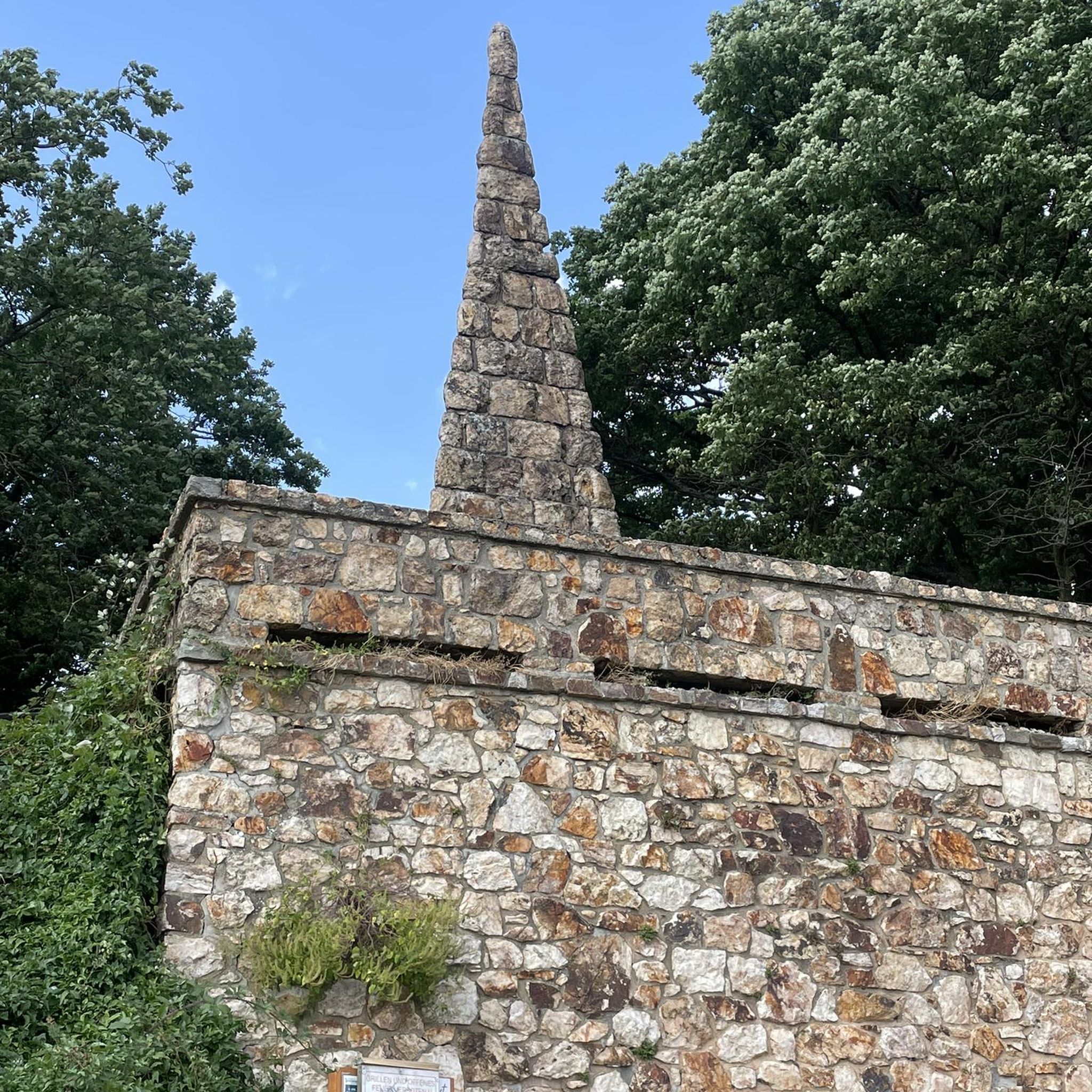
Magnificent spot for a breathtaking view.
0
0
Frequently Asked Questions
What kind of terrain can I expect on the no-traffic gravel bike trails around Brugny-Vaudancourt?
The region around Brugny-Vaudancourt, nestled in the Champagne area, is famous for its 'Chemins Blancs' or white chalk trails. These limestone paths offer a unique gravel riding experience, winding through vineyards, expansive forests, and picturesque valleys. You'll encounter diverse topography, including slopes and valleys formed by streams, providing varied and engaging routes.
Are there any challenging no-traffic gravel routes for experienced riders?
Yes, for experienced riders seeking a challenge, there are several routes with significant elevation gain. For example, the View of Hautvillers – Small road along the Marne loop from Épernay is rated as difficult, covering nearly 50 km with over 450 meters of elevation gain. Another challenging option is the Church of Notre-Dame Epernay – Town Hall loop from Épernay, which features over 549 meters of ascent over 37 km.
What natural features or viewpoints can I discover on these gravel trails?
The trails often lead through the majestic Brugny forest, where you can find serene ponds like the Etang de Terre-Neuve and the Etang du Grand-Brugny. Many routes offer exceptional panoramic views over the valley south of Épernay and across continuous vineyards. The Montagne de Reims Natural Regional Park also provides stunning agricultural plains, lush forests, and vineyard-clad hillsides.
Are there any historical or cultural landmarks accessible from the no-traffic gravel routes?
Absolutely. The region is rich in history. You might pass by a 13th-century château, traditional washhouses, and authentic wine presses. Near Épernay, you can visit the Abbaye de Hautvillers, explore the famous Avenue de Champagne, or see the Town Hall. The Champagne Wine and Regional Archaeology Museum (Château Perrier) is also a notable point of interest.
What is the best time of year to go gravel biking in Brugny-Vaudancourt?
The Champagne region is beautiful throughout the warmer months. Spring and autumn offer pleasant temperatures and stunning scenery, with vineyards either budding or displaying vibrant fall colors. Summer is also great, but be prepared for potentially warmer weather. The 'Chemins Blancs' are generally rideable in most conditions, but checking local weather before your ride is always recommended.
Are there any family-friendly no-traffic gravel routes suitable for beginners?
While many routes in the area are moderate to difficult, there are options that can be adapted for families or beginners, focusing on flatter sections of the 'Chemins Blancs' through vineyards. The region's emphasis on traffic-calmed routes through the vineyards makes it safer for less experienced riders. Look for shorter loops or out-and-back sections that avoid significant climbs.
Can I find cafes or places to stop for refreshments along the gravel trails?
Yes, as you cycle through the Champagne region, you'll often pass through charming villages. These villages, especially those along the Champagne wine route, typically offer opportunities for refreshments, including cafes, bakeries, and even champagne houses where you might find tastings. Épernay, a major center, has numerous options for food and drink.
What do other gravel bikers enjoy most about the trails in Brugny-Vaudancourt?
The area is highly rated by the komoot community, with an average score of 4.6 stars. Reviewers often praise the unique experience of riding on the 'Chemins Blancs' through the iconic Champagne vineyards, the stunning panoramic views, and the peaceful, traffic-free nature of the routes that allow for an immersive outdoor experience.
How long do the no-traffic gravel bike routes typically take to complete?
The duration varies significantly depending on the route's length and your pace. For example, a moderate route like View to Champagne De Castellan – View of Hautvillers loop from Épernay (29.8 km) might take around 1 hour 55 minutes, while a longer, more difficult route such as View to Champagne De Castellan – Town Hall loop from Épernay (46.3 km) could take approximately 2 hours 57 minutes. Always check the estimated duration for your chosen route.
Is public transport available to access the gravel trails around Brugny-Vaudancourt?
Brugny-Vaudancourt itself is a smaller commune, but its proximity to Épernay, a larger town, means better public transport connections. You can often reach Épernay by train, and from there, access to the surrounding vineyard trails is more feasible. It's advisable to check local bus services or consider cycling directly from Épernay to reach the start of many routes.
Are there any specific routes that offer a good mix of vineyards and forest riding?
Many routes in the area naturally blend vineyard landscapes with forest sections, especially those that traverse the Montagne de Reims Natural Regional Park or the Brugny forest. The diverse topography ensures a varied ride, moving from open vineyard paths to shaded forest trails, often with scenic ponds like Etang de Terre-Neuve along the way.
Most popular routes around Brugny-Vaudancourt
Most popular attractions around Brugny-Vaudancourt

Get inspired with the komoot mobile app


Explore more
Browse the best Gravel rides in other regions.
