The best traffic-free bike rides around Bize-Minervois
4.4
(80)
1,323
riders
35
rides
No traffic road cycling routes around Bize-Minervois traverse a landscape defined by the Cesse Valley, featuring serene pine forests, limestone cliffs, and the aromatic garrigue. The region presents a Mediterranean tableau of expansive vineyards and ancient olive groves, providing varied terrain for road cyclists. The proximity to the Canal du Midi, a UNESCO World Heritage site, offers additional flat and scenic cycling opportunities along its towpaths.
Best no traffic road cycling routes around Bize-Minervois
- The most popular no traffic road…
Last updated: August 29, 2026
3.0
(1)
21
riders
36.5km
01:43
480m
470m
Moderate road ride. Good fitness required. Mostly well-paved surfaces and easy to ride.
5.0
(1)
19
riders
Moderate road ride. Good fitness required. Mostly well-paved surfaces and easy to ride.

Sign up for free
16
riders
63.9km
03:06
900m
900m
Hard road ride. Very good fitness required. Mostly well-paved surfaces and easy to ride.
4.0
(1)
21
riders
75.9km
03:43
1,110m
1,110m
Hard road ride. Very good fitness required. Mostly well-paved surfaces and easy to ride.
5.0
(1)
17
riders
21.6km
01:09
420m
420m
Moderate road ride. Good fitness required. Mostly well-paved surfaces and easy to ride.
Get access to more routes and recommendations from other explorers.
Sign up for free
Already have an account?
Our route recommendations are based on thousands of hikes, rides, and runs completed by other people on komoot.
Start today with a free account
Your next adventure awaits.
Login or Signup
Popular around Bize-Minervois

Tips from the Community

In the heart of old Creissan, a heritage site unfolds, telling more than a thousand years of history. The Saint-Martin church, mentioned as early as the 10th century, belonged to the powerful chapter of the Saint-Just cathedral in Narbonne, which held lordship over the village for several centuries. It was solemnly consecrated in 1132, during a religious assembly bringing together several bishops, an exceptional event that testifies to the village's importance in the Middle Ages. This modest Romanesque church retains the characteristics of 12th-century Languedoc religious architecture: a single nave covered by a barrel vault and a semi-dome apse. More unusually, the remains of an old well are visible within the building. A short walk away, the castle of Creissan recalls the other facet of medieval power: that of the lords who administered the territory alongside the religious authorities. Together, the Saint-Martin church and the old castle form the historic heart of the village.
1
0
In the heart of the village of Quarante stands the church of Sainte-Marie, the former abbey church of a powerful Benedictine monastery founded in the 10th century. For nearly a thousand years, the abbey has marked the religious and economic history of the Minervois. The current church preserves the traces of this long history, with Romanesque elements from the 12th century associated with Gothic transformations carried out in the Middle Ages.
1
0
In the heart of old Montouliers lies a heritage site that bears witness to the village's importance in the Middle Ages. The church of Saint-Baudile, whose existence is attested as early as the 10th century under the name Sanctus Baudelius de Monte Olerio, was rebuilt and enlarged over the centuries, mainly between the 12th and 14th centuries. Inside, the building houses a remarkable 14th-century polychrome stone statue of Saint Baudile, classified as a Historic Monument in 1975. Just opposite are the remains of the castrum of Monte Olerio, the old fortified castle around which the medieval village was organized. This grouping around a fortified place, a church, and a few dwellings then formed the defensive and religious heart of the community.
1
0
The church of the Nativity of Saint John the Baptist bears witness to the gradual shift of the religious heart of Saint-Jean-de-Minervois. For centuries, parish life was linked to the Saint-Jean de Dieuvaille chapel, now nicknamed "the church of the Hole", isolated in a canyon between the hamlets of Gimios and Barroubio. At the beginning of the 18th century, the current village became the new center of the community, around this current parish church.
1
0
Much more than a simple village church, Notre-Dame-de-l'Assomption was originally the chapel of the seigniorial castle of Villespassans. Built between the 12th and 16th centuries, it has the particularity of housing two superimposed naves, testifying to the different phases of its evolution. Its massive square tower, built of dressed stone, still dominates the heart of the old medieval village, where remains of the ramparts also still exist. Villespassans developed on a ridge of Hettangian dolomites, limestone rocks about 200 million years old that mark the early Jurassic period. These extensive terrains offer a solid base on which the village was established and partly explain its dominant position in the landscape. Nicknamed the "village of a thousand and one stones", Villespassans is also renowned for its remarkable dry stone heritage: *capitelles*, low walls, dolmens, and old agricultural constructions dot the surroundings.
1
0
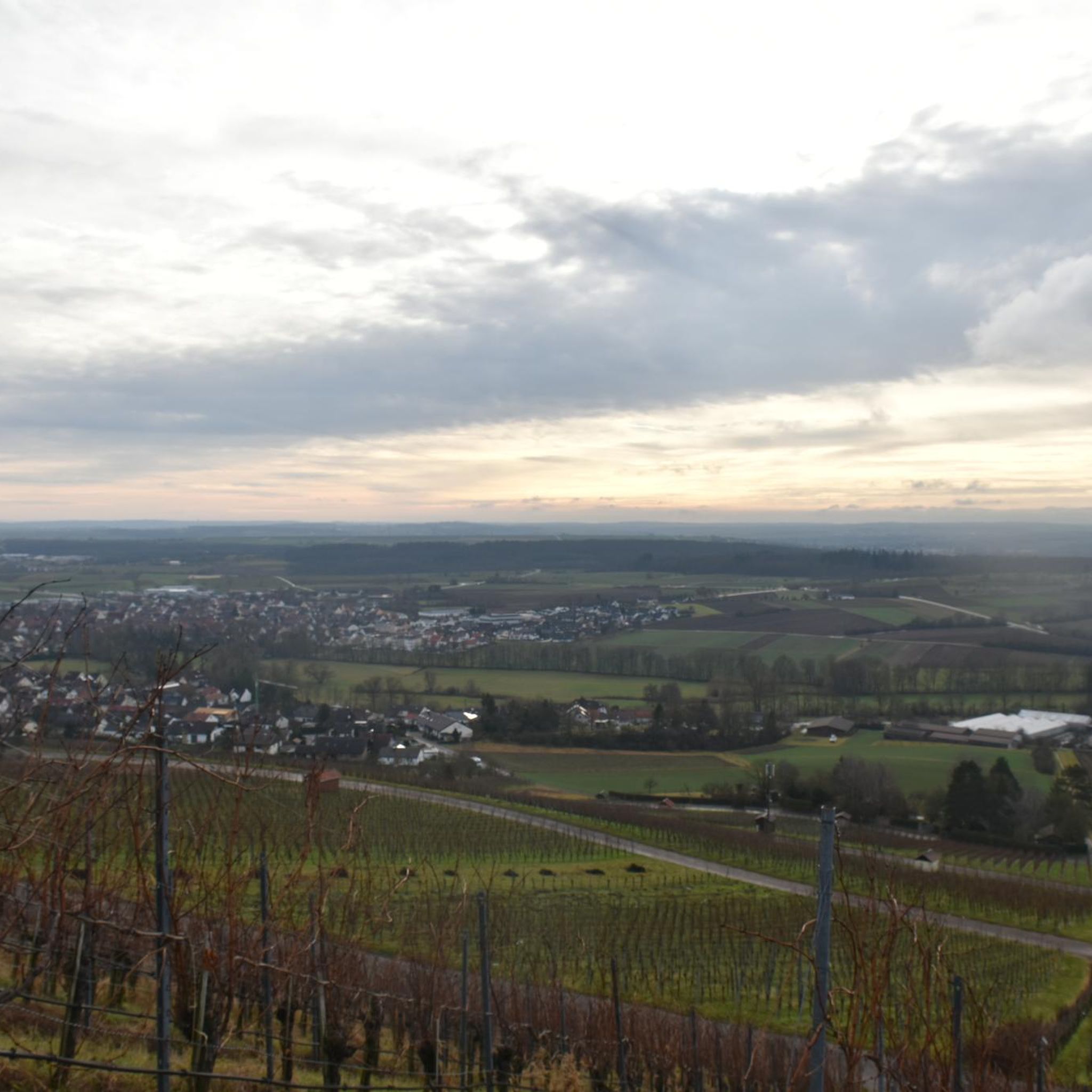
This lace reveals one of the most beautiful landscape profiles in the area. Behind this landscape of vineyards and wooded hills lies a spectacular geological history, still readable in the shapes of the relief. You are riding here on a remarkable site, the "Écailles de Tudéry" (Tudéry Scales). Under the effect of the titanic forces that gave birth to the Pyrenees, the Earth's crust broke and piled up. This tectonic overlap pushed and straightened the ancient secondary-era limestone strata to overlap with more recent tertiary terrains.
1
0
The Notre-Dame-de-la-Barthe church is intimately linked to the history of Saint-Chinian. Rebuilt between the end of the 16th and the end of the 17th century after the destructions of the Wars of Religion, it replaced the old parish church located outside the ramparts. Its bell tower occupies the site of the Némorouse tower, one of the old towers of the medieval fortifications, recalling the defensive past of the village. Inside, do not miss the remarkable 18th-century tribune organ, the work of Jean-Baptiste Lannes and later modified by Louis Peyssy and Jean-Baptiste Micot. Classified as a Historic Monument, it is among the most precious historical organs preserved in the Hérault.
1
0

A landmark on the way to Minerve. You'll face a bit of a climb.
0
0
Frequently Asked Questions
How many no-traffic road cycling routes are available around Bize-Minervois?
There are over 40 dedicated no-traffic road cycling routes around Bize-Minervois, offering a wide range of distances and elevations to suit various fitness levels. These routes are designed to provide a peaceful cycling experience through the region's beautiful landscapes.
Are there easy or family-friendly no-traffic road cycling routes in Bize-Minervois?
Yes, Bize-Minervois offers several easy and family-friendly options, particularly along the Canal du Midi. Its largely flat towpaths provide a remarkably scenic and car-free experience suitable for all skill levels. For a specific moderate route, consider the Canal du Midi Capestang – The Canal du Midi loop from Argeliers, which is 36.8 km long with minimal elevation gain.
Can I cycle along the Canal du Midi from Bize-Minervois with minimal traffic?
Absolutely. The Canal du Midi, a UNESCO World Heritage site, is a major highlight for cyclists in the region. Its towpaths have been extensively converted into cycle paths, offering a largely flat and remarkably scenic experience with very little to no traffic. You can explore charming hamlets and historic engineering marvels along its banks.
What kind of landscapes can I expect on these no-traffic road cycling routes?
The routes around Bize-Minervois traverse diverse and captivating landscapes. You'll cycle through serene pine forests, expansive vineyards, ancient olive groves, and stretches of garrigue. The Cesse Valley, with its impressive limestone cliffs and the aromatic scents of wild mint and thyme, provides a quintessential Mediterranean backdrop for your rides.
Are there any circular no-traffic road cycling routes around Bize-Minervois?
Many of the no-traffic road cycling routes in the area are designed as loops, allowing you to start and finish in the same location. Examples include the challenging Col de Coulouma – Entrance to Hérault Department loop from Argeliers or the slightly shorter Entrance to Hérault Department – Col de Coulouma loop from Bize-Minervois, both offering significant elevation gains and stunning views.
What are some scenic viewpoints or hidden gems along the no-traffic routes?
The region is rich in scenic beauty. You'll find panoramic views of the Minervois countryside, especially from higher points on routes that climb into the hills. The Cesse Valley itself is a scenic route, and you might discover ancient stone shelters known as "capitelles" tucked away in the vineyards. The nearby ancient village of Minerve, just 11 km away, offers breathtaking views and is a rewarding cycling destination.
What attractions can I see along the no-traffic road cycling routes?
Beyond the natural beauty, you can encounter several attractions. Along the Canal du Midi, you might pass by The Port of Somail or the Gailhousty Lock and Spillway. The historic village of Minerve is a popular destination, and some routes might take you near the Natural Tunnel of Minerve or the Daniel Bridge and the Brian Gorges.
Is there parking available for accessing these car-free bike trails?
Yes, Bize-Minervois and surrounding villages like Argeliers, which serve as common starting points for many routes, typically offer public parking facilities. It's advisable to check specific starting points for the most convenient parking options, especially for routes that begin directly in the villages.
What is the best time of year for no-traffic road biking in Bize-Minervois?
The Mediterranean climate makes spring (April-June) and autumn (September-October) ideal for road cycling in Bize-Minervois. Temperatures are pleasant, and the landscapes are vibrant. Summer can be hot, but early morning rides are still enjoyable. Winter offers milder conditions compared to many other regions, though some facilities might have reduced hours.
Are there any long-distance no-traffic road cycling options?
Yes, the proximity to the Canal du Midi allows for extended, long-distance rides with minimal traffic. Its continuous cycle paths offer the unique opportunity to cover significant distances, potentially connecting to other regions or even reaching the Mediterranean coast. Routes like the Minerve – Church of St Michel loop from Argeliers also offer a substantial distance of over 70 km.
What do other road cyclists enjoy most about road cycling in Bize-Minervois?
The area is highly rated by the komoot community, with an average score of 4.375 stars. Reviewers often praise the quiet roads, the stunning views of vineyards and garrigue, and the diverse terrain that caters to both leisurely rides and challenging climbs. The peaceful atmosphere away from heavy traffic is consistently highlighted as a major draw.
Most popular routes around Bize-Minervois
Most popular attractions around Bize-Minervois

Get inspired with the komoot mobile app


Explore more
Browse the best Road cycling routes in other regions.
