The best traffic-free bike rides around Saint-Denis-D'Authou
4.3
(26)
394
riders
33
rides
Road cycling around Saint-Denis-D'Authou features a landscape characterized by rolling green hills and bocage countryside, offering diverse and scenic routes. The region's varied inclinations provide opportunities for both leisurely rides and more challenging routes with elevation changes. Proximity to the Perche Regional Nature Park ensures tranquil backdrops for outdoor activities. These quiet bike roads near Saint-Denis-D'Authou are ideal for those seeking cycling routes without cars.
Best no traffic road cycling routes around Saint-Denis-D'Authou
- The most popular no traffic road cycling…
Last updated: July 6, 2026
5.0
(2)
33
riders
127km
05:39
1,190m
1,190m
Hard road ride. Very good fitness required. Mostly well-paved surfaces and easy to ride.
4.8
(5)
17
riders
Hard road ride. Very good fitness required. Mostly well-paved surfaces and easy to ride.

Sign up for free
7
riders
45.4km
02:04
520m
520m
Moderate road ride. Good fitness required. Mostly well-paved surfaces and easy to ride.
7
riders
43.0km
01:54
390m
390m
Moderate road ride. Good fitness required. Mostly well-paved surfaces and easy to ride.
3
riders
83.9km
04:01
1,080m
1,090m
Hard road ride. Very good fitness required. Mostly well-paved surfaces and easy to ride.
Get access to more routes and recommendations from other explorers.
Sign up for free
Already have an account?
Our route recommendations are based on thousands of hikes, rides, and runs completed by other people on komoot.
Start today with a free account
Your next adventure awaits.
Login or Signup
Popular around Saint-Denis-D'Authou

Tips from the Community

Magnificent ceiling with the possibility of lighting it up
0
0

The church of Saint-Germain-des-Grois, dedicated to Saint Germain, is a charming church in the canton of Rémalard in the heart of Perche. Built in the Romanesque style with its 12th-century choir, it was considerably enlarged during the 15th and 16th centuries, the periods in which the construction of the side aisles took place. The church was under the jurisdiction of the abbey of Saint-Lomer-de-Blois for its presentation to the parish priest. Its curious exterior volume attracts even more attention as the right wing of a building adjoining the church largely obscures the left side of its façade, in line with the aisle; this construction, moreover, resembles that of an old priory. The building consists of a nave of three bays, flanked by side aisles opening onto the central nave through large arches with a broken profile resting on large circular piers and a choir of one bay in the extension of the central nave ending in a flat chevet. A modest sacristy adjoins the building to the southeast. Outside, the side aisles are covered with successive gables, with the exception of the first bay of the north aisle covered by a square-plan, squat bell tower whose exterior volume, close to that of a bell tower, barely dominates the roof of the building which leans against its base. The three gables covering the right aisle do not follow an identical profile, the slope of the framework and the roof of the first of them, to the west, having been the subject of a significant restoration in the 19th century. At the same time, the two gables of the north aisle were also restored. As for the choir, of smaller volume, it has retained on its north and south sides a cornice with modillions; it constitutes the oldest part of the building. Inside, the nave is covered with a recently restored paneled vault, while the side aisles are vaulted on ribbed vaults, the ribs of which are received by ornate corbels. The church is lit thanks to the large bays with radiating tracery pierced in the walls of the side aisles. Among the notable elements of the furniture, it is worth mentioning the two monumental stone altarpieces which adorn the side altars, works of the 17th and 18th centuries; that of the south aisle houses statues of Saint Sebastian, Saint Joseph and Saint Germain and a finely worked gilded wooden tabernacle from the 17th century, with a dome and small columns. For drainage, the restoration of the masonry, particularly the buttresses, and for the restoration of the lower roof of the bell tower, the Sauvegarde de l’Art français granted a grant of 70,000 F in 1999.
0
0
The inhabitants of Margon can admire the church of Notre-Dame du Mont-Carmel, proudly dominating the old town on its rocky spur, at the corner of two green valleys. It was later given an aisle during the 16th century, but its Romanesque portal has been preserved. It reigns benevolently over the old cemetery which surrounds it and which has recently been enlarged due to the increase in the population of the commune.
0
0
Occupying mainly a hill dominated by a curious dome-shaped bell tower, the territory of Brunelles has a rich historical past, sometimes even bordering on the marvelous. If the very ancient occupation of the place is attested to in Bois-Jahan, the disappearance of the village of La Ferrière and its church of La Madeleine during the Hundred Years' War (14th-15th century), give the hamlet of Vieux Murs a legendary air... A fortified castle and a chapel below probably stood here. Furthermore, because the lords of Brunelles who were the vassals of the Rotrou, were required to guard the Saint-Jean castle, one of the towers of the Nogent castle still bears the name of the village today. Situated on a rocky peak, the Saint-Martin church is visible from afar. Built in the 15th century, most of it, including the spire, was unfortunately destroyed by fire, and only the stone choir with a semi-circular vault is original. The nave is lit on each side by three flamboyant-style windows, and in the choir you can admire the beautiful stone altarpiece that has recently been restored. You will also notice an oculus on the south face, found during the 1998 restoration campaign, and enriched with a recent stained glass window illustrating the Creation. Finally, visitors should not fail to stop by the relics of the young Alexander, tortured for refusing to renounce his faith in Christ, as were other saints called martyrs for this, from the Greek "witnesses". There are thus many relics in our churches: they can be found at the first origin of basilicas, often built on ancient funerary areas on the outskirts of ancient cities. The relics of the saints are to be considered as the very humble signs of what their bodies were, the evocation of their human condition: it is with their bodies that the saints acted, thought, prayed, worked, suffered and experienced death. The monastery of the Val d’Arcisses was the first foundation of the monk Bernard d’Abbeville, later called Bernard de Thiron, because the monks of St.-Denis de Nogent-le-Rotrou would not let him do it! Bernard had to settle nearby, in the parish of Gardais, under the protection of the bishop of Chartres, Saint Yves and de Rotrou, Count of Perche. He had been established in a manor located between Brunelles and Ozée. The Notre-Dame-du-Val-d’Arcisses abbey welcomed Benedictine nuns during the 17th and 18th centuries. Destroyed during the Revolution, all that remains is the gatehouse, a beautiful arch embedded in a façade. One of the monks' major works was to dig the Arcisses canal, a diversion from the Cloche: it irrigated the abbey's lands and supplied the fountain which flowed near the Notre-Dame church in Nogent-le-Rotrou.
0
0
The church has a Latin cross plan. It has a single nave and a flat chevet. A small building is attached to the chevet. A bell tower flanks the building. Buttresses support the drip walls and the gable wall. Pointed arch bays with tracery illuminate the building. The portal, in a low arch, has its external arched voussure.
0
0
Church built in the 12th and 16th centuries. Listed apse from the 12th century. 4-storey bell tower. Corner buttress bell with staircase turret. Renaissance portal. Large Gothic window above the portal. 16th century roof and nave. Stone statue of a bishop, 16th century paintings.
0
0

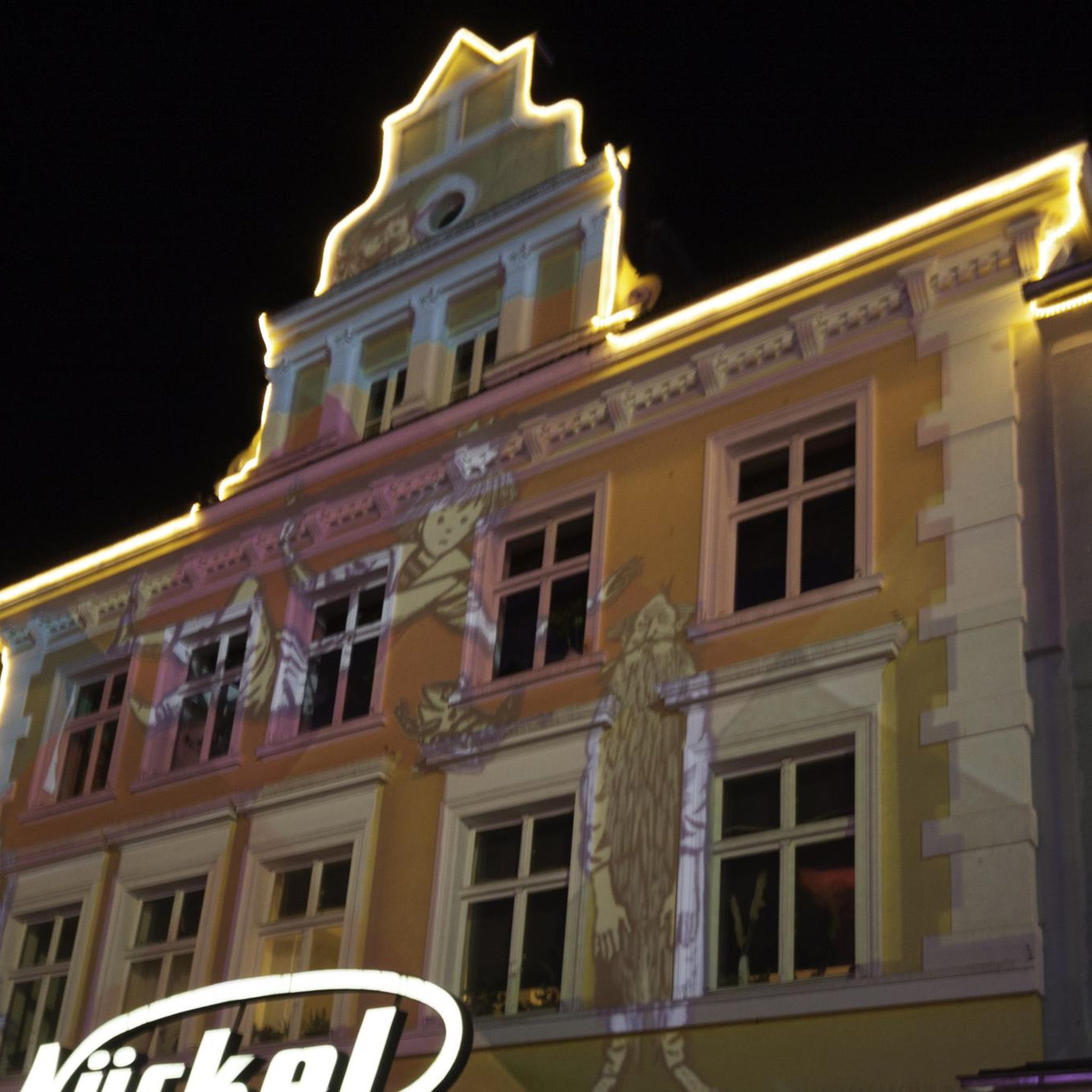
Very pretty trompe l'oeil
0
0
Between the green hills of Perche, the Saint-Denis church contains a 16th century baptistery listed as a Historic Monument. Explanatory plaque at the entrance. This church is Romanesque in style and has a rounded apse and a quadrangular bell tower. The baptismal font dates from the 16th century. The church is surrounded by walls made of Saint-Denis stone.
0
0
Frequently Asked Questions
How many no-traffic road cycling routes are available around Saint-Denis-d'Authou?
There are nearly 30 dedicated no-traffic road cycling routes around Saint-Denis-d'Authou. These routes offer a variety of distances and difficulty levels, allowing cyclists to explore the region's quiet roads and scenic landscapes.
What kind of terrain can I expect on these traffic-free road cycling routes?
The region around Saint-Denis-d'Authou is characterized by rolling green hills and 'bocage' countryside, offering diverse and scenic routes. You'll encounter varied terrain with different inclinations, as the area ranges from 174 to 286 meters in altitude. This provides opportunities for both leisurely rides and more challenging routes with elevation changes.
Are there any easy no-traffic road cycling routes suitable for beginners?
Yes, there are 5 easy no-traffic road cycling routes available. These are perfect for beginners or those looking for a relaxed ride through the picturesque countryside, allowing you to enjoy the scenery without significant climbs.
Can I find longer, more challenging no-traffic road cycling routes in the area?
Absolutely. For experienced cyclists seeking a challenge, there are 2 difficult routes and 21 moderate routes. For example, the Saint-Jouin Church of Dancé – Saint Martin Church loop from Montlandon is a demanding route covering over 100 km with significant elevation gain, offering a true test of endurance on quiet roads.
What natural features or landmarks can I see along these routes?
Many routes pass through or near the picturesque Perche Regional Nature Park, known for its forest hills and bocage countryside. You might also encounter historical sites like the Château de Frazé or enjoy a lovely stretch through the fields. The region's quiet roads often lead through charming villages and offer glimpses of the local heritage.
Are there any circular no-traffic road cycling routes?
Yes, many of the routes are designed as loops, allowing you to start and finish in the same location. For instance, the Notre-Dame Church – Saint-Denis Church loop from Coudreceau is a moderate 45 km circular route, perfect for a half-day ride without retracing your steps.
What is the best time of year to go road cycling in Saint-Denis-d'Authou?
The spring and autumn months generally offer the most pleasant conditions for road cycling in Saint-Denis-d'Authou, with mild temperatures and beautiful scenery. Summer can also be enjoyable, especially in the mornings or late afternoons, though it can get warmer. Winter cycling is possible but be prepared for colder temperatures and potentially wet conditions.
Are there any family-friendly no-traffic road cycling routes?
While specific 'family-friendly' designations aren't always explicit, the 5 easy routes are generally suitable for families with older children or those comfortable with longer distances on quiet roads. The focus on 'no traffic' ensures a safer and more relaxed experience for everyone.
What do other road cyclists enjoy most about cycling in Saint-Denis-d'Authou?
The area is highly rated by the komoot community, with an average score of 4.2 stars. Reviewers often praise the tranquility of the routes, the beautiful rolling landscapes, and the opportunity to cycle on quiet roads away from motorized traffic, making for a peaceful and immersive experience.
Where can I park my car to access these no-traffic road cycling routes?
While specific parking areas are not detailed for every route, many routes start from villages like Coudreceau or Montlandon. You can typically find parking in village centers or near local amenities, providing convenient access to the quiet roads. Always check local signage for parking regulations.
Are there any viewpoints or scenic spots along the no-traffic routes?
Yes, the rolling hills and bocage countryside naturally offer many scenic vistas. You'll find numerous spots with expansive views over the fields and woodlands. Keep an eye out for highlights like a lovely stretch through the fields, which often provide excellent photo opportunities and a chance to appreciate the serene landscape.
Can I combine road cycling with other outdoor activities in the region?
Absolutely. The region around Saint-Denis-d'Authou, particularly its proximity to the Perche Regional Nature Park, is also excellent for hiking and mountain biking. You can easily find opportunities to explore the natural beauty of the area on foot or on different types of bikes, making it a versatile destination for outdoor enthusiasts.
Most popular routes around Saint-Denis-D'Authou
Most popular attractions around Saint-Denis-D'Authou

Get inspired with the komoot mobile app


Explore more
Browse the best Road cycling routes in other regions.
