The best traffic-free bike rides around Chassant
4.3
(11)
188
riders
14
rides
No traffic road cycling routes around Chassant are characterized by a distinctly hilly landscape and diverse cultivated fields, offering varied terrain for cyclists. The region's proximity to the Parc Naturel Régional du Perche provides access to a broader natural environment. Cyclists can find routes that include shaded forest sections, offering a quiet experience away from cars. These features combine to create a scenic and engaging environment for road cycling.
Best no traffic road cycling routes around Chassant
- The most popular…
Last updated: May 9, 2026
3
riders
83.8km
04:01
1,080m
1,090m
Hard road ride. Very good fitness required. Mostly well-paved surfaces and easy to ride.
3
riders
55.4km
02:28
520m
520m
Moderate road ride. Good fitness required. Mostly well-paved surfaces and easy to ride.

Sign up for free
5.0
(1)
2
riders
67.4km
02:59
690m
690m
Moderate road ride. Good fitness required. Mostly well-paved surfaces and easy to ride.
3
riders
54.7km
02:35
730m
730m
Moderate road ride. Good fitness required. Mostly well-paved surfaces and easy to ride.
4.0
(1)
2
riders
43.7km
01:59
260m
260m
Easy road ride. Great for any fitness level. Mostly well-paved surfaces and easy to ride.
Get access to more routes and recommendations from other explorers.
Sign up for free
Already have an account?
Our route recommendations are based on thousands of hikes, rides, and runs completed by other people on komoot.
Start today with a free account
Your next adventure awaits.
Login or Signup
Popular around Chassant
Tips from the Community


Built on an old feudal motte, which is still visible and was completely destroyed during the Hundred Years' War, it was replaced in the second half of the 15th century by the castle, the remains of which can still be seen today. The Saint-François Tower remains as it was, with its Grisons base and rows of white stone. Halfway up the circle is the Cord of Saint Francis of Assisi, with its coils and knots. A Renaissance building was added in the 16th century, and new buildings were constructed in the 17th and 18th centuries.
0
0

Occupying mainly a hill dominated by a curious dome-shaped bell tower, the territory of Brunelles has a rich historical past, sometimes even bordering on the marvelous. If the very ancient occupation of the place is attested to in Bois-Jahan, the disappearance of the village of La Ferrière and its church of La Madeleine during the Hundred Years' War (14th-15th century), give the hamlet of Vieux Murs a legendary air... A fortified castle and a chapel below probably stood here. Furthermore, because the lords of Brunelles who were the vassals of the Rotrou, were required to guard the Saint-Jean castle, one of the towers of the Nogent castle still bears the name of the village today. Situated on a rocky peak, the Saint-Martin church is visible from afar. Built in the 15th century, most of it, including the spire, was unfortunately destroyed by fire, and only the stone choir with a semi-circular vault is original. The nave is lit on each side by three flamboyant-style windows, and in the choir you can admire the beautiful stone altarpiece that has recently been restored. You will also notice an oculus on the south face, found during the 1998 restoration campaign, and enriched with a recent stained glass window illustrating the Creation. Finally, visitors should not fail to stop by the relics of the young Alexander, tortured for refusing to renounce his faith in Christ, as were other saints called martyrs for this, from the Greek "witnesses". There are thus many relics in our churches: they can be found at the first origin of basilicas, often built on ancient funerary areas on the outskirts of ancient cities. The relics of the saints are to be considered as the very humble signs of what their bodies were, the evocation of their human condition: it is with their bodies that the saints acted, thought, prayed, worked, suffered and experienced death. The monastery of the Val d’Arcisses was the first foundation of the monk Bernard d’Abbeville, later called Bernard de Thiron, because the monks of St.-Denis de Nogent-le-Rotrou would not let him do it! Bernard had to settle nearby, in the parish of Gardais, under the protection of the bishop of Chartres, Saint Yves and de Rotrou, Count of Perche. He had been established in a manor located between Brunelles and Ozée. The Notre-Dame-du-Val-d’Arcisses abbey welcomed Benedictine nuns during the 17th and 18th centuries. Destroyed during the Revolution, all that remains is the gatehouse, a beautiful arch embedded in a façade. One of the monks' major works was to dig the Arcisses canal, a diversion from the Cloche: it irrigated the abbey's lands and supplied the fountain which flowed near the Notre-Dame church in Nogent-le-Rotrou.
0
0
The church has a Latin cross plan. It has a single nave and a flat chevet. A small building is attached to the chevet. A bell tower flanks the building. Buttresses support the drip walls and the gable wall. Pointed arch bays with tracery illuminate the building. The portal, in a low arch, has its external arched voussure.
0
0
Church built in the 12th and 16th centuries. Listed apse from the 12th century. 4-storey bell tower. Corner buttress bell with staircase turret. Renaissance portal. Large Gothic window above the portal. 16th century roof and nave. Stone statue of a bishop, 16th century paintings.
0
0
The Saint-Martin church, listed as a Historic Monument, is located in Nocé, Normandy. It was probably built in the 12th century near the ruined and abandoned Nocé castle after the Hundred Years' War. Originally, the church was surrounded by a cemetery that was moved in the 18th century. In the 15th century, the walls were razed and the Romanesque framework of the nave replaced by a new paneled framework. In the 16th century, after the troubles of the Hundred Years' War, the building was modified: a single large roof was built in place of the various previous volumes and the framework was transformed, a new chapel was added against the south facade and a stone bell tower was built to the right of the nave. This tower, square from base to top, stands twenty meters high. The church is composed of a rectangular nave, three bays and a choir with a Romanesque semicircular chevet. A succession of three chapels opens a side aisle separated from the nave by pillars. The chapels are covered with ribbed vaults. A sacristy is fitted out behind the church. Note the altarpiece and the tabernacle in painted and gilded wood with steps, installed in the choir and lit by two bays with tracery, a painting presenting the disciples of Emmaus and one of the Annunciation, as well as a polychrome terracotta statue and a stone statue of Saint Madeleine without forgetting a stone statue of Our Lady of Pity.
0
0

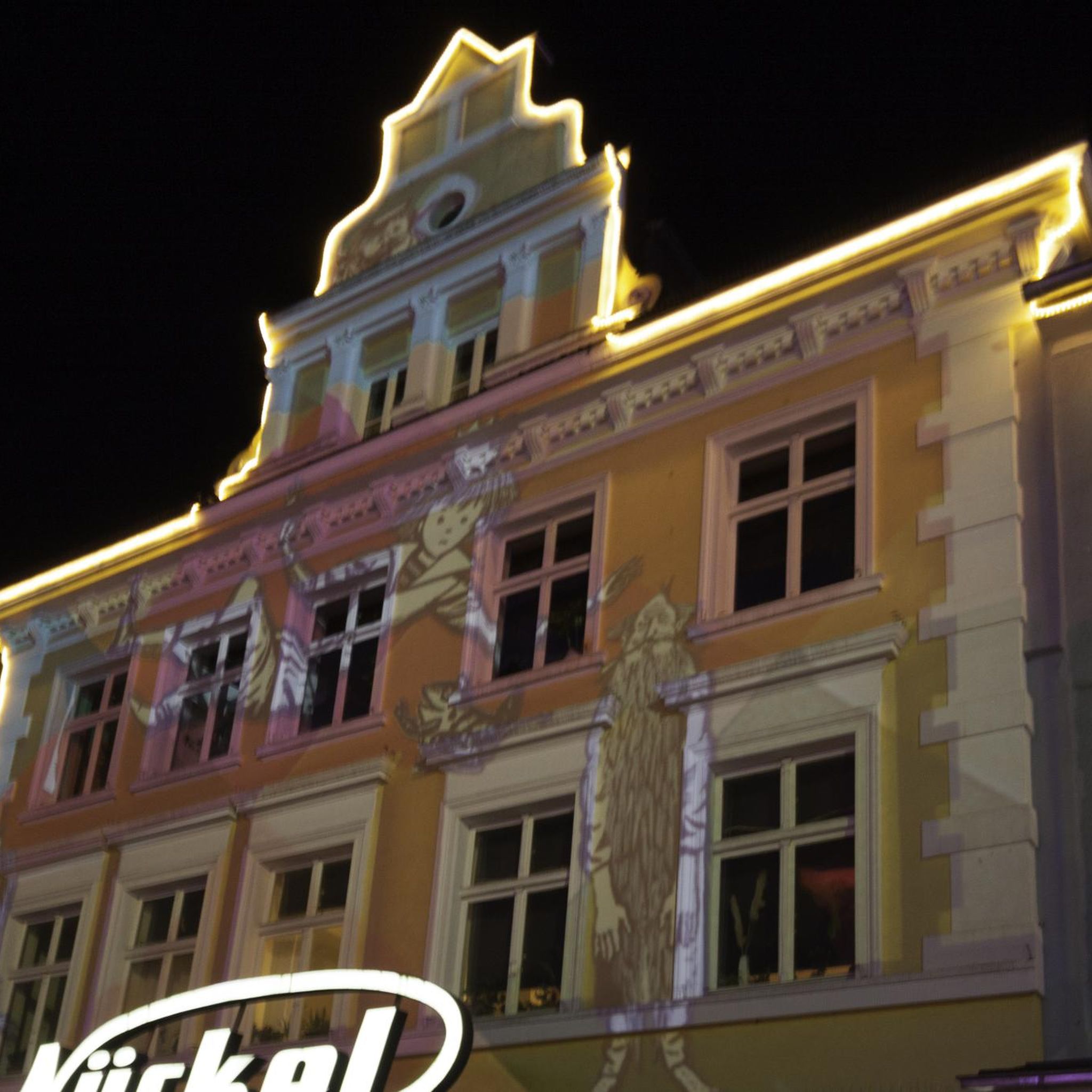
Very pretty trompe l'oeil
0
0

Beautiful castle. Unfortunately it was closed.
0
0
Frequently Asked Questions
How many no-traffic road cycling routes are available around Chassant?
There are 11 dedicated no-traffic road cycling routes around Chassant, offering a variety of experiences for different skill levels.
What is the difficulty level of the no-traffic road cycling routes around Chassant?
The routes around Chassant cater to various skill levels. You'll find 3 easy routes, 7 moderate routes, and 1 difficult route, ensuring there's something for everyone from beginners to experienced cyclists.
Are there easy, beginner-friendly no-traffic road cycling routes in the Chassant area?
Yes, there are 3 easy routes perfect for beginners or those looking for a relaxed ride. One such route is the Saint Martin Church – Château de Frazé loop from Montigny-le-Chartif, which covers 43.76 km with a manageable elevation gain.
What natural features or viewpoints can I expect to see on these no-traffic routes?
The region around Chassant is characterized by its hilly terrain and diverse cultivated fields, offering picturesque scenery. You can enjoy expansive views over wide fields and hills, particularly from spots like the Lovely stretch through the fields. Some routes also feature tranquil shaded sections in the forest, providing a pleasant change of scenery.
Are there any historical landmarks or attractions along the no-traffic cycling routes?
Yes, several routes pass by or near historical sites. The 15th-century Château de Frazé is a notable landmark, and you can find routes like the Frazé – Château de Frazé loop from Frazé that incorporate it. The Thiron-Gardais Abbey Gardens are also nearby, adding cultural interest to your ride.
What do other road cyclists enjoy the most about no-traffic road cycling in Chassant?
The area is highly rated by the komoot community, with an average score of 4.2 stars. Reviewers often praise the quiet roads, the scenic views of rolling hills and cultivated fields, and the opportunity to cycle away from motor traffic.
Are there any long-distance no-traffic road cycling routes for experienced riders?
For experienced riders seeking a longer challenge, the Notre-Dame Church – Villeray Mill loop from Nogent-le-Rotrou is a difficult route spanning over 83 km with more than 1000 meters of elevation gain, offering a substantial ride on quiet roads.
Can I find routes that are circular or loop back to the starting point?
Many of the no-traffic road cycling routes around Chassant are designed as loops, allowing you to start and finish in the same location. Examples include the Sainte-Suzanne stream – Château Saint-Jean loop from Beaumont-les-Autels and the Vichères Church loop from Nogent-le-Rotrou.
What is the best time of year to cycle the no-traffic routes around Chassant?
The spring and autumn months generally offer the most pleasant conditions for cycling, with milder temperatures and beautiful seasonal colors across the cultivated fields and forests. Summer can also be enjoyable, especially when utilizing routes with shaded forest sections.
Is the area around Chassant suitable for road cycling with its hilly terrain?
Yes, the hilly terrain around Chassant is a defining characteristic, providing varied and engaging routes for road cyclists. The presence of limited motor traffic on many of these stretches enhances the safety and enjoyment, allowing you to appreciate the picturesque inclines and scenic vistas.
Most popular attractions around Chassant

Get inspired with the komoot mobile app


Explore more
Browse the best Road cycling routes in other regions.
