The best traffic-free bike rides around Neuilly-Le-Bisson
5.0
(2)
301
riders
23
rides
No traffic road cycling routes around Neuilly-Le-Bisson traverse a landscape characterized by extensive forested areas, including the notable Écouves and Multonne forests. The region features rolling countryside and some hilly terrain, particularly in areas like the "Vallée d'Enfer," offering varied gradients for cyclists. Neuilly-Le-Bisson is also directly connected to the Greenway Alençon-Condé-sur-Huisne, providing dedicated traffic-free paths. This setting within the Normandie-Maine Regional Nature Park offers a mix of serene routes and challenging climbs.
Best no traffic road cycling routes around…
Last updated: July 5, 2026
8
riders
Moderate road ride. Good fitness required. Some segments of this route may be unpaved and difficult to ride.
6
riders
33.9km
01:31
160m
160m
Moderate road ride. Great for any fitness level. Some segments of this route may be unpaved and difficult to ride.

Sign up for free
6
riders
9.49km
00:26
30m
30m
Easy road ride. Great for any fitness level. Mostly well-paved surfaces and easy to ride.
5.0
(1)
8
riders
Moderate road ride. Great for any fitness level. Some segments of this route may be unpaved and difficult to ride.
2
riders
49.5km
02:15
410m
410m
Moderate road ride. Good fitness required. Mostly well-paved surfaces and easy to ride.
Get access to more routes and recommendations from other explorers.
Sign up for free
Already have an account?
Our route recommendations are based on thousands of hikes, rides, and runs completed by other people on komoot.
Start today with a free account
Your next adventure awaits.
Login or Signup
Popular around Neuilly-Le-Bisson
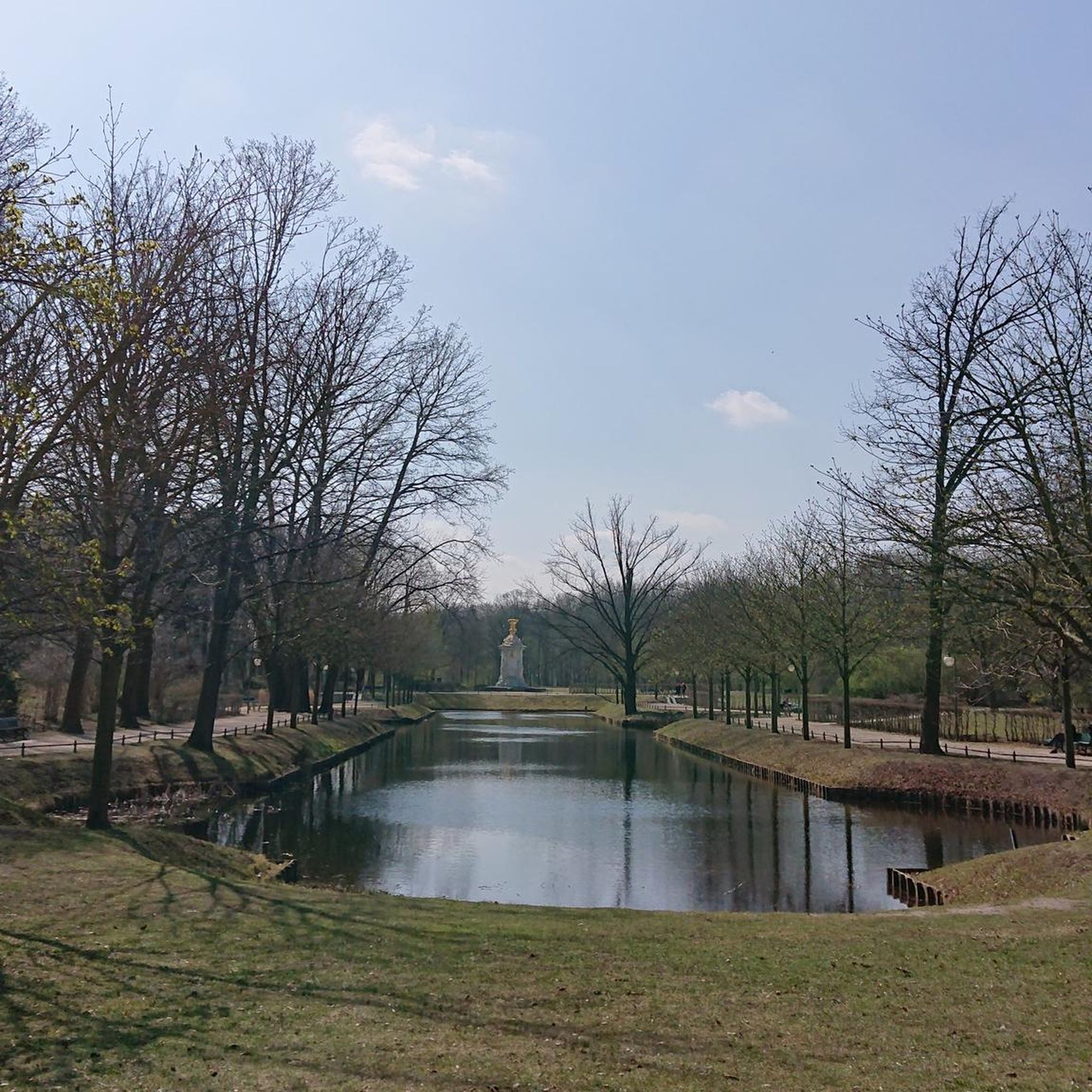
Tips from the Community

11th Century Church Worship was abolished in the parish of Chevain. The church was sold for 31,700 livres to the citizen of Villeray on 6 Vendémiaire, Year VII (September 27, 1799). The Chevain church, having been donated by Madame du Hameau de Villeray to the commune by notarial deed dated April 16, 1827, was restored to worship there on January 15, 1827. The parish was established as a branch parish.
0
0
Built at the end of the 12th century, the church belonged to the former diocese of Saintes. It has been restored several times, notably in the 15th century. Rectangular building with a straight chevet. A single nave with a ribbed vault. Sculpted column capitals. In the transept, a dome on pendentives. Chancel with a ribbed vault and a large 13th-century chevet window. On the north side of the chancel, a large pointed arch gives access to a ribbed vaulted chapel. The western façade dates from the 13th century, with a pointed arch portal with three arches on round columns. Two chamfered pilasters separate the portal from the blind doors and rise to the top of the façade. Above this ground floor and set back are three pointed arch arcades with sculpted figures (seated Virgin, shepherds guided by an angel, three wise men). On each side, twin arcades with pointed arches with heads, fantastic animals, diamond points and crockets. On the transept rises a square bell tower.
0
0
A building constructed in the 11th and 12th centuries. It was then just a simple chapel built on a temple, which was subsequently remodeled numerous times over the centuries. The choir, narrower and higher than the rest, is believed to have been built on tombs from the old cemetery, from which a 10th-century Merovingian sarcophagus made of Roussard sandstone was extracted and is on display outside the church.
0
0
small, gentle climb coming from Allieres Beauvoir
0
0

Beautiful climb north of Sarthe
0
0
The Saint-Léonard church takes its name from the hermit Saint Léonard de Vandoeuvre. The latter, born at the end of the 5th century, left his family to serve God and settled in a place called Vandoeuvre, in Saint-Léonard-des-Bois, where he lived in austerity for several years. Joined by a few disciples, he built a monastery protected by King Clotaire. The relics of Saint Leonard, who died in 570, were transported in 868 to Corbigny by the monks of Vandoeuvre to preserve them from the Normans. Part of these was undoubtedly returned around 1025 thanks to the second lord of Alençon, William I, and deposited in an old chapel dedicated to Saint Martin located on the site of the current Saint-Léonard church. This saint is often invoked to cure deafness. A first Saint-Léonard church, attested between 1160 and 1182, was probably built very close to the Saint-Martin oratory. This disappeared around the middle of the 13th century in forgotten circumstances, but parish life remained concentrated in the chapel until the end of the 15th century. It is on the latter that the current church was built, in tertiary ogival style and flamboyant Gothic interior, by Duke René d'Alençon and his wife Marguerite de Lorraine. Most of the work took place from 1490 to 1505 and it was this same year that the building was placed under the name of Saint Leonard de Noblac, a character then more popular than Saint Leonard de Vandoeuvre. On the stained glass windows of one of the eleven side chapels, which was for a certain time dedicated to Louis IX, ancestor of the counts and dukes of Alençon, and on the walls, appeared the coats of arms of the houses of Alençon and Lorraine, today now disappeared. It was in this chapel that the duchess and the duke attended services and in which a fireplace was built for them which no longer exists. After René's death, his heart is placed in a lead box, itself in the shape of a heart, covered with a stone. When around 1510, René's heart was transferred to the church of Saint-François de Mortagne, the empty box was left in his vault. In 1776, the stone, which also bears the imprint of a heart, was removed, then put back in its place, and this imprint, erased by the friction of the feet, no longer exists except in memory. In 1562, the church was pillaged by Protestants. At Easter 1645, Hertré's granite vault collapsed. Replaced by a simple plaster cradle, it was not until 1836 that a new Gothic style vault was built. The main door was built in 1663 and the clock was installed in 1727. Until 1789, this church depended on Notre-Dame and did not have a baptismal font. The carved wooden altar and pulpit, two side consoles and some mostly modern stained glass windows, deserve the tourist's attention. The Saint-Léonard church, restored in the 17th-18th centuries, then completely refurbished in the 19th century by the architect Isidore Dédaux, is classified among the historic monuments.
0
0

A magnificent architecture in the heart of Alençon.
0
0
A must-have that is earned by the strength of the calves. But the climb is in a beautiful wooded environment with the gentle field of birds.
0
0
Frequently Asked Questions
How many no-traffic road cycling routes are available around Neuilly-Le-Bisson?
There are over 15 dedicated no-traffic road cycling routes available around Neuilly-Le-Bisson. These routes offer a variety of distances and difficulty levels, ensuring a pleasant experience away from motorized traffic.
What makes road cycling around Neuilly-Le-Bisson ideal for traffic-free rides?
Neuilly-Le-Bisson is nestled within a tranquil, forested environment, offering extensive green spaces and quiet country roads. The area benefits from its proximity to the Greenway from La Mele-sur-Sarthe to Alencon, which provides dedicated paths separated from traffic. The surrounding Écouves, Perseigne, and Multonne forests also contribute to a serene cycling experience with minimal vehicle presence.
What is the general difficulty level of no-traffic road cycling routes in this area?
The routes around Neuilly-Le-Bisson cater to various fitness levels. You'll find a good mix, with 10 easy routes perfect for a relaxed ride, 7 moderate routes offering more challenge, and 1 difficult route for experienced cyclists seeking significant climbs. The region's rolling countryside, including areas like the "Vallée d'Enfer," can provide varied terrain.
Are there any scenic viewpoints or natural landmarks to discover on these routes?
Yes, many routes offer stunning views and pass by notable natural features. For instance, the Perseigne Viewpoint – Vallée d'Enfer loop takes you to the Perseigne Viewpoint, offering spectacular vistas. You can also find routes that explore the vast Écouves and Perseigne forests, known for their natural beauty and peaceful clearings.
Can I find routes that pass through the famous forests like Écouves or Perseigne?
Absolutely. The region is defined by its extensive forests. Routes like the Ruins of Perseigne Abbey – Perseigne Viewpoint loop immerse you in the heart of the Perseigne Forest, known for its rolling countryside and wooded paths. The majestic Écouves Forest, one of the most extensive forested areas in north-western France, also offers numerous scenic roads for cycling.
Are there any circular no-traffic road cycling routes available?
Yes, many of the no-traffic road cycling routes around Neuilly-Le-Bisson are designed as circular loops, allowing you to start and end at the same point. Examples include the Notre-Dame Church loop from Lignières-la-Carelle and the Saint Denis Church – Château de Montigny loop from La Fresnaye-sur-Chédouet, providing convenient options for exploration.
What do other road cyclists enjoy the most about road cycling in Neuilly-Le-Bisson?
The area is highly rated by the komoot community, with an average score of 4.0 stars. Reviewers often praise the quiet, traffic-free roads, the beautiful forested landscapes, and the varied terrain that offers both gentle rides and more challenging climbs, especially within the Normandie-Maine Regional Nature Park.
Is the Greenway Alençon-Condé-sur-Huisne suitable for road bikes?
Yes, the Greenway Alençon-Condé-sur-Huisne is generally well-suited for road bikes. Greenways typically feature paved or well-surfaced paths, providing a smooth and safe experience away from motorized traffic. A dedicated rest area for users of this greenway is conveniently located at the entrance of Neuilly-Le-Bisson.
Are there any family-friendly no-traffic road cycling options?
Yes, the region offers several easy routes that are ideal for families. The dedicated greenways provide a safe environment away from cars, and many of the quieter country roads through the forests are also suitable for a relaxed family outing. Look for routes marked as 'easy' for the most family-friendly experiences.
Where can I park my car when accessing these cycling routes?
While specific parking locations vary by route start point, many villages and towns in the area, including Neuilly-Le-Bisson, offer public parking. For greenway access, look for designated parking areas near the entry points, such as the rest area at the entrance of Neuilly-Le-Bisson for the Alençon-Condé-sur-Huisne Greenway.
What is the best time of year to enjoy traffic-free road cycling around Neuilly-Le-Bisson?
The spring and autumn months generally offer the most pleasant conditions for road cycling, with mild temperatures and beautiful scenery as the forests change color. Summer can also be enjoyable, especially in the shaded forest areas, though it can be warmer. Winter cycling is possible, but check local conditions for ice or snow, especially on less-trafficked roads.
Are there any places to stop for refreshments or accommodation along the routes?
The villages and towns scattered throughout the Orne department, including those near Neuilly-Le-Bisson, often have small cafes, restaurants, and local shops where you can stop for refreshments. For accommodation, you'll find various options from gîtes to hotels in the wider region, particularly in larger towns like Alençon or within the Normandie-Maine Regional Nature Park.
Most popular attractions around Neuilly-Le-Bisson

Get inspired with the komoot mobile app


Explore more
Browse the best Road cycling routes in other regions.
