The best traffic-free bike rides around Faye-L'Abbesse
4.1
(13)
877
riders
68
rides
No traffic road cycling routes around Faye-L'Abbesse traverse a landscape characterized by picturesque bocage scenery, featuring traditional hedgerows and "sunken paths." The region is shaped by the Thouaret Valley, home to the Thouaret River and historic mills, and sits at the head of the Gatine Valley. These natural features provide varied terrain for road cyclists seeking routes away from vehicle traffic.
Best no traffic road cycling routes around Faye-L'Abbesse
- The most popular no traffic road cycling route is Saint-Loup-Lamairé –…
Last updated: July 17, 2026
7
riders
23.5km
01:05
150m
160m
Easy road ride. Great for any fitness level. Mostly well-paved surfaces and easy to ride.
3.5
(2)
6
riders
60.2km
02:44
510m
510m
Moderate road ride. Good fitness required. Mostly well-paved surfaces and easy to ride.

Sign up for free
6
riders
19.7km
01:05
100m
100m
Moderate road ride. Great for any fitness level. Some segments of this route may be unpaved and difficult to ride.
3.0
(1)
2
riders
33.7km
01:38
310m
310m
Moderate road ride. Good fitness required. Mostly well-paved surfaces and easy to ride.
6
riders
48.8km
01:57
240m
240m
Easy road ride. Great for any fitness level. Mostly well-paved surfaces and easy to ride.
Get access to more routes and recommendations from other explorers.
Sign up for free
Already have an account?
Our route recommendations are based on thousands of hikes, rides, and runs completed by other people on komoot.
Start today with a free account
Your next adventure awaits.
Login or Signup
Popular around Faye-L'Abbesse
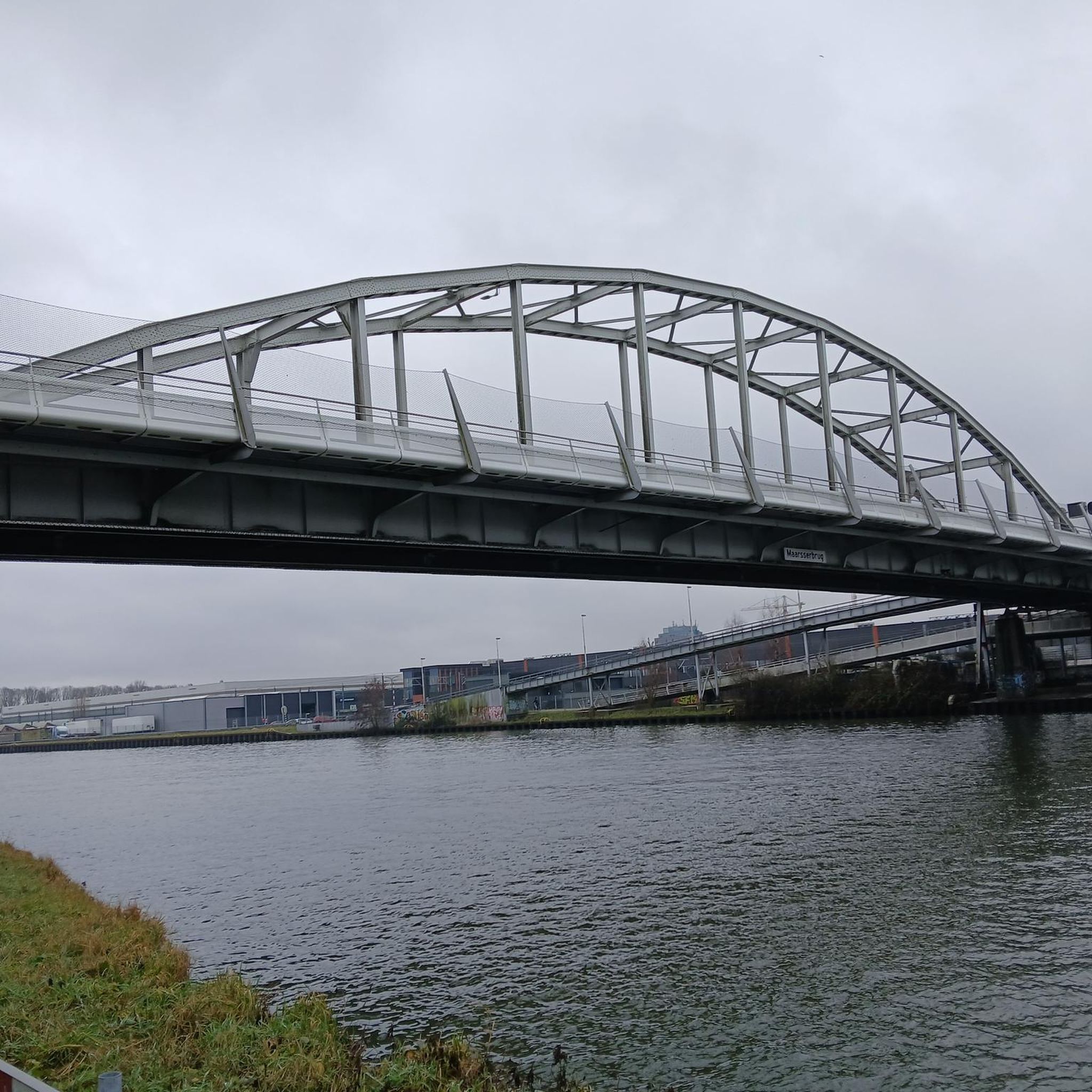
Tips from the Community

Sturdy shoes and rain gear are recommended. Enjoy this walk.
0
0

The "Filles de Bressuire," monumental sculptural works by Franck Ayroles, adorn the Bressuire train station square. Installed in 2021, they welcome travelers as an artistic nod to the city.
0
0

It is from Place de la Solidarité, near the village hall, and in the light of a sunny afternoon, that visitors can best admire Courlay's church, firmly anchored on a hilltop, built in the middle of the village. It is squat and austere, like a fortress, a half-Gothic, half-Romanesque building whose square bell tower dominates the surrounding houses. Crossing the square, created on the site of the former cemetery relocated in 1900 and now adorned with a beautiful fountain where water cascades over granite chirons, note: the square bell tower with two small bays on each side (11th and 12th centuries); to the east, the large wall of the church's apse; on the north facade, a small rectangular tower resting on the bell tower and housing the stone staircase providing access to the bells; on the south facade, the turret topped with a slate pinnacle, the modillions of the cornice, a small door at the top of a few steps, and the Romanesque portal or main gate.
0
0

As you probably know, in the year 732, the armies of Charles Martel repelled the Arab advance around Poitiers. A troop of routed Saracens then barricaded themselves in the old parish church of St Sauveur and promised to surrender only in the event of divine intervention. However, in this month of May, after nights of prayers by the villagers, a cold snap hit the Poitiers countryside to the point of covering the grove with an astonishing layer of frost. The Saracens saw the sign of Allah in this unexpected event and decided to leave the village without giving battle. This legend gave its name to the village and the church of the Holy Trinity became a place consecrated by the religious authorities of the region. The oldest parts of the building that stands today on the small village square date back to the 11th century, but the church had to undergo several restoration campaigns during the 19th century. It now appears to us as a fine example of a Romanesque church, simple, rustic and austere. Note the modern stained glass windows made in the 1990s by Louis-René Petit, an artist who also worked in Sénanque and St Benoît sur Loire. His compositions inspired by frost give the church an atmosphere in harmony with its legend.
1
0

The Boismé water body is an easy-to-access and well-equipped body of water, offering an ideal site for fishing and family walks. You can enjoy the rich diversity of fish, such as carp, pike and zander, as well as the beautiful views of the water and the surrounding countryside. The hike around the lake is approximately 4 km and is suitable for all fitness levels. There is also a picnic area, playground and snack bar near the lake. The Boismé lake is an ideal place to enjoy nature and have fun.
3
0
Bressuire Castle is a medieval ruin dating from the 10th century and having belonged to the Beaumont family. You can discover the 700 meter long enclosure and its 38 towers, admire the romantic remains of the 15th century dwelling and enjoy the view of the chapel and the old slaughterhouse from the esplanade. The castle also hosts temporary exhibitions, sculpture symposia and treasure hunts in summer.
3
0
Magnificent ruins of the fortified castle which can be seen from afar with its toothless silhouette. Its origin dates back to the 11th century, and it was one of the strongholds of Poitou. Decorated with works of art and entertainment, the estate can be visited freely.
1
0
Its origins date back to the 11th century, it was capped in the 16th century by a Gothic bell tower rising to 56m in height and dominates from the city center of Bressuire.
0
0
Frequently Asked Questions
How many no traffic road cycling routes are available around Faye-L'Abbesse?
There are over 50 dedicated no traffic road cycling routes around Faye-L'Abbesse. These routes cater to various skill levels, with 15 easy, 40 moderate, and 3 difficult options to explore.
What kind of landscapes can I expect on these traffic-free road cycling routes?
The routes primarily traverse picturesque bocage scenery, characterized by traditional hedgerows and unique 'sunken paths'. You'll also find routes exploring the natural 'Brandes' (heathlands) and the scenic Thouaret Valley, offering panoramic views of the river and surrounding countryside.
Are there any easy, family-friendly traffic-free cycling routes near Faye-L'Abbesse?
Yes, there are 15 easy routes perfect for families or beginners. An example is the Roadbike loop from Saint-Porchaire, which covers 23.4 km with minimal elevation gain. Another gentle option is the Roadbike loop from Chiché, spanning 19.6 km.
What historical landmarks or points of interest can I see along the no traffic road cycling routes?
Many routes pass by historical sites. You can discover numerous water and wind mills along the Thouaret River, such as Moulin Aumont or the Volbine Mill. The impressive Bressuire Castle is a notable landmark visible from some routes, and you might also encounter the remains of the ancient Gallo-Roman town of Cranières.
Where can I find a good spot to rest or start a ride with facilities?
The 'Aire de détente de Rochette' is an excellent spot for breaks, offering sanitary facilities and tables right by the river. It also serves as a convenient starting point for several routes in the area.
What do other road cyclists enjoy most about the no traffic routes in Faye-L'Abbesse?
The area is highly rated by the komoot community, with an average score of 4.0 stars. Reviewers often praise the tranquility of the traffic-free roads, the charming bocage landscapes, and the opportunity to discover historical mills and scenic river valleys.
Are there any longer, more challenging traffic-free road cycling routes?
For those seeking a longer ride, the Saint-Loup-Lamairé – La Roche-Faton Castle loop from Repéroux is a moderate 68.7 km route with over 500 meters of elevation gain. Another substantial option is the Saint Remy Church – Plan d'eau de Boismé loop from Noirterre, covering 60.2 km.
What is the best time of year to cycle the no traffic routes in Faye-L'Abbesse?
Spring and autumn generally offer the most pleasant conditions for cycling in the Deux-Sèvres region, with mild temperatures and beautiful scenery. Summer can also be enjoyable, but it's advisable to cycle earlier in the morning or later in the afternoon to avoid the midday heat.
Are there any circular no traffic road cycling routes available?
Yes, many of the routes are designed as loops, allowing you to start and finish at the same point. For example, the Beaurepaire Castle loop from Noirterre offers a 41.3 km circular ride through varied terrain.
Can I find information about the 'Autour des Brandes de Chaume' circuit?
The 'Autour des Brandes de Chaume' circuit is a notable route that highlights the natural heathlands of the area. While specific Komoot routes may vary, you can find more general information about this circuit and the region's natural heritage on local tourism sites, such as tourisme-deux-sevres.com.
Are there any routes that pass through or near charming towns?
Yes, some routes will take you through or close to charming local towns. For instance, you might pass near Saint-Loup-Lamairé or Saint-Loup-sur-Thouet, offering opportunities to explore these settlements.
Most popular routes around Faye-L'Abbesse
Most popular attractions around Faye-L'Abbesse

Get inspired with the komoot mobile app


Explore more
Browse the best Road cycling routes in other regions.
