The best traffic-free bike rides around Argenton-L'Église
5.0
(6)
218
riders
37
rides
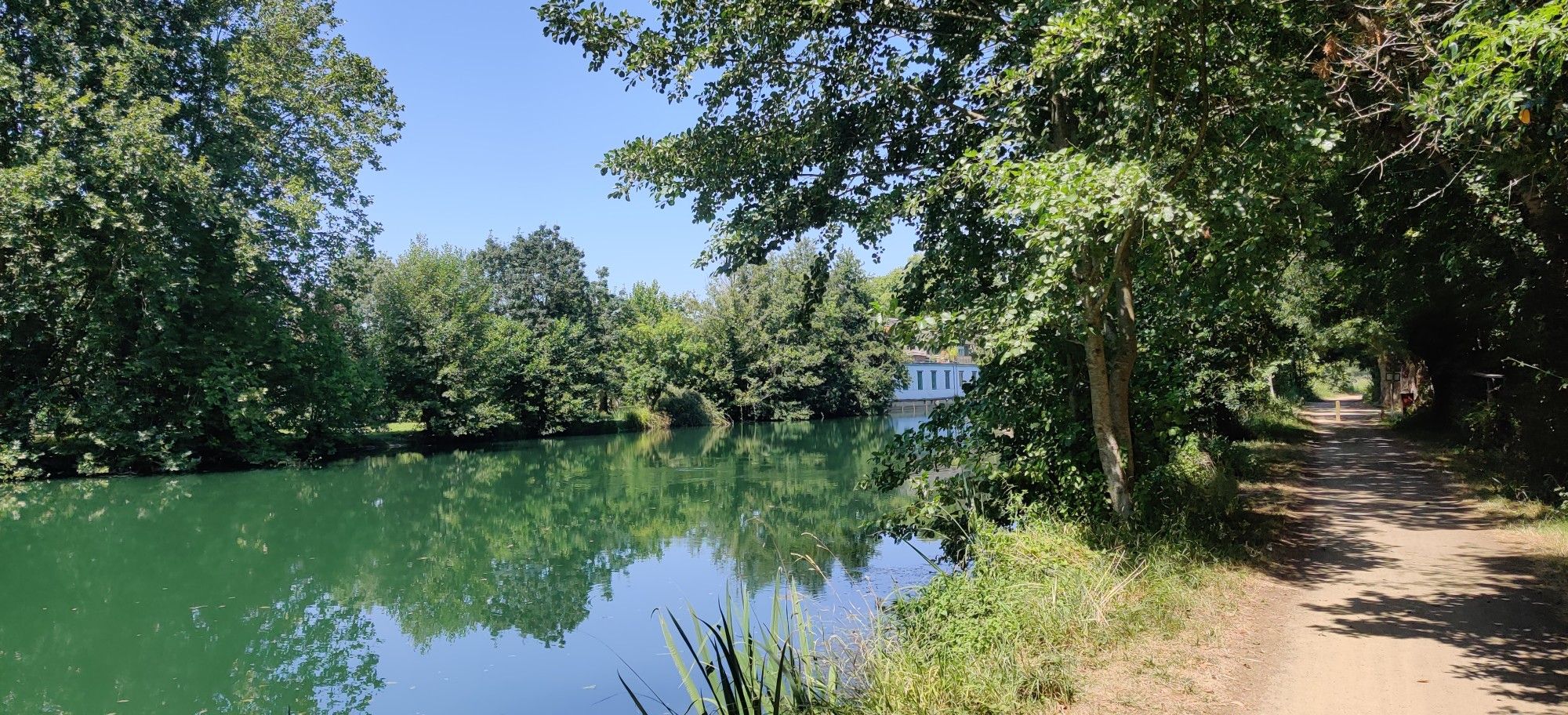
No traffic gravel bike trails around Argenton-L'Église traverse a landscape characterized by fertile plains and deep river valleys, shaped by the Argenton and Thouet rivers. These areas feature wooded banks and diverse terrain, offering varied surfaces for gravel biking. The region is also on the edge of the Loire-Anjou-Touraine Regional Natural Park, providing additional natural features.
Best no traffic gravel bike trails around Argenton-L'Église
- The most popular no traffic gravel bike trail is Saint-Médard Church of Thouars – Pont des Chouans on the Thouet loop from Thouars, a 58.0 miles (93.3 km) difficult trail that takes 6 hours 2 minutes to complete. This route explores the Thouet river valley, passing historical points of interest.
- Another top favourite among local gravel bikers is Ballastière Pond – Saint-Médard Church of Thouars loop from Mauzé-Thouarsais, a difficult 56.9 miles (91.6 km) path. This route offers views of the Ballastière Pond and the Thouet river, with varied terrain suitable for gravel bikes.
- Local gravel bikers also love the Saint-Médard Church of Thouars – Preuil Bridge on the Argenton River loop from Thouars, a 54.5 miles (87.8 km) trail leading through river valleys and past historical sites, often completed in about 5 hours 34 minutes.
- Gravel biking around Argenton-L'Église is defined by scenic river valleys, wooded areas, and agricultural plains. The network offers options for different ability levels, including easy, moderate, and difficult routes.
- The routes in Argenton-L'Église are highly rated by the komoot community with an average score of 5.0 stars from over 5 reviews. More than 200 gravel bikers have used komoot to explore Argenton-L'Église's varied terrain.
Last updated: May 23, 2026
5.0
(1)
45
riders
Hard gravel ride. Very good fitness required. Mostly paved surfaces. Suitable for all skill levels.
37
riders
Hard gravel ride. Very good fitness required. You may need to push your bike for some segments of this route.

Sign up for free
37
riders
Hard gravel ride. Very good fitness required. Mostly paved surfaces. Suitable for all skill levels.
35
riders
Hard gravel ride. Very good fitness required. Mostly paved surfaces. Suitable for all skill levels.
5.0
(2)
12
riders
Moderate gravel ride. Good fitness required. Mostly paved surfaces. Suitable for all skill levels.
Get access to more routes and recommendations from other explorers.
Sign up for free
Already have an account?
Our route recommendations are based on thousands of hikes, rides, and runs completed by other people on komoot.
Start today with a free account
Your next adventure awaits.
Login or Signup

Other adventures around Argenton-L'Église

Tips from the Community

The Church of Saint-Généroux is a site well worth a visit during a hike. It dates back to the 10th century and is considered one of the oldest churches in France, as it features pre-Romanesque architecture found nowhere else. The church is located on the banks of the Thouet River. You can also admire the Romanesque bridge (13th century).
0
0

The contemporary art center of national interest, La Chapelle Jeanne d’Arc de Thouars, is today a leading venue for contemporary art in the western region. Along with the Château d’Oiron and the Syndicat Mixte de la Vallée du Thouet, which runs a program of public commissions for contemporary works, the art center's work is carried out in partnership across the entire territory of the Pays Thouarsais community of communes and, more broadly, in the northern part of the Nouvelle-Aquitaine region. Within the region, the art center is a recognized player in the Astre plastic and visual arts network. Developing an artistic project that takes into account its geographical location and its architectural envelope, a neo-Gothic chapel, the art center maintains a privileged relationship with the heritage of Thouars. Guest artists, hosted for residencies or exhibitions, appropriate the chapel space by creating an original work designed for the venue. They also bring their perspective to the city, urban planning, landscape, and rural areas of the Thouars region and the Thouet Valley. Since 1993, nearly a hundred artists have been invited for residencies or exhibition projects. In recent years, the art center has paid particular attention to emerging artists from art schools, particularly those from the regional Le Grand Huit network. In addition to its programming, the art center also engages in outreach activities in the form of off-site exhibitions, workshops, and events (meetings, lectures, and workshops). A mobile device, La Mar(g)elle, was created in 2015 by the artist Marie-Ange Guilleminot to offer interventions in partner locations, particularly within schools and structures in the social and medical sectors. For its educational action, the art center benefits from the action of the municipal art school of Thouars, to which it is connected within the visual arts department of the City of Thouars.
0
0

As you probably know, in the year 732, the armies of Charles Martel repelled the Arab advance around Poitiers. A troop of routed Saracens then barricaded themselves in the old parish church of St Sauveur and promised to surrender only in the event of divine intervention. However, in this month of May, after nights of prayers by the villagers, a cold snap hit the Poitiers countryside to the point of covering the grove with an astonishing layer of frost. The Saracens saw the sign of Allah in this unexpected event and decided to leave the village without giving battle. This legend gave its name to the village and the church of the Holy Trinity became a place consecrated by the religious authorities of the region. The oldest parts of the building that stands today on the small village square date back to the 11th century, but the church had to undergo several restoration campaigns during the 19th century. It now appears to us as a fine example of a Romanesque church, simple, rustic and austere. Note the modern stained glass windows made in the 1990s by Louis-René Petit, an artist who also worked in Sénanque and St Benoît sur Loire. His compositions inspired by frost give the church an atmosphere in harmony with its legend.
1
0
Dating from the 13th century, at the foot of the city ramparts, this bridge ultimately offers the best view of the Château de Thouars.
0
0

This bridge allows you to cross the Thouet and reach Saint Jacques De Thouars. The view there is magnificent! There is a good hill to climb after the bridge, be careful when choosing the pinion!
1
0

Without the characteristic wings - which used to capture the power of the wind to set the heavy millstones in motion - the once proud windmill, which was certainly impressive at the time, is missing an essential architectural element. From a distance, the observer can see its modern successors: within sight of the former windmill, the slender towers and turbine blades of a modern wind farm, which is used to generate electricity, rise into the sky.
2
0
In the proverbial "good old days" of centuries past, this (former) windmill, standing in a very prominent position in the vast landscape, must have made a deep impression on the viewer. However, this changed a long time ago: the no longer intact tower stump is missing the wings, precisely those elements that were once so fundamental to the appearance of those four-armed giants (at least that is what the character "Don Quixote" invented by Miguel Cervantes thinks in one of the famous Spanish author's bizarre stories).
3
0

The Chouans bridge on the Thouet is a medieval bridge which crosses the Thouet river between Thouars and Saint-Jean-de-Thouars. The bridge was fortified in the 15th century and witnessed the passage of the Vendée army during the French Revolution. You can admire the architecture of the bridge which has two arches and triangular spouts on the piers. You can also enjoy the view of the river and the castle of the Dukes of La Trémoille on the hill. The bridge is classified as a historic monument and has been restored several times.
3
0
Frequently Asked Questions
How many no traffic gravel bike trails are available around Argenton-L'Église?
There are over 25 no traffic gravel bike trails around Argenton-L'Église, offering a wide range of options for exploration. The region is increasingly recognized for its gravel biking potential, with routes that combine quiet roads and natural paths.
What is the typical terrain like for no traffic gravel biking in this region?
The terrain around Argenton-L'Église is diverse, featuring fertile plains, deep valleys carved by the Argenton and Thouet rivers, and wooded banks. You'll encounter a mix of small, low-traffic roads, established cycling paths like the Vélo-Route La Vallée de l'Argenton, and natural trails, often without significant difficulty. The area is on the edge of the Loire-Anjou-Touraine Regional Natural Park, ensuring scenic and varied landscapes.
Are there any easy no traffic gravel bike routes suitable for beginners?
Yes, while many routes are moderate to difficult, there is at least one easy no traffic gravel bike route available. For instance, the region's landscape includes many small roads where traffic is minimal, making them ideal for those new to gravel biking or looking for a relaxed ride.
What natural features or landmarks can I expect to see on these no traffic gravel trails?
Many routes will take you through the picturesque Vallée de l'Argenton and along the Thouet River. A notable natural feature is the Pommiers Waterfall, nestled in a preserved green setting. You might also pass by the Ballastière Pond and various wooded areas, some of which are Natura 2000 sites.
Are there any historical sites accessible from the no traffic gravel routes?
Absolutely. The region is rich in history. You can often find routes that pass by impressive sites like the Montreuil-Bellay Castle, an impressive 15th-century castle along the Thouet River. The Saint-Médard Church of Thouars is another significant historical landmark you might encounter on routes such as the Saint-Médard Church of Thouars – Pont des Chouans on the Thouet loop from Thouars.
Are there circular no traffic gravel bike routes available?
Yes, many of the no traffic gravel bike routes in the area are designed as loops, allowing you to start and finish at the same point. Examples include the Ballastière Pond – Saint-Médard Church of Thouars loop from Mauzé-Thouarsais or the Saint-Médard Church of Thouars – Preuil Bridge on the Argenton River loop from Thouars.
Is public transport available to Argenton-L'Église for cyclists?
While Argenton-L'Église itself is a smaller commune, the wider Deux-Sèvres department has some regional transport options. However, bringing bikes on public transport can be limited. It's often more practical to travel by car to a starting point, especially given the rural nature of many gravel trails. Always check local transport provider websites for the most current information on bike carriage policies.
Are the no traffic gravel trails around Argenton-L'Église family-friendly?
Many of the routes, especially those utilizing small, low-traffic roads and established cycle paths, are suitable for families. The region's terrain often avoids significant difficulty, making it enjoyable for various skill levels. Always check the specific route details for elevation and distance to ensure it matches your family's capabilities.
Can I bring my dog on these no traffic gravel bike trails?
Generally, dogs are welcome on outdoor trails in France, especially in rural areas, provided they are kept under control, ideally on a leash, and you clean up after them. Some protected natural areas, like Natura 2000 sites, might have specific regulations, so it's always best to check local signage or park guidelines if you plan to enter such areas.
When is the best time of year to go gravel biking in Argenton-L'Église?
Spring and autumn are generally ideal for gravel biking in Argenton-L'Église. The weather is typically mild, and the natural scenery is at its most vibrant. Summer can also be pleasant, but it's advisable to start earlier in the day to avoid the midday heat. Winters are usually mild but can be wet, which might affect trail conditions.
What do other gravel bikers enjoy the most about gravel biking in Argenton-L'Église?
The area is highly rated by the komoot community, with an average score of 5.0 stars. Reviewers often praise the tranquility of the routes, the beautiful river valleys, and the opportunity to discover historical sites and charming villages away from heavy traffic. The varied terrain, combining quiet asphalt and natural paths, is also frequently highlighted as a major draw.
Most popular routes around Argenton-L'Église
Most popular attractions around Argenton-L'Église

Get inspired with the komoot mobile app


Explore more
Browse the best Gravel rides in other regions.
