The best traffic-free bike rides around Rioux
11
riders
3
rides
Gravel biking around Rioux offers diverse terrain and gentle undulations, making it suitable for various fitness levels. The region, located in the Charente-Maritime department of France, features altitudes ranging from 24 to 56 meters. Extensive forested areas like Forêt de Pons and Forêt de la Lande provide numerous shaded trails and unpaved paths ideal for quiet gravel cycling routes. Its proximity to the coast allows for routes that blend gravel paths with scenic views, connecting historical landmarks with varied terrain.
…Last updated: July 3, 2026
6
riders
48.2km
02:55
320m
320m
Moderate gravel ride. Good fitness required. Mostly paved surfaces. Suitable for all skill levels.
1
riders
17.7km
01:08
40m
40m
Easy gravel ride. Great for any fitness level. Mostly paved surfaces. Suitable for all skill levels.

Sign up for free
2
riders
43.7km
02:38
170m
170m
Hard gravel ride. Good fitness required. You may need to push your bike for some segments of this route.
2
riders
56.4km
03:24
340m
340m
Moderate gravel ride. Good fitness required. Mostly paved surfaces. Suitable for all skill levels.
Our route recommendations are based on thousands of hikes, rides, and runs completed by other people on komoot.
Start today with a free account
Your next adventure awaits.
Login or Signup
Popular around Rioux
Tips from the Community

In the heart of the singles of the forest of St Leger
0
0

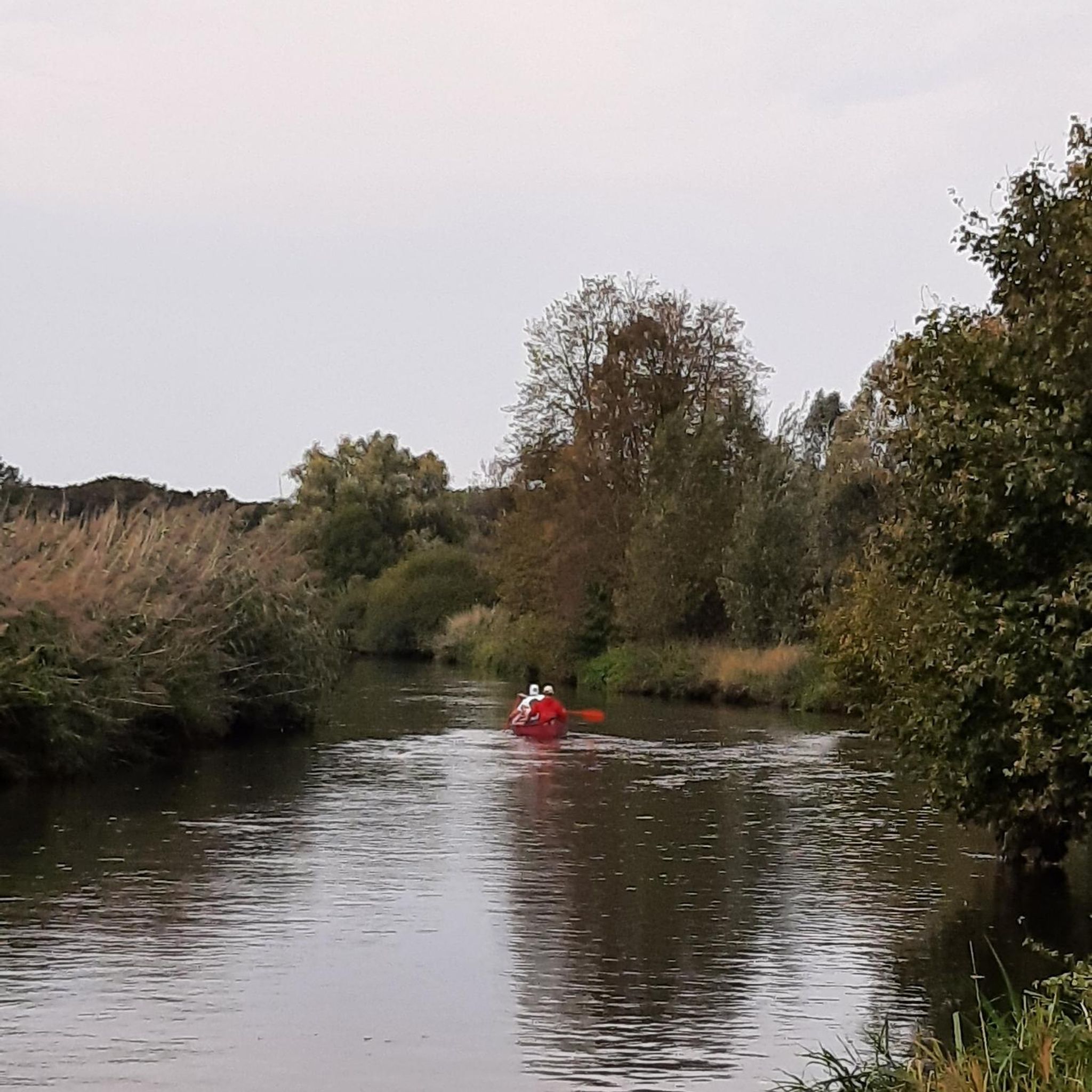
beautiful passages along the Charente with pretty monuments and small waterfront cafés in Port d’Envaux and Saintes.
0
0

Courcoury is a natural island surrounded by the Charente and Seugne rivers, giving it a unique landscape setting between marshes and waterways, conducive to biodiversity and outdoor activities. It is also the only village in Charente-Maritime to have been awarded 4 stars by the "Villes et villages étoilés" label, recognizing its efforts to reduce light pollution through intelligent and environmentally friendly public lighting.
1
0
The Gallo-Roman amphitheater of Sainte, also called the Arena of Saintes, is an elliptical monument built between 40 and 50 AD, probably during the reigns of Tiberius and Claudius. It measures approximately 126 meters by 102 meters and could accommodate between 12,000 and 15,000 spectators, making it one of the largest and oldest amphitheaters in Gaul. Located in a natural valley called the "Arènes valley," it takes advantage of the topography to limit construction work, with stands backing onto the hill. The site has two monumental gates, the "Gate of the Living" to the east and the "Gate of the Dead" to the west, and has been the subject of a major restoration project since 2021 to preserve this exceptional heritage. Accessible on foot from the city center, it offers an immersion in Roman history with an educational trail and activities for families
1
0

Parish church dedicated to Saint Lawrence, built in the 12th century. It opens with a semicircular doorway with three archivolts resting on sculpted capitals that have lost their columns. The doorway was narrowed by two jambs and an archivolt with prismatic moldings from the 15th or 16th century. The corners of the facade are each buttressed by a group of three large engaged columns, surmounted from the first entablature by five smaller columns bearing capitals decorated with vegetal motifs. Above the first entablature is a row of seven ogival openings, the columns of which have disappeared. A pediment with two ramps from the 17th century. Its facade is very interesting. A deep and vast portal with four arches occupies the entire ground floor. The archivolts are decorated with geometric motifs. On the first floor, a beautiful Romanesque arcading unfolds its seven arches supported by slender columns. A blunt gable pierced by a semicircular window and crossed by a cornice supported by modifications completes it. The square bell tower is placed along the north wall. It is adorned, between the first and second entablatures, on the west and north faces, with three arcading. Above the second entablature, it takes an octagonal shape supported by a sloped section. Amputated of its upper part, it has retained from the 12th century only its base, its square first floor with false semicircular windows, and its staircase tower is also square. The octagonal second floor, with its pointed roof, was rebuilt in the 17th century. The nave has three bays separated by strong half-engaged columns, but only the left wall survives from the original building. It is pierced by three undecorated Romanesque splayed windows; the semicircular vault is made of lightweight materials. A few Romanesque arches frame the false square, which, through a wide bay on the left, connects to the base of the bell tower. This space, covered by an octagonal dome on squinches, forms a porch. The apse with a straight wall, vaulted like the preceding bay and the nave, is lit by three modern bare windows. To the left, a slightly broken bay opens onto a rectangular chapel that follows the porch located under the bell tower. This chapel, also with a flat chevet, is lit by an axial window, unsculpted on the interior but beautifully decorated on the exterior. The church of Saint-Simon de Pellouaille suffered severe attacks during the Wars of Religion, attacks attested by traces of fire still visible at the base of the bell tower. In the 16th century, it lost its south wall, its apse, and the crown of its bell tower. In the nave, one can see a well-made painting and a curious stone font. Near the south wall, eight ancient burials were discovered at the beginning of the present century. The church was listed as a Historic Monument on September 19, 1923.
0
0


There are pretty singles in this forest
0
0

The Saint-Pierre Cathedral is located in the heart of the old town on the left bank of the Charente. According to tradition, the founding of this episcopal see goes back to Saint Eutrope. The construction of the first Christian building on the site of the current cathedral could not be dated with any precision. It probably dates back to the 6th century.
5
0
Frequently Asked Questions
How many no-traffic gravel bike trails are available around Rioux?
There are currently 4 curated no-traffic gravel bike trails around Rioux featured in this guide. These routes offer a range of distances and difficulties, ensuring a quiet and enjoyable ride away from vehicular traffic.
What are the difficulty levels of the no-traffic gravel bike trails near Rioux?
The no-traffic gravel bike trails around Rioux cater to various skill levels. You'll find options ranging from easy routes, such as the 'Village of Courcoury – Saint-Martin Church loop from Les Gonds', to more moderate and difficult trails for experienced riders seeking a challenge.
Are there any family-friendly no-traffic gravel bike trails in the Rioux area?
Yes, for families looking for a relaxed ride, the 'Village of Courcoury – Saint-Martin Church loop from Les Gonds' is an excellent choice. This easy 17.7 km route features minimal elevation gain, making it suitable for most ages and fitness levels, ensuring a pleasant, traffic-free experience for everyone.
What historical landmarks can I see along the no-traffic gravel bike trails?
Many routes in the Rioux area connect historical landmarks. For instance, the 'Cathedral of Saintes – Basilica of Saint-Eutrope loop from Thénac' takes you past significant sites like the Saint-Romain Church of Saint-Romain-de-Benet. The region is rich in monuments on French pilgrim routes, including Saintes Basilique St Eutrope and Pons Ancien Hôpital des Pèlerins, offering a blend of cycling and cultural exploration.
Are there any scenic viewpoints or natural features on these quiet gravel routes?
Absolutely. While Rioux is inland, its proximity to the coast means some routes offer a blend of gravel paths with scenic views, including features like Pointe de Suzac. The region also boasts extensive forested areas such as Forêt de Pons and Forêt de la Lande, providing shaded trails and natural beauty. The 'La Roche Madame Cave – La Salle Castle loop from Préguillac' offers a chance to explore natural and historical sites.
What is the best time of year to go gravel biking in Rioux to avoid traffic?
To enjoy the quietest experience, spring and autumn are generally ideal. The weather is pleasant, and tourist traffic is lower than in peak summer months. Winter can also offer serene rides, though some paths might be muddier. Always check local weather conditions before heading out.
Are there any challenging no-traffic gravel routes near Rioux for experienced riders?
Yes, for those seeking a more demanding ride, routes like the 'Crazannes Castle – Saint Saturnin of Séchaud loop from Puineuf' offer a significant challenge. This difficult 56.6 km route features over 330 meters of elevation gain, providing a rewarding experience for seasoned gravel bikers.
Where can I find parking for these no-traffic gravel bike trails?
Most of the routes start from small towns or villages like Thénac, Les Gonds, Préguillac, or Puineuf. These locations typically offer public parking facilities, often near the starting points of the trails. It's advisable to check local maps for specific parking areas before your ride.
Can I bring my dog on the gravel bike trails around Rioux?
While many natural areas in France are dog-friendly, it's always best to check specific regulations for each trail or protected area. Generally, dogs are welcome on leashes on public paths. Ensure your dog is comfortable with cycling and that you carry water for them, especially on longer rides.
Are there any charming villages or towns to explore near the gravel routes?
Yes, the region around Rioux is dotted with charming villages. Mornac-sur-Seudre, recognized as a 'Most Beautiful Village,' is a short distance away and offers a pleasant center to explore. Saint-Savinien, set on the banks of the Charente River, also provides an attractive stop. These towns often have local amenities like cafes and shops.
What kind of terrain can I expect on the no-traffic gravel bike trails in Rioux?
The terrain around Rioux is diverse, characterized by gentle undulations and altitudes ranging from 24 to 56 meters. You can expect a mix of unpaved paths through extensive forested areas like Forêt de Pons and Forêt de la Lande, as well as quieter country roads connecting historical sites. The varied terrain offers a rich experience for gravel riders.
Most popular attractions around Rioux

Get inspired with the komoot mobile app


Explore more
Browse the best Gravel rides in other regions.
