The best traffic-free bike rides around Pego
4.3
(264)
9,484
riders
21
rides
No traffic road cycling routes around Pego are situated in the Marina Alta region of Alicante, Spain, characterized by a diverse landscape that includes coastal plains, river valleys, and surrounding mountain ranges. The area features a mix of flat sections, gentle gradients, and demanding climbs, offering varied terrain for road cyclists. Pego is positioned about 15 kilometers inland, providing access to both agricultural areas and the foothills of the Migdia mountains. The region's geography supports a network of routes with…
Last updated: July 2, 2026
5.0
(1)
106
riders
56.7km
02:35
550m
550m
Moderate road ride. Good fitness required. Mostly well-paved surfaces and easy to ride.
39
riders
17.3km
00:44
50m
50m
Easy road ride. Great for any fitness level. Mostly well-paved surfaces and easy to ride.

Sign up for free
4.3
(4)
41
riders
Moderate road ride. Great for any fitness level. Some segments of this route may be unpaved and difficult to ride.
4.5
(2)
36
riders
27.6km
01:47
280m
280m
Easy road ride. Great for any fitness level. Mostly well-paved surfaces and easy to ride.
32
riders
47.6km
02:16
200m
200m
Moderate road ride. Good fitness required. Some segments of this route may be unpaved and difficult to ride.
Get access to more routes and recommendations from other explorers.
Sign up for free
Already have an account?
Our route recommendations are based on thousands of hikes, rides, and runs completed by other people on komoot.
Start today with a free account
Your next adventure awaits.
Login or Signup


Other adventures around Pego

Tips from the Community

The Church of Santa María la Mayor is one of the most emblematic monuments in Oliva and a magnificent example of Valencian architecture from the 17th and 18th centuries. Built on top of an old Gothic church, it combines Baroque and Neoclassical elements, highlighting its three naves, the bell tower, the Capilla del Rosario, and a spacious crypt located beneath the temple. Its interior, characterized by great sobriety and elegance, houses valuable pieces of goldsmithing and religious art, making it an essential visit for those who wish to discover the city's historical and cultural heritage.
13
0

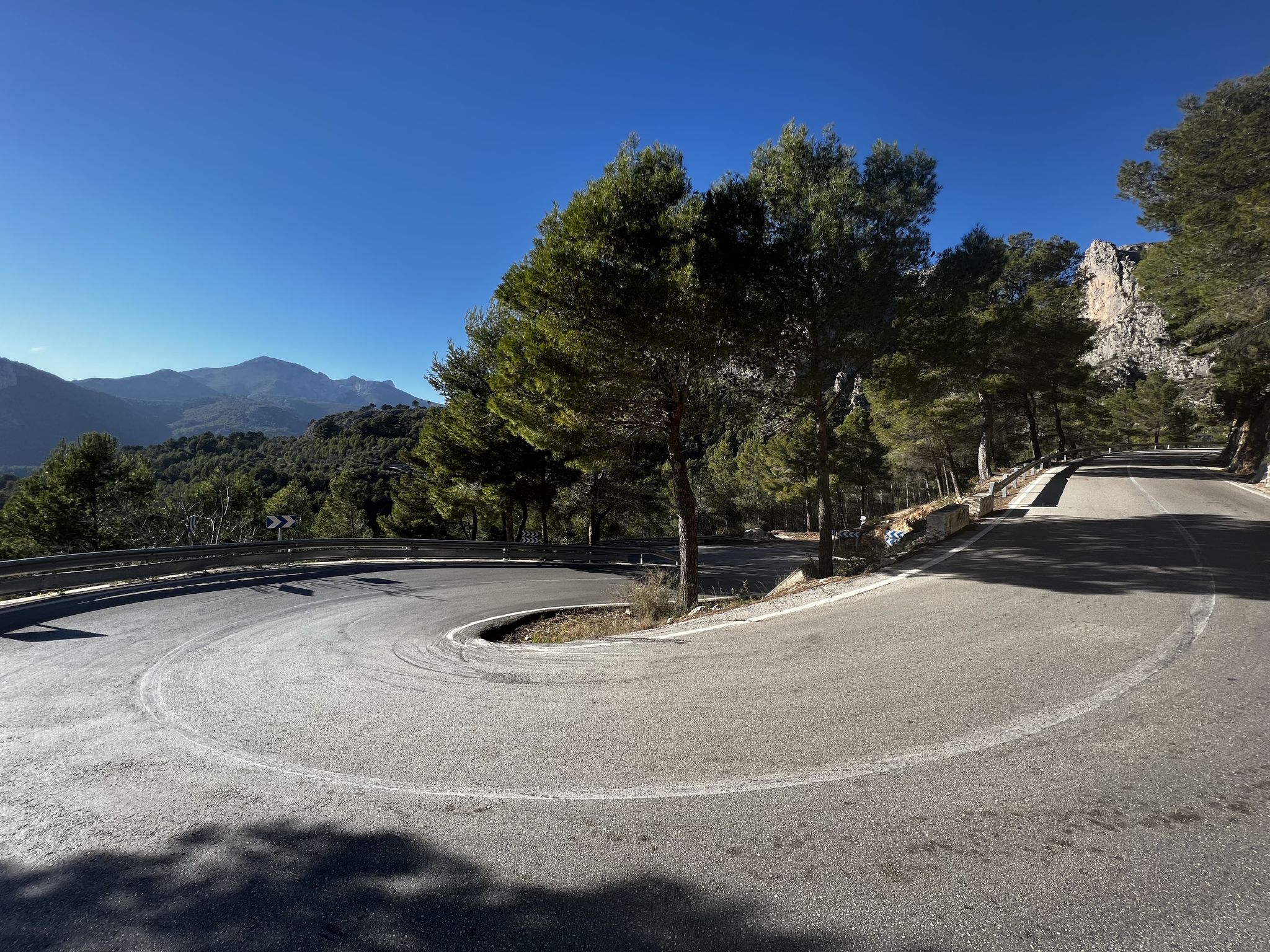
The port of Barx is a Valencian classic. Its horseshoe bends run over the panorama of the surrounding mountains and the Mediterranean coast.
3
0

The Palau del Duc ducal palace was built in the late Gothic and Renaissance style in the 16th and 17th centuries. Opening hours: Mon to Sat 10am–1.30pm and 3pm to 6.30pm (November to March) and 4pm to 7.30pm (April to October) and Sunday/public holiday 10am to 1.30pm.
1
0

From the bridge you have a beautiful view of the estuary, where the river meanders through reeds and dunes before flowing into the sea.
1
0

The ford was replaced by a "bridge".
1
0
Forna is a small, very quiet village in the municipality of L’Atzúbia, in the hinterland of the Costa Blanca. It lies nestled in a hilly, Mediterranean landscape characterized by orange groves and unspoiled valleys. With fewer than one hundred inhabitants, the village has an almost familial atmosphere and has retained its traditional, rural character: narrow streets, whitewashed houses, and flowers adorning doorways. Above the village rises the impressive Castillo de Forna, a fortified palace dating from the late Middle Ages. Its towers and walls define the village's appearance and are a reminder of the region's Moorish past. Later, the castle served as a lord's residence and remains a central landmark of Forna. The village's history stretches far back, as the area was already settled during the Islamic period. Even after the resettlement of new inhabitants in the 17th century, Forna remained a small, agricultural village that has preserved its historical structure. Visitors to Forna will experience a tranquil and charming place. The tranquility, the surrounding nature and the immediate proximity to the mountains make it an ideal destination for anyone seeking an authentic atmosphere and historical architecture away from mass tourism.
1
0
The Church of Santa María la Mayor in Gandia stands on the site of an earlier 13th-century temple, of which a Gothic chapel and a Mudéjar pointed arch still remain. In the 17th century, the Communion Chapel was added, and an initial remodeling project began, but remained unfinished. The bell tower was completed in 1695. Construction of the current church began in 1705 but was interrupted during the War of the Spanish Succession. In 1754, a large part of the roof, dome, and nave collapsed, necessitating further remodeling. Following the completion of this work, the church was consecrated in 1787. Today, Santa María la Mayor combines Gothic, Renaissance, and Baroque elements and represents both a spiritual center and an important testimony to the architecture and history of Gandia.
5
1
A tour to the mouth of the Río Molinell is particularly attractive, as the route is mostly flat and traffic-free. Starting from Dénia, for example, the route leads along quiet roads and coastal paths through the dune landscape of Les Marines. Shortly before the estuary, you pass the small bridge over the river, which allows a direct crossing and offers a beautiful view of the estuary. Here, where the river flows through reeds and dunes into the sea, fresh and salt water meet, creating a diverse landscape with rich birdlife. This section is ideal for a relaxing ride that combines nature experiences with coastal panoramas.
1
0
Frequently Asked Questions
How many no-traffic road cycling routes are available around Pego?
There are 15 dedicated no-traffic road cycling routes around Pego featured in this guide. These routes cater to various skill levels, with 5 easy, 9 moderate, and 1 difficult option to explore.
What kind of terrain can I expect on no-traffic road cycling routes in Pego?
Pego offers a diverse range of terrain, even on its quieter roads. You'll find everything from scenic valley rides and coastal views to routes winding through the Migdia mountains. While some routes feature gentle, consistent gradients, others, like those in the Vall de Gallinera, can include significant elevation gain, providing a good challenge with minimal traffic.
Are there any family-friendly no-traffic cycling routes in the Pego area?
Yes, Pego offers several easier routes suitable for families looking for a relaxed ride away from traffic. Options like the Nautilus Restaurant loop from Oliva, at 26.7 km with minimal elevation, provide a pleasant experience. The region also features parts of the Dénia to Gandía Greenway, known for its accessibility.
What are some notable natural features or landmarks I can see along these quiet cycling routes?
Many routes offer stunning views of the surrounding natural beauty. You might pass by the important wetlands of the Marjal de Pego-Oliva Natural Park, or enjoy panoramic vistas from points like Mirador de Cocoll. The region is also home to impressive mountain ranges like the Sierra de Segària and the Serra de la Foradà, which are often visible from the quieter roads. For a unique experience, consider visiting the Cave of the Skulls, which is accessible near some routes.
What is the best season for road cycling in Pego to avoid heavy traffic?
Pego is a cyclist's paradise year-round, but for optimal conditions with minimal traffic, spring and autumn are ideal. The weather is pleasant, and the natural landscapes, such as the cherry blossoms in Vall de la Gallinera during spring, are particularly beautiful. While professional teams train here in winter, the quieter roads remain accessible, offering a peaceful experience.
Are there any circular no-traffic road cycling routes around Pego?
Yes, many of the no-traffic routes around Pego are circular, allowing you to start and end at the same point. Examples include the Mouth of the Molinell River – Playa de Oliva loop or the more challenging La Llacuna – Puerto de l'Orxa - Alpatro loop. These loops are designed to maximize scenic views and minimize backtracking.
What do other road cyclists enjoy most about the no-traffic routes in Pego?
The komoot community highly rates the road cycling experience in Pego, with an average score of 4.4 stars from 193 ratings. Reviewers often praise the region's diverse landscapes, from challenging mountain climbs like Port d'Ebo with very little traffic, to scenic valley rides. The well-paved surfaces and the feeling of being immersed in nature away from cars are frequently highlighted.
Can I find routes that combine mountain views with coastal scenery while avoiding traffic?
Absolutely. Pego's unique location, about 15 kilometers inland, means many routes offer a fantastic blend of mountain and Mediterranean Sea views. You can cycle through valleys surrounded by peaks and then find yourself with glimpses of the coast, particularly on routes that venture towards Oliva. The Playa de Oliva – Mouth of the Molinell River loop is a great example of a moderate route offering such varied scenery.
Are there any challenging no-traffic road cycling routes for experienced cyclists?
Yes, for experienced cyclists seeking a challenge, there are routes with significant elevation gain and demanding sections, even on quieter roads. The La Llacuna – Puerto de l'Orxa - Alpatro loop from Oliva is classified as difficult, covering nearly 57.5 km with over 960 meters of ascent. The region is known for iconic climbs like Coll de Rates and Port d'Ebo, which, when approached from Pego, offer scenic, low-traffic ascents.
Where can I park my car when accessing these no-traffic cycling routes in Pego?
While specific parking facilities for each route trailhead are not detailed here, Pego and its surrounding towns like Oliva offer various public parking options. Many routes, such as those starting from Oliva, are easily accessible from town centers where parking is typically available. It's advisable to check local parking regulations upon arrival.
Are there any long-distance no-traffic road cycling routes in the Pego area?
Yes, Pego offers several longer routes that minimize traffic exposure. For instance, the Mouth of the Molinell River – Greenway of Safor loop extends over 63.5 km, providing a substantial ride through varied landscapes. These longer routes often connect different valleys and natural areas, ensuring a sustained, peaceful cycling experience.
Most popular attractions around Pego

Get inspired with the komoot mobile app


Explore more
Browse the best Road cycling routes in other regions.
