The best traffic-free bike rides around Castronuño
4.1
(6)
62
riders
5
rides
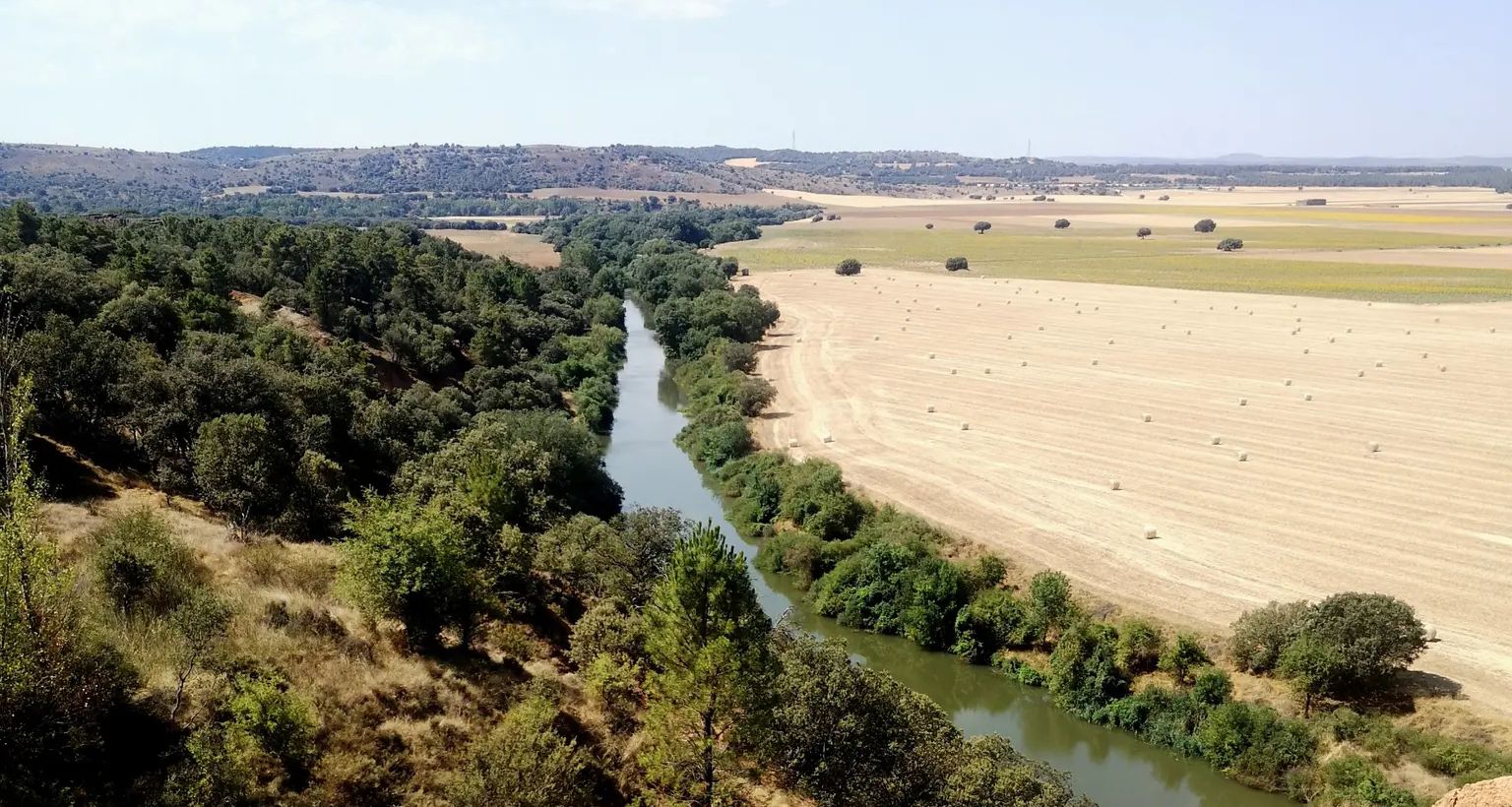
No traffic touring cycling routes around Castronuño are primarily defined by the Duero River and its associated natural landscapes. The region features the Riberas de Castronuño - Vega del Duero Natural Reserve, a protected wetland ecosystem formed by the San José reservoir. Cyclists can expect to navigate paths alongside riparian forests, pine forests, and areas with holm oaks, offering varied terrain with moderate elevation changes.
Best no traffic touring cycling routes around Castronuño
- The most popular no traffic touring cycling route is Viewpoint – San José Dam loop from Castronuño, a 30.9 miles (49.8 km) trail that takes 4 hours 11 minutes to complete. This route offers views of the Duero River and the San José dam.
- Another top favourite among local touring cyclists is Historic Center of Tordesillas – Tordesillas Historic Center loop from Pollos, a moderate 37.4 miles (60.2 km) path. This route provides scenic views along the Duero River and passes through varied landscapes.
- Local touring cyclists also love the Viewpoint loop from Castronuño, a 22.0 miles (35.4 km) trail leading through the natural reserve, often completed in about 2 hours 59 minutes.
- Touring cycling around Castronuño is defined by the Duero River, extensive riparian forests, and panoramic viewpoints over the natural reserve. The network offers options for moderate and difficult ability levels.
- The routes in Castronuño are highly rated by the komoot community with an average score of 3.8 stars from 6 reviews. More than 50 touring cyclists have used komoot to explore Castronuño's varied terrain.
Last updated: July 2, 2026
5.0
(2)
16
riders
Moderate bike ride. Good fitness required. Mostly paved surfaces. Suitable for all skill levels.
5.0
(1)
14
riders
59.0km
04:06
230m
230m
Moderate bike ride. Good fitness required. Mostly paved surfaces. Suitable for all skill levels.

Sign up for free
4.0
(1)
5
riders
49.8km
04:11
390m
390m
Moderate bike ride. Good fitness required. Mostly paved surfaces. Suitable for all skill levels.
4
riders
Hard bike ride. Very good fitness required. Mostly paved surfaces. Suitable for all skill levels.
3
riders
35.4km
02:59
250m
250m
Moderate bike ride. Good fitness required. Mostly paved surfaces. Suitable for all skill levels.
Our route recommendations are based on thousands of hikes, rides, and runs completed by other people on komoot.
Start today with a free account
Your next adventure awaits.
Login or Signup
Popular around Castronuño
Other adventures around Castronuño

Tips from the Community

Declared a Site of Cultural Interest (BIC) on December 7, 1983, this church is located in the heart of Tordesillas (Valladolid), one of the town's most iconic landmarks and the largest in the entire municipality. It is believed to have been built on the site of the former Tordesillas mosque. The main construction took place between the 16th and 17th centuries, with additions continuing into the 18th century. The church combines Gothic elements (the apse and the lower sections of the tower) with Neoclassical renovations inspired by El Escorial. Today, it serves as the headquarters for several Holy Week brotherhoods, housing processional floats such as the Virgin of Solitude and the Christ of Mercy.
5
0
It was built between the late 12th and early 13th centuries by Commander Fernán (Hernán) Rodríguez de Valbuena, becoming a funerary chapel for the Order. For centuries, it served as a fortified church overlooking the Duero River, and was linked to the now-vanished castle and other medieval chapels in the town. It suffered several collapses in the 19th and 20th centuries, until the original ruins had practically disappeared; the current structure is the one dedicated to Santa María del Castillo (Saint Mary of the Castle).
4
0
Hermitage of Santa María del Castillo (also known as the Hermitage of Santo Cristo or the Church of the Order of Saint John) in Castronuño: Located on Alto de la Muela, on the banks of the Duero River in Castronuño (Valladolid). A medieval building originally linked to the Military and Hospitaller Order of Saint John of Jerusalem, which established a commandery here.
4
0

The building, constructed between the 16th and 18th centuries, began in the Gothic style and finished in the Neoclassical. Another striking feature is its tower, the tallest in the city. The Baroque-era organ is considered one of the finest in the region, both for its design and its state of preservation.
6
0
The medieval bridge over the Duero River, with its perfectly aligned arches, connects the historic center to the opposite bank. The monumental skyline of Tordesillas, highlighting the Plaza Mayor, the Casas del Tratado (Houses of the Treaty), and the Monastery of Santa Clara, all framed by reddish rooftops and the silhouette of the Church of San Antolín. The Duero River winds beneath the bridge, its reflections shifting with the changing light, creating a highly photogenic scene. Natural surroundings: riverside vegetation and, in autumn, golden hues that enhance the scenery.
6
0
The view of the Stone Bridge and Tordesillas from the viewpoint on Avenida de Portugal is considered one of the most beautiful panoramas of the town.
6
0
The historic center of Tordesillas is one of the most emblematic ensembles in Castile and León, steeped in history and traditional architecture. Here are the main points of interest: Treaty Houses and Treaty Museum The famous Treaty of Tordesillas (1494), which divided the lands of the New World between Spain and Portugal, was signed here. The museum includes original documents, antique maps, and scale models. Santa Clara Monastery A National Monument since 1931. A prime example of Mudéjar architecture, originally a 14th-century royal palace. It houses a church and a museum with historical artifacts. San Antolín Church Museum A 16th-17th century Gothic church. Works by Juan de Juni, Pedro de Mena, and Gregorio Fernández. Main altarpiece and Baroque sculptures. Plaza Mayor (Main Square) The heart of the town, surrounded by arcades and traditional architecture. A venue for markets and historical celebrations.
6
0

You can cross over the dam without any danger, it is a road with little traffic...
0
1
Frequently Asked Questions
How many no-traffic touring cycling routes are available around Castronuño?
There are 5 dedicated no-traffic touring cycling routes around Castronuño, ranging from moderate to difficult. These routes are designed to offer a peaceful cycling experience away from vehicular traffic.
Are there any circular no-traffic touring cycling routes in Castronuño?
Yes, several routes are circular, allowing you to start and end in the same location. For example, the Viewpoint – San José Dam loop from Castronuño is a moderate 49.8 km route that offers scenic views. Another option is the Viewpoint loop from Castronuño, a moderate 35.4 km ride.
What natural attractions or viewpoints can I expect to see on these routes?
The no-traffic routes in Castronuño offer stunning natural beauty, primarily centered around the Riberas de Castronuño - Vega del Duero Natural Reserve. You can expect panoramic views of the Duero River and its unique U-shaped meander from the View of the Duero River Meander from La Muela Park and the Hermitage of the Holy Christ of La Muela. The San José Dam is also a prominent feature, creating a vital wetland ecosystem.
What is the best season for no-traffic touring cycling in Castronuño?
The best seasons for touring cycling in Castronuño are typically spring (April to June) and autumn (September to October). During these months, the weather is generally mild and pleasant, with less extreme heat than summer and fewer cold temperatures or heavy rains than winter. This allows for comfortable exploration of the natural reserve and its riparian forests.
Are there any specific dedicated cycling paths or long-distance trails in the area?
Yes, the region features segments of the **GR-14 Senda del Duero**, a long-distance trail that follows the Duero River, offering close-up views and opportunities for birdwatching. Additionally, the **Ruta de los Almendros** (Almond Tree Path) is a shorter, scenic path showcasing diverse ecosystems, and the **Ruta de la Cañada** is suitable for both walking and cycling, known for bird observation.
Where can I find parking for these no-traffic cycling routes?
Parking is generally available in Castronuño village, particularly near the Casa de la Reserva Natural, which serves as a visitor center for the natural reserve. From there, you can easily access many of the local cycling routes. For routes starting further afield, such as those near Tordesillas, parking options will be available in those respective towns.
Is Castronuño accessible by public transport for cyclists?
While Castronuño is a smaller town, it can be accessed by regional bus services from larger nearby cities like Valladolid. However, public transport options specifically designed to accommodate bicycles might be limited. It's advisable to check local bus schedules and policies regarding bicycle transport in advance if you plan to use public transport.
What do other touring cyclists enjoy most about cycling in Castronuño?
The area is highly rated by the komoot community, with an average score of 3.8 stars. Reviewers often praise the tranquility of the routes, the stunning natural landscapes of the Duero River and its reserve, and the opportunity for birdwatching. The well-maintained paths and the absence of traffic are frequently highlighted as key enjoyable aspects.
Are there places to stop for refreshments or food along the no-traffic routes?
While the routes themselves are designed to be traffic-free, you will find amenities in the main towns and villages you pass through or start from, such as Castronuño or Tordesillas. It's recommended to carry sufficient water and snacks, especially on longer stretches, as cafes or shops might not be directly on the more secluded parts of the routes.
Are there any routes suitable for beginners or families with children?
While the guide primarily features moderate to difficult routes, the region offers paths like the Ruta de los Almendros (3.4 km) and Ruta de la Cañada, which are generally flatter and shorter, making them more suitable for beginners or families looking for an easier, traffic-free experience. These paths allow for a relaxed pace to enjoy the natural surroundings.
Can I learn more about the natural reserve while cycling?
Absolutely! The Riberas de Castronuño - Vega del Duero Natural Reserve is a key feature of the area. You can visit the Casa de la Reserva Natural visitor center in Castronuño, which provides information about the local flora and fauna, and even has an observatory for birdwatching. Many routes pass through or alongside the reserve, offering direct engagement with its unique ecosystems.
Most popular routes around Castronuño
Most popular attractions around Castronuño

Get inspired with the komoot mobile app


Explore more
Browse the best Cycling routes in other regions.
