The best traffic-free bike rides around Les Masies De Roda
4.5
(217)
6,564
riders
400
rides
No traffic touring cycling routes around Les Masies De Roda traverse a landscape shaped by the Ter River, offering a mix of flat plains and undulating reliefs. The region is characterized by the sinuous meanders of the Ter River, the gentle expanse of the Plana de Vic, and the more challenging terrain of the Collsacabra foothills. This diverse geography provides varied cycling experiences, from riverside paths to routes exploring the natural features of the Espai Natural de les Guilleries-Savassona.
Best…
Last updated: October 18, 2026
4.9
(14)
35
riders
25.7km
02:00
270m
270m
Moderate bike ride. Good fitness required. Mostly paved surfaces. Suitable for all skill levels.
4.7
(3)
36
riders
34.7km
03:28
910m
910m
Hard bike ride. Very good fitness required. You may need to push your bike for some segments of this route.

31
riders
31.1km
02:43
500m
500m
Hard bike ride. Very good fitness required. Mostly paved surfaces. Suitable for all skill levels.
5.0
(1)
26
riders
49.1km
04:35
990m
990m
Hard bike ride. Very good fitness required. Mostly paved surfaces. Suitable for all skill levels.
3.0
(3)
10
riders
15.2km
01:04
110m
110m
Easy bike ride. Great for any fitness level. Mostly paved surfaces. Suitable for all skill levels.
Get access to more routes and recommendations from other explorers.
Already have an account?
Our route recommendations are based on thousands of hikes, rides, and runs completed by other people on komoot.
Start today with a free account
Your next adventure awaits.


Other adventures around Les Masies De Roda

Tips from the Community

The Parish Church of Santa María de Corcó (also known as the parish church of Santa Maria del Corcó) is the main temple of the municipality of **L'Esquirol** (historically known as Santa Maria de Corcó), located in the region of Osona (Barcelona). ### Characteristics and history * **Baroque origin:** The current building mainly dates from the 17th and 18th centuries, although it replaced a previous medieval temple. * **Reconstruction:** It was largely destroyed during the Civil War and was subsequently rebuilt, retaining its monumental structure dominating the town center. * **Strategic location:** It is located next to the Passeig de les Gorgues and the Sant Bartomeu stream area, a usual starting point for routes towards La Foradada de Cantonagròs and the Collsacabra area.
0
0

Cruza la riera de les Gorgues por este puente medieval, integrado en el antiguo camí ral entre Olot y Vic, por donde el tránsito ha pasado durante siglos. El puente se encuentra al final del carrer del Pont, una de las calles más características de l’Esquirol, marcada por su fuerte pendiente.
0
0

The Mother of God depicted and venerated here is the Virgin Mary of Lourdes. This well-known Marian pilgrimage site is located in the French Pyrenees and is visited annually by large numbers of people, including many sick people hoping for healing. The devotional image of the Mother of God has become widespread – not only in France – with believers building Lourdes chapels and grottos everywhere. The church feast day of "Our Lady of Lourdes" is February 11th, the anniversary of the Marian apparition (1858), when the Mother of God appeared to 14-year-old Bernadette Soubirous in a rock grotto very close to Lourdes. Bernadette later became a nun and died at the age of just 35. On December 8th (the Feast of the Immaculate Conception of Mary), 1933, she was canonized by Pope Pius XI. The commemoration of the Madonna of Lourdes is also World Day of the Sick.
0
0


The Pont Vell de Roda or old bridge of Roda is of medieval origin. In 1652 it was restored and in 1876 the arches were added. It has always been significant that a church was built on each side of the bridge: the church of Sol del Pont and the church of Sant Pere.
1
0

The Puig-agut Sanctuary is a beautiful hermitage with a lot of history. The architecture and landscape are different from most of what you can see in Catalunya. Very interesting.
3
0

Although the primitive parish church, documented in the 10th century, was located in the Bertrana farmhouse, the current parish church of Santa Maria del Corcó corresponds to the baroque building built in the 18th century in the new town of l'Esquirol born near the old royal road from Vic to Olot as a result of the population growth experienced in the area. Church of a single nave with chapels on the side walls. The nave is very spacious and the presbytery is covered with a cross vault. At the foot of the nave is the choir, decorated with paintings except for the ceiling. On the facade we find a rectangular entrance portal with stone framing, flanked by single niches with the figures of Saint Joaquim and Saint Anne. A circular oculus opens above. A triangular capcer ends the facade. The bell tower rises at the north end of the building. The primitive parish temple was built between 1721 and 1743 under the supervision of Josep Moretó, and twenty years later its tower bell tower with a viewpoint and ogival openings that frame the bells, the only surviving element of the temple after the Civil War of 1936-1939. The current parish church responds to the reconstruction carried out by the architect Josep Mª Pericas from 1940.
2
0
It is a very scattered neighborhood, located at the foot of the Serra de Cabrera, made up of isolated farmhouses, grouped around what used to be its parish: the church of St. Julià de Cabrera and del Prat de St. Julian The church of St. Julià dates from 1050, and had to be modified after the earthquakes of 1428. Two apses remain from the original work. From here many paths lead to the sanctuary of Our Lady of Cabrera, a hermitage that collapsed in 1428 and was raised again in 1611 and subsequently modified in the 18th century. It is located right at the top of the Serra de Cabrera (1311 m) so it can be considered a privileged vantage point for both Osona and Garrotxa. They remain at the top of the Serra de Cabrera, vestiges of what had been the Cabrera castle, cradle of the Cabrera lineage.
2
0
Frequently Asked Questions
How many no-traffic touring cycling routes are available in Les Masies de Roda?
Les Masies de Roda offers a wide selection of no-traffic touring cycling routes, with over 350 options available. This includes routes of varying difficulty levels, ensuring there's something for every cyclist.
Are there easy no-traffic touring routes suitable for beginners or casual rides?
Yes, the region provides several easy no-traffic touring routes perfect for beginners or those seeking a relaxed ride. You can find 28 such routes, often utilizing the flatter sections near the Ter River or dedicated greenways like the "Via verda de les Masies" mentioned in local research.
What about more challenging no-traffic touring routes for experienced cyclists?
For experienced cyclists looking for a challenge, Les Masies de Roda has over 200 difficult no-traffic touring routes. These often venture into the more undulating terrain of the Collsacabra area, offering significant elevation gains. An example is the Church of Santa Maria de Corcó loop from Sant Pere de Casserres, which features substantial climbing.
What natural features or historical sites can I see along these no-traffic routes?
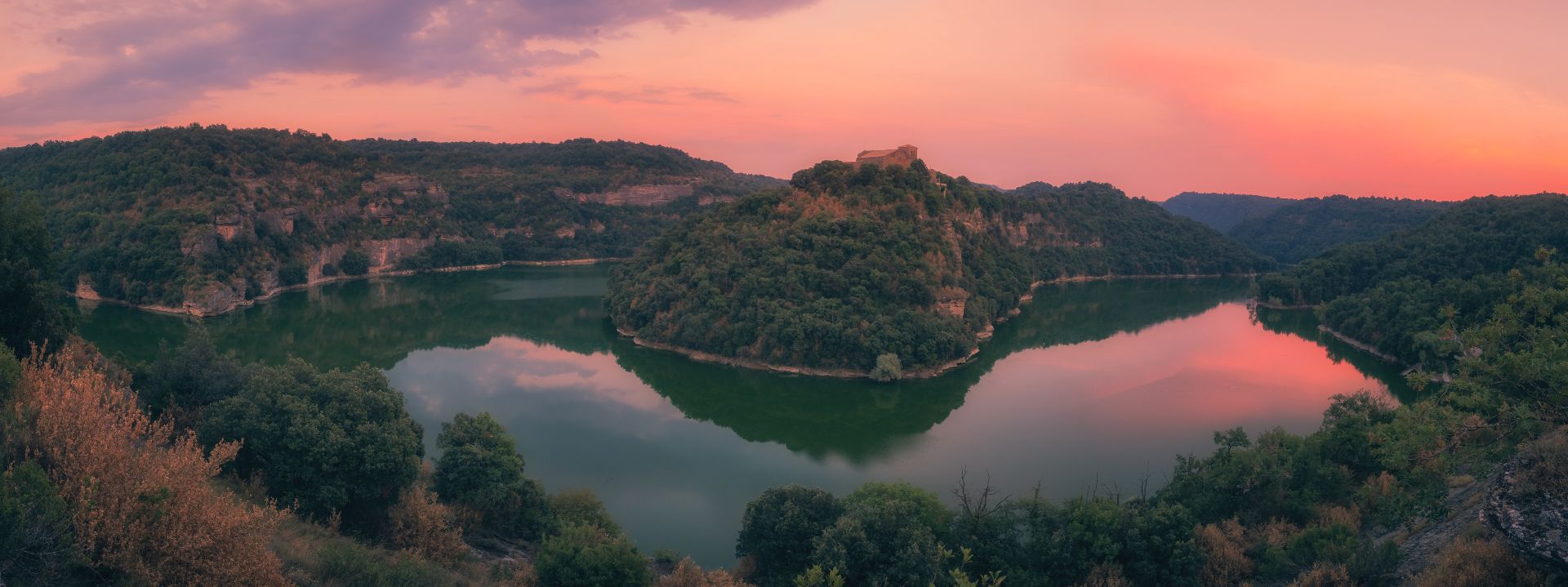
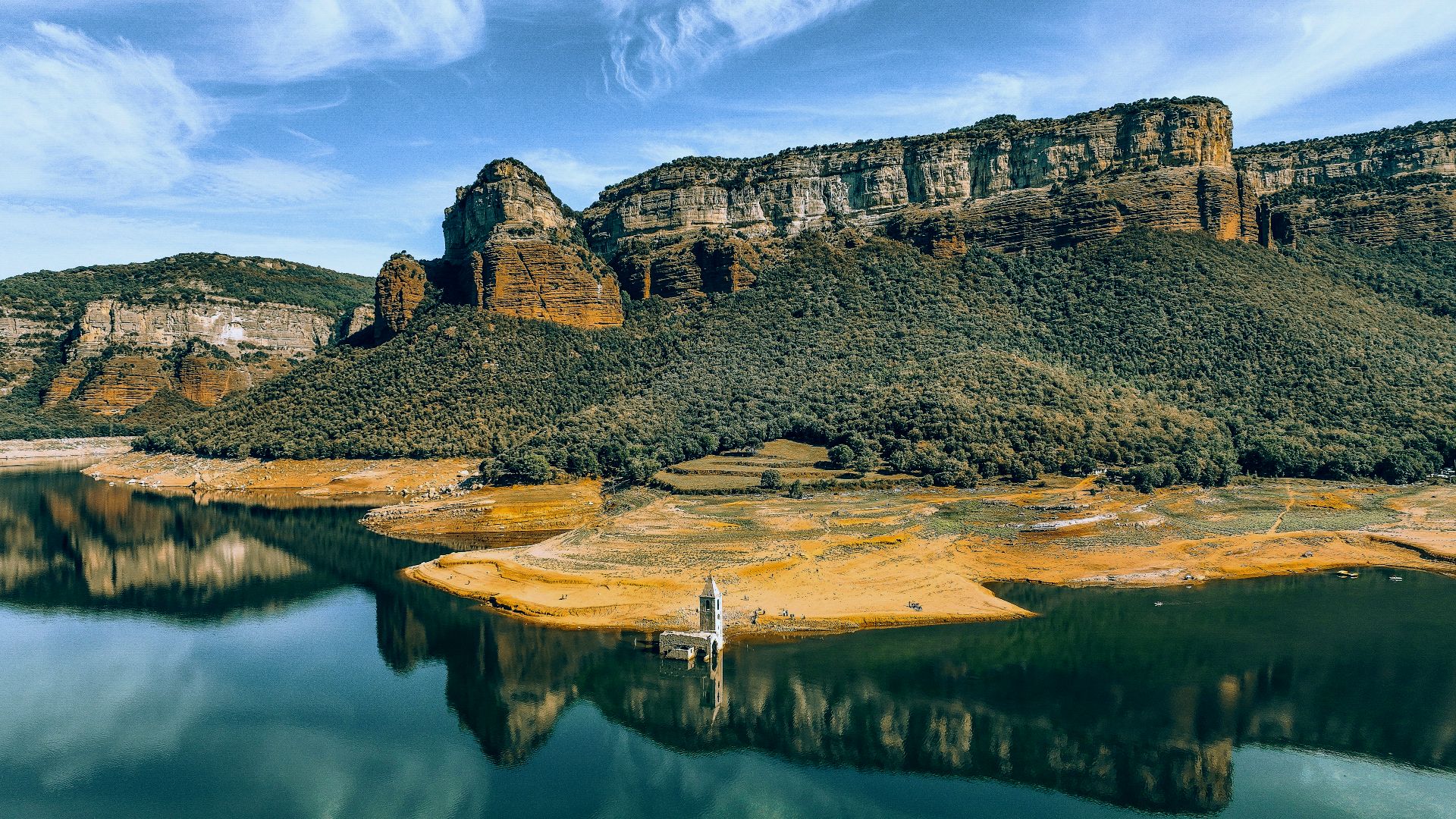
The no-traffic routes in Les Masies de Roda are rich in natural beauty and historical landmarks. You can cycle past the dramatic meanders of the Ter River, explore the Espai Natural de les Guilleries-Savassona, or visit historical sites. Notable attractions include the uniquely situated Sant Feliuet de Savassona Hermitage and the ancient ruins of L'Esquerda. Many routes also offer stunning viewpoints like the View of the Pantà de Sau reservoir from Morro de l'Abella.
Are there any no-traffic routes that pass by waterfalls?
Yes, several no-traffic touring routes in the area allow you to experience beautiful waterfalls. You might encounter the impressive La Foradada Waterfall and Mill or the scenic Sallent Waterfall. These natural highlights are often integrated into longer tours, providing picturesque stops.
Are the no-traffic touring routes in Les Masies de Roda suitable for families?
Many no-traffic touring routes in Les Masies de Roda are suitable for families, especially those utilizing the flatter sections and dedicated cycling paths like the "Via verda de les Masies." These routes offer a safe and enjoyable environment away from vehicle traffic, allowing families to cycle together comfortably. Look for routes categorized as 'easy' for the most family-friendly options.
Can I bring my dog on these no-traffic cycling tours?
While many outdoor areas in Catalonia are dog-friendly, specific rules can vary for cycling routes and natural parks. Generally, dogs are welcome on trails if kept on a leash. It's advisable to check local regulations for specific sections, especially within protected natural areas like Espai Natural de les Guilleries-Savassona, to ensure a smooth trip with your canine companion.
Are there circular no-traffic touring routes available?
Yes, many of the no-traffic touring routes in Les Masies de Roda are designed as circular loops, allowing you to start and end at the same point. An example is the Ter Promenade – Santuario de Puig-agut loop from les Masies de Roda, which offers a moderate ride through varied landscapes.
Where can I park my car when starting a no-traffic touring cycling route?
Les Masies de Roda, being a cycling-friendly area, offers various parking options. You can typically find parking in the town center or near popular trailheads. For routes starting from specific points, check the route details on komoot for recommended parking areas. The town itself is described as easily traversable, making it a good starting point for explorations.
What do other touring cyclists enjoy most about touring cycling in Les Masies de Roda?
The komoot community highly rates the touring cycling experience in Les Masies de Roda, with an average score of 4.57 stars. Reviewers often praise the diverse landscape, from the flat plains to the challenging ascents, and the blend of natural beauty with historical landmarks. The presence of no-traffic routes is particularly appreciated for a peaceful and immersive cycling experience.
What is the best time of year to cycle the no-traffic touring routes in Les Masies de Roda?
The diverse climate of Les Masies de Roda makes it suitable for cycling for much of the year. Spring and autumn offer pleasant temperatures and vibrant scenery, ideal for longer tours. Summer can be warm, but early mornings or routes with shade along the Ter River are enjoyable. Winter cycling is also possible, especially on lower elevation routes, though some higher trails might be cooler.
Most popular routes around Les Masies De Roda
Most popular attractions around Les Masies De Roda

Get inspired with the komoot mobile app


Explore more
Browse the best Cycling routes in other regions.
