Villarcayo De Merindad De Castilla La Vieja
Villarcayo De Merindad De Castilla La Vieja
The best traffic-free bike rides around Villarcayo De Merindad De Castilla La Vieja
4.8
(77)
1,047
riders
19
rides
No traffic touring cycling routes around Villarcayo De Merindad De Castilla La Vieja traverse a diverse landscape shaped by the Cantabrian Mountains and rivers like the Ebro, Nela, and Trema. The region features a blend of rolling hills, river valleys, and historic villages, offering varied terrain for cyclists. This area, recognized as a "Territorio Ciclista," provides extensive routes on both paved surfaces and greenways. Cyclists can explore green scenery contrasting with ochre tones, passing through areas with waterfalls and ancient…
Last updated: July 15, 2026
4.3
(3)
18
riders
Moderate bike ride. Good fitness required. Mostly paved surfaces. Suitable for all skill levels.
5.0
(1)
7
riders
21.0km
01:20
120m
120m
Easy bike ride. Great for any fitness level. Mostly paved surfaces. Suitable for all skill levels.

Sign up for free
8
riders
Easy bike ride. Great for any fitness level. Mostly paved surfaces. Suitable for all skill levels.
5.0
(1)
5
riders
Easy bike ride. Great for any fitness level. Mostly paved surfaces. Suitable for all skill levels.
5
riders
Hard bike ride. Good fitness required. You may need to push your bike for some segments of this route.
Get access to more routes and recommendations from other explorers.
Sign up for free
Already have an account?
Our route recommendations are based on thousands of hikes, rides, and runs completed by other people on komoot.
Start today with a free account
Your next adventure awaits.
Login or Signup
Popular around Villarcayo De Merindad De Castilla La Vieja

Other adventures around Villarcayo De Merindad De Castilla La Vieja

Tips from the Community

carry water, but go to a village to the fountain and if possible don't go on a very sunny day...
0
0

A surprising historic center in Medina de Pomar. It's worth leaving the greenway or the road to stroll through its streets.
0
0


The greenway bridge is already finished, but if you can get out to see the bridge, do so; it's worth it, it's very cool.
1
0

And there is a fountain!!
0
0

Tried to get it going.... Greetings from Lukas 🤪
0
0

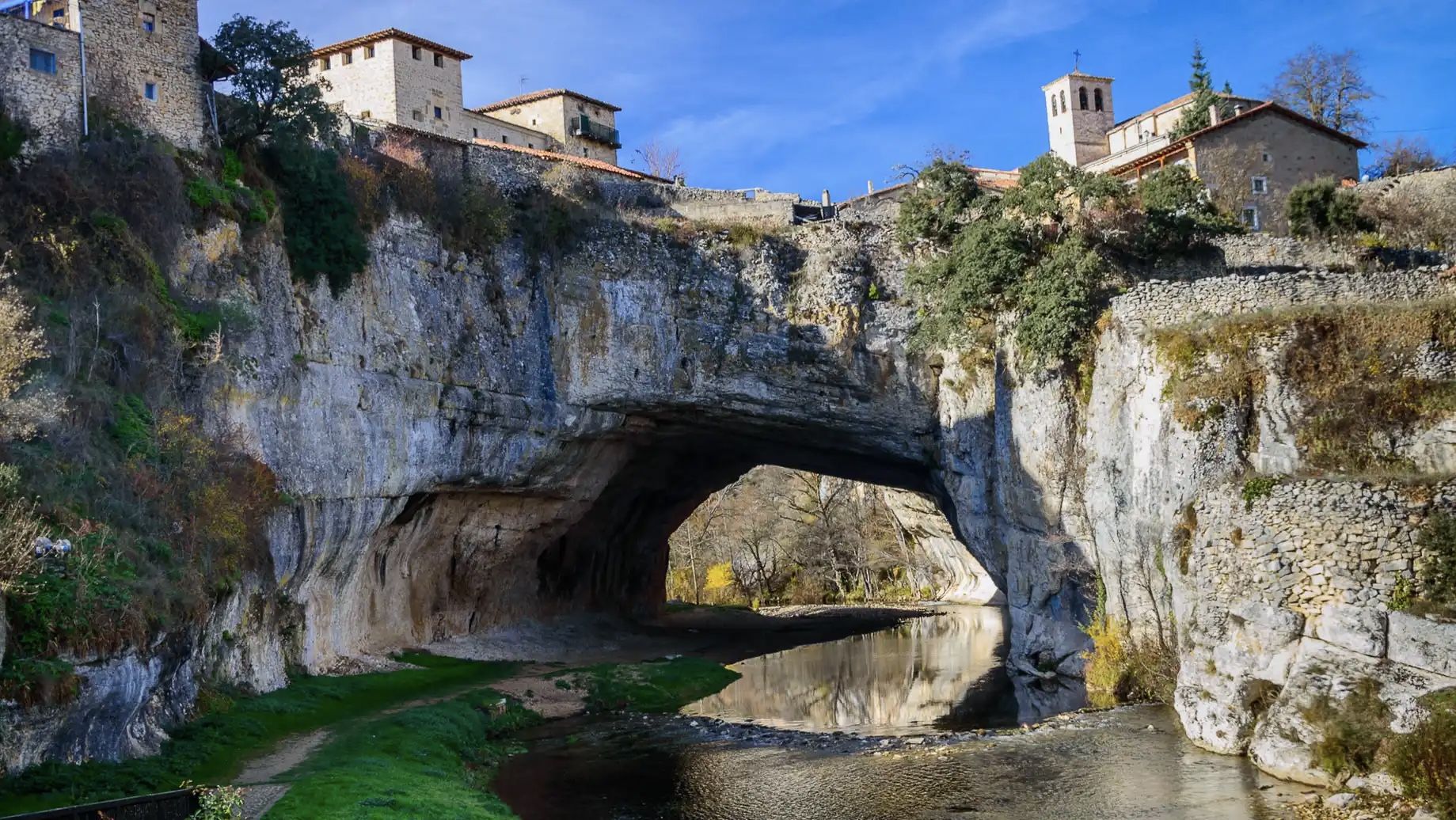
Stage 2. Villarcayo/Trespaderne 97 kilometers. 1,370 positive meters. In the old Villarcayo-Horna station there are many remains and curiosities of the railway heritage of the old Santander-Mediterranean line; an old machine parked next to the track, the water tanks, the platforms, the point changes and the buildings attached to the railway service dismantled in 1985. The Natural Trail continues through Cigüenza, with a new bridge over the Nela, and continues through a fantastic valley crossing the meanders of the Nela through Tubilla, Escanduso and Escaño to the curious railway station of Brizuela , which preserves some rails, the railway building and a pleasant grass “pavement” between the platforms. Puentedey is another attractive stop to go down to the bed of the Nela and see the impressive natural tunnel that the river bed has carved under the town. The old train track also passes through another tunnel under the town and continues through the spectacular canyon that the Nela River has carved at the foot of the Muelas de Dulla. In Quitanabaldo the track deviates along the Ruta de los Sentidos towards Soncillo to complete the stage following the Ebro Natural Path but still has to travel one of the emblematic sections of the Santander-Mediterranean Natural Path to the Tunnel of Engaña. At the Nela bridge, the Cidad Dosante detour leaves to the left, the main route crosses the imposing bridge, passes through the Pedrosa de Valdeporres station and goes up to the entrance of the Engaña Tunnel. The area is a forest jungle of birch, oak, beech, maple, hazel and bushes of all kinds in a place steeped in history. The construction of the tunnel in the bowels of the Cantabrian Mountains was essential to complete the railway line; it took 17 years and hundreds of workers, most of them political prisoners, to drill the seven kilometers of gallery between Burgos and Cantabria, a work that had never been It was used for the passage of trains, however it was used for several decades to exchange goods between the two slopes of the mountain range by private vehicles, until landslides in the interior complicated transit and it was permanently closed. The traveling cycle route returns along the same path to Quintanabaldo and deviates from the Santander-Mediterranean Natural Path along the Route of the Senses GR-85. From this point on, the technical level for gravel bikes increases, there are sections with uneven surfaces, high slopes, narrow paths and several points in the Ebro canyon where it is necessary to load the bike to cross some walkways. In reality, everything is cyclable except for the walkways, which are easy to navigate in a few minutes on foot, and it is worth it to travel a fantastic stretch of the Ebro Natural Trail through the Manzanedo and Valdivieso valleys. The GR-85 goes up from Quintabaldo along a fairly steep track to the town of Villabáscones de Bezana, a gem of popular architecture hidden in the Pisas beech forest. In the town you have to continue along the road to Soncillo, a good place to regain strength after the climb from the Nela valley. The gravel trip continues along the Alto de la Hoya road and begins an enjoyable descent through the towns of the Trifón River valley, all asphalt, without traffic, between mountains sculpted by a capricious and suggestive nature. In Lándraves there are signs of the Palancas Gorge, one of the natural wonders of the area. The Route of the Senses passes through the canyon but on gravel it is not recommended. The descent continues through Cueva de Manzanedo and finally reaches the bank of the Ebro in Manzanedo, connecting with the Ebro Natural Trail. The route changes banks and continues for about ten kilometers along technical and entertaining trails surrounding livestock meadows and private farms. Cyclability is one hundred percent with patience and skill on this type of narrow and bumpy paths, a complication can be mud during times of heavy rain. The alternative would be to continue along the road to Incinillas and then along the N-232 to Puente del Aire.
1
0

Stage 2. Villarcayo/Trespaderne 97 kilometers. 1,370 positive meters. In the old Villarcayo-Horna station there are many remains and curiosities of the railway heritage of the old Santander-Mediterranean line. An old machine parked next to the track, the water tanks, the platforms, the point changes and the buildings attached to the railway service dismantled in 1985. The Natural Trail continues through Cigüenza, with a new bridge over the Nela, and continues through a fantastic valley crossing the meanders of the Nela through Tubilla, Escanduso and Escaño to the curious railway station of Brizuela , which preserves some rails, the railway building and a pleasant grass “pavement” between the platforms. Puentedey is another attractive stop to go down to the bed of the Nela and see the impressive natural tunnel that the river bed has carved under the town. The old train track also passes through another tunnel under the town and continues through the spectacular canyon that the Nela River has carved at the foot of the Muelas de Dulla. In Quitanabaldo the track deviates along the Ruta de los Sentidos towards Soncillo to complete the stage following the Ebro Natural Path but still has to travel one of the emblematic sections of the Santander-Mediterranean Natural Path to the Tunnel of Engaña. At the Nela bridge, the Cidad Dosante detour leaves to the left, the main route crosses the imposing bridge, passes through the Pedrosa de Valdeporres station and goes up to the entrance of the Engaña Tunnel. The area is a forest jungle of birch, oak, beech, maple, hazel and bushes of all kinds in a place steeped in history. The construction of the tunnel in the bowels of the Cantabrian Mountains was essential to complete the railway line; it took 17 years and hundreds of workers, most of them political prisoners, to drill the seven kilometers of gallery between Burgos and Cantabria, a work that had never been It was used for the passage of trains, however it was used for several decades to exchange goods between the two slopes of the mountain range by private vehicles, until landslides in the interior complicated transit and it was permanently closed. The traveling cycle route returns along the same path to Quintanabaldo and deviates from the Santander-Mediterranean Natural Path along the Route of the Senses GR-85. From this point on, the technical level for gravel bikes increases, there are sections with uneven surfaces, high slopes, narrow paths and several points in the Ebro canyon where it is necessary to load the bike to overcome some walkways. In reality, everything is cyclable except for the walkways, which are easy to navigate in a few minutes on foot, and it is worth it to travel a fantastic stretch of the Ebro Natural Trail through the Manzanedo and Valdivieso valleys. The GR-85 goes up from Quintabaldo along a fairly steep track to the town of Villabáscones de Bezana, a gem of popular architecture hidden in the Pisas beech forest. In the town you have to continue along the road to Soncillo, a good place to regain strength after the climb from the Nela valley. The gravel trip continues along the Alto de la Hoya road and begins an enjoyable descent through the towns of the Trifón River valley, all asphalt, without traffic, between mountains sculpted by a capricious and suggestive nature. In Lándraves there are signs of the Palancas Gorge, one of the natural wonders of the area. The Route of the Senses passes through the canyon but on gravel it is not recommended. The descent continues through Cueva de Manzanedo and finally reaches the bank of the Ebro in Manzanedo, connecting with the Ebro Natural Trail. The route changes banks and continues for about ten kilometers along technical and entertaining trails surrounding livestock meadows and private farms. Cyclability is one hundred percent with patience and skill on this type of narrow and bumpy paths, a complication can be mud during times of heavy rain. The alternative would be to continue along the road to Incinillas and then along the N-232 to Puente del Aire.
1
0
Frequently Asked Questions
How many no-traffic touring cycling routes are available in Villarcayo De Merindad De Castilla La Vieja?
The region of Villarcayo De Merindad De Castilla La Vieja offers a wide selection of routes, with over 60 no-traffic touring cycling routes available. This extensive network caters to various preferences, ensuring a suitable ride for every cyclist.
Are there easy, no-traffic touring cycling routes suitable for beginners?
Yes, there are several easy no-traffic touring cycling routes perfect for beginners or those seeking a relaxed ride. For instance, the Casa Fuerte de los Salazar loop from Casa Rural Punto y Aparte is an excellent option, offering a gentle 21 km journey with minimal elevation gain.
Can I find long-distance, no-traffic touring routes in the region?
Absolutely. For cyclists looking for longer adventures, routes like the Trespaderne – Oña Historic Town Center loop from Medina de Pomar cover over 56 km, allowing you to immerse yourself in the diverse landscapes and cultural heritage of Las Merindades.
Are there circular no-traffic touring cycling routes around Villarcayo de Merindad de Castilla la Vieja?
Many of the no-traffic touring routes in the area are designed as circular loops, providing convenient starting and ending points. A great example is the Natural Rock Arch of Puentedey – Puentedey loop from Medina de Pomar, which offers a scenic 43 km ride through picturesque surroundings.
What kind of terrain can I expect on these no-traffic touring cycling routes?
The region offers a diverse mix of terrain. You'll find routes on converted railway lines like the Vía Verde Santander-Mediterráneo, offering smooth, paved surfaces. Other routes may feature rolling hills, charming villages, and river valleys, with some sections on gravel, showcasing the varied landscapes from the green Mena Valley to the ochre Losa Valley.
What natural features and landmarks can I see along the no-traffic touring cycling routes?
The routes often pass by stunning natural and historical sites. You can encounter the unique Muela de Dulla, the impressive Las Palancas Gorge, or the beautiful Tartalés de los Montes Waterfall. The Natural Rock Arch of Puentedey is also a prominent landmark where the Nela River has carved a passage through stone.
What is the best time of year for touring cycling in Villarcayo de Merindad de Castilla la Vieja?
The autumn months are particularly recommended for touring cycling in Villarcayo de Merindad de Castilla la Vieja. The natural scenery transforms into a sublime palette of colors, making for a visually stunning experience. Spring and early summer also offer pleasant temperatures and lush landscapes.
Are there any routes that pass through historic towns or villages?
Yes, many routes are designed to weave through the rich historical and cultural tapestry of the region. You can cycle through medieval villages and towns like Frías, allowing you to explore ancient architecture and Romanesque churches. The Roman Bridge – Villarcayo loop from Las Merindades is a great option for historical exploration.
What do other touring cyclists enjoy most about cycling in Villarcayo De Merindad De Castilla La Vieja?
The area is highly rated by the komoot community, with an average score of 4.68 stars. Reviewers often praise the region's extensive network of routes, the diverse and captivating environment, and the opportunity to explore both natural beauty and rich historical sites on two wheels.
Are there any specific highlights or viewpoints along the no-traffic routes?
Beyond the routes themselves, the region boasts several highlights. You can find stunning vistas from Pico del Cuerno or enjoy the panoramic View of the Ebro Gorge from Alto de los Tornos. These viewpoints offer breathtaking perspectives of the surrounding landscapes.
Most popular routes around Villarcayo De Merindad De Castilla La Vieja
Most popular attractions around Villarcayo De Merindad De Castilla La Vieja

Get inspired with the komoot mobile app


Explore more
Browse the best Cycling routes in other regions.
