The best traffic-free bike rides around Hilton
4.6
(81)
1,179
riders
10
rides
No traffic touring cycling routes around Hilton, Dorset, navigate a landscape characterized by rolling hills, chalk downs, and picturesque river valleys. The area features a mix of quiet country lanes and bridleways, offering varied terrain for cyclists. Elevations are generally moderate, with some notable climbs providing expansive views across the Dorset countryside. This region provides a tranquil setting for exploring rural England by bike.
Best no traffic touring cycling routes around Hilton
- The most popular no traffic touring cycling route…
Last updated: October 18, 2026
13
riders
23.2km
01:32
320m
320m
Moderate bike ride. Good fitness required. Mostly paved surfaces. Suitable for all skill levels.
5
riders
15.9km
01:07
280m
280m
Moderate bike ride. Good fitness required. Mostly paved surfaces. Suitable for all skill levels.

5
riders
37.9km
02:21
370m
370m
Moderate bike ride. Good fitness required. Mostly paved surfaces. Suitable for all skill levels.
1
riders
30.5km
01:54
300m
300m
Moderate bike ride. Good fitness required. Mostly paved surfaces. Suitable for all skill levels.
3
riders
18.4km
01:10
190m
190m
Moderate bike ride. Good fitness required. Mostly paved surfaces. Suitable for all skill levels.
Get access to more routes and recommendations from other explorers.
Already have an account?
Our route recommendations are based on thousands of hikes, rides, and runs completed by other people on komoot.
Start today with a free account
Your next adventure awaits.
Other adventures around Hilton

Tips from the Community

3. The "Thomas Hardy" Connection: By the early 1920s, the church was in a state of "picturesque ruin." It had been abandoned since 1896 and was literally being used as a stable for donkeys and pigs by the neighboring farm.Its rescue is one of the most famous stories in British conservation: The Sale of Manuscripts: The Society for the Protection of Ancient Buildings (SPAB) wanted to save it but lacked funds. They sold a collection of Thomas Hardy’s original manuscripts to raise the money for the restoration.AR Powys: The restoration was led by the famous architect and conservationist A.R. Powys. He was so devoted to the project that he is buried in the churchyard ( the only grave, it is surreal ). 4. Visiting Today Location: It sits in a field next to a manor house in the tiny hamlet of Winterborne Tomson. Ownership: It is now a redundant church cared for by the Churches Conservation Trust. It is no longer used for regular Sunday services but remains consecrated and open to the public.Vibe: It is tiny (only 40 feet long) and possesses a profound silence. As the writer Simon Jenkins put it, it is "one of the loveliest in Dorset." Note: If you visit, look for the plaque commemorating A.R. Powys and the "silvered" oak pews—they have a unique, soft texture from centuries of being untouched by modern varnish.
0
0
St Andrew’s Church in Winterborne Tomson is a tiny, hauntingly beautiful Norman building that feels like a time capsule. It is widely considered a "gem" of Dorset architecture, famous not just for its age, but for its near-miraculous survival.Here is what makes it so special: 1. Architecture & Design The Rare Norman Apse: It is one of the few churches in England—and the only one in Dorset—to retain its original semi-circular apse (the rounded east end). Built in the early 12th century, its floor plan hasn't changed in over 800 years.The "Upturned Boat" Roof: Inside, the 15th-century wagon roof (or barrel vault) is a masterpiece. The timber ribs actually curve to follow the shape of the apse, making the ceiling look like the inside of an ancient wooden ship. It is decorated with carved Tudor rose bosses. Construction: The walls are a rustic mix of flint, rubble, and stone, giving it the weathered appearance of a farm building. 2. The Interior: A Georgian Treasure While the structure is Norman, the fittings are pure 18th-century Georgian. Archbishop’s Gift: The silver-grey oak box pews, pulpit, and screen were all donated by William Wake, the Archbishop of Canterbury (1716–1737), whose family lived nearby. Unspoiled Atmosphere: Because the church never underwent a "Victorian restoration" (which often stripped away older features), it feels incredibly authentic. The walls are simple limewash, and the floor is made of uneven stone flags.
0
0
The Greyhound is a classic 16th-century thatched pub where "local charm" meets "excellent gravy." Expect roaring fires, real ales, and a warm Dorset welcome. It’s the perfect pitstop after getting lost in a cornfield or browsing the phone box library. Friendly, rustic, and very, very British. Cheers!
0
0

Really lovely main street. This can comfort you while you climb - if you are going left at the top you will face more climbing. Milton Abbas is one of the earliest examples of a community being moved for aesthetic reasons: it was created in the 1770s when Joseph Damer, the then owner of Milton Abbey, relocated the village of Middleton to a new site (now known as Milton Abbas) to improve the view from his estate. https://en.wikipedia.org/wiki/Milton_Abbas
0
0
* Athelhampton Chantry: The south transept, known as the Athelhampton Chantry, is a major historic interest. It contains numerous monuments to the Martyn family of nearby Athelhampton House, with tombs dating back to the 13th century. The effigy of Sir William Martyn (d. 1503), who built much of Athelhampton House, is particularly high quality.
0
0
* 17th-Century Woodwork: The interior boasts a wealth of 17th-century woodwork, including the pulpit, reading desk, altar rails, font cover, and box pews. The gallery over the west end of the church, dated 1635, is wonderfully carved and bears a Latin inscription: "You come hither, not to be seen, but to listen and to pray."
0
0
* Norman Period Elements: The base of the tower, parts of the southwest corner, and possibly the south respond of the chancel arch survive from the original Norman building. * 12th-Century Font: A notable feature is the superb 12th-century font, which has an unusual beaker-like shape and is intricately carved with interwoven acanthus leaves. Its cover is an octagonal pyramid from around 1635.
0
0
St Mary the Virgin Church in Puddletown, Dorset, is a historic church with Norman origins, though much of its current structure dates from the 15th century rebuilding. It is considered one of the finest historic churches in Dorset. Key features and historical aspects include:
0
0
Frequently Asked Questions
How many no traffic touring cycling routes are available around Hilton?
There are 10 dedicated no traffic touring cycling routes around Hilton. These routes offer a variety of experiences, with 8 being moderate and 2 considered difficult, ensuring options for different skill levels.
Are there any circular no traffic touring cycling routes in Hilton?
Yes, many of the no traffic touring cycling routes around Hilton are circular. For example, you can enjoy the Milton Abbas Village – View from Bulbarrow Hill loop from Hilton, which covers 23.6 km, or the shorter View from Bulbarrow Hill – Milton Abbas Village loop from Hilton at 15.9 km.
What kind of distances and elevations can I expect on these routes?
The no traffic touring cycling routes around Hilton vary in length and elevation. Distances range from approximately 15.9 km to 37.3 km. Elevation gains are generally moderate, with routes like the Milton Abbas Village – The View Coffee Shop loop from Hilton featuring around 358 meters of ascent, while others like The Oak at Dewlish – Dewlish War Memorial loop from Hilton have about 189 meters of climbing.
What can I see along the no traffic touring cycling routes around Hilton?
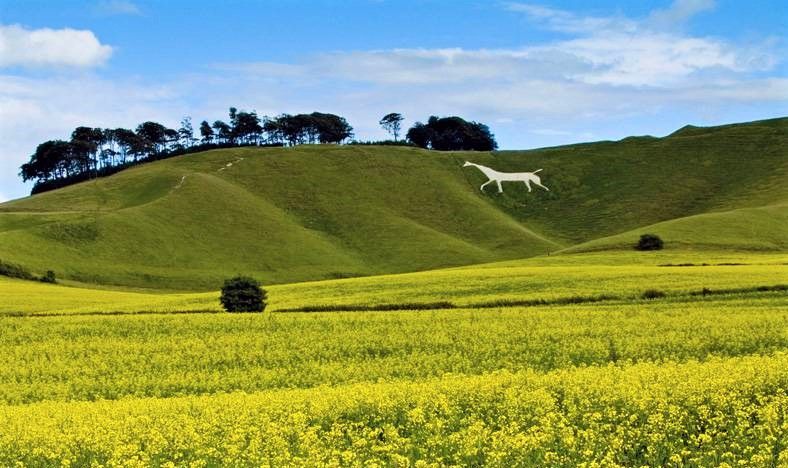
Many routes pass by interesting landmarks and natural features. You can cycle near the iconic Cerne Abbas Giant, explore the historic Thomas Hardy's Cottage, or enjoy views from Hod Hill. The North Dorset Trailway also offers a scenic path for cyclists.
Are there any historical sites or cultural attractions accessible from these routes?
Yes, the area around Hilton is rich in history. Cyclists can visit Thomas Hardy's Cottage, the birthplace of the famous author, or the Shillingstone Railway Station & Museum. The Athelhampton House and Gardens – The Oak at Dewlish loop from Hilton route passes by the historic Athelhampton House.
What do other touring cyclists enjoy most about the no traffic routes in Hilton?
The no traffic touring cycling routes around Hilton are highly rated by the komoot community, with an average score of 4.46 out of 5 stars from 66 ratings. Reviewers often praise the quiet, scenic nature of the routes and the opportunity to explore the beautiful Dorset countryside away from vehicle traffic.
Are there any viewpoints or scenic spots along the routes?
Absolutely. Several routes offer stunning views. You can find panoramic vistas from Hod Hill and The Dorsetshire Gap. The routes often traverse rolling hills, providing picturesque landscapes throughout your ride.
What is the difficulty level of the no traffic touring cycling routes?
Most of the no traffic touring cycling routes around Hilton are classified as moderate (8 out of 10 routes). There are also two more challenging routes for experienced cyclists. There are no easy routes listed, suggesting a generally undulating terrain.
Can I find natural monuments or unique natural features on these rides?
Yes, the area features several natural monuments. You can cycle past the ancient Cerne Abbas Giant, a chalk hill figure, and enjoy the tranquil surroundings of Minterne Gardens, which includes a lake.
Which route is a good option for a moderate touring cycling experience?
For a moderate touring cycling experience, consider the Athelhampton House and Gardens – The Oak at Dewlish loop from Hilton. This route is 30.3 km long with about 292 meters of elevation gain, offering a balanced ride through scenic countryside.
Most popular attractions around Hilton

Get inspired with the komoot mobile app


Explore more
Browse the best Cycling routes in other regions.
