The best traffic-free bike rides around Poperinge
4.4
(381)
3,270
riders
239
rides
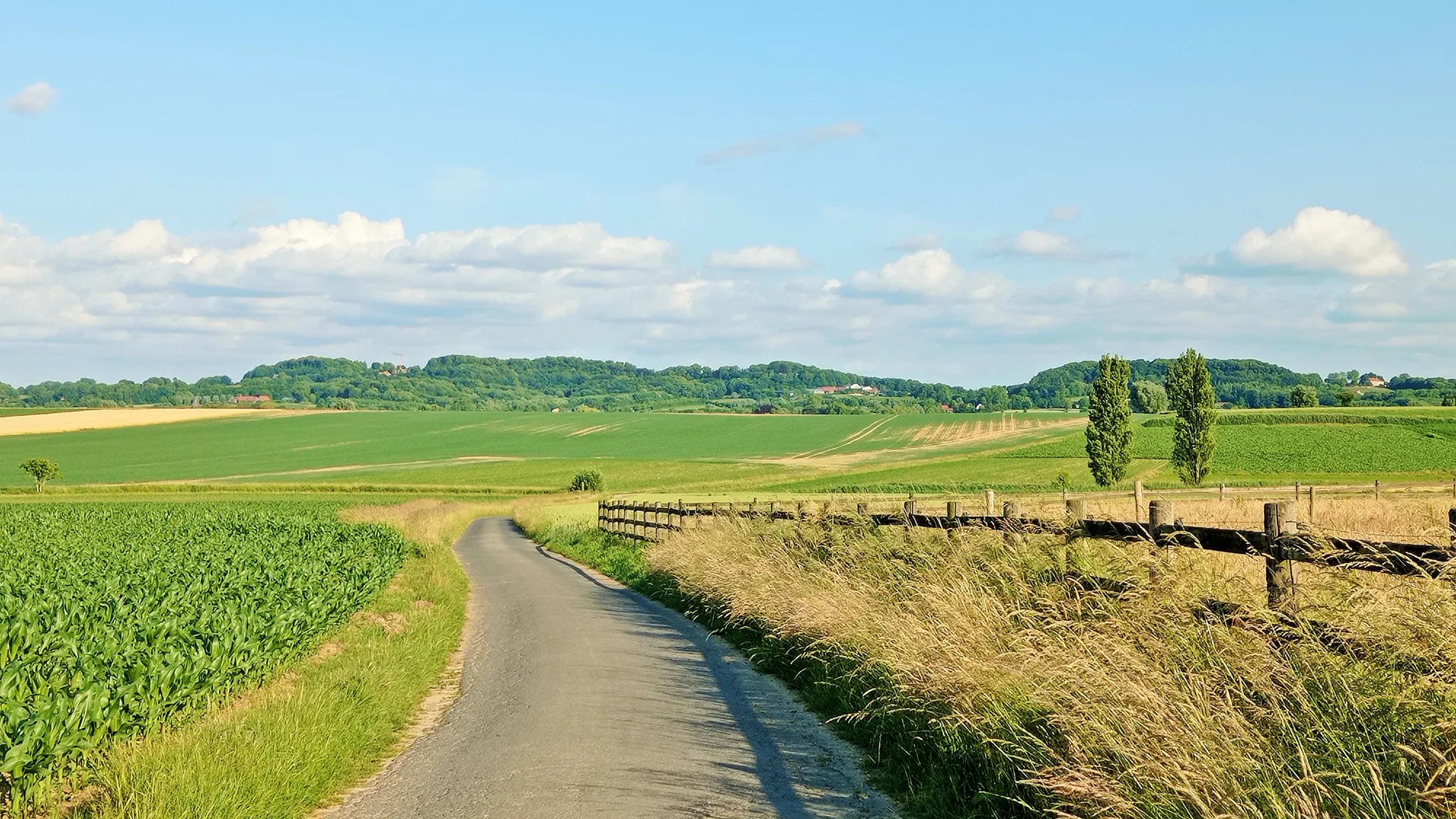
No traffic touring cycling routes around Poperinge traverse a landscape characterized by extensive hop fields, rolling hills, and verdant surroundings in West Flanders, Belgium. The region features the unique agricultural scenery of Hoppeland and includes areas near the French-Belgian border. Cyclists can explore varied terrain, from the tranquil Vleterbeek valley to climbs offering panoramic views over the Flemish uplands. This area provides a diverse backdrop for touring cycling, blending natural beauty with historical significance.
Best no traffic touring cycling routes…
Last updated: August 24, 2026
4.5
(32)
262
riders
61.7km
03:40
240m
240m
Moderate bike ride. Good fitness required. Mostly paved surfaces. Suitable for all skill levels.
4.7
(24)
66
riders
45.4km
02:50
450m
450m
Hard bike ride. Very good fitness required. Mostly paved surfaces. Suitable for all skill levels.

Sign up for free
2.7
(3)
101
riders
31.1km
02:05
160m
160m
Moderate bike ride. Good fitness required. Mostly paved surfaces. Suitable for all skill levels.
4.0
(4)
70
riders
42.5km
02:39
430m
430m
Moderate bike ride. Good fitness required. Mostly paved surfaces. Suitable for all skill levels.
4.0
(8)
41
riders
56.1km
03:13
120m
120m
Moderate bike ride. Good fitness required. Mostly paved surfaces. Suitable for all skill levels.
Get access to more routes and recommendations from other explorers.
Sign up for free
Already have an account?
Our route recommendations are based on thousands of hikes, rides, and runs completed by other people on komoot.
Start today with a free account
Your next adventure awaits.
Login or Signup

Other adventures around Poperinge


Tips from the Community

After the poet Emile Verhaeren died in November 1916 in the French town of Rouen, he was initially buried in the military cemetery of Adinkerke (De Panne). Due to the advancing German troops, his remains were secretly transferred at the end of 1917 to a second temporary resting place in the cemetery of Wulveringem (Alveringem). It was not until 1927 that he was finally laid to rest in his monumental tomb on the Scheldt in Sint-Amands. You can find more details about his life and the various locations on the biography page of the Emile Verhaeren Museum.
0
0
In the churchyard lie 15 British casualties (including 3 unidentified) from the Second World War. They were members of the British Expeditionary Force who fought against the advancing German troops. They died between 30 May and 1 June 1940. Their graves are maintained by the Commonwealth War Graves Commission and are registered there as Wulveringem Churchyard. Source: Wikipedia
0
0

The castle isn't open to the public except for specific events, so check the calendar. It's located just across from Beauvoorde's beautiful church and cemetery. A little further down the street, you'll also find the old pancake bakery and pancake house. You used to be able to visit both, but now there's a vending machine selling the famous Beauvoorde pancakes.
0
0

Nice Statue of Eliane Cossey (Poperinge, 9 December 1902 – London, 1942), known by the nickname Ginger, was a striking red-haired precocious child in the Belgian town of Poperinge during the First World War. The café "A la Poupée", an unpronounceable name for English speakers, on the main square grew under the name "Ginger's" into one of the most famous taverns behind "The Ypres Salient". The appeal of the young diva can be read in various diary excerpts and in the Visitors Book with compliments and drawings. Ginger krijgt eigen standbeeld https://www.hln.be/.../ginger-krijgt-eigen-standbeeld.../
0
0

The town of Poperinge (now Poperinge) was of great importance during the First World War because, although occasionally bombed or bombed from a distance, it was the closest town to Ypres (now Ypres), which was both substantial and reasonably safe. It initially served as a center for wounded units, but by 1916 it became necessary to move these units further back, and their places were taken by field ambulances. The earliest Commonwealth graves in the town are in the municipal cemetery. The Old Military Cemetery was established during the First Battle of Ypres and, as far as Commonwealth graves are concerned, was closed in early May 1915. The New Military Cemetery was established in June 1915. The New Military Cemetery contains 677 Commonwealth burials of the First World War and 271 French war graves. The cemetery was designed by Sir Reginald Blomfield. Source: https://www.cwgc.org/visit-us/find-cemeteries-memorials/cemetery-details/14500/poperinghe-new-military-cemetery/
2
0

Poperinge town was in British hands for almost the entire war. It was an important location because it was the closest town to Ypres, relatively safe from bombardment, and of considerable size. Initially, it served as a center for Casualty Clearing Stations, but in 1916 these were withdrawn and replaced by Field Ambulances. The first Commonwealth burials were in the town cemetery (Poperinge Communal Cemetery). The Old Military Cemetery was used during the First Battle of Ypres and closed, at least for Commonwealth burials, in early May 1915. The New Military Cemetery opened in June 1915. This cemetery contains 677 Commonwealth graves and 274 graves of other nationalities, including 271 French. The cemetery was designed by Sir Reginald Blomfield. Burials (Commonwealth War Graves Commission): United Kingdom: 597 Canada: 55 Australia: 20 New Zealand: 3 Other Commonwealth: 2 Total Commonwealth: 677 Other nationalities: 274
6
0
St. John's Church was founded in the 13th century and is primarily known as a place of pilgrimage in honor of Our Lady of St. John. In 1479, through her intercession, a miracle occurred, which led to the annual Marian Procession. The white stone Calvary is a replica of the original wooden statues, which can now be seen in the winter chapel.
5
0

Poperinge is known for its hop cultivation, and this is clearly visible in the surrounding countryside. Cycling through the area, you'll come across these hop fields, where the hop plant is cultivated. Curious about the harvest? Then settle down on one of Poperinge's terraces and sample the local beers. Cheers!
1
0
Frequently Asked Questions
How many no-traffic touring cycling routes are available around Poperinge?
Poperinge offers a wide selection of car-free touring cycling routes, with over 240 options available. These routes cater to various skill levels, including more than 110 easy routes and over 120 moderate routes, ensuring a pleasant experience for most cyclists.
What kind of terrain can I expect on the no-traffic touring cycling routes in Poperinge?
The region around Poperinge is characterized by rolling hills and lush greenery, particularly the extensive hop fields of the 'Hoppeland'. While many routes are relatively flat, some, like the Magnificent view – Ondankmeulen loop from Watou, include more significant elevation changes, offering panoramic views, especially towards the Rode Berg (Red Mountain) or Mont Noir.
Are there family-friendly no-traffic cycling routes in Poperinge?
Yes, Poperinge is well-suited for family cycling. The extensive Westhoek Cycle Node Network provides many gentle paths, allowing you to customize routes based on distance and difficulty. The region's quiet agricultural roads and dedicated cycle paths make it safe and enjoyable for families.
What are the best natural features or landmarks to see along these quiet cycling routes?
You'll encounter diverse scenery, from the unique hop fields of the Hoppeland to tranquil forested areas like Ploegsteert Wood. Routes often pass through the scenic Valley of the Vleterbeek. For historical landmarks, you can explore sites related to World War I, such as the The Bluff Memorial and Crater, or visit the Kemmelberg for impressive views.
Can I bring my dog on the no-traffic touring cycling routes?
Many of the quiet roads and paths around Poperinge are suitable for cycling with dogs, provided they are well-behaved and kept on a leash where necessary, especially near agricultural areas or in more populated sections. Always ensure your dog is comfortable with the distance and terrain.
What is the best time of year to cycle the no-traffic routes in Poperinge?
The spring and summer months (April to September) are generally ideal for cycling in Poperinge. During this time, the hop fields are in full bloom, offering a particularly picturesque landscape. The weather is typically milder, making for more comfortable rides.
Are there any circular no-traffic touring routes available?
Yes, many of the touring cycling routes in Poperinge are designed as circular loops, allowing you to start and end at the same point. An example is the De Lovie Castle Park – Hop field loop from Watou, which takes you through varied landscapes and hop fields.
What do other touring cyclists enjoy most about cycling in Poperinge?
The area is highly rated by the komoot community, with an average score of 4.5 stars. Reviewers often praise the peaceful, car-free nature of the routes, the beautiful agricultural landscapes, and the rich historical context, particularly the World War I sites and the unique hop culture.
Are there places to eat or drink along the no-traffic cycling routes?
Yes, the region is known for its hop and beer culture. Routes like the Beer Cycle Route Poperinge-Vleteren guide cyclists past breweries and cozy pubs where local Westhoek beers can be tasted. You'll find various cafes and restaurants in the charming villages and towns along the routes, perfect for a break.
Where can I park my car to access these quiet cycling routes?
Poperinge and its surrounding villages offer various parking options, often near town centers or designated starting points for cycling routes. The extensive Westhoek Cycle Node Network also means you can often find convenient parking in smaller communities, allowing you to easily access the car-free paths.
Are there any routes that explore the border region between Belgium and France?
Yes, several routes in the Poperinge area allow you to experience the unique frontier landscape between Belgium and France. These routes, sometimes referred to as 'Frontierenroute' or 'Schreveroute', offer insights into the region's history, including remnants of its smuggling past, while providing quiet cycling paths.
Most popular attractions around Poperinge

Get inspired with the komoot mobile app


Explore more
Browse the best Cycling routes in other regions.
