Attractions and Places To See around Bijele i Samarske stijene - Top 6
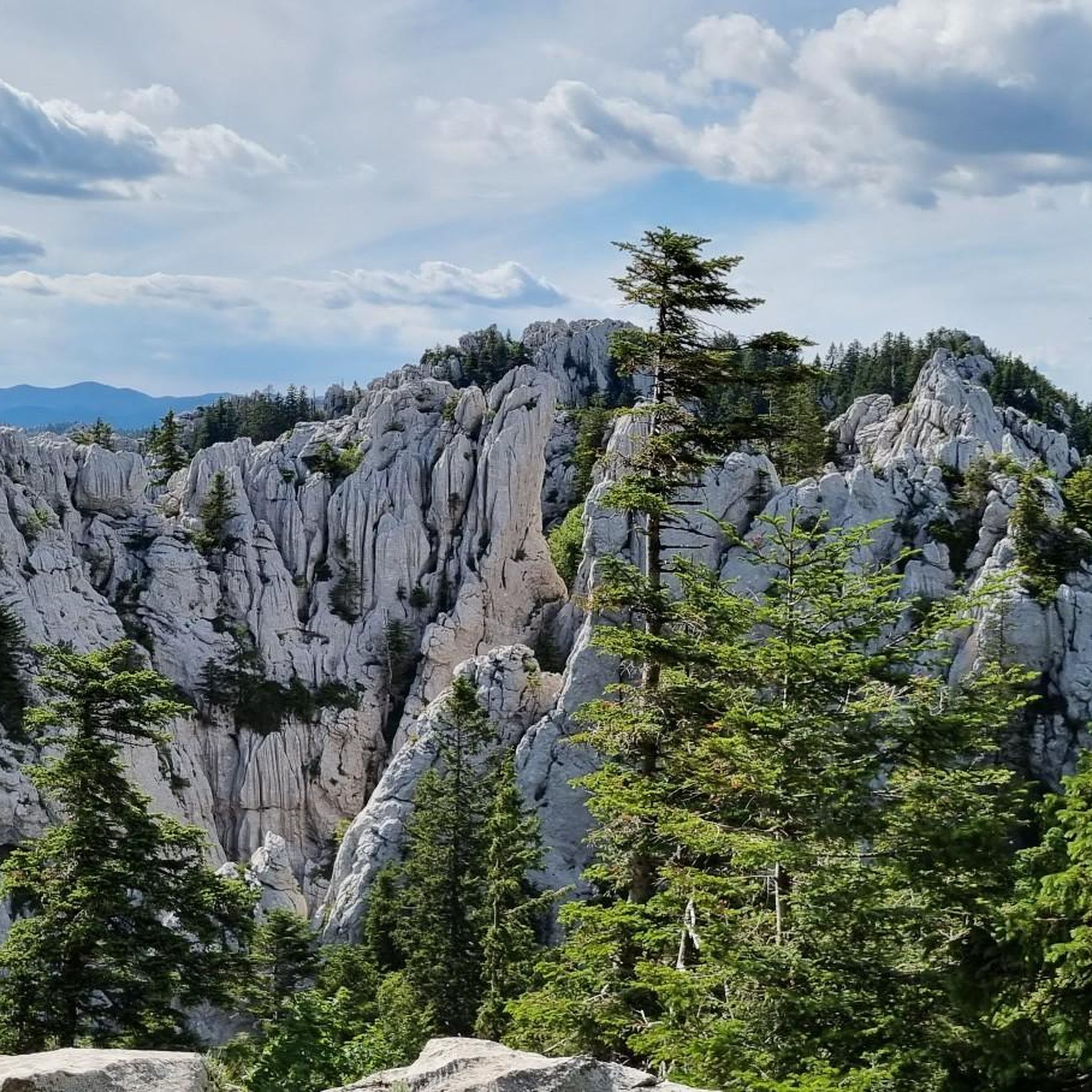
Best attractions and places to see around Bijele i Samarske stijene, a strict nature reserve in Croatia's Gorski Kotar region, are characterized by a unique and rugged karst landscape. This area features sharp-toothed peaks, sheer rock faces, and distinctive geomorphological formations. It is a destination for nature lovers, hikers, and mountaineers seeking untouched wilderness and geological displays. The region offers a variety of natural landmarks and mountain shelters.
Best attractions and places to see around Bijele i Samarske stijene
- The…
Last updated: July 7, 2026
Stepenica Summit, Bijele i Samarske Stijene
Highlight • Summit
Translated by Google •
Tip by

Dragutin Hirc Mountain Hut
Highlight • Mountain Hut
Translated by Google •
Tip by

Sign up now to discover places like this
Get recommendations on the best single tracks, peaks, & plenty of other exciting outdoor places.
Sign up for free
Kapelica Amphitheater
Highlight • Gorge
Translated by Google •
Tip by

Ratko's Shelter
Highlight • Mountain Hut
Translated by Google •
Tip by
Slonova Brada (Elephant's Beard) Rock
Highlight • Natural Monument
Translated by Google •
Tip by
Start today with a free account
Your next adventure awaits.
Login or Signup
Popular around Bijele i Samarske stijene

Tips from the Community

A short but very demanding ascent, just before the summit there is an exposed section that requires the use of hands and a high level of concentration.
0
0

The house is maintained by the Kapela Mountaineering Society from Zagreb. It is open during duty hours (https://www.hpd-kapela.hr/nase-kuce) or by appointment. There are a dozen places to sleep, and more can be squeezed in. The hosts are very friendly, call and make an arrangement.
0
0

It burned down and was rebuilt, but it is again being ravaged by visitors
0
0

There is a guitar in the shelter ;) I also saw sleeping bags, I think 2 pieces.
1
0
Works on weekends, beer and tea avaliable
2
0

There is always a free place to sleep
2
0

Stepenica (1280 m) is part of the amphitheater, which also includes the top of Samarski stijene, the Pyramid and the Viewpoint. The ascent to Stepenica is short but technically demanding. It is not a problem to climb up to the registration box with a little skill, but the final part to the very top is demanding and high caution and climbing skills are required. From the top there is a beautiful and unforgettable view of the surrounding rocks of the western group that spring from the vast spruce forest, Bjelolasica and Klek.
1
0
It has been renovated, but they take bad care of it
3
0
Frequently Asked Questions
What unique natural features define the landscape of Bijele i Samarske stijene?
The region is renowned for its distinctive karst landscape, featuring sharp-toothed peaks, sheer rock faces up to 50 meters high, towers, grooves, and deep dolines. Notable formations include the surreal spires of Bijele Stijene, the five natural stone sculptures known as Prsti (The Fingers), and the unique sinkhole called “Frižider” (The Refrigerator), known for its everlasting snow.
Are there any challenging hiking trails for experienced mountaineers?
Yes, Bijele i Samarske stijene offers some of Croatia's most challenging trails. The Vihoraški put is particularly known for its wild and impassable terrain, partly secured with steel ropes and pins, recommended only for experienced mountaineers. Additionally, the ascent to Stepenica Summit is technically demanding, requiring climbing skills for the final part.
Where can I find mountain shelters or huts in the area?
There are several mountain shelters available. Dragutin Hirc Mountain Hut is maintained by the Kapela Mountaineering Society and often open on weekends, offering basic accommodation. Another option is Ratko's Shelter, a picturesque log cabin nestled in a half-cave, providing a resting stop for hikers.
What are the best viewpoints for panoramic vistas?
For breathtaking views, consider ascending Bijele Stijene Peak (1,335 meters) or Samarske Stijene Peak (1,302 meters), both offering panoramic vistas of the surrounding mountains and forests. The Stepenica Summit also provides an unforgettable view of the western rock group, Bjelolasica, and Klek.
Can I find unique geological formations like natural amphitheaters or rock passages?
Absolutely. The Kapelica Amphitheater is a notable gorge featuring a valley surrounded by rocks, with a hollow containing an altar and a cross. It's accessible via a narrow passage beneath a rock known as Slonova Brada (Elephant's Beard) Rock, which creates a dramatic entrance to this unique space.
What kind of wildlife can be observed in Bijele i Samarske stijene?
As a strict nature reserve, the area is home to diverse wildlife. You might encounter bears, martens, dormice, and weasels. Rare species such as the alpine salamander and viviparous lizard also inhabit this pristine wilderness.
Are there any specific plants or flora that are unique to the region?
The region boasts lush and varied mountain flora. The tall herbs growing at the bottom of the dolines are often referred to as 'mountain gardens' due to their beauty and rarity. You can also find Edelweiss (Leontopodium alpinum), a favorite flower among mountaineers, in this area.
What kind of outdoor activities, specifically hiking, are available near these attractions?
The region is ideal for hiking and mountaineering. You can explore various routes, from moderate to difficult. For specific hiking tours, check out the Hiking around Bijele i Samarske stijene guide, which includes routes like the 'Valley of Peace – Razbijeni Vrh loop'. For more challenging mountaineering, refer to the Mountain Hikes around Bijele i Samarske stijene guide.
What is the best time to visit Bijele i Samarske stijene?
Bijele i Samarske stijene is primarily appealing to nature lovers, hikers, and mountaineers. The best time to visit for hiking and exploring the unique geological formations is generally during the warmer months, from late spring to early autumn, when trails are most accessible and weather conditions are favorable. Winter offers a different, more challenging experience for experienced winter mountaineers.
Are there any old-growth forests to explore?
Yes, the area features extensive old-growth forests. These forests are primarily composed of fir, spruce, beech, and sycamore, providing a dramatic contrast to the stark white limestone cliffs and offering a serene environment for exploration.
What do visitors enjoy most about the attractions around Bijele i Samarske stijene?
Visitors particularly appreciate the untouched wilderness and the unique geological displays. The challenging yet rewarding ascents to peaks like Stepenica Summit for its panoramic views, and the mystical atmosphere of places like the Kapelica Amphitheater, are frequently highlighted as memorable experiences.
Most popular routes around Bijele i Samarske stijene

Get inspired with the komoot mobile app


