The best traffic-free bike rides around Gualdo Cattaneo
4.5
(241)
1,866
riders
90
rides
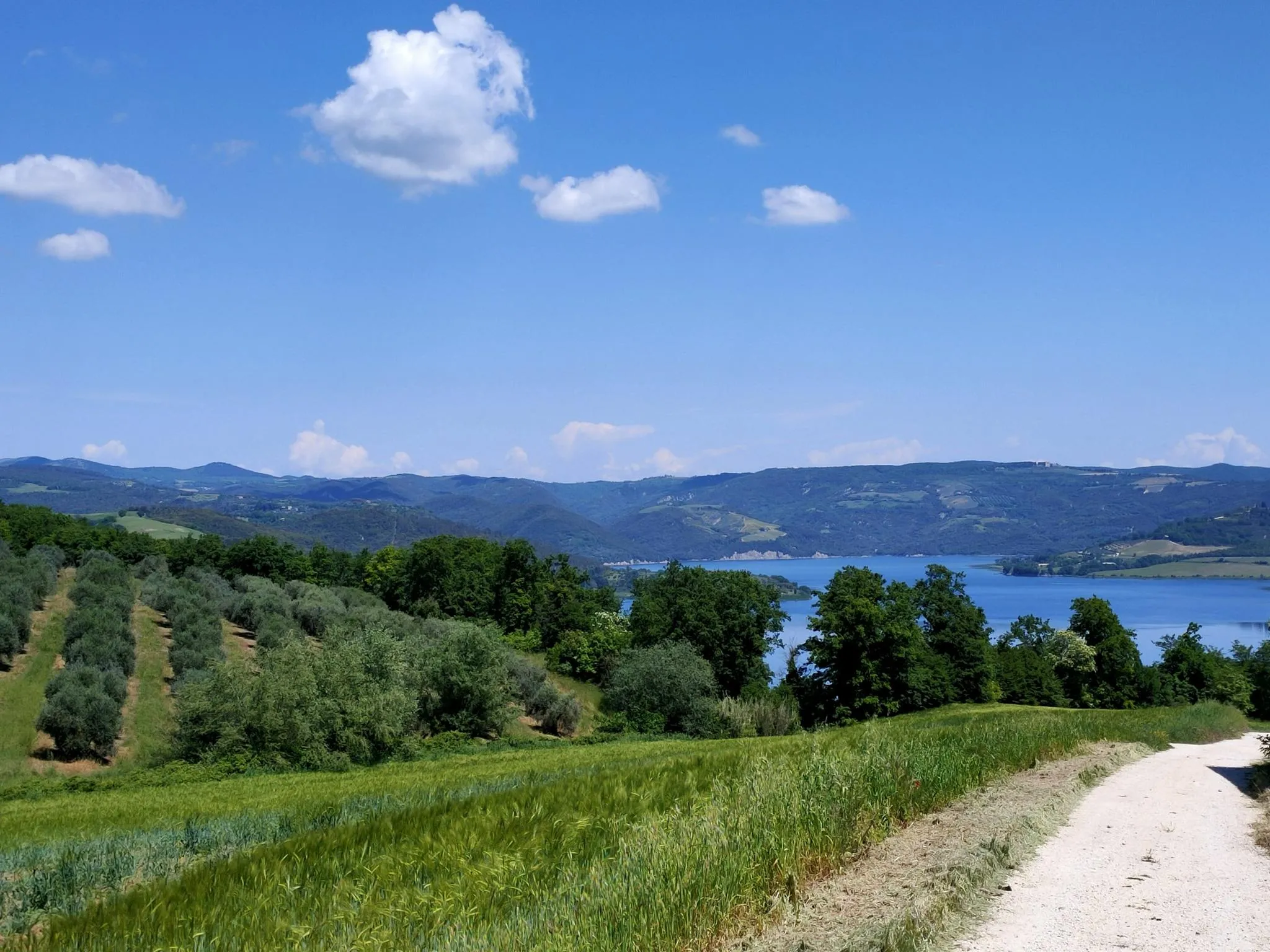
No traffic touring cycling routes around Gualdo Cattaneo are set within Umbria's gentle hilly reliefs, characterized by forests and olive groves. The region is situated on the slopes of the Martani Mountains, providing varied terrain for cyclists. Routes often feature mostly paved surfaces, making them suitable for touring. This landscape offers a blend of scenic beauty and historical points of interest.
Best no traffic touring cycling routes around Gualdo Cattaneo
- The most popular no traffic touring cycling route is View…
Last updated: July 13, 2026
8
riders
27.6km
02:00
580m
580m
Hard bike ride. Very good fitness required. Mostly paved surfaces. Suitable for all skill levels.
7
riders
19.7km
01:13
200m
200m
Moderate bike ride. Good fitness required. Mostly paved surfaces. Suitable for all skill levels.

Sign up for free
8
riders
26.6km
02:14
830m
830m
Hard bike ride. Very good fitness required. Mostly paved surfaces. Suitable for all skill levels.
5
riders
18.6km
01:17
330m
330m
Moderate bike ride. Good fitness required. Mostly paved surfaces. Suitable for all skill levels.
2
riders
29.1km
02:02
500m
500m
Hard bike ride. Very good fitness required. Mostly paved surfaces. Suitable for all skill levels.
Get access to more routes and recommendations from other explorers.
Sign up for free
Already have an account?
Our route recommendations are based on thousands of hikes, rides, and runs completed by other people on komoot.
Start today with a free account
Your next adventure awaits.
Login or Signup

Other adventures around Gualdo Cattaneo

Tips from the Community

terrace with breathtaking views of Todi, its surroundings and the middle Tiber Valley
0
0

Not a particularly challenging climb, except for a small stretch before the final climb to the top of Martano. The descent towards Spoleto is on a mule track for the first few kilometres. I recommend getting off the asphalt road if you go up on a racing bike.
0
0

Great place for lunch. Some of the best wines in umbria
0
0

Marvelous
0
0

A historic-looking place, on top of the mountain. Adjacent is a nice, shady place for a break.
0
0

The People's Palace with its bell tower dominates the highest point of the city, the "platea rotunda", the square of the municipality, the heart of the civil and religious power of the city of Montefalco. In the Piazza del Comune, the Palazzo Comunale stands out mightily, formerly called Palazzo del Popolo, with its round arches that outline its façade. Built in 1270 with very small dimensions, it was subsequently enlarged on the entire left side during the 15th century, when the loggia with octagonal pillars was added, finished with capitals with large acanthus leaves, above which is placed the large terrace which stands out on the square. It is precisely from this terrace that every year, on the occasion of the Renaissance re-enactment of the "Fuga del Bove", the winner of the coveted Golden Falcon is announced as a prize for the competitions held in the four historic districts of Sant'Agostino, San Bartolomeo, San Fortunato and San Francesco. The event which since 1972 has been recalling the Renaissance splendor of this municipality, drawing inspiration from the historical period between 1400 and 1500.
0
0
It is the land of the famous Sagrantino wine but not only... The following varieties of wine are produced in Montefalco: Montefalco Bianco, Montefalco Rosso, Montefalco Sagrantino and Montefalco Sagrantino Passito. History tells that in Montefalco the ancient monks vinified the grapes of their own harvest to create a sweet version of the consecration wine and in the 1960s some producers managed to recover this tradition. Then, in 1979 this product obtained the controlled designation of origin and in 1992 the superior label of controlled and guaranteed designation of origin.
0
0
Frequently Asked Questions
How many no traffic touring cycling routes are available in Gualdo Cattaneo?
Gualdo Cattaneo offers a wide selection of touring cycling routes designed to keep you away from heavy traffic. There are over 100 routes in the area, catering to various fitness levels, from easy to difficult.
What kind of terrain can I expect on these no traffic touring cycling routes?
The routes around Gualdo Cattaneo feature a picturesque and varied terrain, characterized by gentle hilly reliefs and forests, including evergreen Mediterranean scrub. You'll find mostly paved surfaces, ideal for touring cyclists, with elevation gains ranging from moderate to challenging as you explore the slopes of the Martani Mountains.
Are there any easy, traffic-free touring cycling routes suitable for beginners?
Yes, Gualdo Cattaneo has several easy touring cycling routes with minimal traffic. For instance, the Torre del Colle – Historic Center of Bevagna loop from Torre Del Colle is an easy 19 km route with just over 100 meters of elevation gain, perfect for a relaxed ride.
What historical landmarks or attractions can I see along the routes?
Many routes pass by or near significant historical sites. You can explore medieval castles like the impressive Rocca di Gualdo Cattaneo or the Castel Ritaldi Castle. The Historic Center of Bevagna is another popular destination, often included in longer loops, offering charming medieval streets and the Church of San Michele Arcangelo.
Are there any circular no traffic touring cycling routes?
Yes, many of the touring cycling routes in Gualdo Cattaneo are circular, allowing you to start and end at the same point. An example is the challenging View of Spello – Historic Center of Bevagna loop from Gualdo Cattaneo, which covers 52 km and offers scenic views.
What is the best time of year to go touring cycling in Gualdo Cattaneo?
The region is generally pleasant for cycling from spring through autumn. Spring offers lush greenery and comfortable temperatures, while autumn provides beautiful foliage and cooler weather. Summers can be warm, so early morning or late afternoon rides are recommended during peak season. Always check local weather forecasts before heading out.
Can I find routes that offer views of the Martani Mountains?
Absolutely. Gualdo Cattaneo is situated on the slopes of the Martani Mountains, so many routes offer rewarding descents and spectacular views. The Monte Martano Summit View – Olivo di Macciano loop from Bastardo is a challenging route that provides excellent opportunities to experience the mountain scenery.
What do other touring cyclists enjoy most about cycling in Gualdo Cattaneo?
The komoot community highly rates the touring cycling experience in Gualdo Cattaneo, with an average score of 4.5 stars from over 200 ratings. Reviewers often praise the region's quiet, scenic roads, the blend of natural beauty with historic villages, and the rewarding climbs that offer panoramic views of the Umbrian landscape.
Are there any routes that connect to other charming Umbrian towns?
Yes, several routes allow you to explore nearby historic towns. For example, the View of Spello – Historic Center of Bevagna loop from Gualdo Cattaneo takes you towards Bevagna, a charming medieval village. The region is also close to Montefalco, known for its Sagrantino wine, and Assisi, both accessible via pleasant cycling routes.
Are there any specific routes that are particularly good for experiencing the olive groves?
The landscape around Gualdo Cattaneo is rich with olive groves, contributing to the scenic beauty of many routes. While not a single dedicated route, you'll find yourself cycling through these picturesque groves on various paths, especially on the gentler hilly sections, offering a quintessential Umbrian touring experience.
What is the difficulty level of the no traffic touring cycling routes in Gualdo Cattaneo?
The routes vary significantly in difficulty. You'll find 22 easy routes, 33 moderate routes, and 47 difficult routes. This range ensures that both casual riders and experienced touring cyclists can find suitable options, with some challenging routes featuring over 800 meters of elevation gain.
Most popular routes around Gualdo Cattaneo
Most popular attractions around Gualdo Cattaneo

Get inspired with the komoot mobile app


Explore more
Browse the best Cycling routes in other regions.
