The best traffic-free bike rides in Slovenský Raj - Op
4.9
(12)
931
riders
9
rides
No traffic road cycling routes in Slovenský Raj - Op traverse a landscape characterized by dramatic karst formations, deep gorges, and extensive spruce forests. The region features a mix of undulating sections and demanding ascents, with many routes offering paved surfaces suitable for road bikes. Cyclists can explore rocky plateaus and valleys, experiencing varied elevation changes throughout the area. This environment provides a compelling setting for road cyclists seeking both a physical challenge and immersion in natural beauty.
Best no…
Last updated: July 13, 2026
20
riders
56.8km
02:33
580m
580m
Moderate road ride. Good fitness required. Mostly well-paved surfaces and easy to ride.
4
riders
Moderate road ride. Good fitness required. Some segments of this route may be unpaved and difficult to ride.

Sign up for free
5.0
(1)
42
riders
31.6km
01:37
440m
440m
Moderate road ride. Good fitness required. Some segments of this route may be unpaved and difficult to ride.
35
riders
41.4km
01:42
240m
240m
Easy road ride. Great for any fitness level. Mostly well-paved surfaces and easy to ride.
9
riders
112km
04:51
1,000m
1,000m
Hard road ride. Very good fitness required. Mostly well-paved surfaces and easy to ride.
Get access to more routes and recommendations from other explorers.
Sign up for free
Already have an account?
Our route recommendations are based on thousands of hikes, rides, and runs completed by other people on komoot.
Start today with a free account
Your next adventure awaits.
Login or Signup
Popular around Slovenský Raj - Op
Tips from the Community

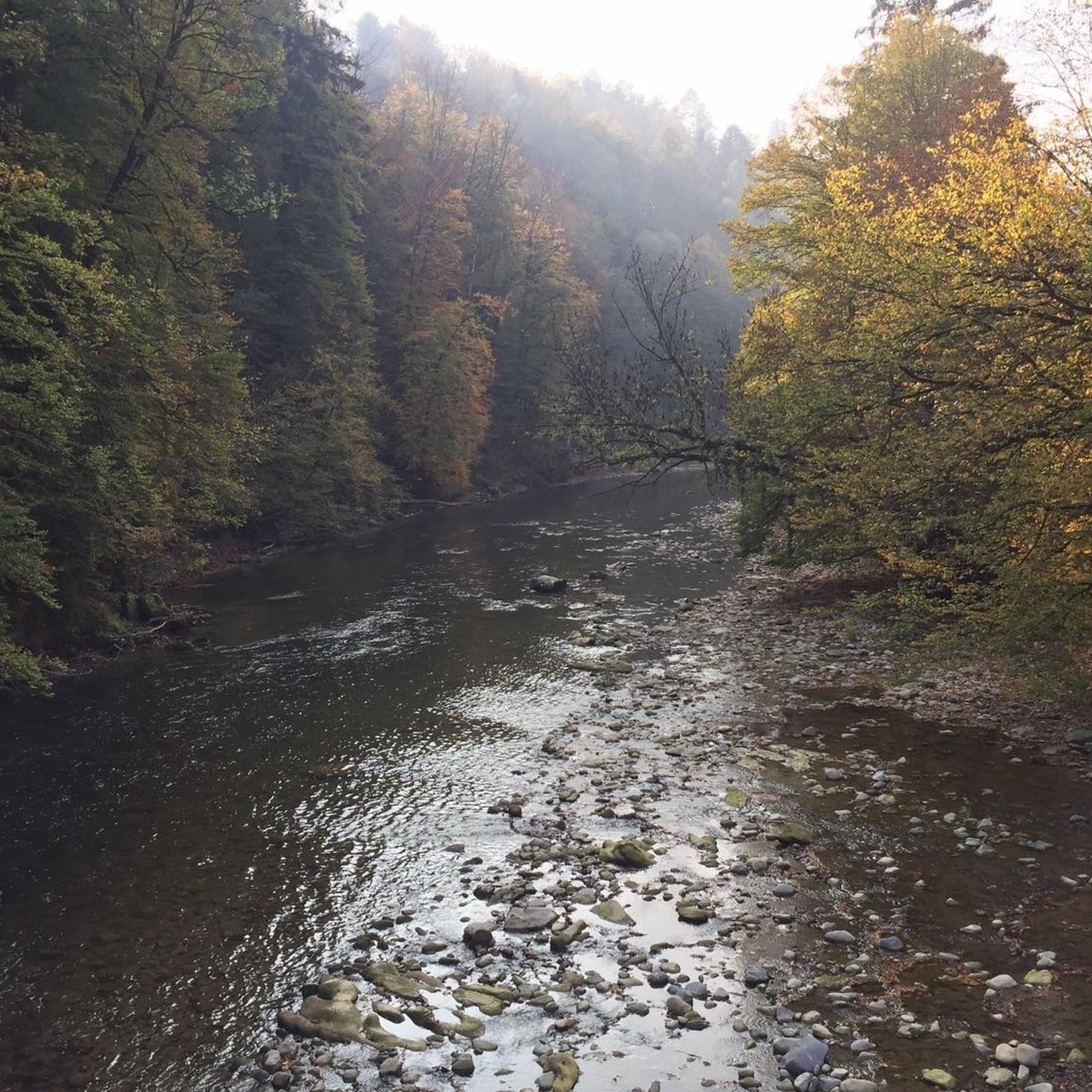
The section from Svit to Poprad is a very pleasant route leading along an asphalt bike path along the Poprad River. This section is part of the Trail Around the Tatras and is great for a leisurely ride on a trekking or gravel bike. The road is almost completely flat, well marked and separated from car traffic. Along the way, we are accompanied by a view of the High Tatras, and after reaching Poprad, you can take a break at one of the many catering points or visit the local aquapark.
3
0


great food, unfortunately closed Sunday and Monday
0
0

Invites you to swim. If you are lucky, there are also snacks and drinks at the small bar.
0
0

Come to one city, visit six. The present day city of Poprad (53.000 inhabitants) is actually a unification of several smaller settlements. All of them emerged probably after the Mongol (Tatar) invasion in the mid 13th century, when the Hungarian king invited German (Saxon) colonists to the Spiš region. Today’s Poprad is formed of: Spišská Sobota (Georgenberg), Poprad (Deutschendorf - lit. Germans’ Village), Stráže (Michelsdorf), Veľká (Felka), Matejovce (Matzdorf), Kvetnica (Blumental). In 1412 all except Blumental became a part of so called Polish Pledge and belonged to Poland until 1772 (read more in Kežmarok description). Under the Polish rule they developed quickly, maintaining all an equal importance with Sobotá (lit. Saturday) having a leading role, politically and economically, partly because of the Saturday markets’ right. With the construction of the Bohumin - Košice railway in 1871 (an important rail arteria in this part of Europe), Poprad became “ate” the smaller neighbours. The Saxons were majority in some towns and played a very important role in the development of the region. The end of the WW2 and the approaching Soviet troops gave a sad exodus of this seven-century-long history of a multinational city. After WW2 Poprad strengthened its position as a starting point to the Tatras, it has train connections with Prague, Bratislava, Košice and narrow gauge trains to Štrbské Pleso and Lomnica. Also, there is an airport outside the city. Visiting Poprad: TatraVelo route leads through three historic zones - Velká (in the west), the jewel - Spišská Sobota (north-east) and Poprad (south-east). In Poprad and Sobota you can observe the very traditional layout of Spiš town main square, in a shape of a long oval, with parallel streets and houses outside and a stream, churches and shops in the centre. In Poprad, visit the main square (Nám. Sv. Egídia) with the typical 18th and 19th century burgher houses, the 13 century Gothic St Gilles Church (with the oldest painted panorama of the High Tatras - 15th century!, along with other beautiful frescoes), see the Protestant church and the Synagogue (truly multinational town, isn’t it?); Spišská Sobota’s centre is a preserved historic zone, with medieval houses and churches, a true jewel! In St George Church (hence the German name: Georgenberg!) you can see a wooden altar carved by Master Pavol from Levoča, a great local artist;
1
0
Poprad River is the only big river south of the Tatras that is an affluent of the Baltic and not the Black Sea. Liptov region with the Váh River is a tributary of the Danube and the Black Sea. The Poprad streams start under Rysy and Gerlachovský Štit, the highest peaks of Poland and Slovakia, pass through the Poprad Basin, on the way giving a name to a city - Poprad :-), then continuing east and north, to Poland. We start here a nice cycling along the Poprad River here. Here - in Svit. A funny fact: the name Svit comes from… Slovenské Vizkózové Továrne = Slovak Viscose Factory. Yes, it was founded in 1934 for the workers of the newly built shoe company Bata. Today it is the smallest city of Slovakia - 4,5 sq km. Well, it’s still 10 times the territory of the Vatican :-)
0
0
Frequently Asked Questions
How many no-traffic road cycling routes are available in Slovenský Raj?
Slovenský Raj offers a selection of 9 dedicated no-traffic road cycling routes, ranging from easy to difficult, ensuring options for various skill levels. The region boasts over 110 km of marked cycling trails in total, with a significant portion designed to keep you away from vehicular traffic.
What is the general difficulty level of no-traffic road cycling in Slovenský Raj?
The no-traffic road cycling routes in Slovenský Raj offer a varied terrain. You'll find a mix of undulating sections and demanding ascents. Out of the 9 routes, 2 are considered easy, 6 are moderate, and 1 is difficult, providing options whether you're looking for a relaxed ride or a significant challenge.
Are there any long-distance no-traffic road cycling routes for experienced cyclists?
Yes, for experienced cyclists seeking a longer, more challenging ride, the region offers routes like the Lom Kvetnica Lake – Descent to Hranovnica loop from Teplička nad Hornádom. This difficult route covers over 112 km with more than 1000 meters of elevation gain, providing a substantial day out on quiet roads.
What kind of scenery can I expect on these no-traffic road cycling routes?
You can expect stunning and diverse scenery. The routes traverse dramatic karst landscapes, deep gorges, and extensive spruce forests. You'll ride through valleys, experience panoramic views of the Hornádska kotlina basin, and on clear days, even catch glimpses of the distant Tatra Mountains. The region's unique geological formations are a constant backdrop.
Are there any circular no-traffic road cycling routes available?
Yes, many of the no-traffic road cycling routes in Slovenský Raj are designed as loops, allowing you to start and finish in the same location. Examples include the moderate Baniská loop from Spišská Nová Ves (57 km) or the Prielom Hornádu loop from Teplička nad Hornádom (44 km), offering convenient options for exploration.
What are some notable natural attractions or landmarks I might see while cycling?
While cycling on the quiet roads, you'll be immersed in the natural beauty of Slovenský Raj. Although direct access to some gorges like Suchá Belá or Prielom Hornádu is typically by foot, the cycling routes often provide scenic views of the surrounding karst formations and forests. You might also pass by areas offering views towards landmarks like Tomášovský Výhľad, a prominent rock outcrop with breathtaking panoramas.
Is Slovenský Raj suitable for family-friendly no-traffic road cycling?
Yes, Slovenský Raj offers options for family-friendly cycling, particularly on its easier, quieter routes. While the region features varied terrain, there are less demanding sections and dedicated cycling infrastructure that can be suitable for families. Routes like the red-marked Hnilecká cycle arterial track are known for being less challenging.
What do other cyclists say about the no-traffic road cycling experience in Slovenský Raj?
The no-traffic road cycling experience in Slovenský Raj is highly regarded by the komoot community, with an average rating of 4.9 out of 5 stars. Cyclists frequently praise the stunning natural beauty, the quietness of the roads, and the diverse terrain that offers both scenic rides and challenging ascents through the unique karst landscapes.
What is the best time of year for no-traffic road cycling in Slovenský Raj?
The best time for no-traffic road cycling in Slovenský Raj is generally from spring through autumn. During these seasons, the weather is more favorable, and the natural beauty of the forests and gorges is at its peak. While some routes might be accessible in winter, conditions can be challenging due to snow and ice, especially in higher elevations.
Are there any specific regulations for cyclists within Slovenský Raj National Park?
Cyclists are generally required to follow marked cycling routes within Slovenský Raj National Park. It's advisable to be aware of local regulations, and for collective cycling activities, it's recommended to report to the park administration and mountain rescue. Always respect the natural environment and wildlife.
Where can I find parking for these no-traffic road cycling routes?
Access points to the park for cyclists, such as Spišská Nová Ves, Čingov, Podlesok in the north, and Dedinky in the south, typically offer parking facilities. When planning your ride, consider starting points like Spišská Nová Ves for the Baniská loop or Teplička nad Hornádom for the Prielom Hornádu loop, where you can usually find suitable parking.
Can I reach the no-traffic road cycling routes by public transport?
Yes, Slovenský Raj is accessible by public transport, connecting it with surrounding regions like Spiš and Gemer. Major access points such as Spišská Nová Ves and Poprad (near Spišský Štiavnik, a starting point for routes like the Námestie Svätého Egídia loop) are well-served by trains and buses, making it possible to reach the starting points of many routes without a car.
Most popular routes in Slovenský Raj - Op

Get inspired with the komoot mobile app


Explore more
Browse the best Road cycling routes in other regions.
