The best hikes from bus stations around Parque Natural do Douro Internacional
4.4
(215)
1,331
hikers
14
hikes
Bus station hiking trails around Parque Natural do Douro Internacional traverse a landscape defined by the deep river valleys and steep cliffs of the Douro Canyon, often referred to as the "Grand Canyon" of the Iberian Peninsula. The region features extensive plateaus, granite banks, and a varied flora including oak and holm oak forests. Hikers can explore rugged terrain shaped by the Douro River, offering views of monumental ravines and a diverse natural environment.
Best bus station hiking trails around…
Last updated: June 29, 2026
4.6
(17)
64
hikers
19.0km
05:15
320m
320m
Hike the difficult 11.8-mile São João das Arribas Trail (PR1 MDR) for panoramic Douro valley views and historical sites in Portugal.
5.0
(3)
17
hikers
14.2km
04:01
310m
310m
Hike the moderate 8.8-mile São Fagundo Trail (PR 3) in Douro Internacional Natural Park, featuring stunning river views and ancient ruins.

Sign up for free
2
hikers
Hard hike. Very good fitness required. Easily-accessible paths. Suitable for all skill levels.
4.8
(6)
28
hikers
Moderate hike. Good fitness required. Easily-accessible paths. Suitable for all skill levels.
2.0
(1)
2
hikers
20.3km
05:48
470m
470m
Hike the difficult GR 14 Stage 42: La Fregeneda to Vega Terrón Trail, a 12.6-mile route along the historic Iron Path.
Get access to more routes and recommendations from other explorers.
Sign up for free
Already have an account?
Our route recommendations are based on thousands of hikes, rides, and runs completed by other people on komoot.
Start today with a free account
Your next adventure awaits.
Login or Signup
Popular around Parque Natural do Douro Internacional
Other adventures around Parque Natural do Douro Internacional

Tips from the Community

Mirador do Penedo Amarelo. It is located on Rua do Penedo Amarelo, in the urban area of Miranda do Douro. It offers wide panoramic views of the Douro River surrounded by green hills, the dam, the historic center and the co-cathedral of Miranda do Douro. It is one of the most outstanding urban viewpoints in the area.
3
0
From the Vale de Águia hill fort, there is a natural viewpoint with spectacular views of one of the meanders of the Douro. At the São João das Arribas hermitage, you can also enjoy stunning panoramic views of the canyon and waterfalls on the Spanish slope. The landscape includes cliffs, meadows, oak groves, and pastures, with abundant flora and fauna.
5
0
The GR-36 trail in the Miranda do Douro area is one of the most spectacular routes in northern Portugal, especially for its views of the Douro Canyon, which forms the natural border with Spain.
6
0
The Miradouro da Cerca, located in the village of Urrós (municipality of Mogadouro, near Miranda do Douro), is one of the most spectacular viewpoints in the Douro International Natural Park and is part of a route that many consider worthy of the title of “Europe’s Grand Canyon.” It offers stunning views of the deep and rugged valley of the Douro River, which marks the natural border between Portugal and Spain.
4
0

The first bishops of Miranda had to live in the Castle. It was only in 1601 that construction began on the Episcopal Palace and the Seminary. When it was completed, more than a century later, its opulence was no less than that of the Cathedral, whose Renaissance style it imitated. The Palace was built around a central courtyard, surrounded by a cloister with lowered arcades, on monolithic columns. And, although badly damaged by successive fires during the 17th and 18th centuries, it was the definitive transfer of the seat of the Diocese to Bragança, in 1780, that caused it to fall into rapid ruin. The shadow of its monumentality can still be seen today in the cloister and on the portico of the Seminary. However, despite its state of ruin, its symbolic power remains because the bishops always continued to engrave their names on the respective memorial, at the entrance to the Renaissance portico of the first Episcopal Palace of the Diocese.
2
1
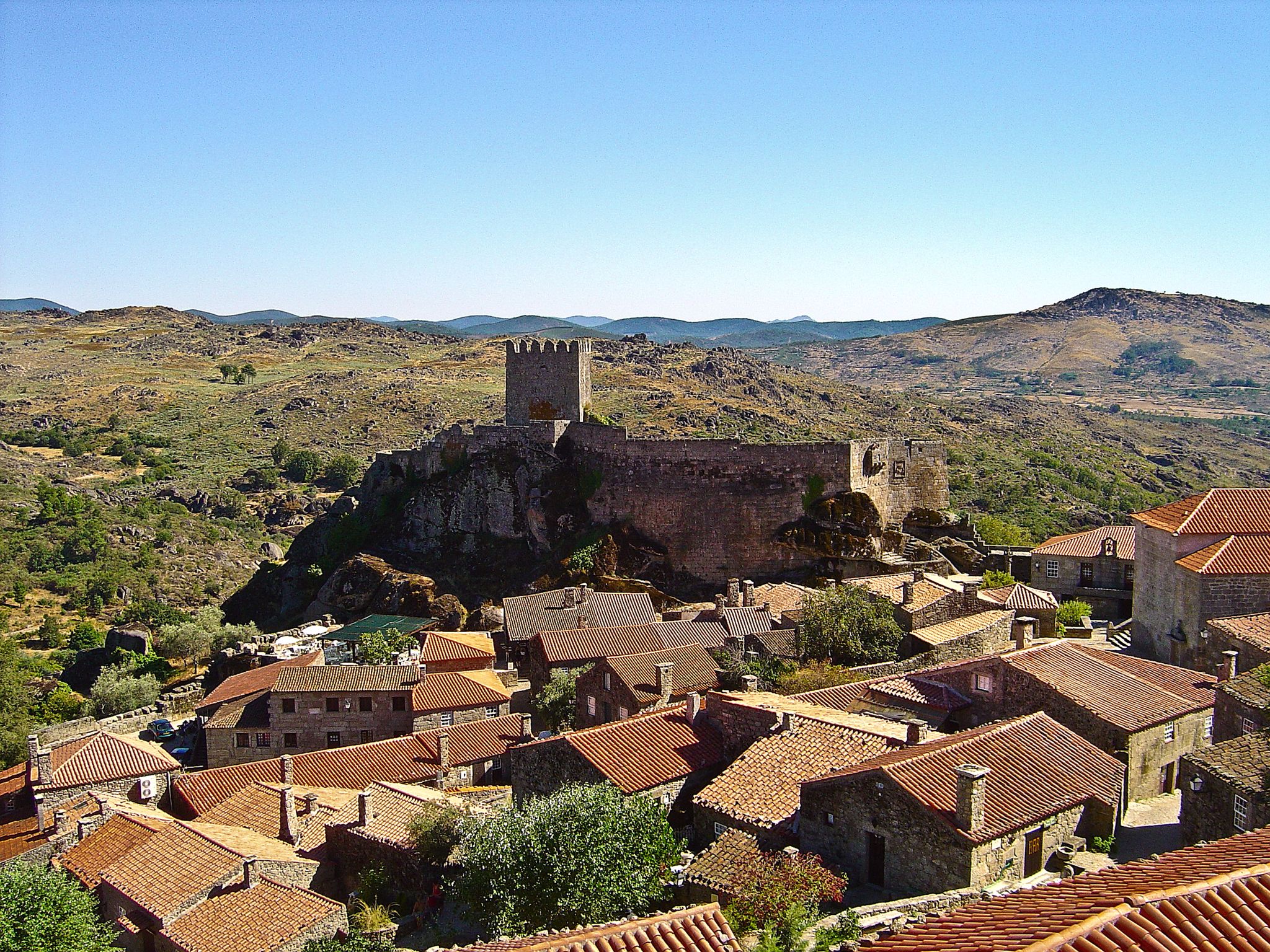
The castle of Miranda do Douro was built during a second period of settlement and ordering in Trás-os-Montes, which occurred during the reign of King Dinis. The first kings had provided this vast region with administrative units protected by Romanesque castles, called Terras, whose mission was to establish royal authority in an area of the kingdom that was notoriously peripheral. Over time, this power structure proved to be inadequate and King Afonso III initiated a different policy, the most visible of which was the founding of new urban towns. In the territory of Miranda do Douro, the new town was founded by King Dinis in 1286, thus culminating in the transfer of power from the old castle of Algoso, which had been the capital of the land until that date.
1
1

At the northern end of the Douro Internacional Natural Park, nature reveals itself in all its splendor. Approaching the course of the Fresno River, the trail takes you through breathtaking scenery, where the beauty of the landscape blends with echoes of the past and vibrant biodiversity.
1
0
Near the village of Urrós, the Cerca Viewpoint awaits you with a breathtaking view. From the top of an imposing rock, you are treated to a dramatic view of the Douro River Gorge, where the steep cliffs form the natural border between the Mirandese Plateau and the Spanish mainland. A magnificent view, impossible to forget!
2
0
Frequently Asked Questions
How many bus station hiking trails are available in Parque Natural do Douro Internacional?
There are 14 bus station hiking trails available in Parque Natural do Douro Internacional. These routes offer a convenient way to explore the region's dramatic landscapes and rich biodiversity without needing a car.
What are the difficulty levels of the bus-accessible hiking trails in Parque Natural do Douro Internacional?
The trails accessible from bus stations in Parque Natural do Douro Internacional cater to various fitness levels. You'll find 2 easy routes, 7 moderate routes, and 5 difficult routes, ensuring options for both casual walkers and experienced hikers.
Are there any family-friendly hiking options accessible by bus in this region?
Yes, there are family-friendly options. While specific routes are not explicitly labeled 'family-friendly' in the data, the 2 easy routes and some of the 7 moderate routes are generally suitable for families. Look for shorter, less strenuous paths to enjoy with children.
Can I find circular hiking routes that start and end at a bus station?
Yes, several routes are designed as loops, allowing you to start and finish your hike at the same point, often conveniently located near bus stops. For example, the Yellow Rock Viewpoint – View of the Douro Canyon loop from Miranda do Douro offers a longer circular option, and a shorter version of the same loop is also available.
What kind of natural features and viewpoints can I expect to see along these trails?
The trails offer spectacular views of the Douro Canyon, often referred to as the 'Grand Canyon' of the Iberian Peninsula. You can expect to see deep river valleys, steep cliffs, and extensive plateaus. Notable viewpoints include Yellow Rock Viewpoint, São João das Arribas Viewpoint, and View of the Douro Canyon. Some trails, like the São João das Arribas Trail, also lead to hermitage sites with stunning vistas.
Are there any waterfalls accessible on the bus station hiking trails?
While the provided routes don't explicitly mention waterfalls, the region is known for its dramatic landscapes. The São João das Arribas hermitage, accessible via the São João das Arribas Trail (PR1 MDR), offers views of Spanish waterfalls across the canyon. The broader park area also features the Faia da Água Alta waterfall, though its direct bus accessibility from these specific routes may vary.
What is the best time of year to hike in Parque Natural do Douro Internacional?
The best time to hike is generally spring (February to May) and autumn (September to November). Spring offers the stunning spectacle of almond trees blossoming in February and March, transforming the landscape with white and pink hues. Autumn provides pleasant temperatures and vibrant fall colors. Summers can be very hot and dry, while winters are milder but can have some rain.
What kind of wildlife might I encounter while hiking in the park?
Parque Natural do Douro Internacional is a haven for diverse wildlife. Birdwatchers can spot griffon vultures, Egyptian vultures (the park's symbol), black storks, and golden eagles nesting in the cliffs. Other animals include the Iberian wolf, wild cats, otters, and various amphibians. The park's remoteness helps preserve these species.
Are there any historical or cultural landmarks along the bus-accessible trails?
Yes, the region is rich in history. Along the trails, you might encounter traditional villages that offer a glimpse into the agricultural life of the region. Historical treasures include remains of fortified settlements like Castro de São Paulo, ancient rock art, and cave paintings. The São João das Arribas Trail (PR1 MDR), for instance, passes by historical sites.
What do other hikers enjoy most about the bus-accessible trails in Parque Natural do Douro Internacional?
The komoot community highly rates the hiking experience in Parque Natural do Douro Internacional, with an average score of 4.48 stars. Hikers frequently praise the dramatic canyon views, the tranquility of the natural environment, and the opportunity to observe diverse wildlife. The convenience of accessing these trails via public transport is also a significant highlight for many.
Are dogs allowed on the hiking trails in Parque Natural do Douro Internacional?
Generally, dogs are permitted on hiking trails in natural parks in Portugal, but they should be kept on a leash to protect wildlife and ensure the safety of other hikers. Always check specific trail regulations or local signage, especially in protected areas, to confirm any restrictions.
Most popular routes around Parque Natural do Douro Internacional
Most popular attractions around Parque Natural do Douro Internacional

Get inspired with the komoot mobile app


Explore more
Browse the best Hikes in other regions.
