The best city hikes and walks around Wienerwald
4.5
(7763)
51,747
hikers
868
hikes
Urban hiking trails around Wienerwald offer a diverse landscape characterized by rolling hills, mixed woodlands, and river valleys, providing accessible outdoor experiences close to Vienna. The region, part of a UNESCO Biosphere Reserve, features extensive deciduous and pine forests alongside picturesque meadows and vineyards. Hikers can explore varied terrain, from gentle riverside paths along the Wien River to routes ascending low hills, with elevations generally remaining modest.
Best urban hiking trails around Wienerwald
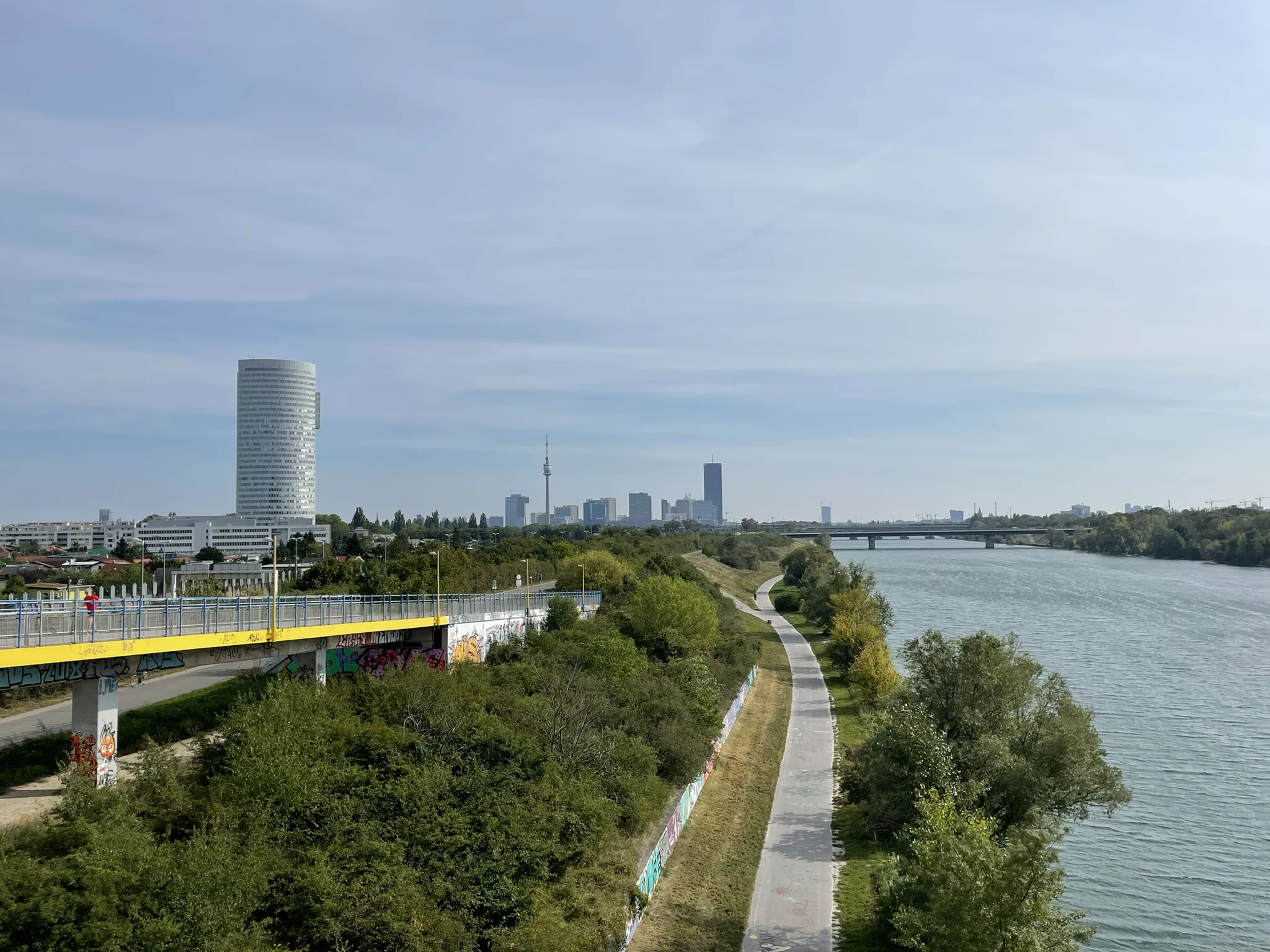
- The most popular urban hiking route is Weir on the Wien River loop from Purkersdorf Sanatorium, a 11.8 miles (19.0 km) trail that takes 4 hours 51 minutes to complete. This route follows the Wien River, offering a mix of natural and urban scenery.
- Another top favourite among local hikers is St. Anna Chapel – Dornbach Cemetery, Vienna loop from Hernals, an easy 3.8 miles (6.1 km) path. This trail winds through urban green spaces and offers views of local landmarks.
- Local hikers also love the Weir on the Wien River loop from Wien Hadersdorf, a 1.9 miles (3.0 km) trail leading through riverine landscapes, often completed in about 47 minutes.
- Hiking around Wienerwald is defined by mixed woodlands, rolling hills, and river valleys, with a network of routes offering options for different ability levels.
- The routes in Wienerwald are highly rated by the komoot community with an average score of 4.6 stars from over 5,700 reviews. More than 30,000 hikers have used komoot to explore Wienerwald's varied terrain.
Last updated: June 29, 2026
4.6
(5)
49
hikers
19.0km
04:51
70m
70m
Moderate hike. Good fitness required. Easily-accessible paths. Suitable for all skill levels.
25
hikers
6.09km
01:37
60m
60m
Easy hike. Great for any fitness level. Easily-accessible paths. Suitable for all skill levels.

Sign up for free
9
hikers
3.03km
00:47
20m
20m
Easy hike. Great for any fitness level. Easily-accessible paths. Suitable for all skill levels.
4.5
(2)
56
hikers
Moderate hike. Good fitness required. Easily-accessible paths. Suitable for all skill levels.
43
hikers
5.08km
01:18
20m
20m
Easy hike. Great for any fitness level. Easily-accessible paths. Suitable for all skill levels.
Get access to more routes and recommendations from other explorers.
Sign up for free
Already have an account?
Our route recommendations are based on thousands of hikes, rides, and runs completed by other people on komoot.
Start today with a free account
Your next adventure awaits.
Login or Signup
Other adventures around Wienerwald


Tips from the Community

Schloss Neuwaldegg is a baroque palace on the edge of the Vienna Woods and is one of Vienna's most important historical sites. Built at the end of the 17th century, it was later expanded by Field Marshal Franz Moritz von Lacy, who had one of Austria's first English landscape gardens laid out here. Together with the present-day Schwarzenbergpark, the palace forms an impressive ensemble of history, architecture, and nature.
4
0
The St. Anna Chapel in Dornbach is a small, historic sacred building and a quiet place for contemplation on the edge of the Wienerwald. The simple chapel blends harmoniously into its surroundings and is reminiscent of the long history of the former village of Dornbach. A tranquil place that uniquely combines cultural history and local recreation.
3
0

The distinctive wild boar sculptures at Pulverstampftor (one of the northern entrances to Lainzer Tiergarten in Vienna-Hietzing) are a popular photo motif. The two life-sized, imposing wild boar figures greet visitors directly at the gate and are a direct indication of the rich wildlife in the nature reserve there.
0
0
The administrative building was erected in 1912/13 by the Viennese city administration on the former site of the depot of the steam tram company formerly known as Krauss & Comp. and opened on January 12, 1914.[1] Initially, it only served the 13th district, as at that time parts of Vienna north of the Wien River also belonged to the 13th district. On October 15, 1938, the district boundaries were changed by the National Socialist dictatorship; since then, the 14th district, Penzing, which was newly configured at the time, has also been administered from here.
0
0
In the winter of 1872/1873, the contractor Antonio Gabrielli suggested to the municipal council that the work be completed in October 1873, instead of 1874 as contractually agreed, in return for a bonus payment. As both the sanitary situation – Vienna was again threatened by a cholera epidemic from 1872 onwards and the Kaiser-Ferdinands-Wasserleitung supplied insufficient water – and the financial situation were extremely strained, this led to difficult discussions within the water supply commission. On February 18, 1873, it submitted a motion to the municipal council to pay Gabrielli a bonus of one million guilders if the construction work was completed by October 1, 1873. This was accepted.
1
0
In 1713, Johann Carl Bartolotti Freiherr von Partenfeld, whom the Palais Bartolotti-Partenfeld in Vienna also commemorates, founded a votive chapel made of wood in place of the present-day St. Anne's Chapel. This was replaced by a stone building in 1717 and enlarged in 1773. Its tower was heightened in 1884. Due to dilapidation, the chapel was closed in 1905 and demolished in 1906, as it represented a traffic obstruction on Dornbacher Straße. In the years 1908 to 1910, St. Anne's Chapel was rebuilt according to the plans of architect Johann Steinmetz, now oriented towards the north. In front of the chapel, the "Association of Gardeners and Garden Friends in Dornbach and the Surrounding Area" had an Emperor Oak planted in 1910 on the occasion of the 80th birthday of Emperor Franz Joseph I, which a memorial stone commemorates.[2] St. Anne's Chapel belongs to the Roman Catholic parish of Dornbach (based in the Dornbach parish church). Furthermore, the chapel is a preaching station of the Evangelical parish community A. B. Währing (based in the Lutherkirche).
3
0
Maria Theresia visited the house of God daily during her stays at Schönbrunn Palace, which, thanks to generous donations, was elevated to a parish in 1786. The church's treasury had to hand over the most valuable part to the mint as a war loan in 1793/1794 and 1809. On the way from Schönbrunn to Hietzing, there were small chapel-like niches in the boundary wall towards the Wien River with paintings depicting the Way of the Cross, for the maintenance of which Clement von Radolt had established a special foundation in 1667. When the wall was removed, the pictures were moved to the Hietzing church by order of Maria Theresia, where they have since been mounted on the side walls.
1
0

Hacking & Hütteldorf have been connected since 1878 by a wooden footbridge, which was replaced by an iron structure in 1898
0
0
Frequently Asked Questions
How many urban hiking trails are available in the Wienerwald region?
The Wienerwald offers a vast network of urban hiking trails, with over 890 routes available on komoot. This includes a wide range of options, from leisurely strolls to more challenging treks, ensuring there's something for every hiker.
What kind of terrain can I expect on urban hikes in the Wienerwald?
Urban hikes in the Wienerwald feature varied terrain. You'll find everything from gentle paths along rivers like the Wien River, as seen on routes such as the Weir on the Wien River loop from Wien Hadersdorf, to rolling hills and mixed woodlands. The region is known for its diverse landscapes, including sandstone ridges, limestone cliffs, and picturesque meadows, even within its more urban-adjacent areas.
Are there family-friendly urban hiking trails in the Wienerwald?
Yes, the Wienerwald is very family-friendly. Many urban routes are designed to be accessible for all ages, often featuring relatively flat terrain and shorter distances. While specific family-focused urban routes aren't highlighted in the data, the region generally offers many easy paths suitable for families, and the broader Wienerwald area includes attractions like Naturpark Sparbach with its ancient trees and wild boars, which can be a great addition to a family outing.
Can I bring my dog on urban hikes in the Wienerwald?
Many urban hiking trails in the Wienerwald are dog-friendly, allowing you to enjoy the natural beauty with your canine companion. It's always advisable to keep dogs on a leash, especially in more populated areas or nature reserves, and to check local regulations for specific trails. The diverse landscapes provide plenty of opportunities for dogs to explore.
Which urban hikes in the Wienerwald are easily accessible by public transport?
The Wienerwald benefits from excellent public transport links from Vienna, making many urban trails easily accessible. Routes like the St. Anna Chapel – Dornbach Cemetery, Vienna loop from Hernals start directly from urban areas well-served by public transport. This convenient access allows for car-free exploration of the region's green spaces.
Are there circular urban hiking routes in the Wienerwald?
Yes, the Wienerwald offers numerous circular urban hiking routes, perfect for a convenient day trip. Examples include the Weir on the Wien River loop from Purkersdorf Sanatorium and the View of the Wien River – Hietzing District Office loop from Wien Hütteldorf. These loops allow you to start and end your hike at the same point, often near public transport or parking.
What interesting landmarks or viewpoints can I discover on urban hikes in the Wienerwald?
Urban hikes in the Wienerwald often lead to fascinating landmarks and offer scenic viewpoints. You can explore areas near historical sites or enjoy vistas from various lookout points. Notable attractions in the broader Wienerwald include the Habsburgwarte on the Hermannskogel and the Troppberg Observation Tower, which provide stunning panoramic views of the Vienna Woods and the cityscape.
Are there places to eat or drink along urban hiking trails in the Wienerwald?
Yes, the Wienerwald region is known for its 'Hütte-hopping' tradition, offering many opportunities for refreshments. While specific urban routes might pass through areas with cafes or restaurants, the wider area features charming vineyard villages like Gumpoldskirchen and numerous traditional huts. Highlights like the Hameau Hut and Meadow (Schwarzenberg Park) and the Josefswarte and Kammersteiner Hut are popular spots for a break.
What is the best time of year for urban hiking in the Wienerwald?
The Wienerwald is beautiful year-round for urban hiking, with each season offering a unique experience. Spring brings lush greenery and blooming flowers, while autumn transforms the deciduous forests into a spectacle of colors. Summer provides warm weather for longer excursions, and even winter offers serene, crisp walks, especially on well-maintained urban paths. Always check local weather conditions before heading out.
What do other hikers enjoy most about urban hiking in the Wienerwald?
The komoot community highly rates urban hiking in the Wienerwald, with an average score of 4.57 stars. Reviewers often praise the region's unique blend of natural beauty and accessibility, highlighting the well-marked trails, the peaceful atmosphere surprisingly close to the city, and the diverse landscapes that make every hike enjoyable. The convenience of reaching these green oases from Vienna is also a frequently mentioned positive.
Are there easy urban hiking routes suitable for beginners in the Wienerwald?
Absolutely. The Wienerwald offers a significant number of easy urban hiking routes, with over 660 routes classified as 'easy' on komoot. These trails are generally shorter, have minimal elevation gain, and are perfect for beginners or those looking for a relaxed walk. An example is the Liesing Aqueduct – Stelzerausteg Bridge loop from Perchtoldsdorf, which is an easy option.
Most popular routes around Wienerwald
Most popular attractions around Wienerwald

Get inspired with the komoot mobile app


Explore more
Browse the best Hikes in other regions.
