The best city hikes and walks around Propsteier Wald
4.5
(16955)
71,887
hikers
178
hikes
Urban hiking trails around Propsteier Wald are characterized by a blend of dense forests, open green spaces, and historical elements. The region features ancient beech and oak trees, with the meandering Saubach stream adding to the natural landscape. As a designated landscape protection area, it offers a unique environment shaped by its past military use, which has fostered diverse biotopes. The area provides a network of paths, including some barrier-free options, connecting natural areas with urban surroundings.
Best urban hiking…
Last updated: June 29, 2026
4
hikers
Easy hike. Great for any fitness level. Easily-accessible paths. Suitable for all skill levels.
5.0
(1)
25
hikers
7.24km
01:54
60m
60m
Easy hike. Great for any fitness level. Easily-accessible paths. Suitable for all skill levels.

Sign up for free
13
hikers
Easy hike. Great for any fitness level. Easily-accessible paths. Suitable for all skill levels.
6
hikers
Easy hike. Great for any fitness level. Easily-accessible paths. Suitable for all skill levels.
3
hikers
Moderate hike. Good fitness required. Easily-accessible paths. Suitable for all skill levels.
Get access to more routes and recommendations from other explorers.
Sign up for free
Already have an account?
Our route recommendations are based on thousands of hikes, rides, and runs completed by other people on komoot.
Start today with a free account
Your next adventure awaits.
Login or Signup
Popular around Propsteier Wald

Tips from the Community

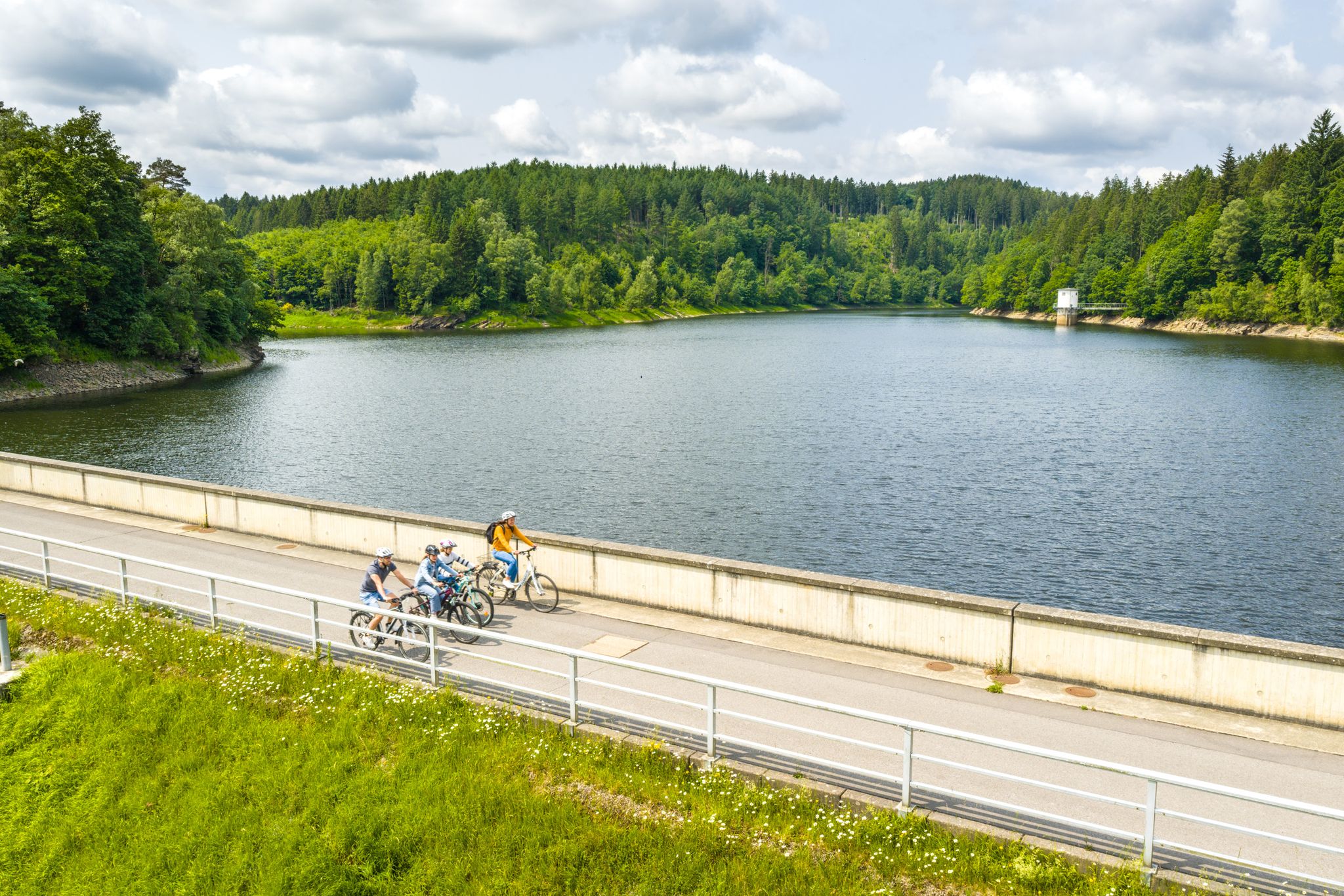
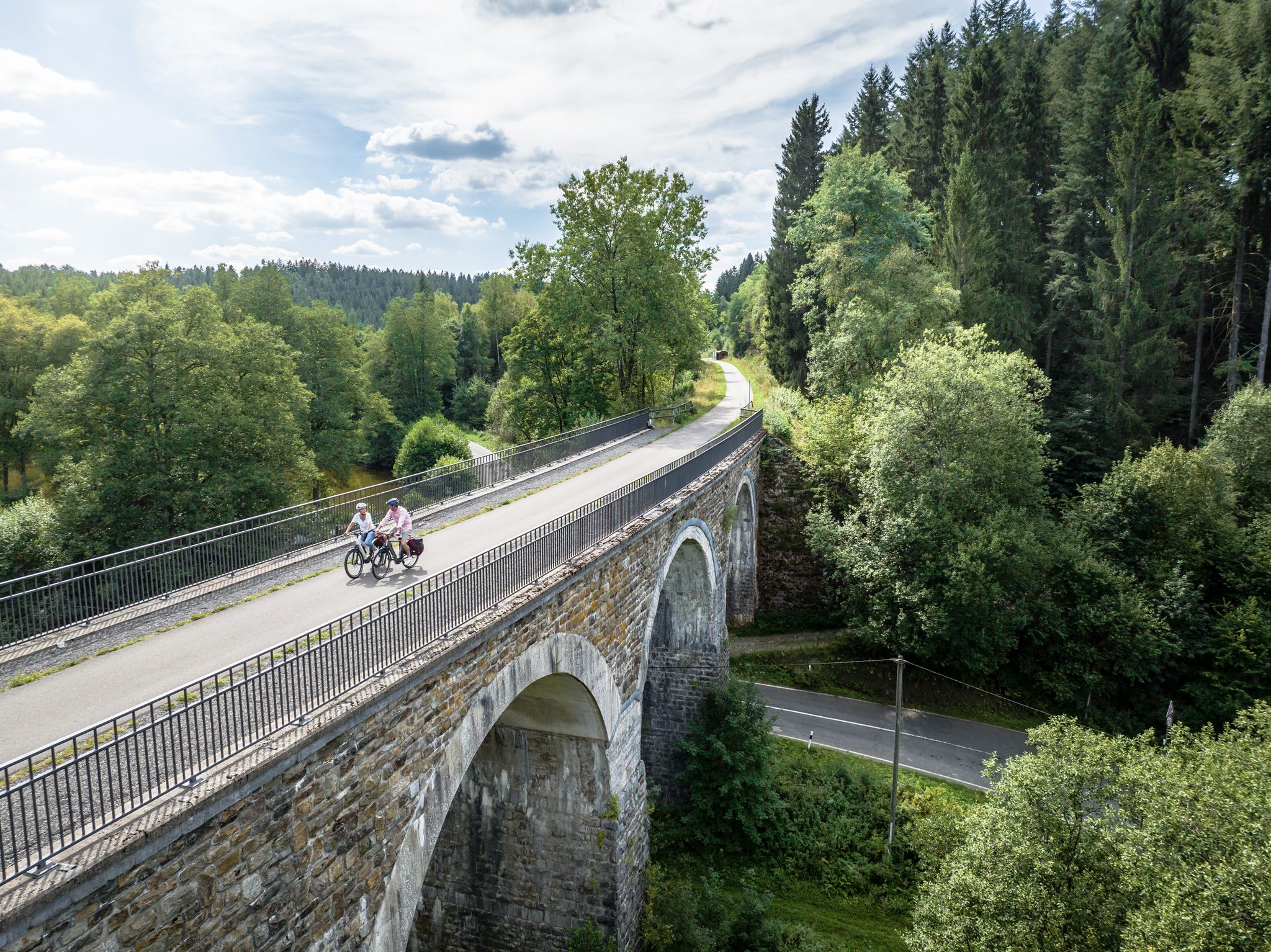
The Vennbahn is one of the longest cycle paths along disused railway lines in Europe. It leads through 3 countries, is completely asphalted and has only slight gradients. Nature, borderland flair and Vennbahn stories accompany this 125 km long tour.
0
0

I was totally impressed by how beautiful Stolberg is 👍 it's wonderful to walk through the streets.
0
0

The restored streambed near Haarberg in Aachen is a prime example of how nature and technology can work together. Where watercourses were often straightened and tightly controlled in the past, here the stream has been given the space to flow naturally again. Thanks to the restoration, the water now meanders through the valley with gentle banks, natural vegetation, and more varied flow. This not only creates a more attractive landscape but also a healthier ecosystem where plants, insects, and birds can once again find a home. The stream forms a tranquil green corridor in an area also home to important infrastructure. Nearby is the Haarbachtal Bridge of the A544 motorway, part of the German Autobahn network. This bridge was demolished in 2024 because it was technically outdated and no longer met modern requirements. For a long time, the route was at a standstill, with no traffic passing through the valley, but an unusual silence around the motorway. The work dominated the scene, with construction activities and an interrupted connection. The new bridge has now been completed, and traffic is flowing across the valley again. Where the highway stood still last year, there is now movement and sound again. The surrounding area is also more vibrant. Buildings and facilities that previously seemed empty or quiet are back in use. The contrast between the former tranquility and the current bustle demonstrates how dramatically a place can change in a short time. In this respect, highways are unique elements in the landscape. They connect regions, enable mobility, and form important economic arteries. At the same time, they are feats of engineering: bridges, viaducts, and routes must perfectly align with the terrain's contours. This interplay is clearly visible at Haarberg. Below, the restored stream flows in its natural bed, while above, traffic once again finds its way over a modern structure. This place thus tells a story of restoration, renewal, and constant movement.
0
0
Schleichers Hof is the name of a historic building in Stolberg's old town, dating back to the 16th century. It played a central role in the early history of Stolberg's copper and brass industry. The complex was originally known as a Kupferhof (literally, a copper or brass yard) and was built in 1575 by Leonhard (Leonard) Schleicher, a copper master from Aachen. In the early 1570s, Leonard Schleicher recognized the economic advantages of the Stolberg Vicht Valley for the brass industry, including its abundant water supply and proximity to ores and coal, and therefore moved his company from Aachen to Stolberg. There, on Burgstraße, he had the foundation stone Kupferhof of Stolberg built, which later became known as Schleichers Hof. At that time, it was one of the few buildings in the city constructed of stone, besides the imposing Stolberger Burg. A copper farm was not a regular residence, but a fortified courtyard-like commercial and residential structure surrounded by residential and factory buildings with a secure entrance gate and windows facing the courtyard, intended to combine both production and protection. As Stolberg's first copper farm, Schleichers Hof marks the beginning of the Stolberg brass industry. From this location, the urban and economic network expanded, and several similar farm complexes were later built. The presence of these companies is why Stolberg is also known as "Kupferstadt," the copper city. Using the water from nearby streams, metal could be processed in hammer mills and furnaces, which was essential for the production of brass (an alloy of copper and zinc). Over the centuries, the function of Schleichers Hof changed. Around 1790, the complex underwent a significant transformation, and a country pharmacy (Adler-Apotheke) was established on part of the site, one of the earliest in the Aachen district. This pharmacy remained in continuous operation for almost 200 years, contributing to the city's infrastructure far beyond the court's former industrial use. The building still has a recognizable façade today, while the interior and its use have changed. Remaining architectural elements, such as 16th-century wall anchors, serve as reminders of the original construction.
0
0
The Pont de Valognes is not a bridge in Valognes, France, but rather the name of a bridge in the German town of Stolberg. It is a symbolic bridge over the Vicht River on Stolberg's historic Burgstraße and commemorates its French twin town, Valognes, in Normandy. The Pont de Valognes is the official name of a bridge over the Vicht River on Stolberg's Burgstraße and one of the old main streets in the Altstadt (Old Town) of Stolberg in North Rhine-Westphalia, Germany. It has been part of the city's infrastructure for centuries, but was officially named "Pont de Valognes" in 2010. This naming ceremony marked the 20th anniversary of the twinning between Stolberg and Valognes, a municipality in the Normandy Cotentin region of France. Hikers report that the bridge offers views of the old town and Stolberg Castle and that it's a pleasant stop along routes through the historic streets of the Altstadt.
0
0
The view of the Vichtbach from the Burgstraße Bridge offers a characteristic and atmospheric view of Stolberg's old town. From this bridge, you look down on the Vichtbach, the stream that runs through the valley like a lifeline and has historically shaped the city's development. The flowing water, the narrow banks, and the densely built houses together create an intimate cityscape in which nature and architecture are closely intertwined. For centuries, the Vichtbach played a central role in Stolberg's daily life. Its water was used for crafts, particularly in the metalworking and copper industries for which the city was known. From the Burgstraße Bridge, it becomes clear how the stream carves its way through the narrow valley and how the city has literally formed around the water. The facades, bridges, and retaining walls follow the course of the stream, enhancing the sense of a historically developed whole. The view from the bridge is unique because it brings together several layers of the city. You see the flowing water below, the old houses built close to the banks, and above them, the rising streets and slopes toward the castle. This perspective reveals the vertical structure of Stolberg, from stream valley to castle hill. At the same time, the rippling water creates tranquility and continuity in an urban environment.
0
0
The Kupferhof Adler is a historic building in the heart of Stolberg (Aachen, Germany), known as the former Adler Pharmacy (Adler-Apotheke). The building is one of the characteristic monuments in the old town and, along with the nearby city castle and other medieval structures, forms an essential part of Stolberg's urban heritage. The building was originally built in the 16th and 17th centuries during a period of urban expansion and increasing prosperity. The name Adler ("eagle") refers to the emblem under which the pharmacy once operated, a name and symbol traditionally associated with quality, reliability, and recognition in Germany at a time when literacy was not a given. For centuries, the pharmacy served as a public facility, dispensing medicinal products to the population, ranging from herbal mixtures to prepared medicines. The building served not only as a pharmacy but also as a meeting place in the city. In a time before modern healthcare, pharmacies were important sources of advice and knowledge, and the Adler Pharmacy played that role for the residents of Stolberg and the surrounding area. The Kupferhof Adler is typical of the architecture of inns and commercial buildings during the transition from late medieval to early modern architectural styles in this region. The facades are constructed of brick and half-timbering with wooden decorative details and typical German Renaissance influences. Small window divisions and rich facade accents testify to the craftsmanship of the construction and the aesthetic preferences of the time. What makes the building special is how it fits into the urban landscape of Stolberg. It stands close to other monumental buildings, squares, and alleyways, forming part of a continuous historical fabric that brings the atmosphere of the old town to life. The combination of its function (pharmacy), name (Adler), and architecture makes the building a recognizable landmark. As a former pharmacy, the Kupferhof Adler was more than just a shop. It was a social hub, a place where people gathered, exchanged information, and sought support. During its centuries of operation, the building guided Stolberg's development from a medium-sized trading town to a regional center of culture and economics. Today, the building is an important part of the historic cityscape. It commemorates a time when medicine, trade, and city life were closely linked. Visitors to Stolberg can admire the building from the outside as one of the tangible witnesses to the town's long history.
0
0
The historic alleyways of Stolberg's old town transport you back in time. Narrow, winding streets lined with half-timbered houses and brick facades exude a centuries-old atmosphere. Wandering through these alleys, you'll discover hidden corners, small squares, and details that keep the past alive, preserving the town's authentic charm.
0
0
Frequently Asked Questions
How many urban hiking trails are available in Propsteier Wald?
There are over 180 urban hiking trails in the Propsteier Wald region, offering a wide variety of experiences. The vast majority, about 158, are rated as easy, making them accessible for many hikers.
What kind of landscapes can I expect on urban hikes in Propsteier Wald?
Urban hikes in Propsteier Wald offer a unique blend of dense forests with ancient beech and oak trees, meandering streams like the Saubach, and smaller open green spaces. You'll find paths that traverse historical railway embankments and lead through sections like the Würselen City Forest, providing a mix of natural beauty and accessible woodland experiences.
Are there any family-friendly urban hiking routes in Propsteier Wald?
Yes, many of the trails are suitable for families. With 158 easy routes, you'll find plenty of options for leisurely walks. The region's generally flat terrain and well-maintained paths make it ideal for outings with children. Consider routes that explore the Würselen City Forest for accessible woodland experiences.
Can I bring my dog on the urban hiking trails in Propsteier Wald?
Yes, dogs are generally welcome on the urban hiking trails in Propsteier Wald. It's a great area for walks with your canine companion, offering plenty of natural scents and open spaces. However, always keep your dog on a leash, especially given the area's sensitive habitats and to respect other hikers and wildlife.
What historical or natural attractions can I see along the urban hiking trails?
The urban hiking trails in Propsteier Wald are rich with points of interest. You can discover the tranquil Saubach in the Forest, walk along the historic Old Tramway Embankment (Aachen–Weisweiler), or visit the Anna Gertrud Mommertz Memorial Cross. The area also holds remnants of a Roman villa rustica and other ancient artifacts, adding a layer of historical intrigue to your hike.
Are there any circular urban hiking routes available?
Yes, many of the urban hiking routes in Propsteier Wald are circular, offering convenient starting and ending points. For example, you can enjoy the Vennbahn Path loop from Eilendorf, which provides a scenic and accessible circular experience.
What is the best time of year for urban hiking in Propsteier Wald?
Propsteier Wald is beautiful year-round. Spring brings lush greenery and blooming flora, while autumn offers stunning fall colors. Summer is ideal for enjoying the shade of the dense forests, and even winter can be magical with a dusting of snow. The well-maintained paths make it accessible in most conditions.
Where can I find refreshments or a place to eat near the trails?
For a historical ambiance and a meal, the renovated Weiden Forester's Lodge serves as a restaurant and is an idyllic stop during your hike. You'll also find various cafes and restaurants in the nearby city centers, such as Eschweiler and Stolberg, which are often starting points for urban routes.
How can I get to the urban hiking trails using public transport?
Many urban hiking trails in the Propsteier Wald region are accessible via public transport, particularly those starting from city centers or train stations. Routes like the Eschweiler Station – Inde River in Eschweiler loop or the Eschweiler Tal Station – Eschweiler City Center loop are designed to begin near public transport hubs, making them convenient to reach without a car.
What do other hikers enjoy most about urban hiking in Propsteier Wald?
The area is highly rated by the komoot community, with an average score of 4.2 stars from over 150 ratings. Reviewers often praise the peaceful and diverse natural landscapes, the well-maintained paths suitable for all levels, and the blend of forest tranquility with accessible urban connections. The historical elements and rich biodiversity are also frequently highlighted as unique aspects of the hiking experience.
Are there any easy urban hikes that explore city centers?
Yes, there are several easy urban hikes that allow you to explore city centers while enjoying nature. For instance, the Stolberg Old Town – Stolberg Castle loop offers a pleasant walk through historical areas, and the Eschweiler City Center – Inde River in Eschweiler loop combines urban exploration with riverside paths.
Most popular routes around Propsteier Wald
Most popular attractions around Propsteier Wald

Get inspired with the komoot mobile app


Explore more
Browse the best Hikes in other regions.
