The best city hikes and walks around Bleibtreusee
4.4
(12308)
56,690
hikers
63
hikes
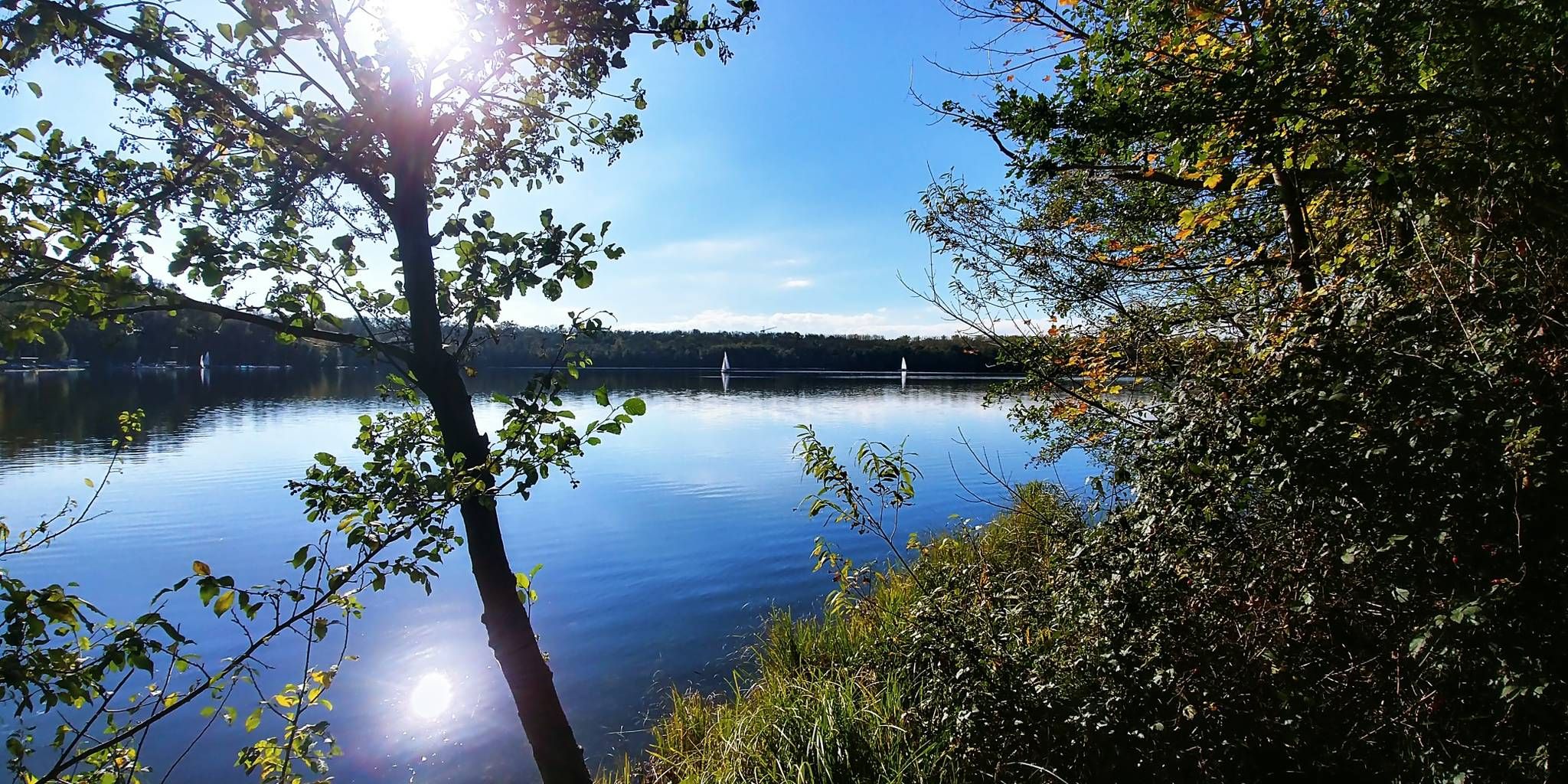
Urban hiking trails around Bleibtreusee offer a unique landscape shaped by its origin as a former lignite opencast mine, now re-naturalized. The region features a substantial lake, approximately 74 hectares, surrounded by extensive mixed forests of poplars, pines, and oaks. These trails provide accessible paths through a diverse ecosystem, blending natural regeneration with urban proximity. The terrain is generally gentle, with some subtle inclines, making it suitable for various activity levels.
Best urban hiking trails around Bleibtreusee
- The most popular…
Last updated: June 29, 2026
5
hikers
5.36km
01:24
40m
40m
Easy hike. Great for any fitness level. Easily-accessible paths. Suitable for all skill levels.
31
hikers
4.49km
01:11
40m
40m
Easy hike. Great for any fitness level. Easily-accessible paths. Suitable for all skill levels.

Sign up for free
5.0
(1)
8
hikers
5.88km
01:32
40m
40m
Easy hike. Great for any fitness level. Easily-accessible paths. Suitable for all skill levels.
1
hikers
Moderate hike. Good fitness required. Easily-accessible paths. Suitable for all skill levels.
4.7
(3)
6
hikers
7.89km
02:03
50m
50m
Moderate hike. Good fitness required. Easily-accessible paths. Suitable for all skill levels.
Get access to more routes and recommendations from other explorers.
Sign up for free
Already have an account?
Our route recommendations are based on thousands of hikes, rides, and runs completed by other people on komoot.
Start today with a free account
Your next adventure awaits.
Login or Signup
Popular around Bleibtreusee
Other adventures around Bleibtreusee

Tips from the Community


For the history of the Palmersdorfer Hof, see e.g. https://de.wikipedia.org/wiki/Palmersdorfer_Hof or https://palmersdorferhof.de/geschichte/geschichte.php
2
0

Featuring the first Rocaille in Germany, Augustusburg Palace marks the cradle of Rococo in Germany. Elector and Archbishop Clemens August had his summer palace built between 1725 and 1768 on the ruins of a medieval moated castle – initially by the Westphalian master builder Johann Conrad Schlaun. Starting in 1728, the Walloon architect François de Cuvilliés the Elder designed Augustusburg Palace in its current form. However, Clemens August never saw his favorite residence completed, as it wasn't completed until seven years after his death.
13
0
Elector Clemens August had the former Franciscan monastery church, consecrated in 1493, converted into the palace church of "St. Mary of the Angels" in 1735. The orangery with a two-story oratory was built between the single-nave building and the palace. Inside and out, the church appears rather plain, but chapel-like niches and pointed-arch ribbed vaults structure the space. The high altar, made of colored stucco marble and extending from the entire choir loft to the vault, is a masterpiece. After being damaged in World War II, the high altar was extensively restored. Today, St. Mary of the Angels is one of the most beautiful Baroque churches in Germany.
16
1


In the former pilgrimage chapel, the viewer is transported to the Orient. Things are turbulent. Women are drawing water from the well. In a tent, a man is telling a story with expansive gestures. A boy is playing the flute. Shepherds are camping with their sheep... The oriental nativity scene with the carved figures... has been set up since 2011. (Text source: information sheet)
11
0

Station No. 47 - Hürth-Fischenich Use of broken Roman canal rubble in the castle "A particularly beautiful example of the reuse of broken Roman canal rubble as building material can be found in Hürth-Fischenich, where almost the entire castle was built from this material. The ruins of the former castle in the center of the town are now surrounded by a small residential complex. Nevertheless, the monument is still easy to get to. Fischenich Castle was built in the 12th/13th century; the castle was owned by knights of the same name. In the preserved remains of the castle masonry, it is clearly visible where the material for building the castle was obtained in the Middle Ages. We can see blocks of rammed concrete (Opus caementicium) to which a hydraulic, reddish plaster (Opus signinum) and a calcareous sinter deposit adhere. This makes it clear that this material is reused sections of the Roman Eifel aqueduct to Cologne. This type of stone extraction was common in the Middle Ages. the route of the Roman Eifel aqueduct. Since residential buildings in the Middle Ages were generally built of half-timbering, we find the building material from the Roman canal quarry primarily in churches, monasteries and castles. Fischenich Castle was destroyed in the fighting in the Truchsess War (1584) and has been a ruin ever since." https://www.roemerkanal.de/bauwerk
0
0
Frequently Asked Questions
How many urban hiking trails are available around Bleibtreusee?
There are over 60 urban hiking trails and walks available around Bleibtreusee, catering to various preferences and fitness levels. Most of these, about 60, are rated as easy, with a few moderate options for those seeking a bit more challenge.
What kind of terrain can I expect on urban hikes near Bleibtreusee?
The urban hikes around Bleibtreusee feature a mix of well-paved paths and natural forest trails. As an artificial residual lake, the landscape blends industrial history with natural regeneration, offering varied scenery with mixed forests and lake views. While generally easy, some paths, like the S1 Steep Short Trail at Bleibtreusee to Taucherparkplatz, can include steeper sections and uneven ground, providing a bit more challenge.
Are there any easy urban walks suitable for beginners or casual strolls?
Yes, many urban walks around Bleibtreusee are perfect for beginners and casual strolls. The popular lake circuit is approximately 5 km long and can typically be completed in about an hour, offering a gentle experience. Routes like Eisenwerk Fountain – Brühl pedestrian zone loop from Brühl and Brühler Marktplatz – Eisenwerk Fountain loop from Brühl are also rated as easy and provide pleasant urban exploration.
Can I bring my dog on the urban hiking trails around Bleibtreusee?
Yes, the trails around Bleibtreusee are generally dog-friendly, making it a great place to enjoy an urban hike with your canine companion. Remember to keep your dog on a leash, especially in busier areas or near wildlife habitats, and always clean up after them to preserve the natural beauty for everyone.
Are the urban hiking trails around Bleibtreusee suitable for families with children?
Absolutely. Many of the urban hiking trails, particularly the lake circuit, are well-suited for families with children. The relatively flat and accessible paths, combined with the scenic lake and forest views, make for an enjoyable outing. The presence of the Bleibtreu Lake Beach also offers a fun spot for families to relax after a walk.
What are some interesting sights or natural features to look out for on these urban hikes?
Urban hikes around Bleibtreusee offer a variety of interesting sights. You can enjoy views of the water ski facility and the expansive lake itself. The area is rich in biodiversity, with an island serving as a breeding ground for various birds. You might also encounter specific aquatic plants like Dwarf Igelkolben. For a unique experience, explore the Pathway Between the Lakes or the Overgrown Path by Bleibtreusee.
Where can I park when visiting Bleibtreusee for an urban hike?
Parking facilities are available around Bleibtreusee, making it convenient for hikers arriving by car. Specific parking areas are often designated near popular access points, such as the Taucherparkplatz mentioned in relation to the S1 Steep Short Trail. It's advisable to check local signage for current parking regulations and fees.
How can I reach Bleibtreusee using public transport for a hike?
Bleibtreusee is accessible via public transport, connecting it to nearby towns like Brühl. While specific bus routes may vary, public transport options typically involve bus services that stop within walking distance of the lake. For example, routes like Kierberg Imperial Station – Imperial Station Brühl-Kierberg loop from Brühl-Kierberg start near a train station, facilitating public transport access.
What is the best time of year to go urban hiking around Bleibtreusee?
Bleibtreusee offers enjoyable urban hiking experiences throughout the year. Spring brings lush greenery and blooming flora, while autumn showcases vibrant fall colors in the mixed forests. Summer is popular for combining hikes with a visit to the Bleibtreu Lake Beach. Even in winter, the serene landscape can be beautiful, though some paths might be muddy or icy.
Are there places to eat or drink near the urban hiking routes?
Yes, there are options for refreshments near the urban hiking routes around Bleibtreusee. The water ski facility often has food and drink services, and the Bleibtreu Lake Beach area can also offer amenities. For more choices, nearby towns like Brühl provide a wider selection of cafes and restaurants.
What do other hikers say about the urban trails around Bleibtreusee?
The urban trails around Bleibtreusee are highly rated by the komoot community, with an average score of 4.45 stars. Reviewers often praise the peaceful environment, the beautiful lake and forest scenery, and the accessibility of the trails. Many appreciate the opportunity to combine nature walks with views of recreational activities like water skiing.
Are there any longer urban hikes for more experienced walkers?
For those seeking longer urban hikes, Bleibtreusee offers several options. While most routes are easy, some extend further, such as the Kierberg Imperial Station – Imperial Station Brühl-Kierberg loop from Brühl-Kierberg, which covers over 10 km. Another moderate option is the Ruins of Fischenich Castle – View of the Cologne skyline loop from Fischenich, spanning nearly 8 km.
Can I combine urban hiking with other activities at Bleibtreusee?
Absolutely! Bleibtreusee is a hub for various outdoor activities. You can easily combine your urban hike with swimming at the officially permitted Bleibtreu Lake Beach, or enjoy watching the water ski facility. The diverse ecosystem also makes it a great spot for birdwatching, especially around the designated breeding island.
Most popular routes around Bleibtreusee
Most popular attractions around Bleibtreusee

Get inspired with the komoot mobile app


Explore more
Browse the best Hikes in other regions.
