The best walks and hikes around Lutzenberg
4.5
(3255)
20,439
hikers
839
hikes
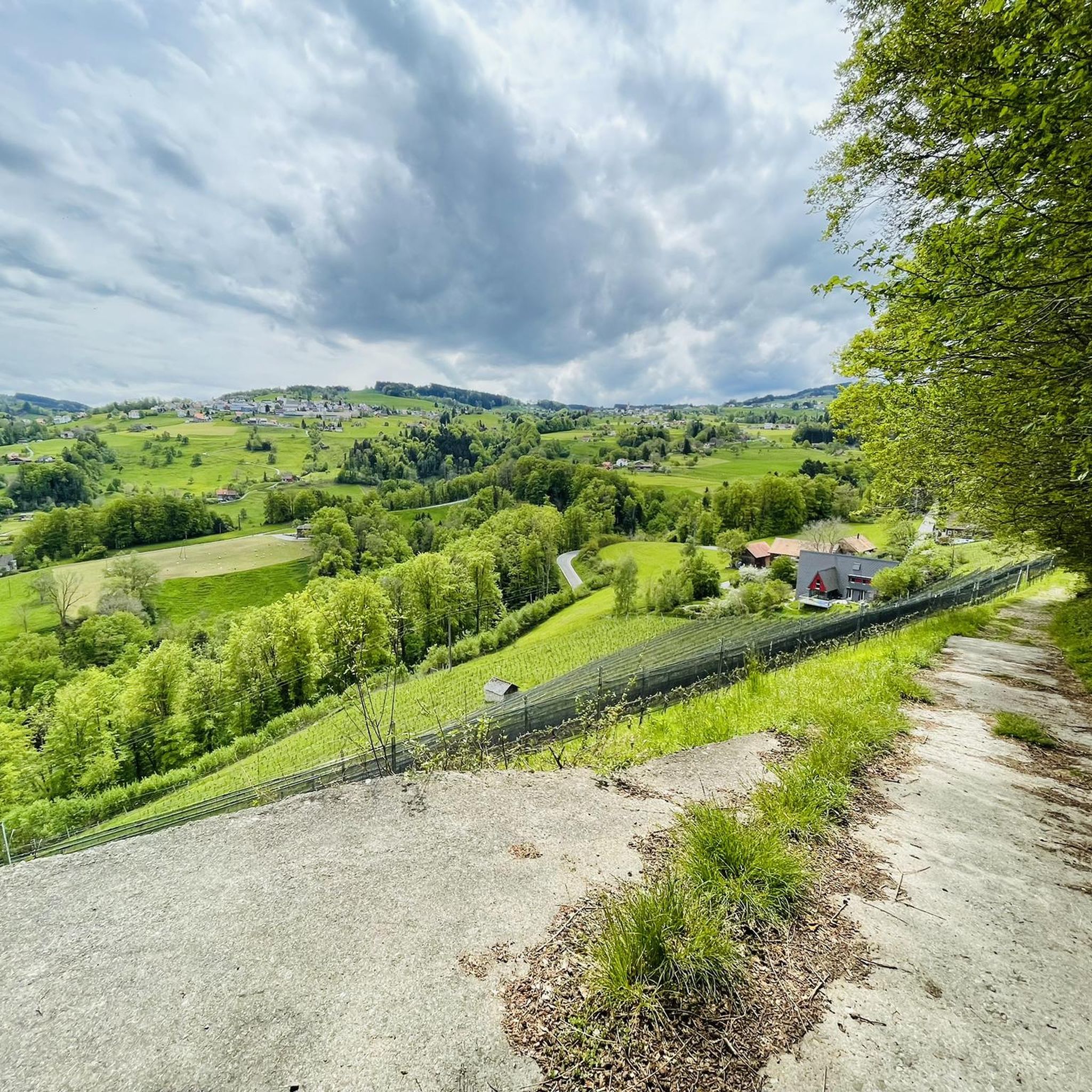
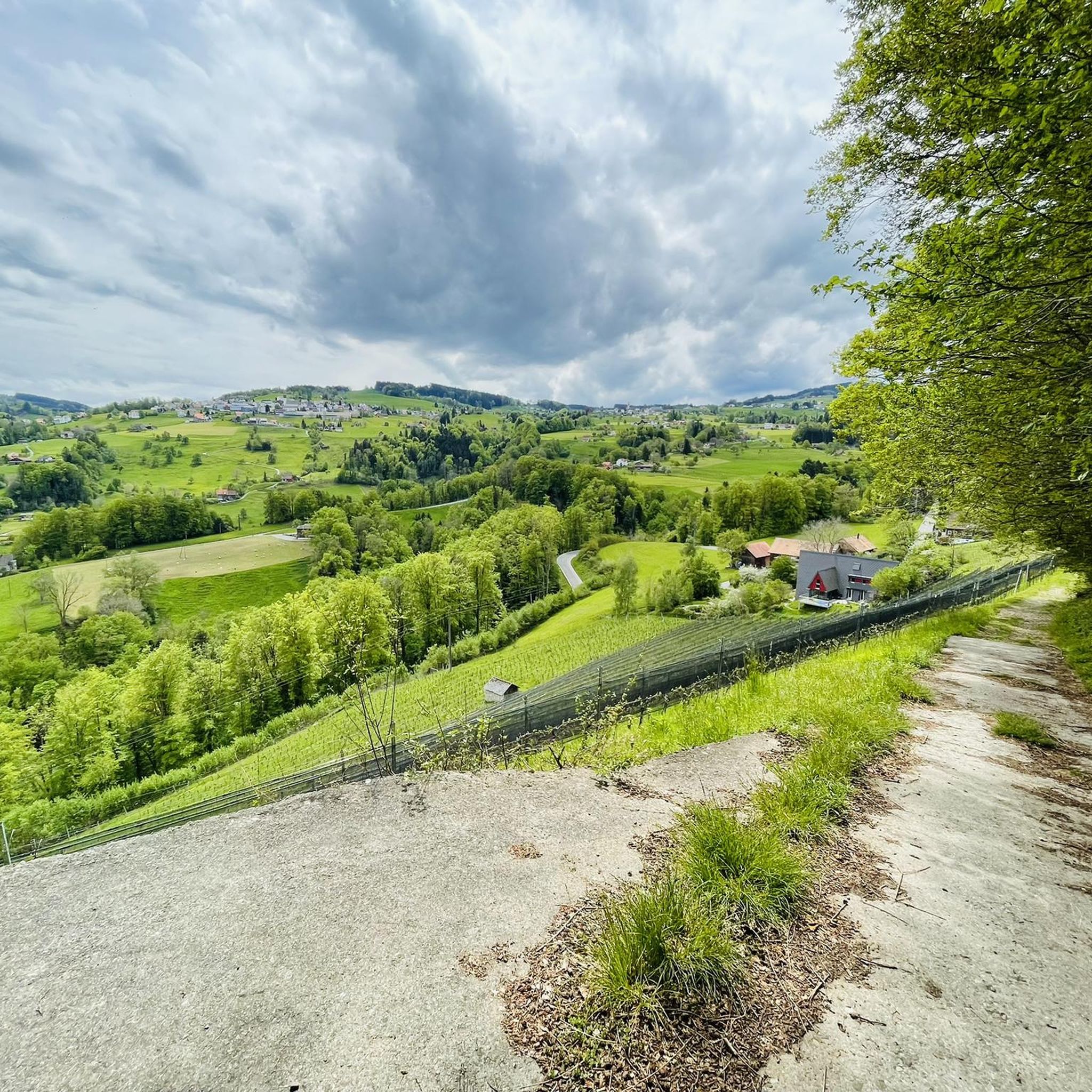
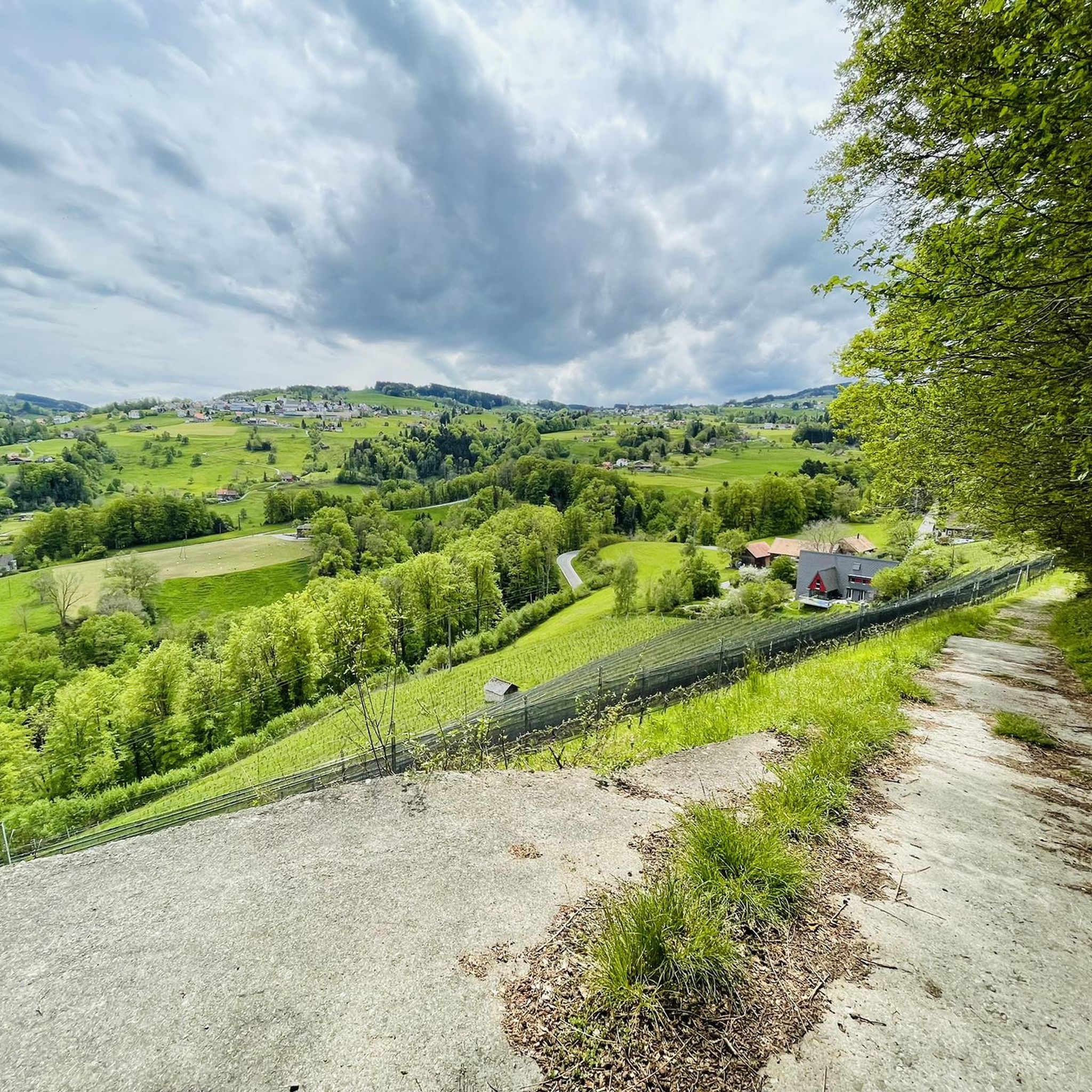
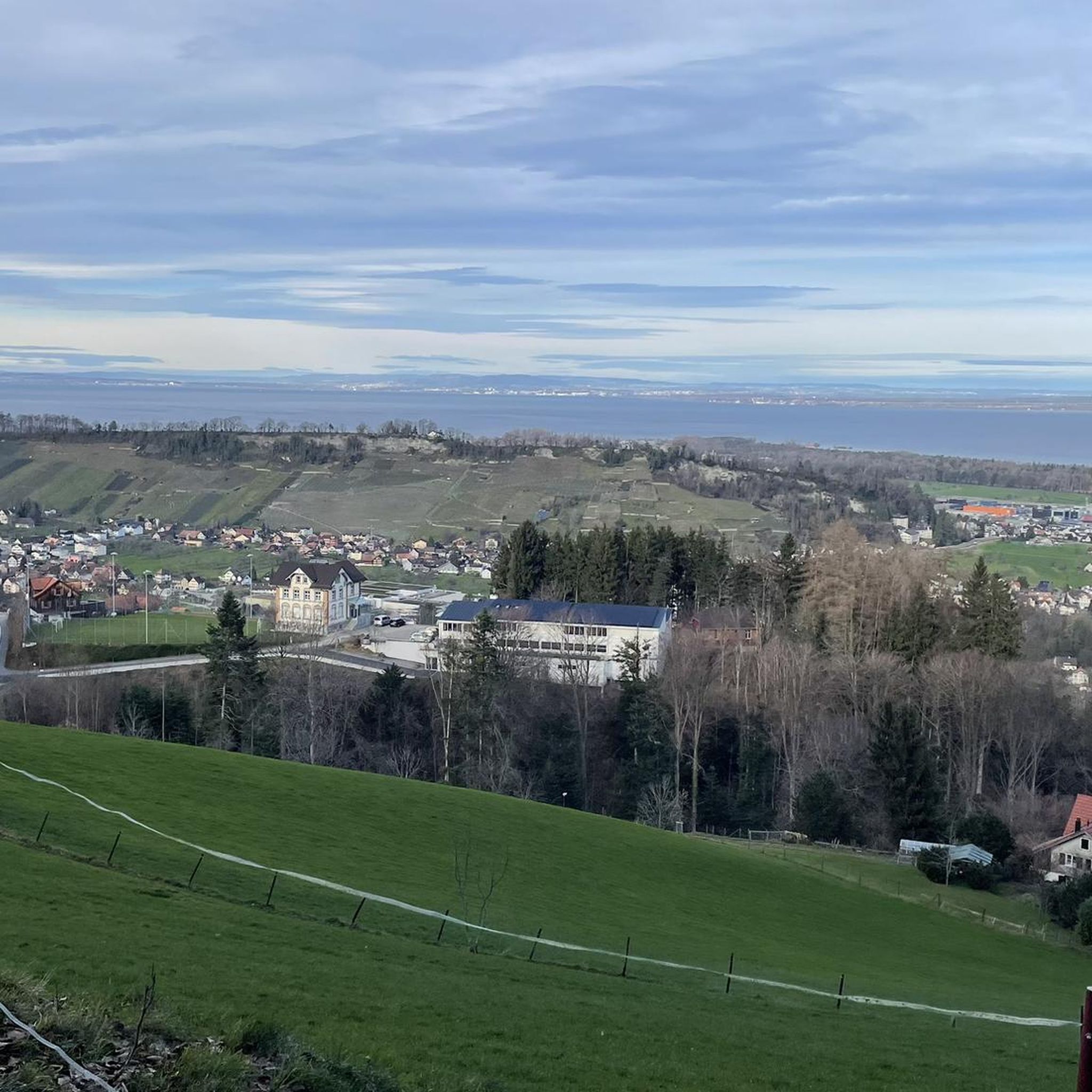
Hiking around Lutzenberg offers diverse terrain, characterized by rolling hills, vineyards, and views towards Lake Constance. The region features a mix of forested paths and open landscapes, providing varied experiences for hikers. Elevations are generally moderate, making many trails accessible. Lutzenberg, Switzerland, is situated in a landscape that transitions from the Rhine Valley to higher ground, offering both valley walks and routes with panoramic vistas.
Best hiking trails around Lutzenberg
- The most popular hiking route is Thal viticultural trail,…
Last updated: July 1, 2026
4.6
(5)
43
hikers
3.05km
00:52
70m
70m
Easy hike. Great for any fitness level. Easily-accessible paths. Suitable for all skill levels.
4.7
(70)
261
hikers
5.59km
01:41
180m
180m
Easy hike. Great for any fitness level. Easily-accessible paths. Suitable for all skill levels.

Sign up for free
4.8
(42)
131
hikers
12.6km
03:55
480m
480m
Moderate hike. Good fitness required. Easily-accessible paths. Suitable for all skill levels.
4.6
(13)
68
hikers
13.3km
03:38
190m
190m
Moderate hike. Good fitness required. Easily-accessible paths. Suitable for all skill levels.
4.6
(11)
48
hikers
Moderate hike. Good fitness required. Easily-accessible paths. Suitable for all skill levels.
Get access to more routes and recommendations from other explorers.
Sign up for free
Already have an account?
Our route recommendations are based on thousands of hikes, rides, and runs completed by other people on komoot.
Start today with a free account
Your next adventure awaits.
Login or Signup
Tips from the Community

The Bisewäldli nature reserve on the Old Rhine (Canton of St. Gallen) is an internationally important floodplain and bird protection area. It is particularly known for its species diversity with over 330 observed bird species and its well-developed nature observation infrastructure.
0
0

This small chapel on the ridge was built in 1892 in honor of Our Lady of Lourdes. From the chapel, you have a wonderful view into the distance, over Lake Constance and the associated national borders.
0
0

Fünfländerblick On the Fünfländerblick, the view is fantastic. The Fünfländerblick owes its name to the view of Switzerland, Austria, and the formerly independent German states of Bavaria, Württemberg, and Baden. Text / Source: St.Gallen-Bodensee Tourismus, Bankgasse 9, St.Gallen https://st.gallen-bodensee.ch/de/map/poi/funflanderblick-ac477623-0957-4a92-bf9c-9bd555970463.html
15
0
Maria Lourdes Kapelle (1892) Rossbüchel In 1892, a Lourdes chapel was built on the ridge on behalf of Klara Bischof. For over 100 years, a chapel has stood on the crest of the Rossbüchel in honor of the Mother of God of Lourdes. The builder of the chapel was the devout maiden Klara Bischof, originating from a family of roofers and therefore commonly known by the name "Deckers Klara". On the occasion of a pilgrimage to Rankweil, Klara Bischof visited the Lourdes chapel in Altenstadt. It was there that she got the idea to erect a chapel in Grub as a thank you for the health regained in Lourdes. When carrying out the plan, difficulties arose from all sides. The church administration feared a decline in church attendance and thus a reduction in offertory income for the church. However, there were also enough people who encouraged Klara Bischof in her endeavor. On January 25, 1892, she was able to acquire the necessary land on the height of the Rossbüchel at a low price. Material transport began just a few days later. 180 loads of masonry stones were quarried and transported to the height. The construction, which began on March 23, was completed at the end of June. Bell founder Egger in Staad donated the little bell, which was transported to Grub on a richly decorated handcart, was consecrated on June 16, and its voice first sounded on June 18. Egger also donated the cross and knob for the small tower. The Lourdes statue arrived on March 11 from Gröden in Tyrol and was first housed in Klara Bischof's home. Under festive accompaniment, the solemn transfer of the two statues, Maria and Bernadette, to the chapel took place on August 6. The festive day of the chapel's consecration was the feast day of the Assumption of Mary, on August 15, 1892. Ext / Quelle: eggersriet.ch http://www.eggersriet.ch/de/aktuellesportrait/portrait/geschichte/welcome.php?action=showinfo&info_id=7348
14
0
Mattenbach Suspension Bridge, Grub AR to Grub SG The Grub-Grub pedestrian suspension bridge between Grub Appenzell and Grub St. Gallen is one of the solid, down-to-earth suspension bridges. Without frills and with two anchorages on each side, the bridge still swings enough to feel the real suspension bridge experience. With a walkway width of just 65cm, it is one of the narrowest suspension bridges in Switzerland. Because the side cladding was attached conically, the width at "backpack height" is still sufficient for careful crossing. The bridge is a welcome shortcut for locals between the two villages. Since the bridge, opened in April 2019, was also mentioned in the Swiss press and on television, it is also known regionally. On beautiful weekend days, there can be quite a few people at the bridge. It is 180 meters long, the new attraction in the Appenzeller Vorderland. Since April 2019, the two villages Grub AR and Grub SG have been connected again by an attractive, 180-meter-long suspension bridge over the Mattenbach. A very popular hiking trail across the cantonal border from Frauenrüti Grub AR to the Grünau area Grub SG is thus continuously accessible again. The bridge is only for the sure-footed. The highest point of the bridge is around 40 meters above the gorge. Text / Source: haengebruecken.com/grub-grub https://www.haengebruecken.com/grub-grub-kantonsverbindend-haengebruecke/
14
0
Albrecht von Graefe (1828–1870), Heiden Medically, von Graefe is considered the true founder of the field of ophthalmology. In 1866, himself the son of an ophthalmologist, he became director of the ophthalmology department at the Charité in Berlin. He invented iridectomy for the treatment of glaucoma, and various other technical terms bear his name, such as Graefe's syndrome, Graefe's spot, or Graefe's reflex. His surgical skill was legendary, his creativity immense. Graefe studied medicine, mathematics, physics, and chemistry in Berlin. He wrote his dissertation in Latin in 1847. Afterwards, he was an assistant physician in Prague, where he began to dedicate himself entirely to ophthalmology. He continued his studies in Paris, Vienna, and London and returned to Berlin in 1852, where he completed his habilitation and opened a private eye clinic with 120 beds, which soon enjoyed worldwide fame in both practice and research. Graefe was exceptionally socially minded in his treatment, making no distinction based on social class – not least for this reason, his student Julius Hirschberg called him an "apostle of suffering humanity" in an obituary. Two years later, in 1854, he founded the first ophthalmological journal, the "Archiv für Ophthalmologie." In 1866, Graefe became director of the ophthalmology department at the Charité and was particularly successful in treating glaucoma and strabismus. He is said to have performed more than 10,000 eye operations. Various technical terms bear the name of the physician, such as "Graefe's syndrome," "Graefe's spot," or "Graefe's reflex." The consistent use of the ophthalmoscope developed by Helmholtz also goes back to Graefe. In 1851, Albrecht von Graefe came to Heiden for the first time; the young Berlin doctor had tuberculosis and wanted to benefit from the high-altitude climate. From 1860 onwards, he settled in Heiden every summer, operated at the «Freihof», and initiated the construction of a new spa hotel because his skill attracted so many patients that the hotel capacities were quickly insufficient. Whey cures and eye medicine helped the town to flourish, a prosperity that is still visible in the village today. von Graefe died in 1870 at the young age of 42 from pulmonary tuberculosis. Text / Source: Heiden Municipal Administration, Kirchplatz 6 / Postfach 64, 9410 Heiden https://www.heiden.ch/geschichte/13103
14
0
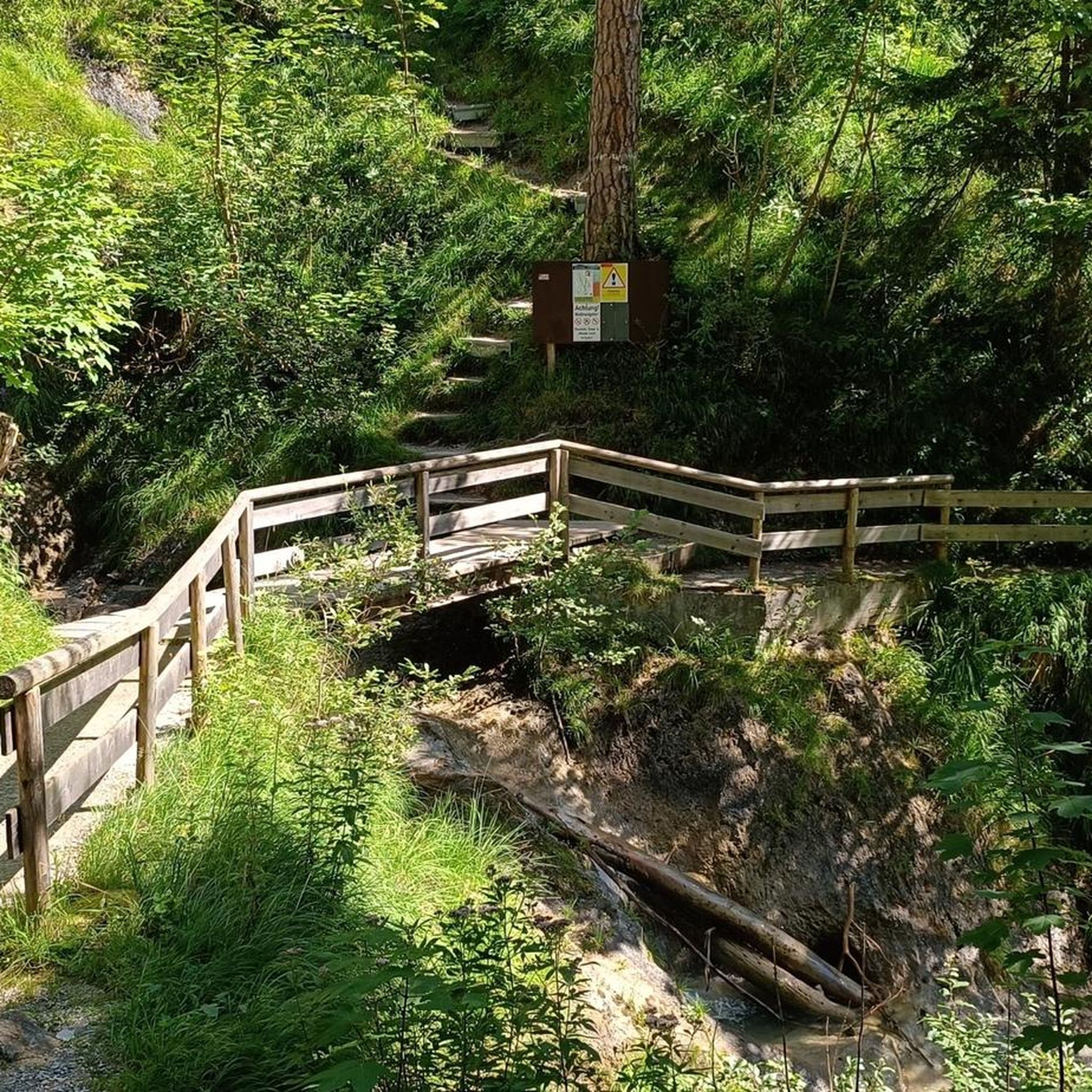
Heidenbach Heiden - Built in June 1996 Wooden bridge over the Heidenbach Built in June 1996 By the Vorderland AR civil protection organization And the local tradesman. On behalf of the Heiden spa association. Supported by the municipality of Heiden
14
0

Beautiful chapel for a quiet prayer
0
0
Frequently Asked Questions
How many hiking trails are available in Lutzenberg?
Lutzenberg offers a wide variety of hiking experiences with over 850 trails recorded on komoot. This includes more than 440 easy routes, 380 moderate routes, and a selection of challenging trails.
Are there easy hiking trails suitable for beginners in Lutzenberg?
Yes, Lutzenberg is well-suited for beginners, with over 440 easy hiking trails. The region's moderate elevations make many paths accessible. A great option is the Thal viticultural trail, which is an easy 1.9-mile (3.0 km) walk through vineyards.
What kind of terrain can I expect on hikes around Lutzenberg?
Hiking around Lutzenberg features diverse terrain, including rolling hills, picturesque vineyards, and forested paths. You'll find a mix of open landscapes and routes offering stunning views towards Lake Constance. The elevation is generally moderate, providing varied experiences from valley walks to panoramic vistas.
Are there any circular hiking routes in Lutzenberg?
Yes, many routes in Lutzenberg are designed as circular hikes. For example, the Fünfländerblick Viewpoint – Grub Suspension Bridge loop from Grub AR is an easy 3.5-mile (5.6 km) circular path that includes a suspension bridge and scenic viewpoints.
What are some scenic viewpoints or landmarks to look out for on Lutzenberg trails?
Many trails offer scenic viewpoints, particularly those overlooking Lake Constance. The Fünfländerblick Viewpoint – Grub Suspension Bridge loop from Grub AR is known for its scenic vistas. You can also explore nearby attractions like the Arbon Old Town or the Arbon Harbor and Lakeside Promenade, which are close to some routes.
What do other hikers enjoy most about hiking in Lutzenberg?
The area is highly rated by the komoot community, with an average score of 4.6 stars from nearly 3,000 reviews. Hikers often praise the diverse landscape, including vineyard paths and views of Lake Constance, as well as the well-maintained trails suitable for various skill levels.
Are there any natural attractions or reserves near Lutzenberg's hiking trails?
Yes, the region boasts natural attractions. The Viewpoint – Altenrhein Nature Reserve loop from Wartensee takes you close to the Rhine Delta Nature Reserve. Other natural highlights include the Gäbrisseeli and the Rheindelta Beach at Lake Constance.
Are there any longer or more challenging hikes in the Lutzenberg area?
While many trails are easy to moderate, Lutzenberg does offer longer options. The Grub Suspension Bridge – View of Lake Constance loop from Grub AR is a moderate 7.8-mile (12.6 km) trail that takes nearly 4 hours to complete, providing a more extended hiking experience through varied terrain.
What is the best time of year to go hiking in Lutzenberg?
The best time to hike in Lutzenberg is typically from spring through autumn (April to October). During these months, the weather is generally mild, and the vineyards are lush, offering pleasant conditions and vibrant scenery. Summer provides warmer temperatures, while autumn brings beautiful fall colors.
Is public transport available to access hiking trails in Lutzenberg?
Lutzenberg and its surrounding areas are generally well-connected by public transport, including local buses and trains. Many trailheads are accessible from villages and towns that have public transport stops, making it convenient to reach various starting points without a car.
Are there specific parking areas or trailheads for hikers in Lutzenberg?
Yes, designated parking areas and trailheads are available in and around Lutzenberg, particularly in villages like Grub AR and near popular starting points for vineyard walks. These are usually well-marked and provide convenient access to the hiking network.
Are there any trails that pass by lakes or bodies of water near Lutzenberg?
Several trails offer views of or lead to bodies of water. The region is close to Lake Constance, and routes like the Grub Suspension Bridge – View of Lake Constance loop from Grub AR provide excellent lake views. You can also find highlights like the Arbon Harbor and Lakeside Promenade nearby.
Most popular routes around Lutzenberg
Most popular attractions around Lutzenberg

Get inspired with the komoot mobile app


Explore more
Browse the best Hikes in other regions.
