The best city hikes and walks around Parc Natural del Montseny
4.5
(2568)
19,424
hikers
12
hikes
Urban hiking trails around Parc Natural del Montseny offer routes through varied landscapes, transitioning from Mediterranean forests at lower altitudes to areas with streams and local green spaces. The region, a UNESCO Biosphere Reserve, features diverse ecosystems even near urban centers, providing a mix of natural and cultural elements. These trails often incorporate local landmarks and accessible paths, making them suitable for exploring the periphery of towns and villages.
Best urban hiking trails around Parc Natural del Montseny
- The most…
Last updated: October 15, 2026
6
hikers
5.64km
01:29
40m
40m
Easy hike. Great for any fitness level. Easily-accessible paths. Suitable for all skill levels.
3
hikers
4.26km
01:07
30m
30m
Easy hike. Great for any fitness level. Easily-accessible paths. Suitable for all skill levels.

2
hikers
6.57km
01:44
60m
60m
Easy hike. Great for any fitness level. Easily-accessible paths. Suitable for all skill levels.
21
hikers
6.63km
01:43
30m
30m
Easy hike. Great for any fitness level. Easily-accessible paths. Suitable for all skill levels.
5
hikers
5.22km
01:22
40m
40m
Easy hike. Great for any fitness level. Easily-accessible paths. Suitable for all skill levels.
Get access to more routes and recommendations from other explorers.
Already have an account?
Our route recommendations are based on thousands of hikes, rides, and runs completed by other people on komoot.
Start today with a free account
Your next adventure awaits.
Popular around Parc Natural del Montseny

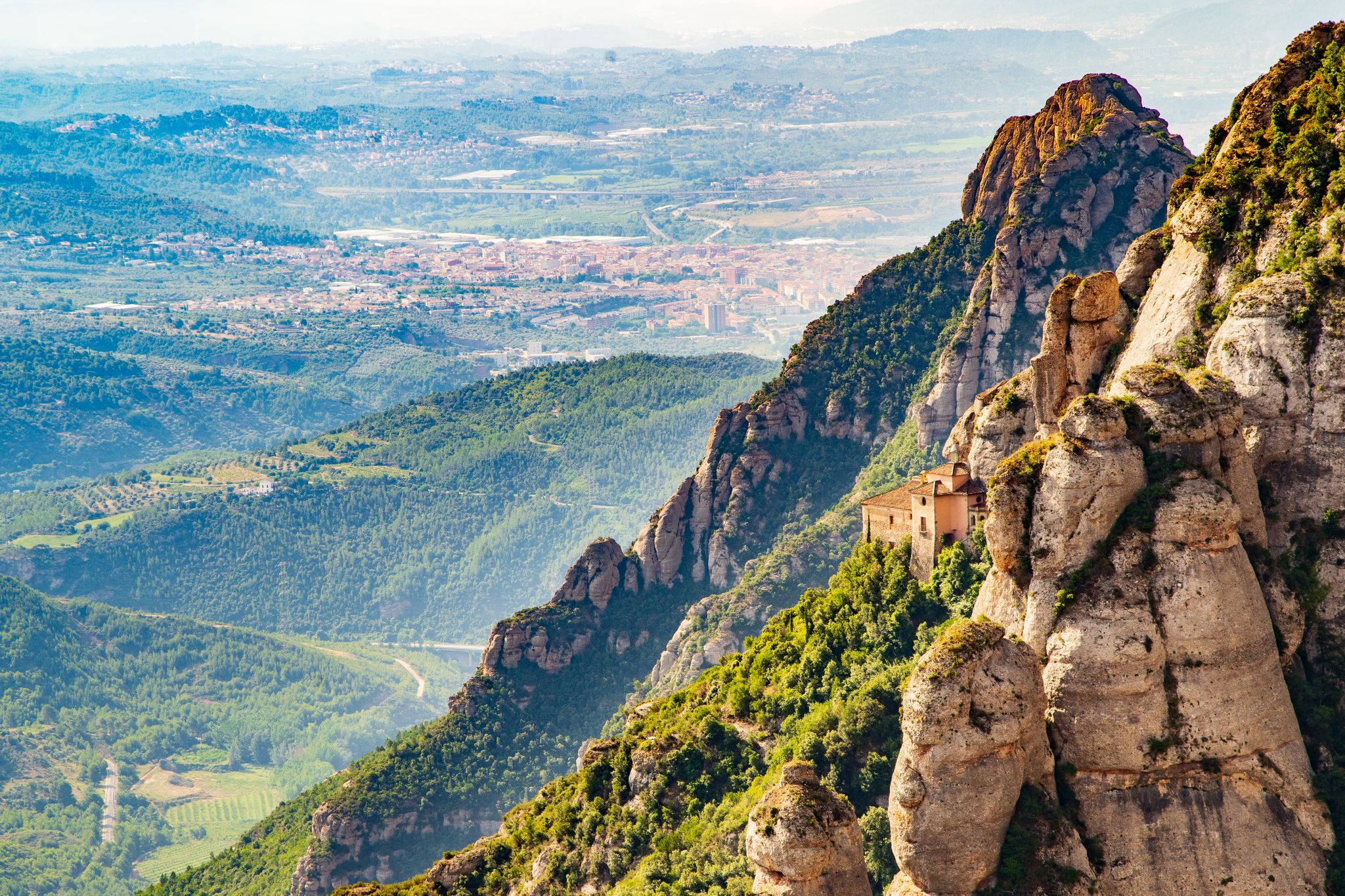
Other adventures around Parc Natural del Montseny


Tips from the Community

Formerly known as Pllaça del Blat, and also Llotja del Gra, it is already mentioned in the year 944, linked to the function of a market.
0
0

The distance between the church of La Doma and the town suggested building a new temple within the urban core, an agreement that was taken in 1685, but which was not completed until 1737, when it was blessed the church of Sant Esteve. The initial project was signed by the house master Giralt Cerdà, but the masters Ramon Fort, Pau Fadrí and Antoni Alsiu also worked on it. It is known that in 1693 the works were already quite advanced. In a corner of the facade, there is a square with an inscription alluding to the death of a worker in 1691. It is a building with three naves, the central one covered with a barrel vault with lunettes and topped with a semicircular apse. Attached to the left side is the Santíssimo chapel. On the north-east side there is the bell tower, with a square plan, with three bodies, the upper octagonal. It is crowned with a metal structure of ogival arches. The portal is quite monumental. It is presided over by a modern image of Saint Stephen, the work of local artist Ferran Ventura. In 1880 the temple had to be closed due to its poor condition and was not reopened until three years later. In 1926, the staircase was built, designed by Josep M. Pericas. Damaged during the Civil War, it had to be restored by Duran and Reynals, who also built the new baptistery.
1
0

The parish church of Sant Fèlix de Canovelles is one of the few buildings in Catalonia of the first Romanesque art probably built in the second half of the 11th century and built with a single elongated nave with Lombard bands around the entire façade. The parish church of Sant Fèlix de Canovelles is one of the few buildings in Catalonia of the first Romanesque art probably built in the second half of the 11th century and built with a single elongated nave with Lombard bands around the entire façade. Inside, there are two paintings dedicated to Sant Roc and Sant Andreu from the end of the 16th century. In the rectory there are two tables from an altarpiece where Sant Llorenç and Santa Puríssima are represented. The parish had a remarkable treasure of goldsmithing that disappeared in 1936 with the Spanish Civil War. A 17th-century nave and an ivory image of the Virgin of the Roser are still preserved. The Church of Sant Fèlix is located in the old town of Canovelles, in Carrer de l’Església. It is a very narrow pedestrian street and can be reached by crossing the roundabout on Avinguda de Canovelles on the Ronda Nord de Granollers in the section that passes through Canovelles.
3
0
La Porxada located in Granollers (Province of Barcelona, Spain) is a building made up of a stone pavement platform, 15 stone columns and the roof, as well as its subsoil.
5
0
Frequently Asked Questions
How many urban hiking trails are available in the Parc Natural del Montseny area?
There are 8 urban hiking trails featured in this guide, offering a variety of experiences. Most of these, 6 to be exact, are rated as easy, making them accessible for many hikers.
Are there any easy urban hikes suitable for beginners or families?
Yes, the area around Parc Natural del Montseny offers several easy urban hikes. For example, the Main Base loop from la Garriga is an easy 4.7 km route. Another great option is the Plaça Jacint Verdaguer – La Porxada loop from les Franqueses del Vallès, which is just under 6 km and also rated easy.
What kind of natural features can I expect to see on urban hikes near Montseny?
While these are urban trails, the wider Parc Natural del Montseny region is known for its rich hydrology, including numerous streams and natural ponds. You might encounter glimpses of the diverse forests, transitioning from Mediterranean holm oaks to Central European beeches, even on routes closer to towns. The area is a UNESCO Biosphere Reserve, highlighting its significant natural beauty.
Are there any historical or cultural landmarks along the urban hiking routes?
Yes, some urban routes incorporate historical elements. For instance, the Main Base – Roman Ruins of Can Terrers loop from la Garriga allows you to explore ancient Roman vestiges. The wider region also features charming villages and historical sites like Casal de la Sala de Viladrau.
What do other hikers enjoy most about urban hiking in this region?
The komoot community highly rates the hiking experiences in the Parc Natural del Montseny area, with an average score of 4.45 stars. Hikers often appreciate the blend of natural beauty and accessibility, finding refreshing escapes close to urban centers.
Are there any moderate urban hiking trails for a bit more challenge?
Yes, if you're looking for a slightly more challenging urban hike, consider the Carrer Girona – Club Basquet Granollers loop from les Franqueses - Granollers Nord. This route is 8.2 km long and is rated as moderate.
Are there any circular urban walks available?
Many of the urban trails in this guide are circular, offering convenient starting and ending points. Examples include the Main Base loop from la Garriga and the Sant Fèlix Parish – Church of Sant Fèlix loop from Granollers.
Can I find any waterfalls or significant water features near the urban trails?
While the urban trails themselves might not lead directly to major waterfalls, the Parc Natural del Montseny is renowned for its powerful hydrological system. Notable water features in the broader area include the Gorg Negre Waterfall and the Vallcàrquera Stream, which are popular spots for nature walks.
What are some notable castles or historical sites I can visit in the wider Montseny region?
Beyond the urban trails, the Montseny region is rich in cultural heritage. You can explore impressive sites like Montsoriu Castle, a significant historical landmark, or discover the charm of Casal de la Sala de Viladrau.
What is the typical length of urban hiking trails in this guide?
The urban hiking trails in this guide vary in length, generally ranging from around 4.7 km to 8.2 km. This provides options for shorter strolls or slightly longer walks, depending on your preference.
Most popular routes around Parc Natural del Montseny
Most popular attractions around Parc Natural del Montseny

Get inspired with the komoot mobile app


Explore more
Browse the best Hikes in other regions.
