The best traffic-free bike rides around Berngau
4.5
(3998)
24,108
riders
510
rides
No traffic touring cycling routes around Berngau are characterized by a varied landscape, situated between the Schwarzach river and the foothills of the Jura Mountains. This geographical position provides a mix of flat routes along waterways and gentle climbs into the surrounding hills. The region also offers access to the historic Main-Danube Canal and is close to the Franconian Lake District, providing diverse terrain for cyclists.
Best no traffic touring cycling routes around Berngau
- The most popular no traffic touring…
Last updated: July 11, 2026
5.0
(2)
16
riders
24.3km
01:31
150m
150m
Easy bike ride. Great for any fitness level. Mostly paved surfaces. Suitable for all skill levels.
5.0
(3)
22
riders
13.0km
00:50
50m
50m
Easy bike ride. Great for any fitness level. Mostly paved surfaces. Suitable for all skill levels.

Sign up for free
14
riders
16.4km
00:59
90m
90m
Easy bike ride. Great for any fitness level. Mostly paved surfaces. Suitable for all skill levels.
4.5
(8)
37
riders
25.0km
01:44
240m
230m
Moderate bike ride. Good fitness required. Mostly paved surfaces. Suitable for all skill levels.
12
riders
Moderate bike ride. Good fitness required. Mostly paved surfaces. Suitable for all skill levels.
Get access to more routes and recommendations from other explorers.
Sign up for free
Already have an account?
Our route recommendations are based on thousands of hikes, rides, and runs completed by other people on komoot.
Start today with a free account
Your next adventure awaits.
Login or Signup
Popular around Berngau
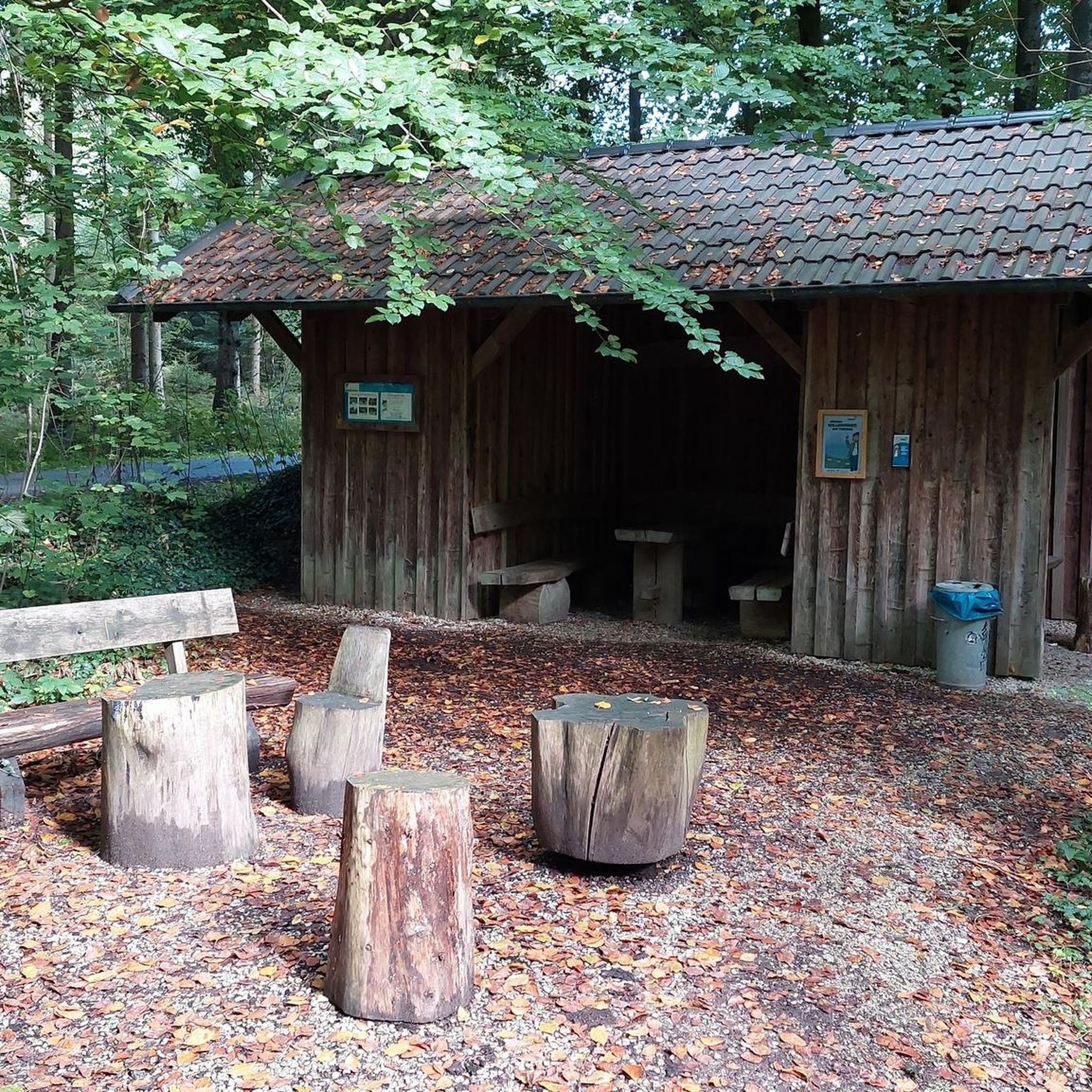
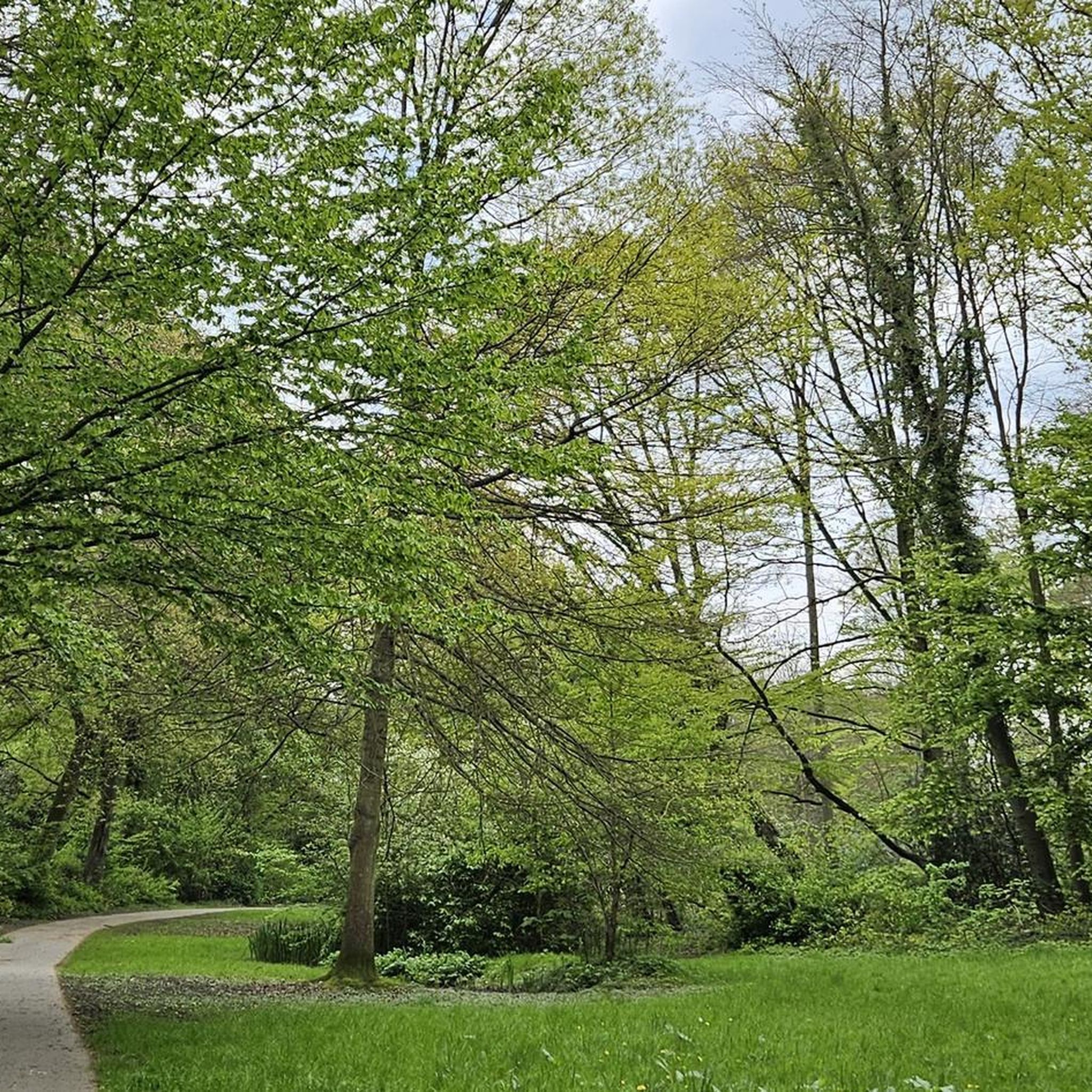
Tips from the Community

Very beautiful village church in the middle of the village center
0
0

Church of the Assumption of Mary The church was originally dedicated to the Visitation of Mary and is now dedicated to the Assumption of Mary. The nave is stylistically dated to the late 13th century. The chancel likely dates from the first half of the 14th century. The elongated, plastered hall church, with a slightly recessed chancel, measures 54 meters in length and features stepped buttresses at the chancel. A gabled tower with a pointed spire on the west side is open at the bottom. The church is a single-nave structure with a large nuns' gallery and, below it, the burial vault (known as a crypt) for the founding families of Sulzbürg and Wolfstein. The design is simple, with high, bare walls and no paintings or sculptures to minimize distractions from prayer. By the mid-14th century, the church's clear tripartite division was complete: the nuns' church in the west, the lay church in the center, and the priests' church in the east. The nuns' primary duties consisted of choral prayer and work. It can therefore be assumed that the church and the monastic living quarters were the first buildings completed. Until the Reformation, almost all deceased members of the founding family were buried here, and the nuns prayed daily for their souls. Several gravestones from this period still exist. The nuns' choir stalls on the gallery have been preserved and are therefore unique in all of Europe. The Baroque altars that adorn the church were acquired around 1720 after all the paintings and altars were burned during the Reformation. The high altar was crafted by a carpenter named Ulrich Schäfer from Neumarkt; the sculptor of the figures is unknown. The altarpiece, "The Visitation of Mary," is by the Landshut painter Wolf Simon Groß. In the right side altarpiece, dating from the late 17th century, the Three Wise Men pay homage to the Christ Child, above which is a statue of the Archangel Michael with a flaming sword and scales. In the left side altar stands a statue of the Virgin Mary with the Christ Child at the center, flanked by the apostles Peter and Paul. Above, a guardian angel holds his hand over a child. On the north wall of the nave is a dynamic, life-size group of figures dating from 1762, depicting the crucifix with John Nepomuk, accompanied by a putto and an angel. Source: Excerpts from www.wikipedia.de / https://www.pfarrei-seligenporten.de
3
0
Seligenporten Monastery The monastery, dedicated to the Blessed Virgin Mary, was founded in 1242 by Gottfried the Elder of Sulzbürg and his wife Adelheid of Hohenfels as a nunnery. In 1247, the monastery, then called "Felix Porta" ("fortunate/blessed gate"), was incorporated into the Cistercian Order through the mediation of the Archbishop of Mainz, and this was confirmed in 1249 by Bishop Heinrich of Eichstätt. In 1299, King Albrecht granted the monastery lower jurisdiction. The monastery was endowed by donations from the citizens of Sulzbürg and later from Wolfstein, as well as from the local nobility, and also served as the burial place for the Wolfstein family. Over the course of its more than 300 years, the Cistercian nunnery had further founders and patrons. Around 1500, the monastery's holdings comprised 350 properties with 650 subjects in over 20 villages, who were liable for taxes. It held the patronage rights for seven parishes and two chaplaincies. In the second half of the 15th century, the Electors of the Palatinate began to bring the Upper Palatinate monasteries under their rule. These monasteries, all heavily indebted and in dire financial straits, were powerless to resist. In 1550, Anna von Kuedorf, the last abbess of the Cistercian convent of Seligenporten, was forced to accept the Protestant church order of the Palatine Elector Ottheinrich. With her death in 1576, Seligenporten, the last abbey in the Palatinate, finally passed into the possession of the sovereign. After the annexation of the Upper Palatinate by Elector Maximilian of Bavaria, it was recatholicized, and the monastery was re-established in 1625. In 1671, the monastery was transferred to the Salesian convent in Amberg. In the course of secularization in 1803, the buildings and properties passed into private hands. Today, the former monastery church is the parish church of Seligenporten. Most of the buildings were demolished. The remaining monastery buildings were taken over in 1930/31 by the expelled Cistercians of Sittich Abbey, belonging to the Mehrerau Congregation. The community of monks, now established in Seligenporten, numbered 16 members in 1963, but was dissolved again in 1967. The former abbey church was restored between 1976 and 1979. In 2003, the former brewhouse of the old monastery brewery was renovated, and a new microbrewery was established. Source: Excerpts from www.wikipedia.de
3
0
St. Willibald Parish Church The hall church with its eastern chancel tower is of Romanesque origin, was remodeled in the Gothic period, refurnished in the Baroque era, and extended westward by two bays in 1834. The 52-meter-high church tower, built of sandstone blocks, bears the date 1491 on a corner stone; the spire was constructed from timbers dating from 1771. A gatehouse ("hay tower") from the 14th/15th century is part of the former churchyard fortifications; the cemetery itself was relocated outside the churchyard in 1864. Only three Gothic statues survived the iconoclasm of the 16th century (St. Nicholas, St. Willibald, and St. James the Apostle). The three Baroque altars were probably created by Johann Ulrich Wiest from Schrobenhausen around 1753. The altarpiece depicts St. Willibald and his sister, St. Walburga's Assumption into Glory is symbolized by the Blessed Virgin Mary with the Christ Child. The work was created by Johann Chrysostomus Wink, court painter of Eichstätt. The altarpiece is framed by figures of the parents of St. Willibald and St. Walburga, St. Richard, and his wife, St. Wuna. The upper section depicts the Holy Trinity. The left side altar shows the Blessed Virgin Mary with Child as Queen of Heaven, with St. Joseph to her left and St. Joachim, her father, to her right. The right side altar is dedicated to St. Anthony of Padua; to his left is St. Francis Xavier, one of the most important missionaries in church history, and to his right is St. John Nepomuk. The frescoes, framed by simple stucco, were painted in 1874 by Georg Lang, a church painter from Deiningen, in the Nazarene style. The church organ was built by the organ builder Andreas M. Ott from Bensheim. The church tower houses four bells; the "Evangelist Bell" dates from the early 14th century and is thus one of the oldest bells in the Diocese of Eichstätt. Three additional bells were added after the war, brought from Erding and Heidelberg. Source: Excerpts from the church guide
3
0

A first church was consecrated around 1060 in honor of St. Willibald, the founding bishop of the Diocese of Eichstätt. Formerly also a fortified church with four defensive towers—the "Hay Tower" from the 14th/15th century still stands, the others were demolished in the 17th century due to their dilapidated condition—the church has been remodeled several times. For example, in 1491 the church tower was built as a "pointing finger to heaven," but was partially destroyed during the Thirty Years' War. The church is a single-nave building (without dividing columns in the interior).
0
0
Another one of those HLs without any description or brains... Just got the button pressed. Delete!
0
0

Definitely cycle along the canal. You are only in nature
0
0
Definitely cycle along the canal. You are only in nature
0
0
Frequently Asked Questions
How many no-traffic touring cycling routes are available around Berngau?
Berngau offers a wide selection of no-traffic touring cycling routes, with over 500 options to explore. These routes cater to various skill levels, including over 250 easy routes, nearly 200 moderate routes, and around 90 more challenging tours.
What kind of terrain can I expect on the no-traffic cycling routes in Berngau?
The terrain around Berngau is quite varied, ranging from flat sections along river valleys and canals to more challenging climbs in the foothills of the Jura Mountains. You'll find idyllic settings along lightly trafficked roads, with routes like the Ludwig-Danube-Main Canal Path offering gentle gradients, while other areas provide rewarding ascents.
Are there any family-friendly no-traffic cycling routes in Berngau?
Yes, Berngau is well-suited for family cycling, especially with its numerous easy, no-traffic routes. Many paths follow the Main-Danube Canal, providing flat and safe environments. Routes like the Old Canal Harbor, Neumarkt – European Watershed loop from Stauf are excellent choices for a relaxed family outing.
What are the best times of year to enjoy no-traffic touring cycling in Berngau?
The best seasons for cycling in Berngau are spring and autumn. During these times, temperatures are pleasant, and the natural surroundings are vibrant with blooms or colorful foliage, making for particularly scenic rides. While summer is also an option, spring and autumn offer ideal conditions.
What interesting landmarks or natural features can I see along the no-traffic cycling routes?
Many no-traffic routes in Berngau pass by significant landmarks and natural features. You can cycle along the historic Ludwig-Danube-Main Canal Path, discover the Wolfstein Castle Ruins, or see the unique Towboat “Elfriede”. The region also features natural highlights like the Löwengrube rock cellar and various gorges such as the Devil's Gorge, offering diverse sights during your tour.
Are there any circular no-traffic touring cycling routes available?
Yes, many of the no-traffic touring cycling routes around Berngau are designed as circular loops, allowing you to start and end at the same point. Examples include the Scenic Path to Möning – European Watershed loop from Möning and the Ludwig-Danube-Main Canal Path – European Watershed loop from Berngau, which are perfect for a day trip without needing to arrange return transport.
Where can I park my car when accessing no-traffic cycling routes in Berngau?
Berngau and its surrounding villages serve as convenient starting points for many routes. You can typically find parking in the center of Berngau or in the smaller towns and villages along the routes, especially near popular trailheads or attractions. Specific parking information is often detailed on individual route pages on komoot.
Can I reach the no-traffic cycling routes by public transport?
While Berngau is primarily accessed by car, some routes, particularly those connecting to larger towns like Neumarkt in der Oberpfalz, may have public transport links. It's advisable to check local bus or train schedules for connections to Berngau or specific starting points of the routes you plan to cycle.
What do other touring cyclists enjoy most about cycling in Berngau?
The komoot community highly rates the touring cycling experience in Berngau, with an average score of 4.5 stars from over 4,000 ratings. Reviewers often praise the region's diverse landscapes, the tranquility of the no-traffic paths, and the blend of natural beauty with historical sights like castles and canal infrastructure.
Are there any longer, more challenging no-traffic routes for experienced cyclists?
Yes, while many routes are easy, Berngau also offers more challenging no-traffic options for experienced cyclists. These routes often feature greater distances and more significant elevation gains as they venture into the Jura Mountains foothills. An example of a moderate route is the Seligenporten Monastery – Faberpark Straßmühle loop from Möning, which covers over 36 km with nearly 200 meters of ascent.
Are there places to eat or drink along the no-traffic cycling routes?
Yes, many routes pass through or near villages and towns where you can find cafes, pubs, and restaurants. Especially in Berngau itself and other larger settlements like Neumarkt, you'll have options for refreshments. It's a good idea to check the specific route details on komoot for points of interest, including eateries, along your chosen path.
Most popular attractions around Berngau

Get inspired with the komoot mobile app


Explore more
Browse the best Cycling routes in other regions.
