The best traffic-free bike rides around Hohenburg
4.5
(88)
470
riders
25
rides
No traffic touring cycling routes around Hohenburg traverse a landscape characterized by the gentle valleys of the Lauterach and Vils rivers, surrounded by green hills and the Naturpark Hirschwald. The region offers a mix of former railway lines converted into smooth paths and scenic routes through rural areas. This terrain provides varied cycling experiences, from flat river paths to routes with moderate elevation changes.
Best no traffic touring cycling routes around Hohenburg
- The most popular no traffic touring cycling route…
Last updated: July 11, 2026
4.5
(6)
42
riders
41.3km
02:38
280m
280m
Moderate bike ride. Good fitness required. Mostly paved surfaces. Suitable for all skill levels.
4.8
(23)
93
riders
25.1km
01:30
180m
180m
Moderate bike ride. Good fitness required. Mostly paved surfaces. Suitable for all skill levels.

Sign up for free
3.8
(4)
31
riders
32.1km
02:05
350m
350m
Moderate bike ride. Good fitness required. Mostly paved surfaces. Suitable for all skill levels.
4.7
(6)
26
riders
38.6km
02:23
360m
360m
Moderate bike ride. Good fitness required. Mostly paved surfaces. Suitable for all skill levels.
4.7
(17)
121
riders
20.0km
01:12
150m
150m
Moderate bike ride. Good fitness required. Mostly paved surfaces. Suitable for all skill levels.
Get access to more routes and recommendations from other explorers.
Sign up for free
Already have an account?
Our route recommendations are based on thousands of hikes, rides, and runs completed by other people on komoot.
Start today with a free account
Your next adventure awaits.
Login or Signup




Tips from the Community

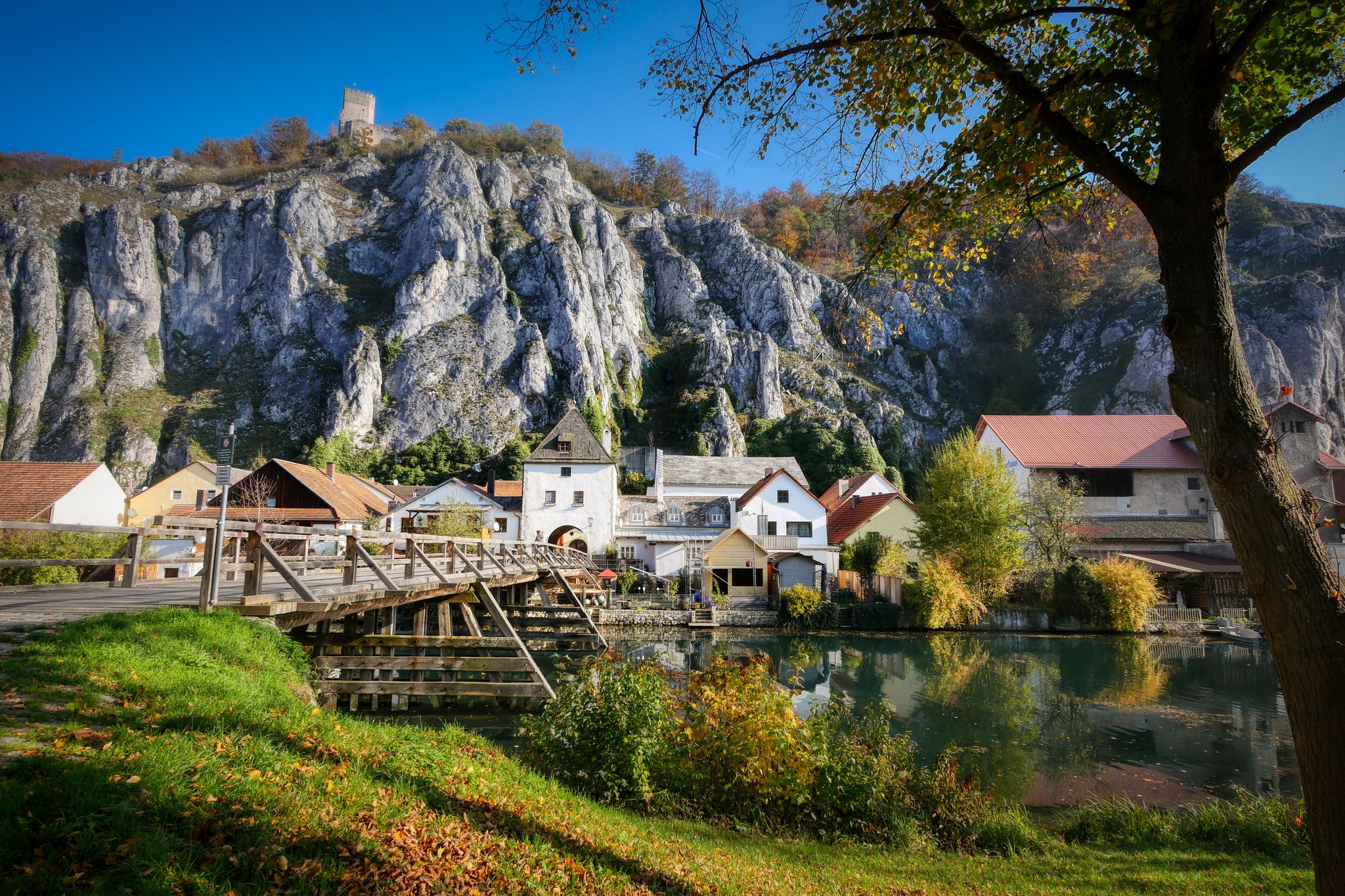
Upper Castle The Upper Castle was built as a moated castle by the Lords of Schmidmühlen. From the mid-12th century, they are documented here, starting with Ernst von Schmidmühlen (1166–1170). Georg Hausner von Winbuch (1595–1614), administrator in Regenstauf, was the builder of the present castle. The year 1600 is located on one of the magnificent door frames of the Knights' Hall. The Upper Castle is a three-story, plastered, solid building with a gable roof. An octagonal stair tower is attached, and another extension to the west. In this castle, there was also a small chapel on the ground floor, which, however, has long been filled in and walled up. At the top of the tower is a round ceiling, painted with flowers and rosettes, supported by a delicate wooden column. The entire second upper floor belongs, due to its furnishings, to the most interesting holdings of the German Renaissance. The profane wall paintings located there are reminiscent of those in the ducal castle Trausnitz in Landshut. During the Second World War and afterwards, the Upper Castle suffered greatly from billeting by the occupying forces. Thus, a valuable ceramic stove was destroyed on the second floor. In 1937, the castle came into the possession of the market town of Schmidmühlen. Since the post-war period, the castle has served the market town of Schmidmühlen as its town hall. Between 1977 and 1980, a thorough restoration took place, during which the castle and also the castle garden changed their appearance. The renovation was completed in 2003. The local history and association museum of Schmidmühlen is also housed in the castle. In front of the castle, on the well, stands the cast image of a Moriskentänzer, reminiscent of the Schmidmühlen sculptor Erasmus Grasser, who created the famous late Gothic Moriskentänzer for the festival hall in the Old Town Hall of Munich. Source: Wikipedia
4
0

nice to ride on the old railway line
0
0

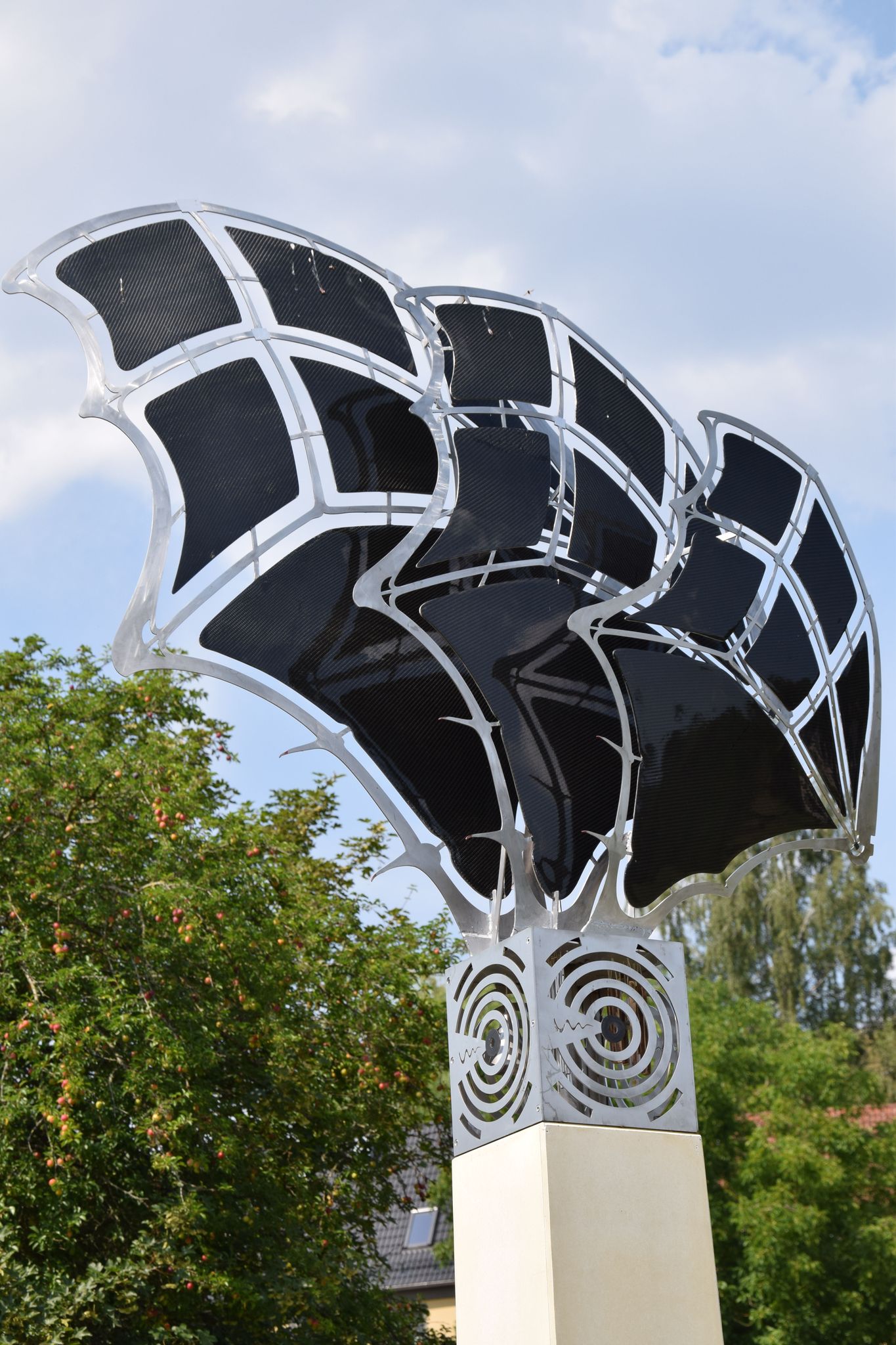
As nocturnal creatures, bats need a roost during the day that offers them peace and security. Therefore, they primarily stay in the towers during the daytime. Bats are very inquisitive animals and discover suitable roosts relatively quickly. All Bavarian bat species that are also found in and around buildings can take up residence in the bat towers. New roosts are often found very quickly by bats. The locations for the two bat towers in Schmidmühlen and Lauterach were deliberately chosen several kilometers away from the Hohenburg Bat House in order to create stepping stones for further dispersal by providing roosting sites. The entrance openings are designed to prevent predators such as cats, martens, or birds of prey from entering. Access to the tower is also blocked from below.
0
0

Stop at the Schweppermann in Pfaffenhofen: great food (good, plentiful, and reasonably priced), large selection, friendly family business, nice to linger inside or outside, tip!
0
0

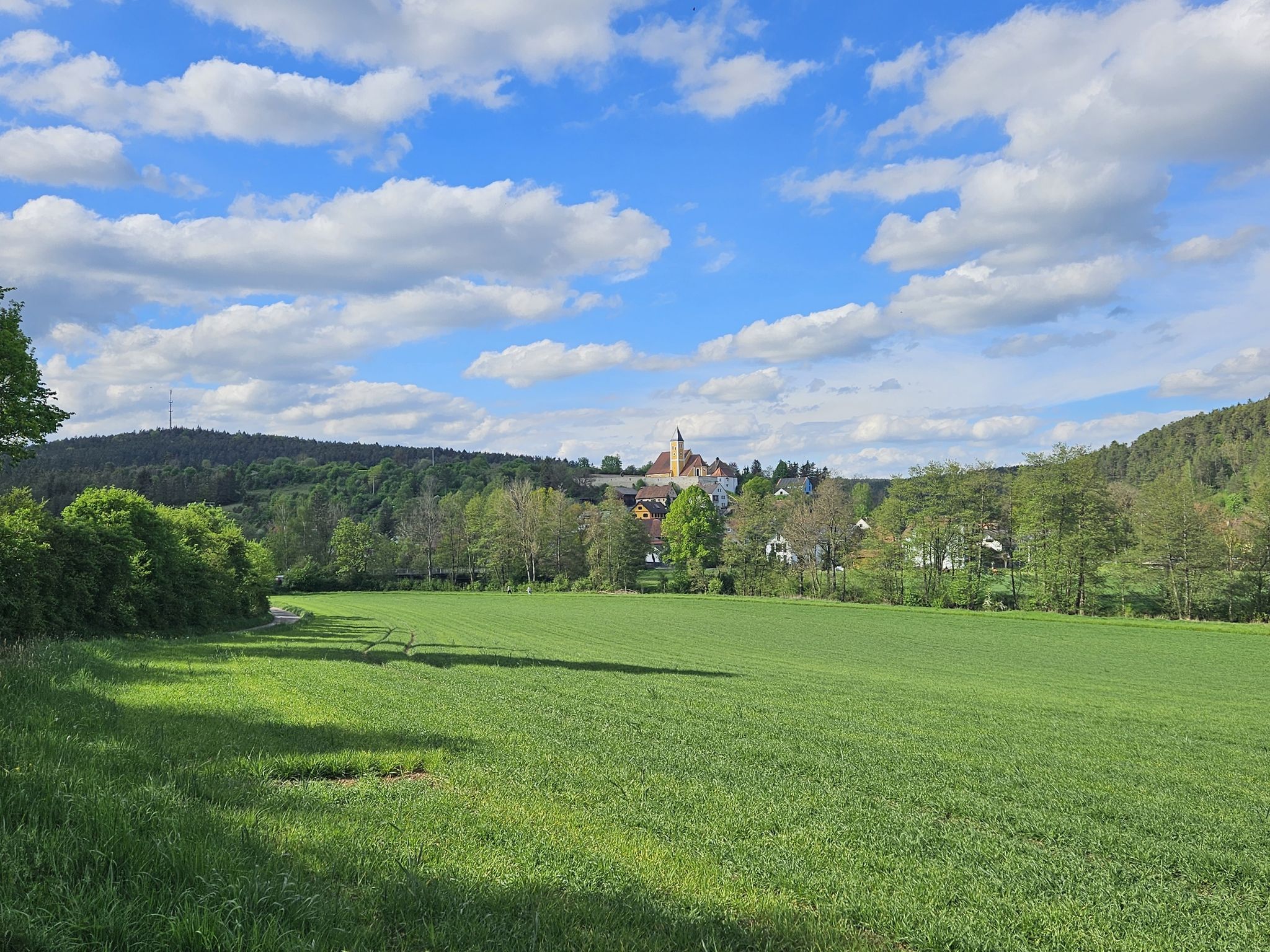
This is the pilgrimage church of the Visitation of Mary in Hohenburg-Stettkirchen, not the Habsberg
0
0
I've been really embarrassed here. I'm not entirely sure why I should drive those 300 meters in the opposite direction.
0
0

Frequently Asked Questions
How many no traffic touring cycling routes are available around Hohenburg?
There are over 25 dedicated no traffic touring cycling routes around Hohenburg, offering a variety of experiences. You'll find 3 easy routes, 13 moderate routes, and 10 more challenging options to explore.
What is the best time of year for traffic-free cycling in Hohenburg?
The region's green hills and gentle valleys are particularly inviting from spring through autumn. While some paths, like sections of the Schweppermann Cycle Path, can be used for cross-country skiing in winter with sufficient snow, the best cycling conditions for touring are typically from late spring to early fall when the weather is mild and the scenery is lush.
Are there easy, beginner-friendly no traffic touring routes in Hohenburg?
Yes, Hohenburg offers 3 easy no traffic touring routes perfect for beginners or those seeking a relaxed ride. These routes often follow former railway lines, providing smooth, super-rolling terrain, such as sections of the Five Rivers Cycle Route.
What kind of terrain can I expect on the no traffic touring routes?
Many no traffic routes in Hohenburg, such as parts of the Five Rivers Cycle Route, are built on former railway lines, offering smooth, flat, and well-maintained surfaces ideal for touring. Other routes wind through gentle valleys and along rivers like the Vils and Lauterach, providing picturesque views and varied, but generally manageable, terrain.
Are there any circular no traffic touring cycling routes available?
Yes, several circular routes allow you to start and end in the same location. For example, you can enjoy the Lauterachtal Cycle Path – Lauterach River loop from Allertshofen, which covers over 36 km, or the shorter Schmidmühlen Water Wheel – Lauterachtal Cycle Path loop from Hohenburg at just under 20 km.
What historical sites or natural landmarks can I see along the no traffic touring routes?
The routes often pass by significant points of interest. You can cycle past the impressive Hoibrücke Viaduct near Ursensollen, explore the historic town of Schmidmühlen with its three castles, or discover natural wonders like the König Otto Dripstone Cave. The Lauterach River itself is a beautiful natural feature you'll follow on many tours.
Are the no traffic routes suitable for families with children?
Many of the no traffic routes, especially those on former railway lines, are ideal for families due to their smooth surfaces and absence of vehicle traffic. The moderate difficulty routes, like the Lauterach River – Café Hammermühle loop from Hohenburg, offer manageable distances and elevations suitable for a family outing.
Can I bring my dog on the no traffic touring cycling routes?
Generally, dogs are welcome on most public cycling paths in the Hohenburg region, provided they are kept on a leash and under control. Always ensure you carry water for your dog and clean up after them. Specific nature reserves or private properties might have different rules, so it's always good to check local signage.
Are there cafes or places to eat along the no traffic touring routes?
Yes, many routes pass through or near charming villages and towns where you can find cafes and restaurants. For instance, the Lauterach River – Café Hammermühle loop from Hohenburg specifically highlights a cafe. The nearby town of Schmidmühlen also offers various dining options.
Where can I park my car to access these traffic-free routes?
Parking is generally available in the towns and villages that serve as starting points for these routes, such as Hohenburg, Allertshofen, or Schmidmühlen. Look for designated public parking areas, often near town centers or trailheads. Some routes, like the Five Rivers Cycle Route, may have specific parking facilities at access points.
What do other touring cyclists enjoy most about the no traffic routes in Hohenburg?
The area is highly rated by the komoot community, with an average score of 4.5 stars. Reviewers often praise the peaceful, car-free environment, the well-maintained paths, and the beautiful natural scenery along rivers and through green valleys. The historical landmarks and charming villages encountered along the way are also frequently highlighted as enjoyable aspects.
Most popular attractions around Hohenburg

Get inspired with the komoot mobile app


Explore more
Browse the best Cycling routes in other regions.
