The best traffic-free bike rides around Hirschwald
4.5
(202)
5,678
riders
96
rides
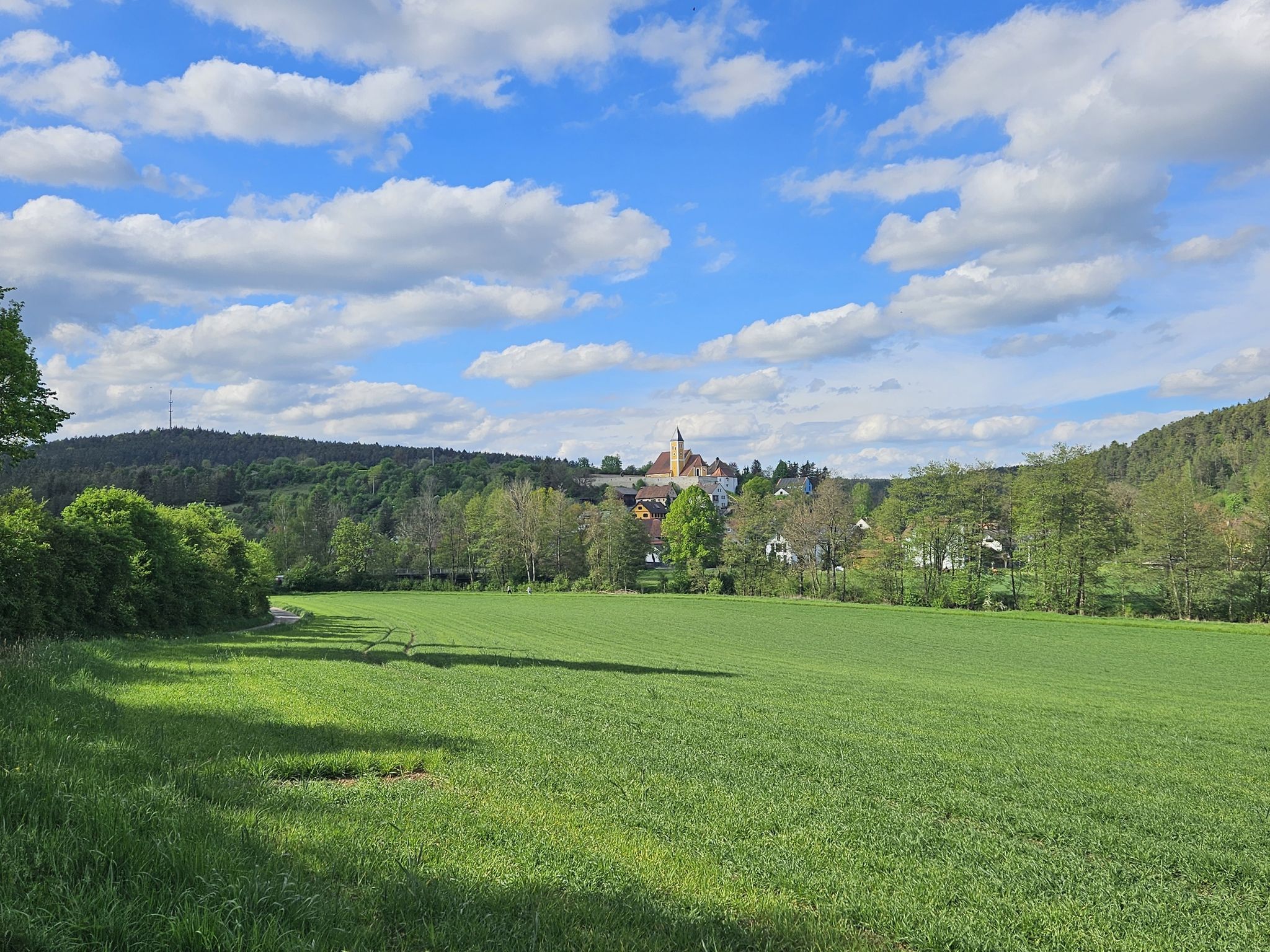
No traffic road cycling routes around Hirschwald Nature Park traverse a varied landscape of smooth valleys, pastured plateaus, and open countryside. The region is characterized by its diverse topography, including the Lauterach Valley, known for its unique vegetation and picturesque views. Cyclists will find routes that follow river valleys and former railway lines, providing generally smooth surfaces for road bikes. This area offers a blend of natural scenery and historical points of interest.
Best no traffic road cycling routes around Hirschwald
- The most popular no traffic road cycling route is Platt Brewery Inn – View of the Vils in Vilshofen loop from Kümmersbruck, a 40.6 miles (65.3 km) trail that takes 2 hours 52 minutes to complete. This route features a moderate elevation gain of 1808 feet (551 meters) and offers views of the Vils river.
- Another top favourite among local road cyclists is Kastl Town Hall – Kastl Monastery Castle loop from Ursensollen, a moderate 25.8 miles (41.6 km) path. This route includes a climb of 1514 feet (461 meters) and passes by the historic Kastl Monastery Castle.
- Local road cyclists also love the Amberg's "Stadtbrille" – Wolfsbach Chapel loop from Kümmersbruck, a 18.9 miles (30.3 km) trail leading through varied terrain with a 568 feet (173 meters) climb, often completed in about 1 hour 41 minutes.
- Road cycling around Hirschwald is defined by river valleys, pastured plateaus, and sections of former railway lines, offering smooth surfaces. The network provides options for different ability levels, from easy loops to more challenging moderate routes.
- The routes in Hirschwald are highly rated by the komoot community with an average score of 4.6 stars from over 180 reviews. More than 5000 road cyclists have used komoot to explore Hirschwald's varied terrain.
Last updated: July 11, 2026
5.0
(3)
51
riders
29.7km
01:39
170m
170m
Moderate road ride. Great for any fitness level. Some segments of this route may be unpaved and difficult to ride.
28
riders
23.1km
00:59
190m
190m
Easy road ride. Great for any fitness level. Mostly well-paved surfaces and easy to ride.

Sign up for free
22
riders
65.5km
02:52
550m
550m
Moderate road ride. Good fitness required. Mostly well-paved surfaces and easy to ride.
5.0
(1)
8
riders
24.0km
01:10
300m
300m
Easy road ride. Great for any fitness level. Mostly well-paved surfaces and easy to ride.
6
riders
49.9km
02:25
700m
700m
Moderate road ride. Good fitness required. Mostly well-paved surfaces and easy to ride.
Get access to more routes and recommendations from other explorers.
Sign up for free
Already have an account?
Our route recommendations are based on thousands of hikes, rides, and runs completed by other people on komoot.
Start today with a free account
Your next adventure awaits.
Login or Signup


Other adventures around Hirschwald

Tips from the Community

Theuern Castle is a castle in Theuern, in the municipality of Kümmersbruck, in the Amberg-Sulzbach district of Bavaria. The preserved buildings are listed as a historic monument under file number D-3-71-136-20. "Archaeological findings from the Middle Ages and the modern era in the area of the Catholic parish church of St. Nicholas and the former Hofmark Castle of Theuern, including traces of predecessor buildings and older construction phases of the church and the noble residence," are also listed as an archaeological monument under file number D-3-6637-0078. "Archaeological findings from the abandoned late medieval and modern iron hammer mill in Theuern" are also listed as an archaeological monument under file number D-3-6637-0118.
0
0

Beautiful area with many attractions
3
0

The Theuern church dates from the middle of the 18th century. The church tower, which was originally not connected to the church and probably also served as a defense, still shows Romanesque echoes today; its foundations date back to the middle of the 12th century. The central painting on the high altar shows scenes from the life of Saint Nicholas. Above it is a picture of the Holy Trinity. The altar is framed by statues of Saint Joseph and Saint Francis Xavier. The left side altar is dedicated to the Holy Cross, the right one to Saint John Nepomuk. The chancel contains gravestones and tombstones of some of the castle owners and priests. The pulpit, the organ and a statue of the scourged Jesus are also impressive.
8
0

Parish church of St. Nicholas Theuern has been a parish for Theuern and the neighboring Ebermannsdorf since the 14th century at the latest. The church was built before 1740 to replace a dilapidated previous building. The Romanesque church tower shows traces of the 12th century and originally served as a defensive tower. The interior is decorated with a central painting on the high altar depicting scenes from the life of St. Nicholas. The altar is framed by statues of St. Joseph and St. Francis Xavier. In the chancel there are gravestones and gravestones of former castle owners and priests. The organ was built in 1911 by Ludwig Edenhofer Jr. built into the housing of the previous organ by Johann Konrad Funtsch from 1761. Source: Excerpts from www.wikipedia.de
4
0
Parish Church of the Assumption of Mary Rieden was first mentioned in 1135 in the documents of the former Benedictine monastery in Ensdorf. The mother parish is the ancient parish of Vilshofen St. Michael. On June 8, 1716, the foundation stone for the current baroque church building was laid. The tower (probably 15th century) has been preserved from the previous building. On Sunday, January 23, 1718, the church was blessed. It has been a parish church since it became a parish in 1810. After 1890 the church was enlarged. In the middle, on the high altar with acanthus carving, Mary as the Heavenly Woman from the Revelation of John. Left and right are Mary's parents: Saint Joachim and Saint Mother Anna. On the left side altar you can see Mary as Queen with the two Saints Dominic and Saint Catherine of Siena. About Maria as a child with her parents Joachim and Anna. The death of St. Joseph is depicted on the right side altar. Above is St. Archangel Michael. On the left the figures of St. Florian and to the right of St. Wendelin. In the nave on the right is the mission cross with the Madonna of Sorrows, to the right of which is St. John Nepomuk. On the left side of the nave of St. Sebastian. The pulpit shows Christ and the four evangelists. Above the sacristy door is the remarkable baroque Pieta. In the triumphal arch, Mary as Queen of the Rosary framed with pictorial representations of the 15 mysteries of the Rosary. They go back to the founding of the Rosary Brotherhood in 1752. The rococo case of the organ comes from the Amberg organ builder Johann Konrad Funtsch from 1776. It was used for the new organ from the Mathis company. The organ has 18 registers and was consecrated by Bishop Gerhard Müller in 2010. Source Church Guide
2
0

A popular destination for young and old for decades 👍🏼🤩
5
0

The Amberger "Stadtbrille" is a starting point for almost every city tour. Together with the reflection in the Vils, the Wassertorbau gives the impression of glasses.
8
0

Frequently Asked Questions
How many no traffic road cycling routes are available in Hirschwald?
There are over 90 dedicated no traffic road cycling routes in the Hirschwald region, offering a wide range of options for cyclists looking for peaceful rides. Most of these routes are of moderate difficulty, but there are also easy and challenging options available.
What kind of terrain and surfaces can I expect on no traffic road cycling routes in Hirschwald?
The Hirschwald Nature Park features diverse landscapes, including smooth valleys, pastured plateaus, and gentle meadows. Many no traffic routes, particularly sections of the Schweppermann Bike Trail, run on former railway lines, providing a smooth and excellent surface ideal for road bikes. The Lauterach Valley also offers wonderful cycling paths, often described as having good surfaces.
What is the best time of year for no traffic road cycling in Hirschwald?
The region is beautiful throughout the warmer months. Spring and autumn offer pleasant temperatures and vibrant scenery. The Lauterach Valley, often called 'Bavarian Tuscany,' is particularly picturesque with unique vegetation in spring and summer, making it a great choice for scenic rides.
Are there any family-friendly no traffic road cycling routes in Hirschwald?
Yes, Hirschwald offers several easy no traffic road cycling routes suitable for families. These routes typically feature gentler gradients and smooth surfaces, ensuring a comfortable experience for all ages. For example, the route Wolfsbach Chapel loop from Ebermannsdorf is rated as easy.
What cultural or historical attractions can I visit along no traffic road cycling routes in Hirschwald?
You can discover several historical sites. The Kastl Town Hall – Kastl Monastery Castle loop from Ursensollen takes you past the romantic Klosterburg in Kastl. Other notable attractions in the wider region include the Hammerschloss in Theuern, which houses the Mining and Industry Museum, and the Asam Cloister in Ensdorf.
Are there any natural landmarks to see while road cycling in Hirschwald?
Absolutely. The Lauterach River valley is a highlight, known for its diverse wildlife like kingfishers and trout. You might also encounter unique vegetation such as wild orchids and juniper bushes on the south-facing hillsides. Other natural features include the Rammertsbrunn Spring.
What do other road cyclists appreciate about the no traffic routes in Hirschwald?
The komoot community highly rates the no traffic road cycling routes in Hirschwald, with an average score of 4.55 stars. Reviewers often praise the stunning scenery of Bavaria's Jura, the quiet and peaceful nature of the routes, and the excellent surfaces, especially on sections that follow former railway lines, which are perfect for road bikes.
Are there circular no traffic road cycling routes available in Hirschwald?
Yes, many of the no traffic road cycling routes in Hirschwald are designed as circular loops, allowing you to start and end at the same point. An example is the Amberg's "Stadtbrille" – Wolfsbach Chapel loop from Kümmersbruck, which offers a varied ride.
Where can I park my car when starting a no traffic road cycling route in Hirschwald?
Many villages and towns within or near the Hirschwald Nature Park, such as Kümmersbruck, Ebermannsdorf, and Ursensollen, serve as common starting points for routes and typically offer parking facilities. It's advisable to check specific route descriptions for recommended parking areas near trailheads.
Can I reach the no traffic road cycling routes in Hirschwald by public transport?
While some larger towns in the region may have train or bus connections, direct public transport access to all trailheads within the Hirschwald Nature Park can be limited. Planning your route in advance and checking local transport schedules for connections to starting points like Amberg is recommended.
Are there places to eat or stay near the no traffic road cycling routes in Hirschwald?
Yes, the region is dotted with charming villages that offer opportunities for refreshments and accommodation. You can find traditional Bavarian inns and cafes. For example, the Beer garden "Old Station" Theuern is a popular spot. Many routes pass through or near these villages, making it easy to plan a stop.
Are there any longer no traffic road cycling routes for more experienced cyclists?
Yes, for those seeking a longer challenge, routes like the Platt Brewery Inn – View of the Vils in Vilshofen loop from Kümmersbruck offer a substantial distance and elevation gain. While most routes are moderate, there are also more difficult options available for experienced road cyclists.
Most popular attractions around Hirschwald

Get inspired with the komoot mobile app


Explore more
Browse the best Road cycling routes in other regions.
