The best traffic-free bike rides around Wolken
4.3
(103)
640
riders
18
rides
Gravel biking around Wolken offers access to the diverse landscapes of Rhineland-Palatinate, characterized by river valleys, extensive forests, and rolling hills. The municipality is situated near the confluence of the Moselle and Rhine rivers, providing varied terrain suitable for gravel cyclists. This region features unpaved roads and natural paths that traverse forested areas and undulating topography, often leading to historic landmarks.
Best no traffic gravel bike trails around Wolken
- The most popular no traffic gravel bike trail is Rhine and…
Last updated: July 11, 2026
4.5
(11)
39
riders
40.8km
03:28
630m
630m
Hard gravel ride. Very good fitness required. Mostly paved surfaces. Suitable for all skill levels.
4.5
(13)
80
riders
Hard gravel ride. Very good fitness required. Mostly paved surfaces. Suitable for all skill levels.

Sign up for free
4.5
(6)
64
riders
48.7km
03:12
620m
620m
Hard gravel ride. Very good fitness required. You may need to push your bike for some segments of this route.
4.8
(4)
26
riders
18.0km
01:12
370m
370m
Moderate gravel ride. Good fitness required. Mostly paved surfaces. Suitable for all skill levels.
4.5
(2)
13
riders
Moderate gravel ride. Good fitness required. Mostly paved surfaces. Suitable for all skill levels.
Get access to more routes and recommendations from other explorers.
Sign up for free
Already have an account?
Our route recommendations are based on thousands of hikes, rides, and runs completed by other people on komoot.
Start today with a free account
Your next adventure awaits.
Login or Signup
Popular around Wolken
Tips from the Community

Just a few kilometers from the city center of Koblenz, in the district of the same name, high above the left bank of the Rhine, stands Stolzenfels Castle. In terms of art and cultural history, the castle, built in the 19th century from the ruins of a 13th-century castle, along with its associated park and gardens, is considered one of the most remarkable achievements of Prussian Rhine Romanticism. Originally built by the Archbishop of Trier, Arnold von Isenburg, Burg Stolzenfels was used to collect the Rhine toll until 1412. In 1689, the French destroyed the castle during the War of the Palatinate Succession. After Napoleon's defeat, the complex passed into the possession of the city of Koblenz. In 1823, the city finally gifted the ruin to the Prussian Crown Prince Friedrich Wilhelm... https://www.visit-koblenz.de/sehenswuerdigkeiten/schloss-stolzenfels
0
0

Very impressive old railway bridge in the middle of the forest.
3
0

Great viewpoint above Metternich and the Moselle River; Several trails lead downhill. Metternich Owl War Memorial on the Kimmelberg Keywords: War Memorial Subject area(s): Cultural Landscape Management, Regional Studies Municipality(ies): Koblenz District(s): Koblenz State: Rhineland-Palatinate WGS84 Coordinates: 50° 21′ 35.85″ N, 7° 32′ 59.33″ E, 50.35996°N, 7.54981°E UTM Coordinates: 32,396,849.55 m, 5,579,659.06 m Gauss-Krüger Coordinates: 3,396,883.41 m, 5,581,451.20 m The so-called Metternich Owl is located on the Kimmelberg hill in the west of the Koblenz district of Metternich, which lies on the middle river terrace on the left bank of the Rhine. The Metternich Owl is located on the Moselle side of the river. It is the town's landmark and can be seen from afar. The Metternich Owl is a war memorial erected in honor of the Prussian soldiers from Metternich who fell in the Franco-Prussian War. The planning and construction of the memorial were initiated by the Metternich Veterans' and Reservists' Association under the leadership of Max Weidtman, owner of the Weidtman Manor (Trierstraße 388). The foundation stone was laid on June 15, 1913, and subsequently, the design by architect Otto Bäppler was executed by the Frankfurt architect Wilhelm Müller, who then erected the memorial. It is thanks in particular to the newly arrived resident Max Weidtman, owner of the Weidtman Manor, that the memorial could be ceremonially inaugurated on October 18 and 19, 1913, as he largely financed its construction. The monument, standing nine meters tall, was erected as a patriotic memorial, a theme reinforced by the figure of the eagle, which sits with folded wings atop a relatively high, conical pedestal. The eagle was crafted from a single block of trachyte by the Metternich master stonemason Wilhelm Geisen, according to the plans of the Frankfurt sculptor Carl Storck. A 16-meter-wide flight of steps leads to the monument. The monument itself tapers conically upwards. The pedestal has a square base with sides measuring 5.5 meters and consists of rusticated blocks whose edges are reinforced like pillars. An eagle figure with folded wings sits atop the pedestal. At the level of the eagle's feet, an Iron Cross bearing the letter W in honor of Wilhelm I and the year 1870 is affixed. The dates of the laying of the foundation stone and the monument's dedication are inscribed between the blocks. These dates are historically and politically significant, as they coincide with the 100th anniversary of the Battle of Leipzig and the 25th anniversary of Kaiser Wilhelm II's accession to the throne. A wide, two-tiered staircase leads from the surrounding lawn to the monument. The meaning of the monument has changed over time. Initially, the eagle was interpreted as the Prussian eagle, dedicated to the fallen Metternich soldiers of 1870 and 1871. Later, the eagle was reinterpreted as the imperial eagle, a symbol of the new German Empire and a tribute from the local population to the Kaiser and the nation. As part of these reinterpretations, the names of those who participated in the First World War were added. During renovations in 1964, the monument's inscriptions were altered. They now commemorate the soldiers who fell in the wars of 1864-1870/71, 1914-1918, and 1939-1945. For the 80th anniversary of the war memorial in 1993, it was restored once again and rededicated as a "Memorial of Peace." New plaques were attached to the base, bearing, among other things, the inscription "In honor of the dead, as a reminder to the living," and on the reverse, "In memory of the dead of the four wars of the last two centuries." The Metternich Owl is a protected cultural monument. It is surprising that it is referred to as an owl and not an eagle. The residents of Metternich are proud of their owl. It gives its name to the residential area in Metternich at the foot of the monument: Eulenhorst (Owl's Nest). Many houses feature pictures of owls or sculptures of them, and even the fair in Metternich is named after the owl, "Eule-Kärmes" (Owl Fair). Today, the Metternich owl is a significant landmark and one of, if not the, symbols of Metternich. (Friederike Meiers and Anna Serwas, University of Koblenz-Landau, 2014) (Friederike Meiers and Anna Serwas, University of Koblenz-Landau, 2014)
0
0

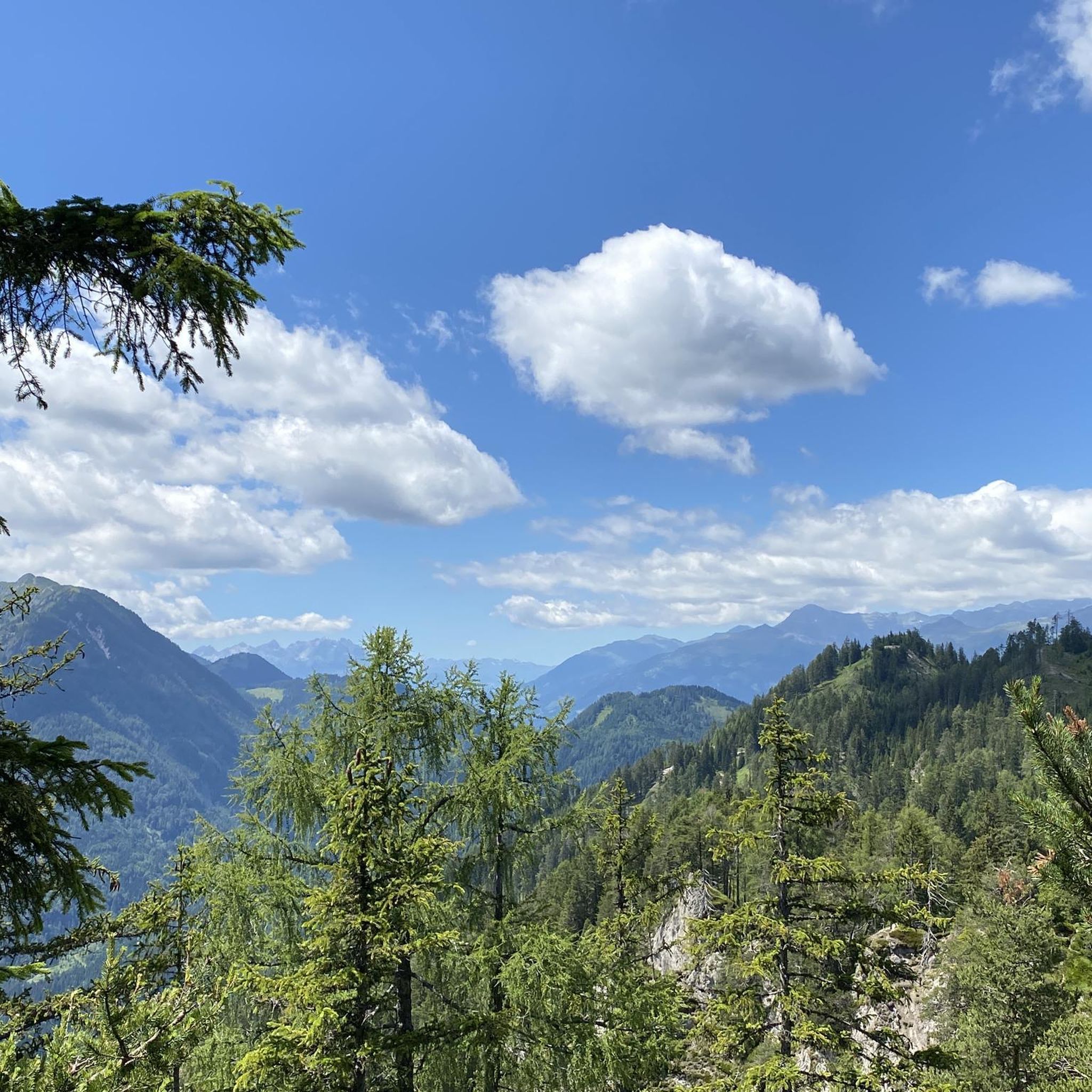
Now that the leaves are thinning again, there is a beautiful view here again!
1
0

Beautifully landscaped still waters to take a break and observe water birds
2
0

From here you have a great view of the castle...and a beautiful but steep path downhill to Stolzenfels.
0
0

At the end of the valley, continue on the Panzerstraße or down to the Meerkatzbach and the Mallendarer Bachtal, also very beautiful and easy to cycle.
0
0

Bike park feeling right on your doorstep.
0
0
Frequently Asked Questions
How many no-traffic gravel bike trails are available around Wolken?
There are 19 dedicated no-traffic gravel bike routes around Wolken listed on Komoot. These routes offer a variety of distances and difficulties, ensuring there's something for every gravel biking enthusiast looking for a peaceful ride.
What makes Wolken a great destination for no-traffic gravel biking?
Wolken, situated in the scenic Rhineland-Palatinate, offers diverse landscapes perfect for gravel biking. You'll find a mix of river valleys, extensive forests, and rolling hills, providing plenty of unpaved roads and natural paths away from car traffic. The region's proximity to the Moselle and Rhine rivers also means access to picturesque routes with stunning views.
Are there any easy, family-friendly no-traffic gravel bike routes near Wolken?
While many routes around Wolken are rated as difficult, there is one easy route and five moderate routes that could be suitable for families or beginners looking for a less challenging ride. For example, the View of the Moselle Valley – Kühkopf Viewpoint loop from Koblenz Hbf is a moderate option that offers beautiful scenery without being overly strenuous.
Can I bring my dog on the no-traffic gravel bike trails in Wolken?
Generally, dogs are welcome on many outdoor trails in Germany, especially on forest and gravel paths. However, it's always best to keep your dog on a leash, especially in nature reserves or areas with wildlife. Always check local regulations for specific trails or protected areas you plan to visit.
Are there circular no-traffic gravel bike routes available?
Yes, many of the no-traffic gravel bike routes around Wolken are designed as circular loops, allowing you to start and end at the same point. An example is the Rhine and Lahn Valleys Loop from Koblenz, which offers a comprehensive tour through varied landscapes.
What kind of landscapes can I expect on these traffic-free gravel trails?
The no-traffic gravel trails around Wolken traverse a rich variety of landscapes. You can expect to ride through dense forests, along the scenic banks of the Moselle and Rhine rivers, and over rolling hills dotted with vineyards. These routes often provide stunning viewpoints and a deep immersion in nature.
Are there any historical landmarks or attractions along the no-traffic gravel bike routes?
Absolutely! The region is rich in history. Many routes offer views of or pass near historic sites. For instance, you might catch a glimpse of Stolzenfels Castle or Thurant Castle. The View of Stolzenfels Castle – View of the Moselle Valley loop from Koblenz-Moselweiß is a great option for combining cycling with historical sights.
How can I access the no-traffic gravel bike trails around Wolken using public transport?
Many of the routes start near larger towns like Koblenz, which is well-connected by public transport. You can often take regional trains or buses that allow bikes, especially outside of peak hours. It's advisable to check the specific public transport provider's rules for bike carriage before your trip.
Where can I park my car when planning a no-traffic gravel bike tour in Wolken?
For tours starting from Koblenz, there are various parking options available in and around the city center or near train stations. When starting from smaller villages, look for designated public parking areas, often near community centers or trailheads. Always ensure you park legally and respectfully.
What is the best season to enjoy traffic-free gravel biking in Wolken?
Spring and autumn are generally considered the best seasons for gravel biking in Wolken. The weather is usually mild, and the natural scenery is particularly beautiful with blooming flowers or vibrant fall foliage. Summer can also be pleasant, but be prepared for warmer temperatures, especially in the river valleys. Winter rides are possible but may require more suitable gear for colder, potentially wet conditions.
Are there any longer no-traffic gravel bike routes for experienced riders?
Yes, for experienced riders seeking a challenge, there are several longer and more difficult routes. For example, the Nettetal Nature Reserve – Old Ochtendung Station loop from Koblenz-Lützel covers nearly 49 km with significant elevation gain, offering a demanding yet rewarding experience through varied terrain.
What do other gravel bikers say about the no-traffic trails in Wolken?
The area is highly rated by the Komoot community, with an average score of 4.36 stars. Reviewers often praise the quiet, well-maintained gravel paths, the stunning views of the Moselle and Rhine valleys, and the opportunity to explore the region's natural beauty away from traffic.
Most popular attractions around Wolken

Get inspired with the komoot mobile app


Explore more
Browse the best Gravel rides in other regions.
