The best traffic-free bike rides around Krummnußbaum
4.6
(3415)
20,945
riders
155
rides
No traffic touring cycling routes around Krummnußbaum are situated on the right bank of the Danube River in Lower Austria. The region features an idyllic, slightly hilly landscape with forests and open views. This area is part of the Nibelungengau region, offering varied terrain suitable for touring cyclists.
Best no traffic touring cycling routes around Krummnußbaum
- The most popular no traffic touring cycling route is View of Maria Taferl Basilica – View of Maria Taferl loop from Persenbeug-Gottsdorf, a…
Last updated: October 13, 2026
5.0
(4)
51
riders
Easy bike ride. Great for any fitness level. Mostly paved surfaces. Suitable for all skill levels.
4.7
(3)
29
riders
54.4km
03:38
750m
750m
Hard bike ride. Very good fitness required. Mostly paved surfaces. Suitable for all skill levels.

3
riders
16.8km
01:16
150m
150m
Easy bike ride. Great for any fitness level. Mostly paved surfaces. Suitable for all skill levels.
8
riders
6.37km
00:22
10m
10m
Easy bike ride. Great for any fitness level. Mostly paved surfaces. Suitable for all skill levels.
5.0
(1)
3
riders
Easy bike ride. Great for any fitness level. Mostly paved surfaces. Suitable for all skill levels.
Get access to more routes and recommendations from other explorers.
Already have an account?
Our route recommendations are based on thousands of hikes, rides, and runs completed by other people on komoot.
Start today with a free account
Your next adventure awaits.
Popular around Krummnußbaum
Other adventures around Krummnußbaum

Tips from the Community

The first historical mention of Persenbeug Castle dates back to 970 AD. The Bavarian Sieghart, Count of Semt and Ebersberg, took possession of "Persinpiugun" and fortified it. Over the centuries, the castle changed hands many times. Until 1593, it was also intermittently in the possession of the regional princes. It was then sold to the Hoyos family, who expanded the castle to its present form. On December 3, 1800, Emperor Franz I of Austria purchased Persenbeug Castle and its dominion as free private property. Around the same time, the dominion of Gutenbrunn also came into the possession of Franz I, and was incorporated into his private fund. Through several inheritances, the dominions of Persenbeug and Gutenbrunn came into the possession of Emperor Franz Joseph I, who passed them on to his daughter Marie Valerie in 1916. Some of her descendants form the currently existing family co-ownership community.
0
0
Schloss Artstetten in Lower Austria, near the Wachau in the Melk district, is the former residence of Archduke Franz Ferdinand and his final resting place. The site is inextricably linked to the assassination in Sarajevo in 1914 – an event that triggered the start of the First World War. Today, Schloss Artstetten houses the Archduke Franz Ferdinand Museum, the family crypt, the historic private castle park, the castle shop, and the castle café.
0
0

Today, Pöchlarn is an exciting mix of a highly modern logistics center on the Danube and a town that traces its roots back to Roman times. Long before the Nibelungs passed through the town, Pöchlarn was an important Roman base called Arelape. It was a fort directly on the Danube Limes. A part of the Roman Danube fleet was stationed here. During excavations in the town area (especially in the area of the church), ancient finds have been made again and again, proving how strategically important this place was even 2,000 years ago.
0
0
Pöchlarn is a town with an extremely deep history that goes far beyond the townscape of today. It is located in the Melk district on the southern bank of the Danube and is often referred to as the "Nibelungen City". Pöchlarn is inextricably linked to the Nibelungenlied, the famous medieval epic. In the city center you will find the modern Nibelungen monument with the coats of arms of the cities that appear in the epic. It is a must for a photo when you are in town.
0
0
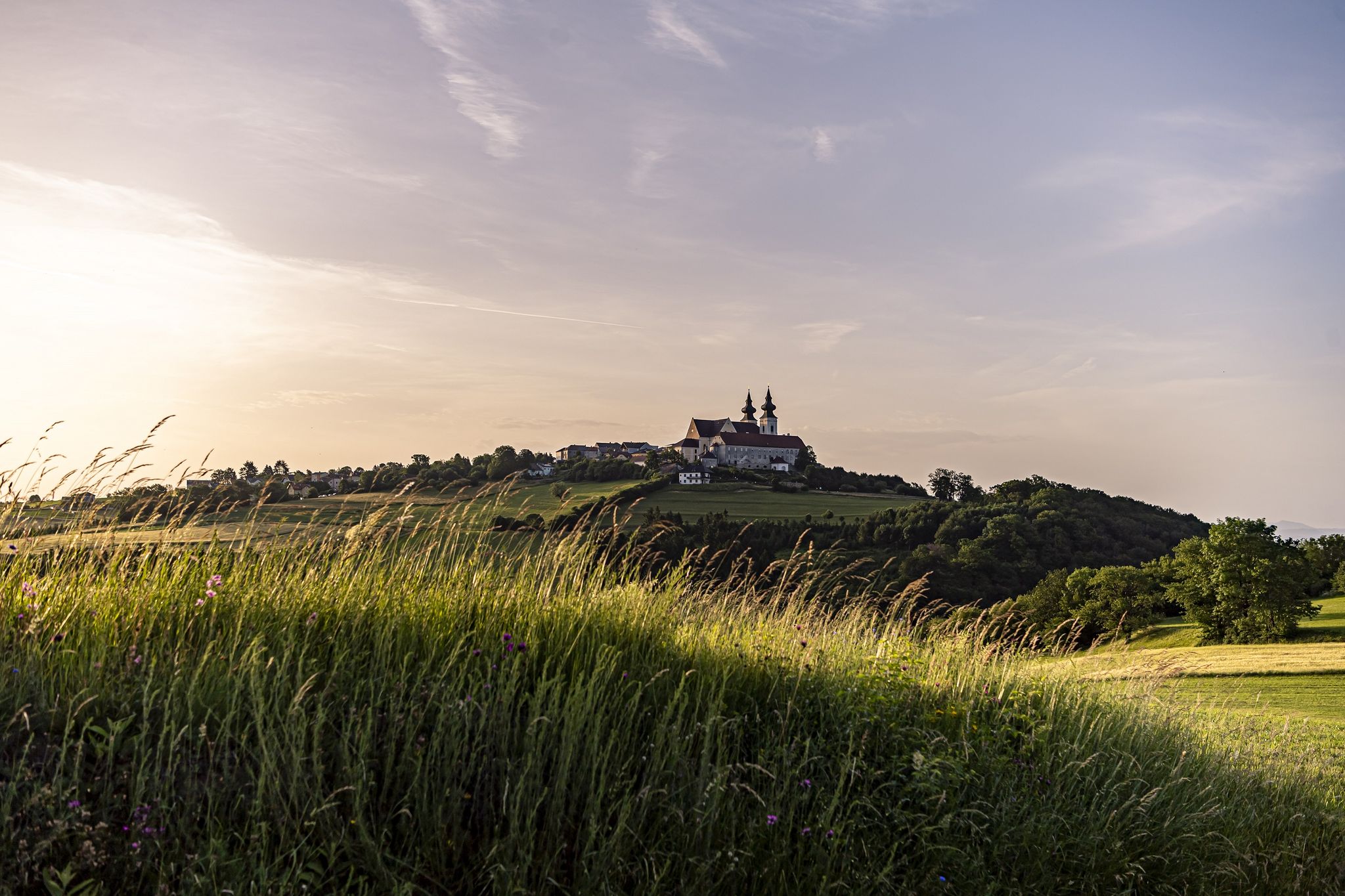
Maria Taferl, after Mariazell, is the most important pilgrimage site in Lower Austria and a baroque work of art. The church is a "Who-is-Who" of Austrian Baroque architecture. Standing in front of it, you are looking at the work of the absolute elite of this time. Construction began in 1660 under Daniel Gran, but it was completed by none other than Jakob Prandtauer (the creator of Stift Melk) and Joseph Munggenast. The striking twin towers and the bright facade are placed in such a way that they look like a crown over the Danube valley.
0
0

It is the most important pilgrimage site in Lower Austria and the second largest in Austria after Mariazell. The basilica is an impressive early Baroque building with a striking twin-tower facade.
1
0
The castle is prominently situated on a rock on the right bank of the Danube, above the municipality of Persenbeug-Gottsdorf, at the transition from the Strudengau to the Nibelungengau.
1
0

Frequently Asked Questions
How many no-traffic touring cycling routes are available around Krummnußbaum?
There are 10 dedicated no-traffic touring cycling routes around Krummnußbaum featured in this guide. These routes vary in difficulty, with 5 easy, 2 moderate, and 3 difficult options, ensuring there's something for every skill level.
What kind of terrain can I expect on no-traffic cycling routes near Krummnußbaum?
The no-traffic routes around Krummnußbaum generally offer a mix of flat terrain, especially along the Danube Cycle Path, and some gentle hills. The region is known for its idyllic, slightly hilly landscape, providing varied scenery without excessive climbs. Routes like the View of Maria Taferl Basilica loop from Krummnußbaum are mostly flat, while others might include more undulating sections.
Are there any family-friendly no-traffic cycling routes in Krummnußbaum?
Yes, Krummnußbaum offers several easy, no-traffic routes perfect for families. The Danube Cycle Path sections are generally flat and well-maintained, making them suitable for all ages. An excellent option is the View of Maria Taferl Basilica – View of Maria Taferl loop from Krummnußbaum, which is 11.6 km long and classified as easy, providing a pleasant ride for the whole family.
What are the best times of year to cycle the no-traffic routes around Krummnußbaum?
The best time to cycle the no-traffic routes around Krummnußbaum is typically from spring through autumn. During these seasons, the weather is generally pleasant, and the landscapes are vibrant. Spring offers blooming nature, while autumn provides stunning foliage, especially in the Wachau Valley. Summer is also popular, but remember to stay hydrated.
Can I find circular no-traffic touring cycling routes near Krummnußbaum?
Absolutely! Many of the no-traffic touring cycling routes around Krummnußbaum are designed as loops, allowing you to start and end in the same location. For example, the Erlauf Marina – Pöchlarn Harbor loop from Krummnußbaum is an easy 14 km circular route, perfect for a relaxed ride.
What kind of scenic viewpoints can I expect along these routes?
The no-traffic routes around Krummnußbaum offer numerous scenic viewpoints, particularly along the Danube River and in the Nibelungengau region. You can enjoy expansive views over the central Mostviertel, including Maria Taferl, Artstetten, Pöchlarn, Melk, and the Danube bend near Ybbs. The View of Maria Taferl Basilica loop from Persenbeug-Gottsdorf provides excellent vistas of the iconic basilica.
Are there any castles or historic landmarks to see along the no-traffic cycling routes?
Yes, the region around Krummnußbaum is rich in history and features several castles and landmarks. Along some routes, you might catch glimpses of impressive structures like Persenbeug Castle or Artstetten Castle. The View of Persenbeug Castle – View of Ybbs an der Donau loop is a longer, more challenging route that offers views of these historic sites.
What do other touring cyclists enjoy most about cycling in Krummnußbaum?
The komoot community highly rates the touring cycling experience in Krummnußbaum, with an average score of 4.3 stars from 66 ratings. Reviewers often praise the well-maintained, traffic-free paths along the Danube, the picturesque landscapes, and the variety of routes suitable for different fitness levels. The peaceful atmosphere and stunning river views are frequently highlighted.
Are there places to eat or rest along the no-traffic cycling routes?
Yes, the region around Krummnußbaum, especially along the popular Danube Cycle Path, offers various opportunities for refreshments and rest. You'll find charming cafes, traditional Gasthöfe, and even specific shelters like Gasthof Rote Säge. Many villages along the routes provide options for a break and a meal.
Is parking available for cyclists near the no-traffic routes in Krummnußbaum?
Krummnußbaum, being a hub for cyclists on the Danube Cycle Path, generally offers parking options suitable for those looking to start their rides. You can often find designated parking areas in the town center or near popular access points to the Danube Cycle Path. It's advisable to check local signage upon arrival for the most convenient spots.
Can I reach Krummnußbaum and its cycling routes using public transport?
Yes, Krummnußbaum is accessible by public transport, which can be convenient for cyclists. The town has a train station, making it possible to arrive by rail. This allows for flexible planning, especially if you intend to cycle one-way sections of the Danube Cycle Path or connect to other regional routes without needing to drive.
Most popular routes around Krummnußbaum
Most popular attractions around Krummnußbaum

Get inspired with the komoot mobile app


Explore more
Browse the best Cycling routes in other regions.
