The best city hikes and walks around Wiesbaden
4.5
(7780)
39,795
hikers
200
hikes
Urban hiking trails around Wiesbaden offer a diverse landscape for exploration, characterized by extensive green spaces, the Rhine River, and the foothills of the Taunus Forest. The city itself integrates numerous parks and gardens, providing accessible routes within an urban setting. Elevations like Neroberg offer panoramic views over the city and surrounding areas. This combination of riverine paths, city parks, and nearby forested hills creates varied terrain for urban hikers.
Best urban hiking trails around Wiesbaden
- The most popular urban…
Last updated: June 26, 2026
4.8
(93)
526
hikers
Moderate hike. Good fitness required. Easily-accessible paths. Suitable for all skill levels.
4.5
(79)
506
hikers
Moderate hike. Good fitness required. Easily-accessible paths. Suitable for all skill levels.

Sign up for free
4.8
(25)
106
hikers
11.6km
02:59
60m
60m
Moderate hike. Good fitness required. Easily-accessible paths. Suitable for all skill levels.
4.5
(20)
311
hikers
5.10km
01:20
40m
40m
Easy hike. Great for any fitness level. Easily-accessible paths. Suitable for all skill levels.
4.3
(15)
91
hikers
5.60km
01:25
10m
10m
Easy hike. Great for any fitness level. Easily-accessible paths. Suitable for all skill levels.
Get access to more routes and recommendations from other explorers.
Sign up for free
Already have an account?
Our route recommendations are based on thousands of hikes, rides, and runs completed by other people on komoot.
Start today with a free account
Your next adventure awaits.
Login or Signup
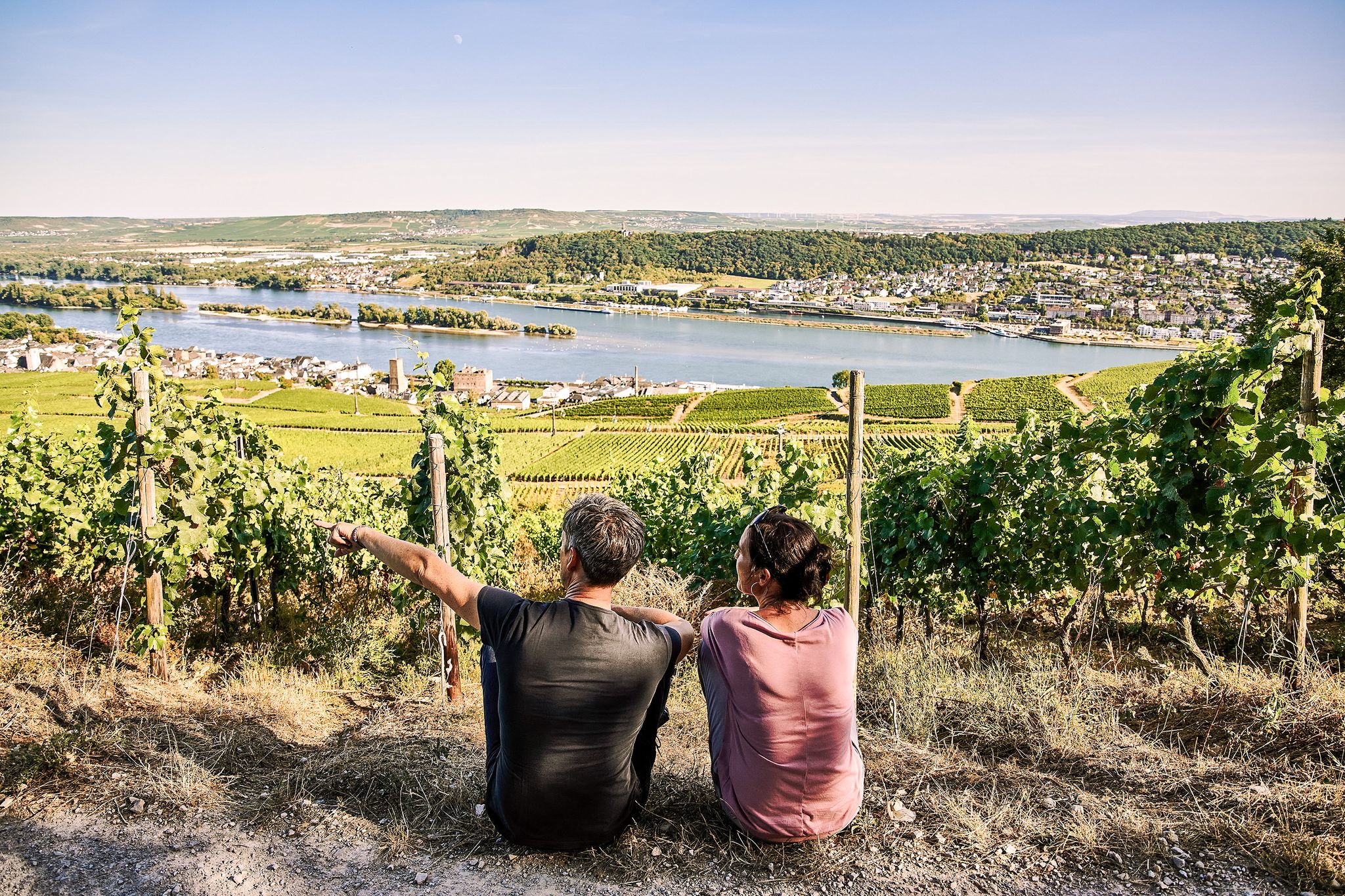
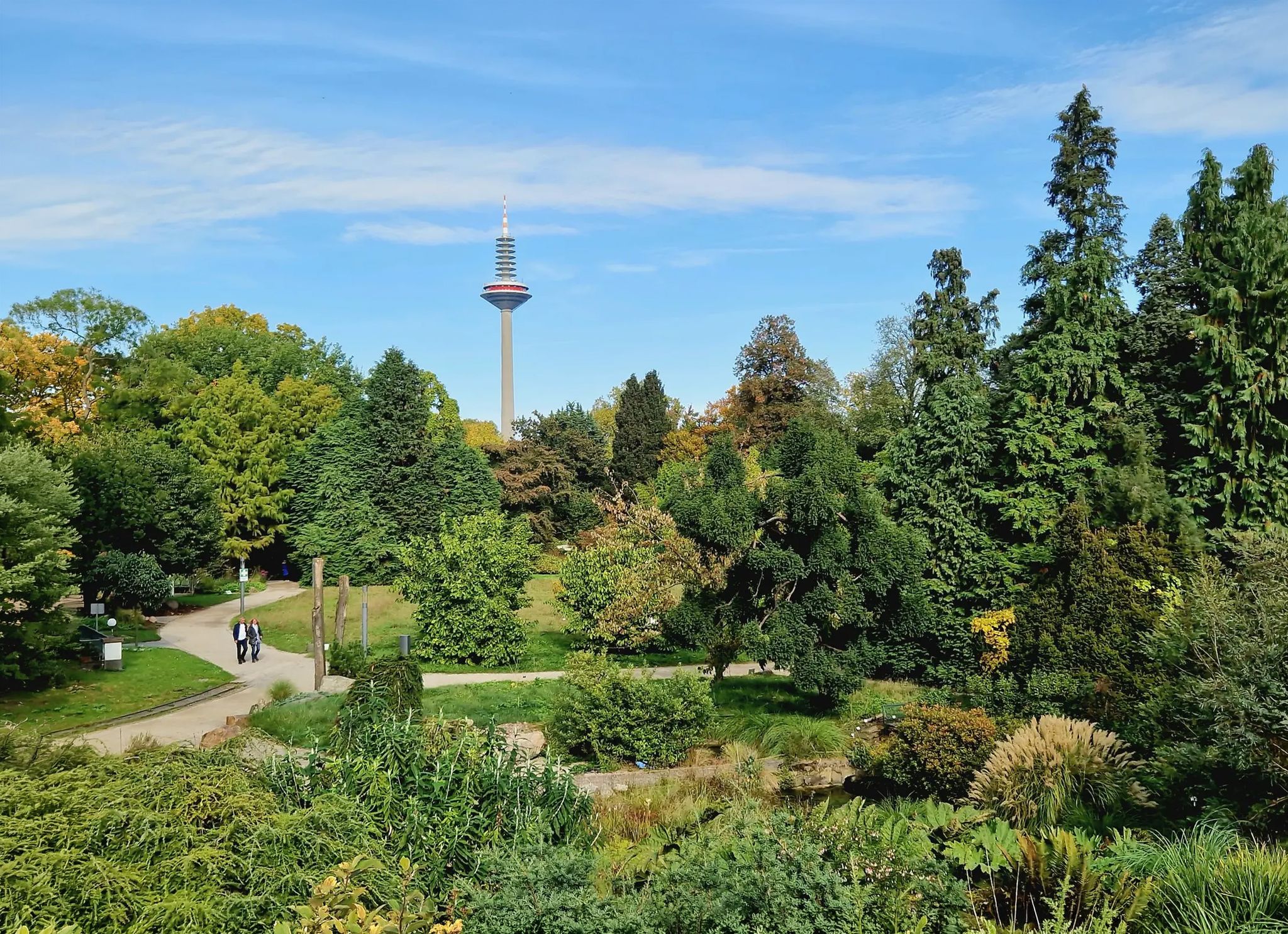
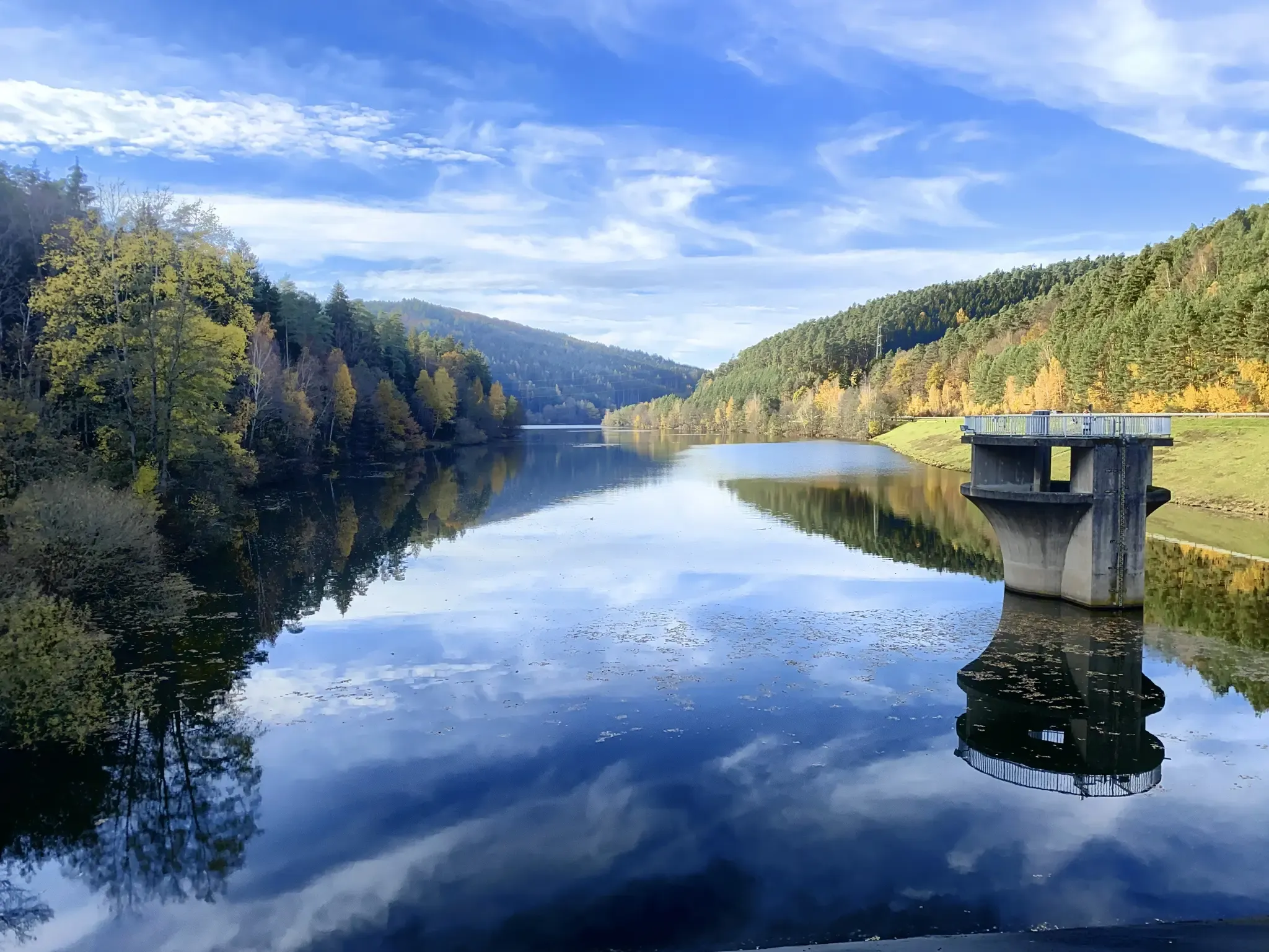
Other adventures around Wiesbaden


Tips from the Community

With a total length of around 1,233 kilometers, the Rhine is one of the longest, most historically significant, and economically important rivers in Europe. The river originates in the Swiss Alps, where it is formed from the two headwaters, the Vorder- and Hinterrhein. After flowing through Lake Constance, it plunges down at the Rhine Falls near Schaffhausen and then, as the High Rhine, forms the border between Switzerland and Germany. Further on, as the Upper Rhine, it flows through the Upper Rhine Plain past major cities such as Karlsruhe and Ludwigshafen, as well as directly past the region of Mainz and Wiesbaden. In this area, the river makes a sharp turn west at the so-called "Rhine Knee" (Rheinknie) before reaching the spectacular Middle Rhine. This section between Bingen and Koblenz – known as the Upper Middle Rhine Valley (Obere Mittelrheintal) – has been protected as a UNESCO World Heritage site since 2002 due to its density of castles, historic vineyards, and the legend of the Loreley rock. Via the Lower Rhine (Niederrhein) and the metropolitan regions of Cologne and Düsseldorf, the Rhine finally continues into the Netherlands. There it divides into a widely branched delta and finally flows into the North Sea near Rotterdam. As an international waterway, the Rhine is the logistical backbone of Western Europe. It connects major industrial centers and seaports directly with the hinterland, and is used annually by tens of thousands of cargo ships for the transport of coal, ores, containers, and chemical goods. In addition to its industrial function, the Rhine Valley serves as a lifeline for tourism, as a rich source of energy through hydropower plants, and as a valuable natural and recreational area for millions of people.
8
0
Today's Theodor Heuss Bridge connects the Rhineland-Palatinate state capital Mainz with the Mainz-Kastel district of the Hessian state capital Wiesbaden across the Rhine.
19
0
The Hessian State Theatre Wiesbaden in the Hessian state capital Wiesbaden is a five-part theatre. The neo-baroque building was built from 1892 to 1894 by the Prussian King and German Emperor Wilhelm II by the Viennese architectural firm Fellner & Helmer as the Royal Theatre. Today it has four stages: the Large House (1,041 seats), the Small House (328 seats), the Studio (89 seats) and the external stage Wartburg (154 seats, since 2003) on Schwalbacher Straße. It has approximately 600 employees. From August 2014 to January 2024, the director and actor Uwe Eric Laufenberg was the artistic director of the Hessian State Theatre.[1][2] From the 2024/25 season, Dorothea Hartmann and Beate Heine will form a dual leadership as artistic directors.
22
0
The theater is a five-genre venue with the following departments: • Opera • Ballet • Drama • Young State Theater • Concerts It has four stages: • Main Stage (approx. 1041 seats) • Small Stage • Studio Stage • Wartburg (external venue)
20
0
The Kurhaus (Kurhaus) in Wiesbaden, the Hessian state capital, is one of the most magnificent festive buildings in Germany. It is the social center of the spa town of Wiesbaden and provides a prestigious setting for numerous events. In addition to a large and a smaller ballroom, it houses the Kurhaus Gastronomie Gerd Käfer and Roland Kuffler GmbH & Co., as well as the Wiesbaden Casino.
6
0
Here is the Wiesbaden Kurhaus, a very impressive building
7
0
Here is a beautiful old sculpture in front of the Kurhaus
6
1
Frequently Asked Questions
How many urban hiking trails are available in Wiesbaden?
Wiesbaden offers nearly 200 urban hiking routes, providing a wide range of options for exploring the city's green spaces and historical areas. Most of these trails are classified as easy to moderate, making them accessible for various fitness levels.
Are there easy urban walks suitable for beginners or families in Wiesbaden?
Yes, Wiesbaden has many easy urban walks perfect for beginners and families. Routes like the Reduit, Mainz-Kastel – Maaraue Bridge loop offer gentle terrain and pleasant scenery. The city's numerous parks, such as the Kurpark and Nerotal Park, also provide serene paths for leisurely strolls.
What kind of natural landscapes can I expect on urban hikes in Wiesbaden?
Urban hikes in Wiesbaden often blend cityscapes with diverse natural settings. You'll find trails winding through extensive green spaces, beautifully landscaped parks like the Kurpark, and along the scenic Rhine River. The city is also close to the Taunus Forest, offering glimpses of dense woodlands, and the Rheingau region with its picturesque vineyards.
Are there any circular urban hiking routes in Wiesbaden?
Yes, many urban hiking routes in Wiesbaden are circular, allowing you to start and end at the same point. Examples include the Wiesbaden Kurhaus – Monopteros on the Neroberg loop or the Wiesbaden Kurhaus – Wiesbaden spa gardens loop, both starting conveniently from Wiesbaden Hauptbahnhof.
What interesting landmarks or attractions can I see along urban hiking trails in Wiesbaden?
Urban hikes in Wiesbaden often pass by significant landmarks and attractions. You can explore the Monopteros on the Neroberg, enjoy views of the Mainz Cathedral and skyline, or visit the historic Schierstein Harbour. The city's thermal springs, like the famous Kochbrunnen, are also often integrated into city walks.
Can I reach urban hiking trailheads in Wiesbaden using public transport?
Absolutely. Many urban hiking trailheads in Wiesbaden are easily accessible by public transport. Routes like the Wiesbaden Kurhaus – Monopteros on the Neroberg loop and the Wiesbaden Kurhaus – Wiesbaden spa gardens loop conveniently start from Wiesbaden Hauptbahnhof, a central public transport hub.
Are urban hiking trails in Wiesbaden dog-friendly?
Many urban hiking trails in Wiesbaden are dog-friendly, especially those through parks and along the Rhine. It's always a good idea to keep your dog on a leash, particularly in more populated areas or nature reserves, and to check for specific local regulations regarding dogs in certain parks or attractions.
What do other hikers enjoy most about urban hiking in Wiesbaden?
The urban hiking routes in Wiesbaden are highly rated by the komoot community, with an average score of 4.5 stars. Hikers frequently praise the well-maintained paths, the beautiful blend of historical architecture with lush green spaces, and the stunning panoramic views from spots like the Neroberg or the Goethestein Monument.
Are there urban hikes that offer viewpoints over Wiesbaden or the Rhine?
Yes, several urban hikes provide fantastic viewpoints. The Wiesbaden Kurhaus – Monopteros on the Neroberg loop takes you to the Neroberg, offering stunning panoramic views over the city. Additionally, trails along the Rhine, such as the Kastel Riverside Promenade loop, provide picturesque vistas of the river and surrounding landscapes.
What is the typical length and duration of urban hikes in Wiesbaden?
Urban hikes in Wiesbaden vary in length, but many fall within the 5 to 12-kilometer range, taking approximately 1.5 to 3.5 hours to complete at a moderate pace. For example, the Reduit, Mainz-Kastel – Maaraue Bridge loop is about 5.6 km, while the Mainz South Bridge Tower – Mainz City Park loop is around 11.5 km.
Can I find urban hiking routes in Wiesbaden that include cafes or refreshment stops?
Many urban hiking routes in Wiesbaden pass through or near city centers, parks, and riverside areas where cafes, restaurants, and kiosks are readily available. The Kurpark area, the Neroberg, and the promenades along the Rhine are particularly good for finding places to stop for a refreshment or a meal during your hike.
Most popular routes around Wiesbaden
Most popular attractions around Wiesbaden

Get inspired with the komoot mobile app


Explore more
Browse the best Hikes in other regions.
