The best city hikes and walks in Dune Du Perroquet
4.4
(3260)
25,246
hikers
30
hikes
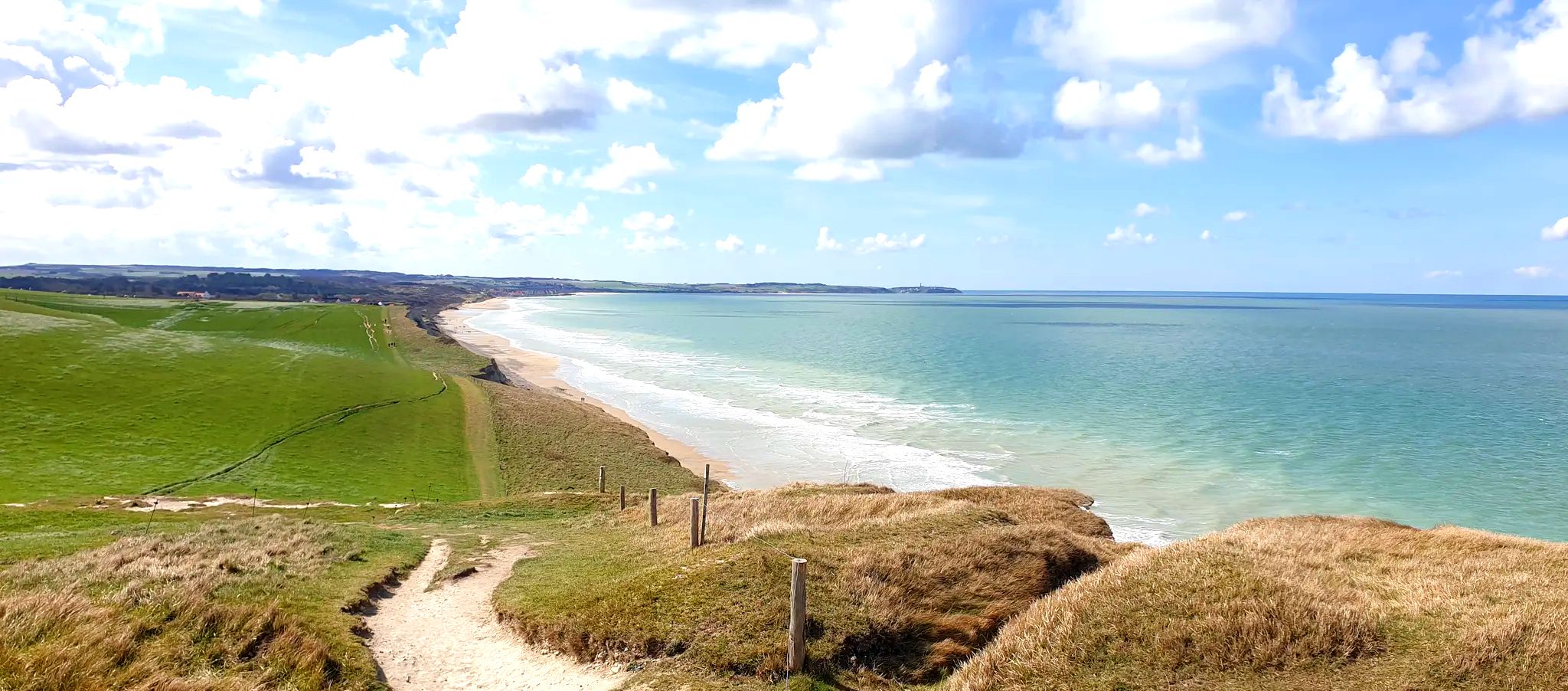
Urban hiking trails in Dune Du Perroquet offer a unique blend of coastal landscapes and natural features. The region is characterized by expansive dune systems, including crescent-shaped dunes and mobile dunes that extend into the Westhoek Nature Reserve. This varied topography supports diverse plant and animal life, with trails often leading through sparse grasslands, humid slacks, and shrub thickets. Hikers can also explore the pristine, expansive beach and discover historical elements such as WWII bunkers along the coastline.
Best urban hiking trails in Dune Du Perroquet
- The most popular urban hiking route is Viewpoint Over De Panne – Artwork Together on the Move loop from De Panne, a 2.6 miles (4.1 km) trail that takes about 1 hour 3 minutes to complete, offering views over the coastal landscape.
- Another top favourite among local hikers is Adinkerke-De Panne Station – Viewpoint Over De Panne loop from Station Heidiland, a moderate 5.5 miles (8.9 km) path that explores the area around the station and a viewpoint.
- Local hikers also love the Artwork The Spider – De Panne town centre loop from De Panne, a 1.8 miles (2.8 km) trail leading through the town centre and past local artworks, often completed in about 43 minutes.
- Hiking in Dune Du Perroquet is defined by dynamic dune systems, expansive beaches, and historical coastal elements. The network offers options for different ability levels, from easy strolls to moderate excursions.
- The routes in Dune Du Perroquet are highly rated by the komoot community with an average score of 4.5 stars from more than 2900 reviews. More than 23000 hikers have used komoot to explore Dune Du Perroquet's varied terrain.
Last updated: August 19, 2026
4.3
(10)
39
hikers
Easy hike. Great for any fitness level. Easily-accessible paths. Suitable for all skill levels.
4.0
(3)
30
hikers
Moderate hike. Good fitness required. Easily-accessible paths. Suitable for all skill levels.

Sign up for free
3.0
(1)
26
hikers
Easy hike. Great for any fitness level. Easily-accessible paths. Suitable for all skill levels.
7
hikers
4.40km
01:07
10m
10m
Easy hike. Great for any fitness level. Easily-accessible paths. Suitable for all skill levels.
8
hikers
Easy hike. Great for any fitness level. Easily-accessible paths. Suitable for all skill levels.
Get access to more routes and recommendations from other explorers.
Sign up for free
Already have an account?
Our route recommendations are based on thousands of hikes, rides, and runs completed by other people on komoot.
Start today with a free account
Your next adventure awaits.
Login or Signup
Popular around Dune Du Perroquet
Other adventures in Dune Du Perroquet

Tips from the Community

Starting point of our bike tour along the Belgian coast...
0
0

This group of sculptures by De Loose illustrates the timeless, universal qualities of humanity and emphasizes the importance of the group. Source: strandverblijf&wandelingen-de-panne
0
0
Construction of the Neo-Romanesque Church of Our Lady began in the Dumont district in 1930-1932 on a vacant lot west of Zeelaan. The crypt of Our Lady of Fatima is located in the church's basement. Six times a year, a pilgrimage to the Church of Our Lady takes place in memory of Fatima. Source: https://www.depanne.be/en/onze-lieve-vrouwekerk
0
0
The spider often has negative connotations: it's a dirty little creature, it can be dangerous, etc. But Monique Mol uses the spider as a symbol of (feminine) creative power: the spider weaves a web of connection and solidarity. Source: https://www.strandverblijf.be/nl/wandelingen/beeldenroute-de-panne
0
0
In contrast to the picturesque center of the neighborhood, the dune relief was largely excavated for the construction of the sea wall. At the western end, the "white mountain" (the name refers to a dune) was preserved, on which eight eclectic villas were built around 1900, largely designed by Albert and Alexis Dumont. Various solutions were devised for the narrow houses to maximize natural light. This group of houses is the largest preserved complex of villas with a sea view on our coast. Villa Anita (Geitenweg 5) has a brick facade with a cornice, plastered and painted. The facade consists of a semicircular bay window crowned by a central dormer window, with an adjoining balcony with a wooden balustrade, under a cantilevered gable roof and resting on wooden columns. Corner villa Coup de Vent (Geitenweg 9) is the most impressive. The facade is an interesting blend of cottage style (the use of wood) with neoclassical elements (a basket-arched entrance portal with a keystone and a cartouche on the parapet). But the most striking feature is undoubtedly the openwork, rounded corner tower with a spire, which serves as a mini-belvedere. Source: Walking Guide Heritage Walk De Panne
3
0
The original section was built in 1904 for Dr. Ver Eecke. Perhaps shortly before the First World War, the villa was expanded for the first time, adding the western section (left). This resulted in the loss of the original side facade with its balcony, which likely offered a sea view. During later renovations, a small tower was built on the southwest corner in its place. The tower at the top offered two beautiful views: one due west, overlooking Dunkirk, and the second due north, overlooking the residential area now known as Dumontwijk. The use of identical yellow brick makes the various extensions virtually indistinguishable. In 1975, Karl and Cecile Vieren-Depuydt purchased the left-hand section of the villa, which was slated for restoration, and renamed this half "Villa Torenhof" [6]. The entire roof, including that of the tower, was then replaced and later insulated. They tastefully transformed the interior into a comfortable, modern home. Source: https://dumontwijk.wordpress.com/2019/02/01/doktersweg-en-albert-dumont/
2
0
In contrast to the picturesque center of the neighborhood, the dune relief was largely excavated for the construction of the sea wall. At the western end, the "white mountain" (the name refers to a dune) was preserved, on which eight eclectic villas were built around 1900, largely designed by Albert and Alexis Dumont. Various solutions were devised for the narrow houses to maximize natural light. This group of houses is the largest preserved complex of villas with a sea view on our coast. Villa Anita (Geitenweg 5) has a brick facade with a cornice, plastered and painted. The facade consists of a semicircular bay window crowned by a central dormer window, with an adjoining balcony with a wooden balustrade, under a cantilevered gable roof and resting on wooden columns. Corner villa Coup de Vent (Geitenweg 9) is the most impressive. The facade is an interesting blend of cottage style (the use of wood) with neoclassical elements (a basket-arched entrance portal with a keystone and a cartouche on the parapet). But the most striking feature is undoubtedly the openwork, rounded corner tower topped with a spire, which serves as a mini-belvedere. Source: Walking Guide Heritage Walk De Panne
3
0
This semi-detached cottage-style house, designed by architect Georges Hobé, dates from around 1900. The entrance to villa Les Eglantines (French for honey briar) is shared with that of villa Les Argousiers (French for sea buckthorn) and is situated beneath a projecting gable roof of slate. The bricks are painted, and the windows are strongly divided. The pseudo-half-timbering is reminiscent of Normandy architecture. However, on our coast, we rarely encounter true half-timbering; the beam structure is not made of wood and is not part of the load-bearing elements of the facade. What we see is imitation or pseudo-half-timbering, a stucco grid with a thin wooden cladding that is, as it were, glued to the facade. Therefore, we cannot speak of a structural function. Another typical feature of the Belle Époque period found in the facade of the semi-detached house is the separate cellar entrance for the staff. It reflects the "upstairs, downstairs" principle and allows the staff to work quietly yet efficiently. The basement houses the kitchen, laundry room, ironing room, and storage and pantry spaces, among other things. The "monte-plats," a small elevator, brings prepared dishes close to the dining room, where a servant can serve them quickly and discreetly. Source: Walking Guide Heritage Walk De Panne
1
0
Frequently Asked Questions
How many urban hiking trails are available in Dune Du Perroquet?
There are over 20 urban hiking trails in Dune Du Perroquet, offering a variety of experiences. Most of these routes are rated as easy, making them accessible for many hikers.
What kind of landscapes can I expect on urban hikes in Dune Du Perroquet?
Urban hikes in Dune Du Perroquet offer a unique blend of coastal and natural environments. You'll encounter expansive and dynamic dune systems, including impressive crescent-shaped and mobile dunes. The trails often lead through sparse grasslands, humid slacks, and dense shrub thickets, providing a diverse natural backdrop right alongside urban areas. The pristine, expansive beach is also a prominent feature.
Are there any family-friendly urban hikes in Dune Du Perroquet?
Yes, many of the urban hikes in Dune Du Perroquet are suitable for families. The majority of the trails are rated as easy, with gentle elevation changes, making them perfect for walks with children. For example, the De Panne – De Panne Beach Promenade loop from De Panne is a relatively short and easy option that offers pleasant coastal views.
Can I bring my dog on urban hiking trails in Dune Du Perroquet?
Yes, Dune Du Perroquet is generally dog-friendly. There is a dedicated dog-friendly beach zone where pets can roam freely. When hiking on trails, it's always best to keep your dog on a leash and respect local signage regarding pet access in specific areas, especially within nature reserves.
What historical landmarks or points of interest can I see along the urban trails?
The area around Dune Du Perroquet is rich in history. Along the urban trails, you can discover vestiges of WWII bunkers scattered along the coastline, such as Bunker b 47, and remnants of old railway lines like Verlaten spoorweg. These offer glimpses into the region's past. You might also encounter the Sailors' Calvary.
Are there any circular urban walks available?
Yes, many of the urban hiking routes in Dune Du Perroquet are designed as circular walks, allowing you to start and end at the same point. An example is the Artwork The Spider – De Panne town centre loop from De Panne, which provides a convenient way to explore the area.
What do other hikers enjoy most about urban hiking in Dune Du Perroquet?
The komoot community highly rates urban hiking in Dune Du Perroquet, with an average score of 4.5 stars from nearly 3,000 ratings. Reviewers often praise the unique coastal dune landscapes, the accessibility of the trails, and the opportunities for peaceful strolls with scenic views, particularly during sunrise and sunset.
Are there any viewpoints or panoramic spots on the urban trails?
Yes, the region offers several spots for excellent views. While not directly on every urban trail, the 'Westerpunt' is a notable architectural structure that provides a magnificent 360-degree panoramic view of the surroundings, sometimes appearing to float above the sea at high tide. You can also find routes like the Viewpoint Over De Panne – Artwork Together on the Move loop from De Panne that incorporate scenic overlooks.
What is the best time of year for urban hiking in Dune Du Perroquet?
Dune Du Perroquet can be enjoyed year-round, but each season offers a different experience. Spring and autumn provide pleasant temperatures for hiking and are ideal for birdwatching, as the area is on a major migration route. Summer is perfect for combining hikes with beach activities. Even in winter, the dynamic dune landscapes offer a stark beauty, though some trails might be windier.
Are there any longer or more challenging urban hikes for experienced hikers?
While most urban hikes in Dune Du Perroquet are easy, there are a few moderate options for those seeking a bit more distance. The Adinkerke-De Panne Station – Viewpoint Over De Panne loop from Station Heidiland is an example of a moderate route, covering nearly 9 kilometers, offering a longer exploration of the area's diverse environments.
Is public transport available to access the urban hiking trails?
Yes, public transport can be used to access some of the urban hiking trails. For instance, the Adinkerke-De Panne Station – Viewpoint Over De Panne loop from Station Heidiland specifically mentions starting from a station, indicating good public transport connectivity for that route. It's advisable to check local transport schedules for specific starting points.
Are there any specific natural features to look out for on these urban hikes?
Absolutely. The urban hikes in Dune Du Perroquet are renowned for their unique natural features. Keep an eye out for the diverse flora, including over 350 plant species, some rare like marsh parnassia. You might also spot wildlife such as Scottish Highland cattle or wild Konik horses roaming freely, and the area is a significant stopover for numerous bird species.
Most popular routes in Dune Du Perroquet
Most popular attractions in Dune Du Perroquet

Get inspired with the komoot mobile app


Explore more
Browse the best Hikes in other regions.
