The best traffic-free bike rides in Forêt De Chaon
4.4
(12)
207
riders
3
rides
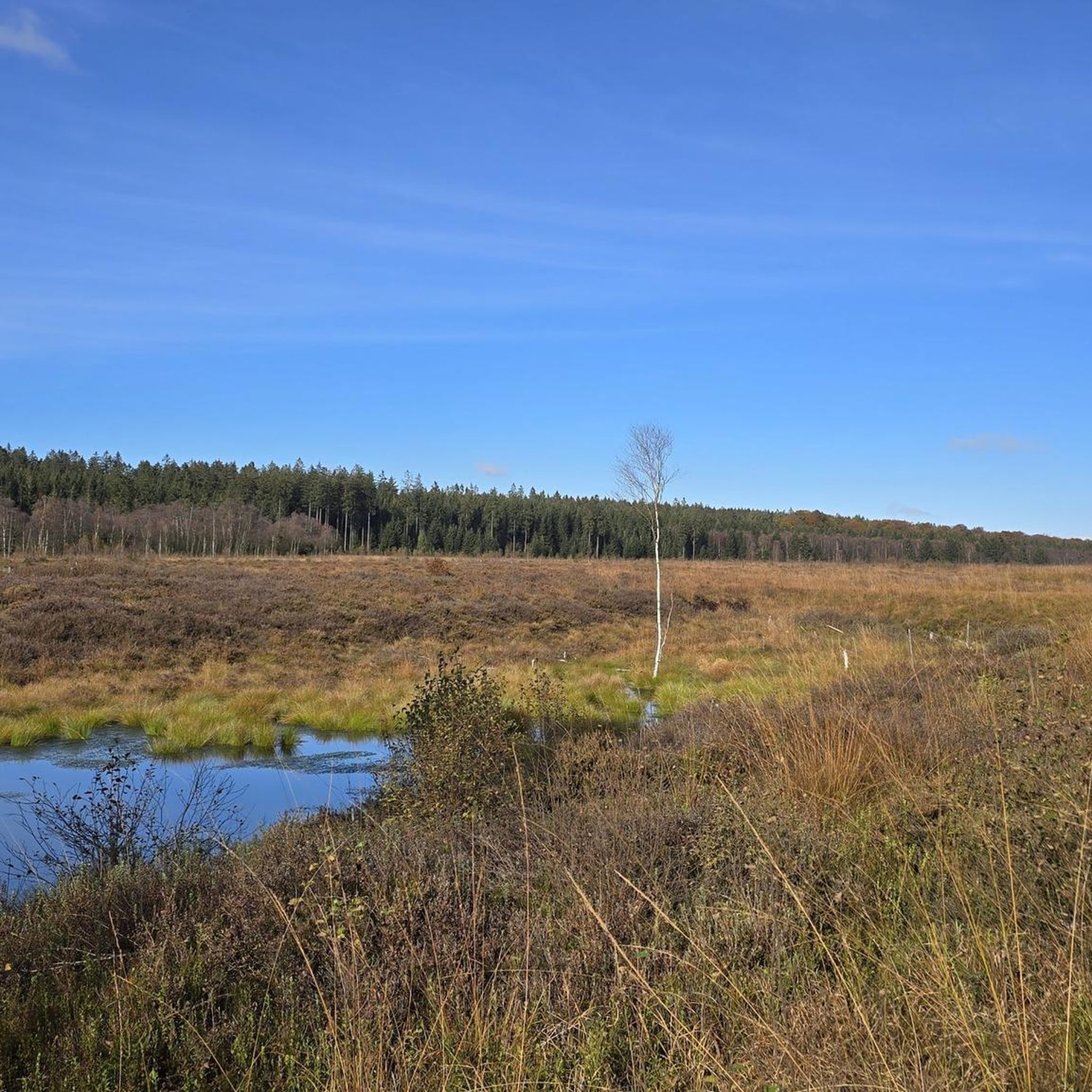
No traffic road cycling routes in Forêt De Chaon are characterized by a largely flat topography, making the region accessible for various cycling abilities. The area features extensive deciduous forests, including oak, chestnut, and birch trees, alongside areas of heathland and numerous ponds. Paved surfaces are common on many routes, providing smooth riding conditions. This blend of woodlands and wetlands defines the natural landscape for road cyclists.
Best no traffic road cycling routes in Forêt De Chaon
- The most popular…
Last updated: July 6, 2026
11
riders
61.7km
02:24
150m
150m
Moderate road ride. Good fitness required. Mostly well-paved surfaces and easy to ride.
4
riders
47.8km
02:02
150m
150m
Moderate road ride. Good fitness required. Mostly well-paved surfaces and easy to ride.

Sign up for free
2
riders
Moderate road ride. Good fitness required. Some segments of this route may be unpaved and difficult to ride.
1
riders
29.7km
01:13
100m
110m
Easy road ride. Great for any fitness level. Mostly well-paved surfaces and easy to ride.
10
riders
25.0km
00:57
60m
60m
Easy road ride. Great for any fitness level. Mostly well-paved surfaces and easy to ride.
Our route recommendations are based on thousands of hikes, rides, and runs completed by other people on komoot.
Start today with a free account
Your next adventure awaits.
Login or Signup
Popular around Forêt De Chaon

Tips from the Community

The lake covers 180 hectares, making it the largest in the Sologne. Originally created in 1864 to supply the Sauldre canal with water. Now partly developed as a recreational area: beach area, hiking trails, water sports (sailing, ski-nautique, pedalo), and an ornithological reserve. For nature lovers: you'll find a rich bird life (cendré heron, grèbe huppé, etc.) and diverse flora along the banks. For families: picnic areas, a beach area in the summer, and playgrounds.
4
0

"A very old church; two buttresses would allow us to date it to the 11th century," we learn. "Rebuilt in the 13th century, damaged during the Hundred Years' War, it was rebuilt again in the 16th century before being burned down during the Wars of Religion and then looted during the Revolution. Its last restoration dates back to 2014."
0
0
Built from 1900 to 1903 by Clavier, an entrepreneur in Vienne-en-Val, based on plans by Henri Rapine, an architect in Paris, this Saint Martin church is the second in Vienne-en-Val. The first church, dating from the 14th century, was destroyed. Inside, the base of the church's lectern depicts various scenes from the life of Saint Martin. The base bears the date 1613, while the eagle, which is said to have come from Férolles, is probably from the 19th century.
0
0
The Saint-André church, originally dating from 1154, was rebuilt under Henry IV. With its old-fashioned cackle, you will discover here the true characteristic of the churches of Sologne. The medieval Saint-Sylvain bell dating from 1403, initially installed in the bell tower, was visible at the reception of the town hall, just opposite, it has now returned to the church, protected from the passage of time. It is also one of the oldest bells in the Loiret department.
0
0
Listed as a historical monument in 1941, this church, dedicated to Sainte-Marguerite and Saint-Jean-Baptiste, is one of the most beautiful in the diocese, dating from the end of the 12th century. In the shape of a Latin cross and ogival style, it was built under the impetus of the monks of the abbey of Saint-Benoît-sur-Loire. 37 metres long, 8 metres wide in the nave and 20 metres wide in the transept, this religious building has a monumental door of Sainte-Marguerite built in a remarkable flamboyant style. The original bell tower and portal were destroyed by fire in the 16th century during the Wars of Religion and rebuilt in 1681. The remains of the bell tower in brick and stone are unique in Sologne.
0
0

At this location, during sanitation work in 1968, a certain number of ancient and medieval remains were unearthed, witnesses to the occupation of this site since Antiquity. Vienne-en-Val is also located on the Roman road from Orléans to Sancerre. The presence of two churches, one Merovingian and one dating from the 10th century, was revealed by surveys. The remains found, in particular sculpted blocks reused in these later constructions, attest that a sanctuary from the Early Roman Empire existed in the area but its location has not yet been discovered. You can discover these ancient blocks nearby, in a community hall which serves as a lapidary museum.
0
0
The largest pond in Sologne which combines rich natural environments, with fauna and flora that can be admired for hours, and facilities conducive to relaxation and swimming, with its beaches and activities on offer.
1
0
Private castle built in 1846 with the particularity of having a geometric brick decor
0
0
Frequently Asked Questions
What makes Forêt de Chaon ideal for no-traffic road cycling?
The Forêt de Chaon and the wider Sologne region are characterized by their relatively flat topography and a network of mostly paved surfaces, making them highly suitable for road cycling away from busy roads. You'll find a serene backdrop of deciduous forests, heathland, and numerous ponds, perfect for peaceful rides.
Are there routes suitable for beginners or families looking for easy, traffic-free rides?
Yes, the region offers routes with minimal elevation gain, perfect for an easy, traffic-free cycling experience. For example, the Roadbike loop from Lamotte-Beuvron is an easy option, covering about 25 km with very little climbing, ideal for a relaxed outing.
What kind of landscapes can I expect on these traffic-free road cycling routes?
You'll cycle through diverse landscapes, including dense deciduous forests of oak, chestnut, and birch, as well as areas of heathland. The region is also known for its 'Sologne of ponds,' offering picturesque wetland environments. These natural features provide a tranquil and scenic backdrop for your rides.
Are there any circular no-traffic road cycling routes available?
Yes, many of the routes in Forêt de Chaon are designed as loops, allowing you to start and end at the same point without retracing your path. An example is the Étang du Puits – Route de Chaon loop from Les Alicourts, which offers a moderate challenge over nearly 48 km.
What are some points of interest or attractions I can see along the no-traffic routes?
Beyond the natural beauty, you can incorporate cultural sights into your rides. Routes may pass by historical sites like the Château de l'Hermitage or the Château de la Grillère. The village of Chaon itself features a 12th-century church and the Maison du Braconnage (Poaching Museum). You might also encounter the tranquil Étang du Puits.
How long do the no-traffic road cycling routes typically take to complete?
The duration varies depending on the route and your pace. Easy routes, like the Roadbike loop from Lamotte-Beuvron, can be completed in under 1.5 hours. More moderate routes, such as the It's the bench! – Beautiful view of the Loire loop from Sennely, can take around 2.5 hours or more for the full 61 km.
What is the elevation profile like for road cycling in Forêt de Chaon?
The region is generally flat, making it accessible for most cyclists. While some routes offer minimal elevation gain, others provide a bit more challenge, with up to 150 meters of climbing over longer distances. This allows you to choose a route that matches your desired intensity, all while enjoying mostly paved, traffic-free surfaces.
Is there parking available near the starting points of these routes?
While specific parking details for each route's starting point are best checked on the individual route pages, the Forêt de Chaon area generally offers accessible parking in or near villages and popular natural sites, making it convenient to access the traffic-free cycling paths.
What do other road cyclists enjoy most about the no-traffic routes in Forêt de Chaon?
The komoot community highly rates the cycling experience in Forêt de Chaon, with an average score of 4.3 stars. Reviewers often praise the peacefulness of the routes, the beautiful natural scenery, and the opportunity to cycle on quiet, mostly paved roads away from vehicle traffic.
Are there any facilities like picnic areas or water points along the routes?
Yes, for your convenience, the region includes facilities such as a dedicated Picnic Area with Water Point within the forest. This ensures you have comfortable spots to rest and refuel during your traffic-free road cycling adventures.
Can I find more challenging no-traffic road cycling routes in Forêt de Chaon?
While the region is known for its gentle terrain, there are routes that offer a more extended ride and a moderate challenge. For example, the View of Château de Fraizières – Saint Jean Baptiste Church loop from Vouzon covers over 50 km with around 160 meters of elevation gain, providing a good workout on quiet roads.
Most popular routes in Forêt De Chaon

Get inspired with the komoot mobile app


Explore more
Browse the best Road cycling routes in other regions.
