Top 4 Caves around Barntrup
Caves near Barntrup Germany are not prominent within the immediate town area. However, the wider region, including areas like Bad Pyrmont and the Teutoburg Forest, offers various geological sites and historical underground structures. These natural features and man-made tunnels provide opportunities for exploration and insight into local geology and history. The landscape around Barntrup is characterized by its natural features and historical architecture.
Best caves around Barntrup
- The most popular caves is Pyrmont Castle, a castle that features casemates…
Last updated: October 5, 2026
Dunsthöhle Bad Pyrmont
Highlight • Cave
Translated by Google •
Tip by

Dunsthöhle (Vapor Cave) Bad Pyrmont
Highlight • Cave
Translated by Google •
Tip by

Sign up now to discover places like this
Get recommendations on the best single tracks, peaks, & plenty of other exciting outdoor places.
Castle Tunnel
Highlight • Castle
Showing Translation
Tip by

Stone Mine Entrance in Teutoburg Forest
Highlight • Cave
Translated by Google •
Tip by

Start today with a free account
Your next adventure awaits.
Other adventures around Barntrup

Tips from the Community

From the outside, it's hard to believe that there are several castle tunnels here and that they are also free to visit. Have fun discovering.
1
0

Beautiful facility to linger
0
0

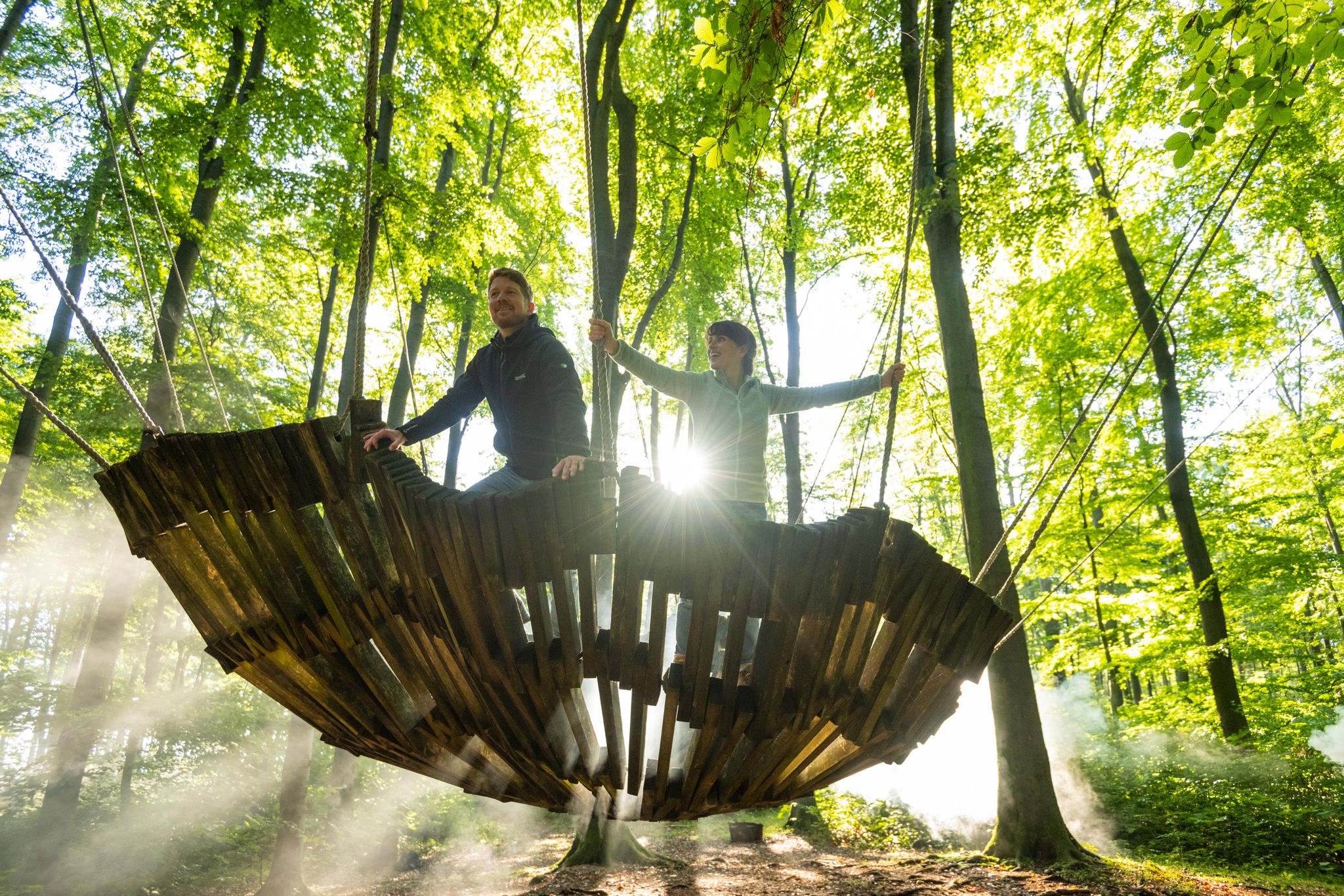
The Haze Cave is unique in Germany. It is located on the site of a former quarry where red sandstone was extracted in the 17th century. Quarry workers noticed a "haze" at a certain depth that caused people to faint. Dead birds were repeatedly found in the pit. Well doctor Dr. Johann Philipp Seip came to Pyrmont in 1712 and investigated the phenomenon. He suspected it was sulfur vapor. Carbon dioxide (CO2) was only discovered a few years later as atmospheric acid. The metal half-shells symbolize the numerous springs in Bad Pyrmont.
1
0

Interesting, brick entrance to a mine, a shaft or a bunker?! When you walk in there is a grate right around the corner.
1
0

Is it a lost place bunker or the entrance to the dwarven kingdom? The access route is blocked by a gate.
1
0

You should visit. A nice experience.
2
0

The haze cave is on the site of a former quarry where red sandstone was quarried in the 17th century. Quarry workers noticed a "haze" at a certain depth that caused people to faint. Again and again dead birds and animals were found in the pit. When the well-known well doctor Dr. Johann Philipp Seip came to Pyrmont in 1712 and got to the bottom of the apparitions. He assumed it was sulfur vapor. Carbon dioxide (CO2) was only discovered as atmospheric acid a few years later. In self-experiments, through "repeated sweating and drawing in the sulphurous fumes", Seip found out that this does not contain any toxic substances. With the permission of Prince Friedrich Anton Ulrich zu Waldeck von Pyrmont, he had a stone vault built over the steaming pit in 1720. Above it is a small building, about "6 shoes square and 10 shoes high", to prepare a dry bath for spa guests. However, the dry weld pool could not be used continuously because of the non-constant level of carbon dioxide. Seip, on the other hand, found that people of all walks of life "vaunt good recovery and help against swelling of the feet, gout pains and stiffness of the limbs". Source: https://www.staatsbad-pyrmont.de/bad-pyrmont-erleben/naturphaenomen-dunsthoehle
0
0

The haze cave is on the site of a former quarry where red sandstone was quarried in the 17th century. Quarry workers noticed a "haze" at a certain depth that made people faint. Dead birds and animals are also found in the pit from time to time. When the well-known well doctor Dr. Johann Phillip Seip came to Pyrmont in 1712 and got to the bottom of the apparitions. He assumed it was sulfur vapor. Carbon dioxide CO2 was only discovered as atmospheric acid a few years later.
0
0
Frequently Asked Questions
Are there natural caves directly within Barntrup?
Barntrup itself is not known for prominent natural cave systems. While the region offers beautiful landscapes and historical sites, significant geological caves are not a primary feature of the immediate Barntrup area.
What kind of 'caves' can I explore near Barntrup?
The 'caves' in the vicinity of Barntrup are primarily unique geological formations, historical structures, or man-made tunnels. For example, you can visit the fascinating Dunsthöhle Bad Pyrmont, a unique 'haze cave' known for its carbon dioxide emissions, or the historical Castle Tunnel.
What is the Dunsthöhle Bad Pyrmont?
The Dunsthöhle Bad Pyrmont is a unique natural phenomenon, a 'haze cave' where carbon dioxide naturally flows. It's considered a natural spectacle and offers an interesting experience, often with guided tours explaining its geological significance and history. It's located in Bad Pyrmont, a short distance from Barntrup.
Are there any historical tunnels or underground passages to visit?
Yes, you can explore the Castle Tunnel, which offers several accessible tunnels. These historical passages are often free to visit and provide a glimpse into the region's past.
Is the Dunsthöhle Bad Pyrmont suitable for families?
Yes, the Dunsthöhle Bad Pyrmont is considered family-friendly. The guided tours are informative and engaging, making it an interesting experience for visitors of all ages to learn about this unique natural phenomenon.
What other historical sites are near these 'caves'?
Close to the Castle Tunnel, you can also visit Pyrmont Castle, an impressive historical building that once served as a residence and now houses a museum. The Dunsthöhle Bad Pyrmont also has historical significance related to its discovery and early use.
Are there hiking trails near the 'cave' attractions?
Yes, the Barntrup area, including locations near these attractions, offers various hiking opportunities. You can find numerous trails for different skill levels, such as those listed in the City hikes around Barntrup guide or Hikes from bus stations around Barntrup.
What outdoor activities can I combine with a visit to these sites?
Beyond exploring the unique 'caves' and historical sites, the Barntrup region is excellent for outdoor activities. You can enjoy running trails, as detailed in the Running Trails around Barntrup guide, or various hiking routes through the scenic landscapes.
What is the 'Stone Mine Entrance in Teutoburg Forest'?
The Stone Mine Entrance in Teutoburg Forest is an interesting historical site, appearing as a brick entrance to what might have been a mine, shaft, or bunker. While the access route is blocked by a gate, it's a curious spot for those interested in industrial history and hidden features within the forest.
What do visitors enjoy most about the Dunsthöhle Bad Pyrmont?
Visitors often highlight the unique experience of the Dunsthöhle Bad Pyrmont, describing it as a fascinating natural spectacle. The guided tours receive praise for their excellent explanations, making the science behind the carbon dioxide emissions accessible and interesting.
Are there any traditional dripstone caves or extensive cave systems in the Barntrup area?
No, the Barntrup area does not feature traditional dripstone caves or extensive cave systems like those found in other parts of Germany, such as the Kluterthöhle near Ennepetal or the Teufelshöhle in Bavaria. The geological formations around Barntrup are different, focusing more on historical tunnels and unique gas-emitting 'haze caves'.
Most popular routes around Barntrup
Most popular attractions around Barntrup

Get inspired with the komoot mobile app


Explore more
Extend your search for the best caves by checking out these guides of the top ones around Barntrup:
