Top 20 Natural Monuments around Wollbrandshausen
Best natural monuments around Wollbrandshausen are characterized by a diverse natural landscape in the Lower Eichsfeld region of Lower Saxony. The area features the Seeburger See, the largest natural lake in the Göttingen district, recognized as a nature reserve. This postglacial lake, formed around 500 B.C., is known for its rich biodiversity, including numerous bird species and diverse flora. The surrounding landscape offers a mix of karst features, forests, and wetlands, providing varied natural attractions.
Best natural monuments around Wollbrandshausen
…Last updated: July 8, 2026
Rhume Spring
Highlight • Natural Monument
Translated by Google •
Tip by

Klingenberg spring
Highlight • Natural Monument
Translated by Google •
Tip by

Sign up now to discover places like this
Get recommendations on the best single tracks, peaks, & plenty of other exciting outdoor places.
Sign up for free
Mackenröder Cliffs
Highlight • Gorge
Translated by Google •
Tip by

Höherberg Pilgrimage Chapel
Highlight • Religious Site
Translated by Google •
Tip by

Oderparksee
Highlight • Lake
Translated by Google •
Tip by

Sign up for free to discover even more natural monuments around Wollbrandshausen.
Sign up for free
Already have an account?
Start today with a free account
Your next adventure awaits.
Login or Signup
Tips from the Community

The Klingenberg Spring has a lot to offer. You'll find a great resting place here, you can refresh yourself at the spring, and learn interesting facts from the information board. A visit here is definitely worth it!
7
0

I enjoyed the peace and the beautiful forest.
17
0
A mystical place, everywhere it bubbles and the color of the water is something very special.
18
1

This route leads along the Eichsfeld hiking trail and the karst hiking trail through a beautiful mixed forest.
19
0

Nice place with tables and benches. Invites you to take a break with a good view of the Harz mountains.
3
0

The hydrogeological background of this comparatively strong spring with its impressive spring pot is very interesting: The groundwater flowing down from the Harz slopes, including seepage water from the rivers Oder and Sieber to the north, rushes at high speed at a depth of around 50 meters through an underground karst cave system. In the source area of the Rhume, with great pressure on a wall, it hits clay-containing and thus water-impermeable rock. This forms an underground dam, which lets the spring water of the Rhume shoot up to the surface. The more or less bluish coloration of the water, depending on the incidence of light, is caused by light scattering of small lime particles, which the water absorbs on its way through the rock layers.
22
0

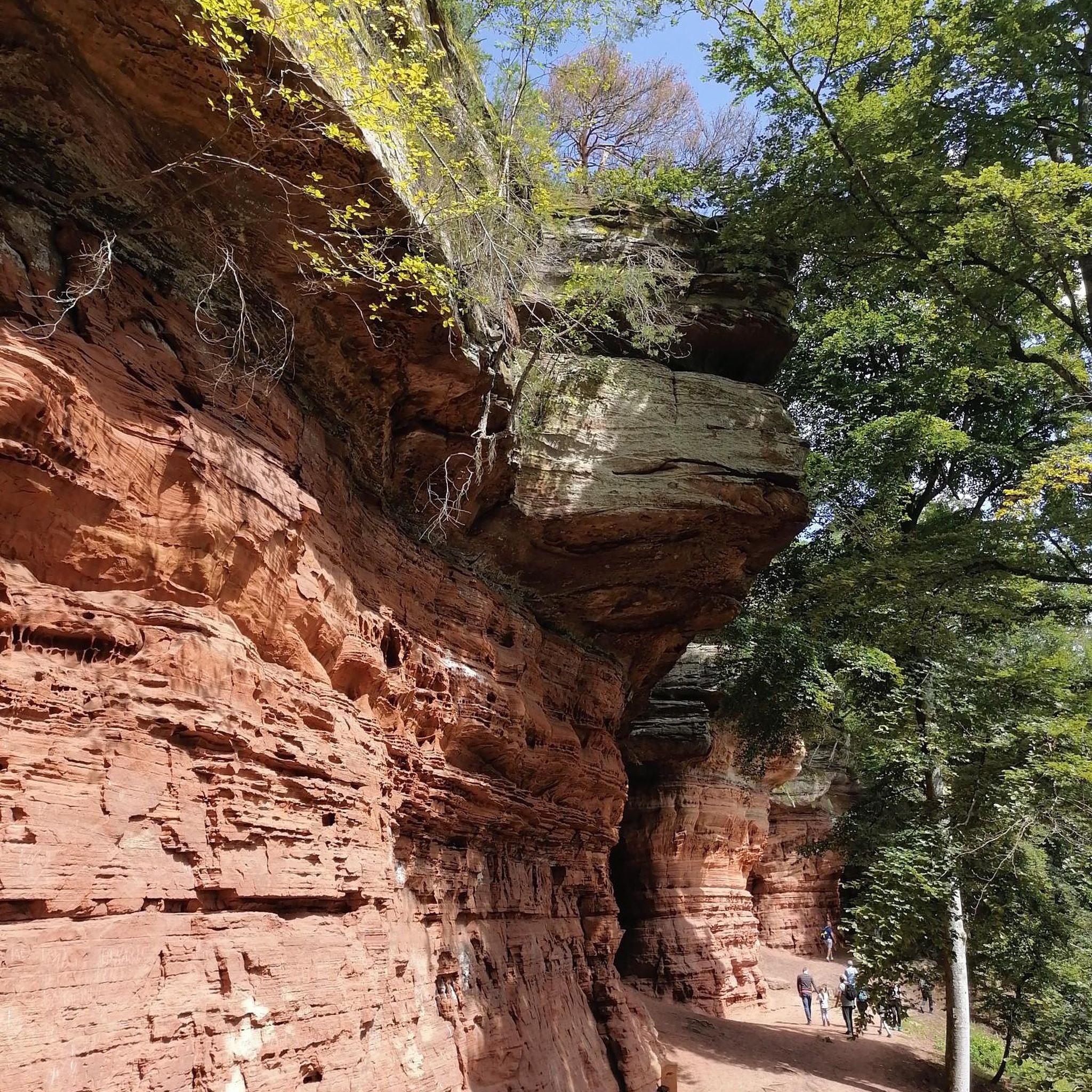
The Mackenröder Trail is a fine single trail that meanders above the Mackenröder cliffs and sometimes leads very close to the edge of the cliff. You should drive carefully in these places in greasy, dirty weather. Overall, however, the trail is great to ride. There is only one very steep section that is a bit challenging. Tip for "biobikers": You should drive the trail north. It's more fun there, because it's mostly downhill and only has to be pedaled briefly uphill in a few places.
3
0

nice and quiet break area
2
0
Frequently Asked Questions
What are the most prominent natural attractions around Wollbrandshausen?
The most significant natural attraction is the Seeburger See, the largest natural lake in the Göttingen district and a designated nature reserve. Other notable natural monuments include the Klingenberg spring, the geologically interesting Mackenröder Cliffs, and the Rhume Spring.
What makes Seeburger See a significant natural monument?
Seeburger See is the largest natural body of water in the Göttingen district, formed around 500 B.C. from a collapsed cave. It's a protected nature reserve known for its rich biodiversity, including 255 bird species, abundant water lilies, and diverse fish populations. It's often called the 'Eye of the Eichsfeld' due to its unique natural beauty and ecological importance.
What kind of wildlife can I expect to see around Seeburger See?
The Seeburger See nature reserve is a haven for birdwatchers, with 255 different species observed. You might spot bluethroats, black terns, water rails, Eurasian reed warblers, black-headed gulls, common teal, and even ospreys. The lake also supports diverse fish, including eel, pike, zander, tench, carp, and perch.
Are there any unique geological formations to explore?
Yes, the Mackenröder Cliffs offer a geologically fascinating experience. The terrain is dynamic, with material slowly shifting over time, revealing layers of lime and red sandstone. The Rhume Spring is also geologically interesting, as groundwater from the Harz rushes through an underground karst cave system before emerging with significant pressure.
Where can I find scenic viewpoints in the area?
For expansive panoramas, visit the Höherberg Pilgrimage Chapel. From here, you can enjoy views of the Eichsfelder Basin and adjacent mountain ranges, potentially even the Harz on clear days. The Mackenröder Cliffs also offer unique perspectives along their root-interspersed paths, and Oderparksee provides beautiful lakeside views.
What outdoor activities are available near these natural monuments?
The area around Wollbrandshausen and Seeburger See is excellent for various outdoor activities. You can enjoy swimming, boating, fishing, and sailing on Seeburger See. There are also numerous hiking and cycling trails. For specific routes, you can explore options like easy hikes, gravel biking, and road cycling routes around Wollbrandshausen.
Are there hiking trails suitable for different skill levels?
Yes, there are trails for various skill levels. For easy walks, consider the circular routes around Seeburger See, such as the 'Lake Seeburg – Lake Seeburg loop from Seeburg' or the 'Hiking loop from Seeburg', which are around 5 km long. More challenging terrain can be found along the Mackenröder Cliffs, where paths are interspersed with roots and small slopes, requiring some concentration.
Can I cycle around the natural monuments?
Absolutely. The area offers popular cycling trails, especially around Seeburger See. You can find various gravel biking and road cycling routes around Wollbrandshausen, including loops that take you along the Rhume River or past other scenic spots. Many routes are available for different distances and difficulty levels.
Are there family-friendly natural monuments or activities?
Yes, several natural monuments are suitable for families. Seeburger See offers recreational activities like swimming and boating, and the circular path around the lake is easy to navigate. The Klingenberg spring has a well-kept resting place and information boards, making it an educational stop. The Höherberg Pilgrimage Chapel also offers family-friendly views.
What is the best time of year to visit the natural monuments around Wollbrandshausen?
The spring and summer months are ideal for enjoying recreational activities on Seeburger See, such as swimming and boating, and for observing the abundant flora. Birdwatching is particularly rewarding during migration seasons. Autumn offers beautiful foliage for hiking and cycling, while winter can provide a peaceful, serene landscape, though some paths might be more challenging.
Are there any historical or archaeological points of interest near the natural monuments?
The Seeburger See area has a rich history, with extensive archaeological research revealing Neolithic activity and medieval settlements. The lake itself formed around 500 B.C. from a collapsed cave. Additionally, local legends, such as that of the evil Graf Isang, are associated with the lake, with claims that his castle tower can sometimes be seen at low water levels.
What do visitors enjoy most about the natural monuments in this region?
Visitors frequently appreciate the tranquility and natural beauty of the area, especially around Seeburger See. The well-maintained resting place and fresh water at Klingenberg spring are highly valued. The dynamic and root-interspersed paths along the Mackenröder Cliffs are also a favorite for their unique geological features and fun hiking experience.
Most popular routes around Wollbrandshausen
Most popular attractions around Wollbrandshausen

Get inspired with the komoot mobile app


Explore more
Extend your search for the best caves by checking out these guides of the top ones around Wollbrandshausen:
