Top 20 Natural Monuments around Teupitz
Best natural monuments around Teupitz are situated within the Dahme-Heideseen Nature Park, offering diverse landscapes and ecological significance. The region features a variety of protected areas, including lakes, forests, and unique geological formations. These natural sites provide opportunities to observe distinct ecosystems and appreciate the local environment. Teupitz is characterized by its interconnected lake systems and surrounding natural habitats.
Best natural monuments around Teupitz
- The most popular natural monuments is Lake Tornow, a lake that features a nature trail…
Last updated: August 18, 2026
Lake Tornow
Highlight • Lake
Translated by Google •
Tip by

Pätzer Vordersee
Highlight • Lake
Translated by Google •
Tip by

Sign up now to discover places like this
Get recommendations on the best single tracks, peaks, & plenty of other exciting outdoor places.
Sign up for free
Briesensee and Klingeberg Nature Reserve
Highlight (Segment) • Natural Monument
Translated by Google •
Tip by

Klingespring Spring
Highlight • Natural Monument
Translated by Google •
Tip by

Pätzer Hintersee
Highlight • Lake
Translated by Google •
Tip by

Sign up for free to discover even more natural monuments around Teupitz.
Sign up for free
Already have an account?
Start today with a free account
Your next adventure awaits.
Login or Signup

Other adventures around Teupitz

Tips from the Community

Very nice, the paths are easy to walk on
0
0
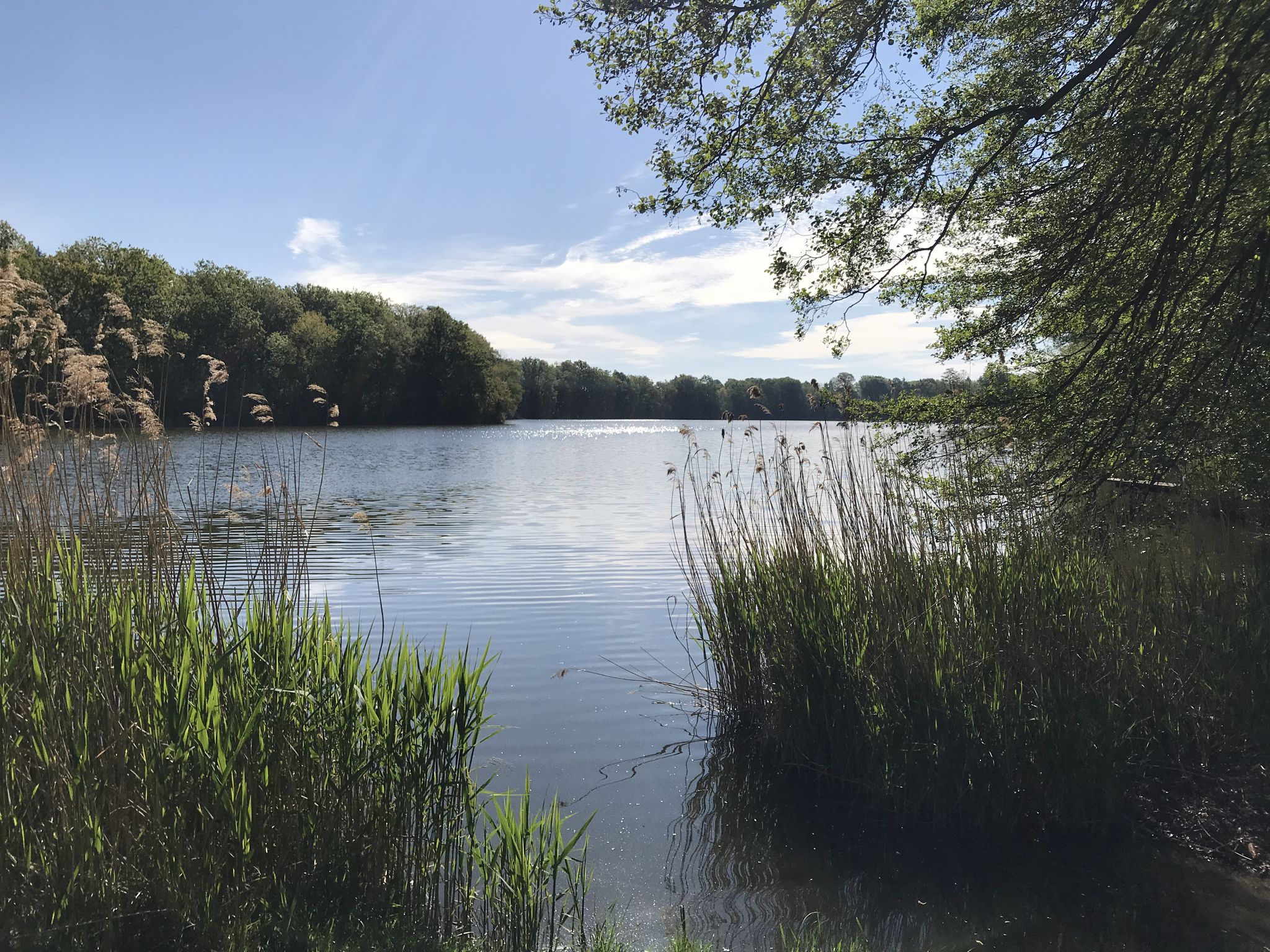
The Tornower See is near Tornow, a little south of Teupitz. There is a nature trail. Very nice paths along the bank and in the forest. There are benches and rest areas.
2
0

Circular route around the Pätz lakes The circular route around the Pätzer Vordersee and Hintersee is a little over 16 kilometers long. It's a trail for all seasons. The start and finish is at the train station “Bestensee”. The path leads along the main road fromBestensee to Pätzer Vordersee and on to Pätz with its historic village green. The place name comes from the Slavic and means something like sand. From here we continue into pure nature! A hundred years ago, the hillsides on the east bank of the Pätzer Hintersee were almost free of forest. A few junipers bear witness to the sparse heathland that once existed here. The lowlands with wet meadows are preserved with the support of landscape conservation. On the southern shore of the Pätzer Hintersee there are large moor areas that have been secured as a nature reserve. The path now leads north. An idiosyncratic pine forest with crooked trees is called Schweinewinkel. This is where the pigs used to be driven into the forest to the Waldwiede. Walking through the Pätz Hintersee settlement, you return to the starting point at the train station. Source https://www.dahme-heideseen-naturpark.de/themen/routen-touren/rundweg-um-die-paetzer-seen/
0
3
Within the "Briesensee and Klingeberg" nature reserve established in 2002, the slopes at the source around the Klingespring and the moors and swamp forests were removed from forest management. On the slopes, semi-natural mixed pine forests with their stocks of ferns and wintergreens should be able to develop undisturbed. The protection also applies to the almost 300-year-old pine trees that occur naturally here, as well as the undisturbed moorland development in the alder quarries, moorland copses, and bank and silting-up areas. Within the 79 hectare nature reserve, 10 hectares are secured as wilderness areas. Source https://www.natur-brandenburg.de/themen/sehenswertes/dauerwald-am-briesensee-und-klingespring/
1
0
A nature trail with information boards leads along the banks of Lake Tornow through a “primeval forest”. The path runs along the lake through rarely found, natural mixed pine forests. Naturally grown pine trees over 200 years old with impressive growth forms and dimensions stretch their crowns over the southern shore of Lake Tornow. They are among the oldest pines in the Mark Brandenburg. It is thanks to careful foresters and botanists that these native pines were preserved. Nowadays they are part of the “Briesensee and Klingeberg” nature reserve. In a scientific sense, the trees are so-called “autochthonous” pines: settled in the region and grown without human influence. This means that the Scots pine (Pinussylvestris) is characterized by characteristics and a specific adaptation to the location. Pine trees also naturally rejuvenate here. As a representative of conifers, the common pine is very variable in its growth form. Depending on the location, it can be 15 to 40 meters high and up to 500 years old. With its taproots it also reaches deep groundwater layers and can therefore survive longer dry periods. In adolescence and in the upper part of the trunk, the bark is thin and smooth and reddish in color. As it ages, the bark becomes grey-brown, deeply cracked and coarsely flaky.
3
0
The approx. 80-hectare nature reserve "Briesensee and Klingeberg" is located about 3 km south-west of Teupitz, on the south and south-west shores of Lake Tornow. These are the Briesensee, the southern and southwestern shores of the Tornower See, and the moraine slopes bordering on the lakes within the Zossen-Teupitzer Hügellan landscape unit. Characteristic of the NSG area are the two lakes, a largely natural flow (Briesenseegraben) and several spring areas, of which the "Klingespring", which is protected as a natural monument, is designed as a prominent hillside spring. The water quality of the Briesensee has apparently been in poor condition for a long time, which has an impact on the water quality of the Briesenseegraben. The relief-rich slopes at Tornowsee are partially planted with autochthonous old pine populations. Numerous wintergreen and club moss species were found on the slopes. Due to changes in use, such as the lack of farm forest and litter use, these occurrences have declined sharply in recent decades and are currently concentrated almost exclusively in the area of a few small clay pits. There is a small agricultural area in the area. This wet meadow is part of the contractual nature protection program. The sanctuary is a popular destination for nature walks. Signposted hiking trails and a nature trail lead through the area. On the hiking trail, with a view of the Briesensee, there is a memorial stone for the botanist and local historian Adolf Straus. There are bathing spots at Lake Tornow. Campgrounds that used to be here were completely dismantled after 1990. Source https://www.dahme-heideseen-naturpark.de/themen/natura-2000/briesensee-und-klingeberge/
2
0
The Klingespring spring is located on a slope opposite the southern bank of Lake Tornow. It appears on a map from the Staakow Forestry Office in 1936 and is therefore considered one of the oldest natural monuments in the region. The name goes back to the Upper German word blade for gorge and, in connection with the English word spring for source, means something like gorge source. It is a seepage spring in which the rainwater flows through sandy, water-permeable material above the spring, seeps into the slope and comes back to the surface at a water-retaining layer. At an earlier time there was said to have been a carillon at this point that was powered by the escaping water. The spring was created during the last ice age around 10,000 years ago. The swamp forget-me-not, fontinalis, real watercress and stream bunge thrive in the source area, which indicates a special quality of the water. As the water escapes, sand is removed, which is deposited as an alluvial fan in Lake Tornow. The wintergreen spotted fern grows above the slope. The source's protection goes back to the botanist Adolf Strauss (1904–1986), in whose honor NABU Dahmeland erected a memorial stone on a hiking trail that connects Lake Tornow with Lake Briesen. Source https://de.wikipedia.org/wiki/Briesensee_und_Klingeberg
2
0
The Klingespring on Lake Tornow was declared a natural monument in 1934 and is demonstrably the oldest natural monument in the region. At the bottom of steep hills, ice-cold, crystal-clear water flows from a slope into a spring basin and then in a small stream to Lake Tornow. The name “Klingespring” goes back to the Upper German “Klinge” and is synonymous with “gorge” and “spring”. “Spring” refers to a spring and (in English) spring. “Klingespring” therefore means: “ravine spring”. The water from the spring, which emerges here as a so-called seepage spring at the foot of the slope, supplies spring biotopes and a small river that are worthy of protection. Botanical specialties include swamp forget-me-nots, spring mosses, stream boulders and watercress. The watercress here characterizes a source that can be viewed as very natural and original. Insects such as the larvae of stoneflies and caddisflies that grow in the water or the black and yellow spring damsel indicate excellent water quality. The power of the emerging spring water created a spring cauldron over thousands of years. The removed sand was deposited as alluvial fans on the other side of the path in and on Lake Tornow. The Klingespring is located directly on the hiking trail and nature trail around Lake Tornow. The source and the surrounding hillsides, together with the Briesensee, belong to the “Briesensee and Klingeberg” nature reserve. The crystal clear water is traditionally drawn from the Klingespringquelle as Easter water. Source https://www.dahme-heideseen-naturpark.de/themen/ausflugsziel-erlebnisse/klingespring-am-tornower-see/
3
0
Frequently Asked Questions
What are some of the most notable natural monuments to visit around Teupitz?
Teupitz offers a variety of significant natural monuments. You can explore the serene Lake Tornow, known for its nature trail and connection to the Briesensee. Another popular spot is Pätzer Vordersee, which features a path leading to a bathing area and a large playground nearby. For a quieter experience, Pätzer Hintersee is surrounded by extensive lowland forests and reed beds, offering diverse natural habitats.
Are there family-friendly natural monuments in the Teupitz area?
Yes, several natural monuments around Teupitz are great for families. Pätzer Vordersee has a bathing area and a large playground. The Briesensee and Klingeberg Nature Reserve offers nature trails suitable for family walks. Additionally, the Klingespring Spring, located on the nature trail around Lake Tornow, is an interesting natural feature for all ages.
What unique natural features can I expect to see in the Teupitz region?
The Teupitz region, part of the Dahme-Heideseen Nature Park, boasts diverse natural features. You can discover unique geological formations like the Binnendüne Waltersberge, an inland dune with dry habitats and sand grasslands. The Dahmetal bei Briesen nature reserve showcases the largely untouched course of the Dahme river with old meanders and natural oak-hornbeam forests. The area is also characterized by its extensive lake systems, such as the Teupitz-Köriser Seenkette, which includes nutrient-poor kettle and fen bogs.
What kind of wildlife can be spotted around the natural monuments?
The diverse ecosystems around Teupitz support a rich variety of wildlife. In the Teupitz-Köriser lake chain, you might spot kingfishers in the moors, and endangered species like the osprey and white-tailed eagle in the air. The lakes themselves are home to eels, perch, carp, tench, catfish, and whitefish, with sightings of the endangered European otter. The extensive lowland forests and reed beds of areas like Pätzer Hintersee also provide habitats for various species.
Are there good options for hiking or cycling near the natural monuments?
Yes, the area around Teupitz offers numerous routes for outdoor activities. For cycling, you can find easy to moderate routes like the 'Boardwalk Over the Lake' loop or the 'Nottekanal' loop. Road cyclists can explore routes such as 'Neue Mühle Lock' or 'Brandenburger Heath'. Runners have options like the 'Lake Tornow Nature Trail' loop. You can find more details and routes in the Cycling around Teupitz, Road Cycling Routes around Teupitz, and Running Trails around Teupitz guides.
What is the best time of year to visit the natural monuments around Teupitz?
The natural monuments around Teupitz are beautiful year-round, but the best time to visit largely depends on your preferred activities. Spring and summer offer lush greenery, ideal conditions for swimming in the lakes, and vibrant wildlife. Autumn brings stunning foliage, perfect for hiking and cycling. Even winter can be appealing for quiet walks, especially around frozen lakes, though some facilities might have reduced hours.
Are there any natural monuments that are considered 'hidden gems' or less crowded?
While many sites are popular, the Naturschutzgebiet Pätzer Hintersee is often described as a quiet place, a bit off the beaten track, offering opportunities for bathing and observing diverse natural habitats away from larger crowds. The Naturschutzgebiet Dubrow, with its moraine formations and continental pine-oak mixed forests, also provides a significant ecological experience that might be less frequented than the main lake areas.
Can I find circular walks or trails around the natural monuments?
Yes, several natural monuments feature circular walks. For instance, a nature trail leads along the shores of Lake Tornow, offering detailed information about the local environment. The Klingespring Spring is directly located on a hiking and nature trail that circles Lake Tornow, providing an engaging loop for visitors.
What are the main characteristics of the Teupitz-Köriser lake chain?
The Teupitz-Köriser lake chain is a significant attraction, characterized by its interconnected lakes and diverse ecosystems. It features lichen-pine forests, sand dry grasslands, and mixed deciduous forests. Unique habitats like nutrient-poor kettle and fen bogs are also present. The water quality is excellent, making it appealing for recreation. This lake system is part of a larger biotope network extending to the Spreewald, highlighting its ecological importance.
What should I bring for a walk or hike around the natural monuments?
When exploring the natural monuments around Teupitz, it's advisable to bring appropriate footwear for trails, especially if you plan to venture into forested or wetland areas. Depending on the season, layers of clothing, rain gear, and sun protection are recommended. Don't forget water, snacks, and a camera to capture the scenic landscapes and potential wildlife sightings. Binoculars can enhance your wildlife spotting experience.
Are there any natural monuments that are particularly significant for their geological formations?
Yes, the Binnendüne Waltersberge is a distinctive natural monument known for its strong relief formed by dune creation, featuring dry habitats like open inland dunes and sand grasslands. Additionally, the Naturschutzgebiet Dubrow is significant for its moraine formations, including the Pätzer Berge, Dubrowberge, and Katzenberge, which are crucial for the preservation of continental pine-oak mixed forests.
What makes the Klingespring Spring a unique natural monument?
The Klingespring Spring, declared a natural monument in 1934, is the oldest in the region. It's unique because ice-cold, crystal-clear water flows from a slope into a spring basin, forming a small stream that feeds into Lake Tornow. The name 'Klingespring' itself means 'gorge source,' referring to the erosion trough created over millennia where many small springs rise from the ground.
Most popular routes around Teupitz
Most popular attractions around Teupitz

Get inspired with the komoot mobile app


Explore more
Extend your search for the best caves by checking out these guides of the top ones around Teupitz:
