Top 20 Natural Monuments around Zörbig
Best natural monuments around Zörbig are characterized by glacial erratics, reflecting the region's ice age history. Located between Leipzig and Halle (Saale), the area features geological formations such as the Flinzstein in Löberitz and the Bauernstein in Göttnitz. These sites offer insights into the natural and cultural landscape of Zörbig. The region's natural monuments provide diverse points of interest for exploration.
Best natural monuments around Zörbig
- The most popular natural monuments is Porphyry Quarry Lake at Gützer Berg, a…
Last updated: June 25, 2026
The Blue Bench Memorial, Goitzsche Shore
Highlight • Monument
Translated by Google •
Tip by

Großer Goitzschesee
Highlight • Lake
Translated by Google •
Tip by

Sign up now to discover places like this
Get recommendations on the best single tracks, peaks, & plenty of other exciting outdoor places.
Sign up for free
Lake Ludwig
Highlight • Lake
Translated by Google •
Tip by

Frenchmen's Stone Menhir, Seeben
Highlight • Monument
Translated by Google •
Tip by

Porphyry Quarry Lake at Gützer Berg
Highlight • Lake
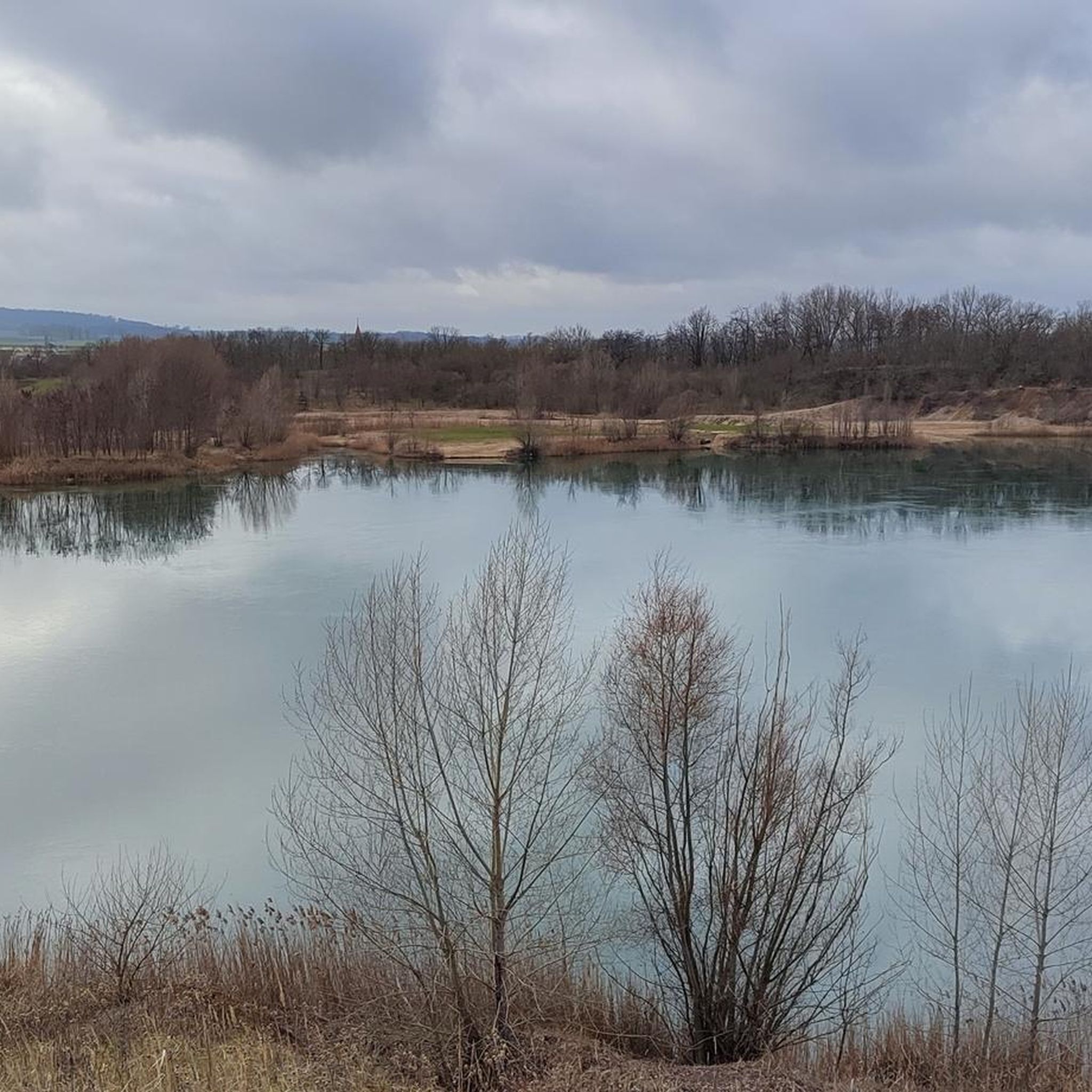
As on the Kapellenberg in Landsberg, the "Landsberg rhyolite" of the Lower Halle porphyry complex is found here. The quarry has been inactive …
Translated by Google •
Tip by
Sign up for free to discover even more natural monuments around Zörbig.
Sign up for free
Already have an account?
Start today with a free account
Your next adventure awaits.
Login or Signup
Tips from the Community

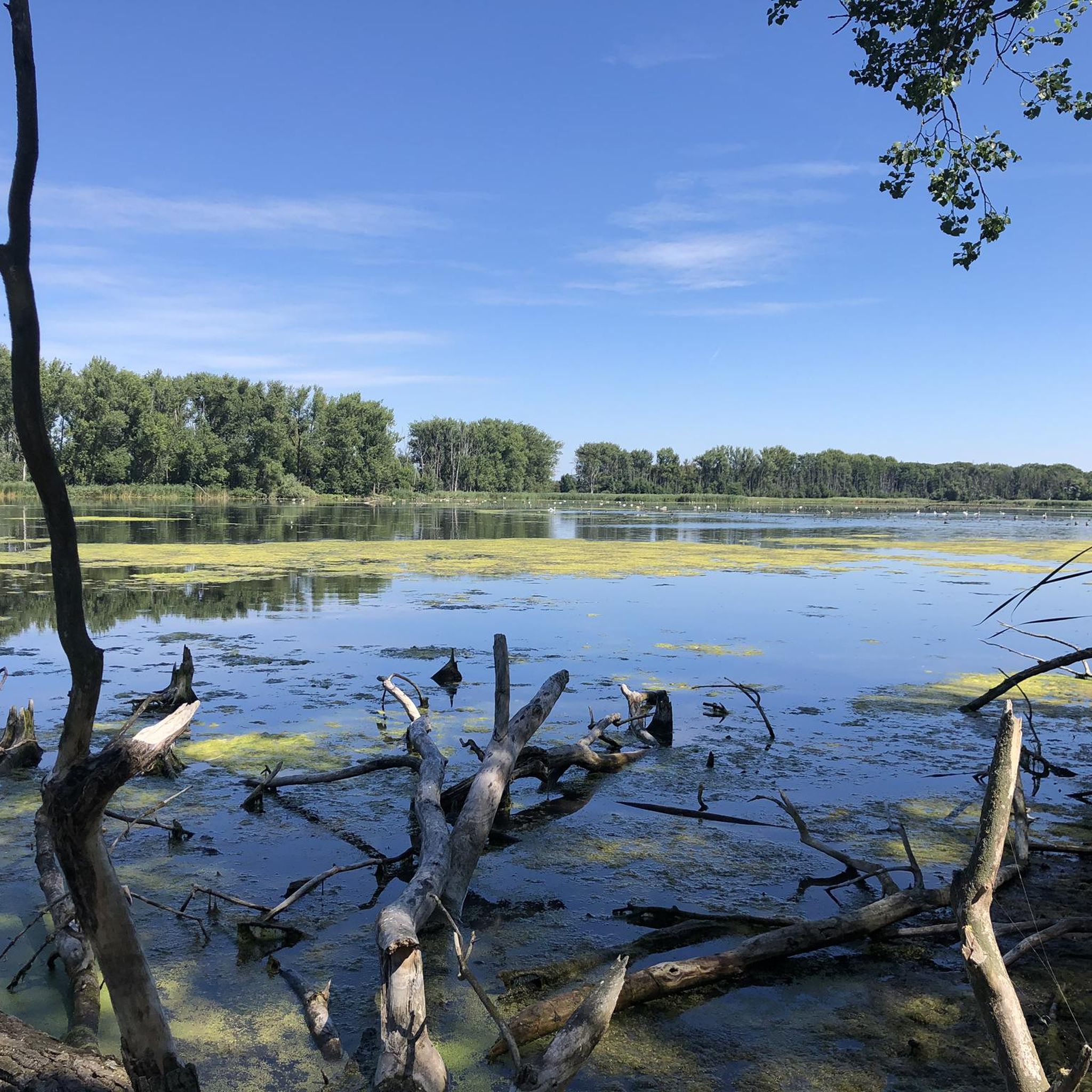
Lake Ludwig near Holzweißig (Saxony-Anhalt) is an idyllic natural bathing lake that originated from a former open-cast lignite mine in Holzweißig-West. It offers a popular sandy beach with a designated swimming area, good water quality, and is a peaceful destination for hikers and cyclists near Bitterfeld.
2
0
Cool location with a great view of the Goitzsche
5
0

The Ludwigsee was the oldest coal mine in the Goitzsche. By the time of reunification in 1990, it had already been mined out and a small lake had been created. The groundwater, which rose until 2007, caused the lake to grow to over 100 hectares. The Ludwigsee was initially fenced off for many years because its steep banks and unrehabilitated slopes were prone to landslides. After the final water level was reached, the dangerous steep edges were secured by blasting and the fence could be dismantled. The gradual development of the bank area can be clearly observed here.
2
0
The name of the floodplain forest that was originally located here changed several times over the centuries until the name 'Goitzsche' prevailed. At the beginning of the 20th century, however, when new maps were created, the name 'Goitsche' was entered, which can still be found today.[7] Source https://de.wikipedia.org/wiki/Gro%C3%9Fer_Goitzschesee
5
0
Large parts of the lake in the Bärenhof area were purchased by the BUND and are designated as a nature reserve. Goitzschewächter Various art projects have been realized around the lake: On the Pouch peninsula, next to the Agora event arena, there are several landscape art objects, the Bitterfelder Bogen is located west of the Goitzsche and the Goitzschewächter by Anatol Herzfeld is in the south, near the Paupitzscher See. Since 2004, motorboat races (world, European and German championships in different classes) have been held on the Goitzsche near the Pouch peninsula in August. The event is linked to the region's largest folk festival, the Goitzsche Festival. Every year around 100,000 visitors flock to the peninsula on the second weekend in August. In addition, since 2006 the so-called Goitzsche Marathon in various disciplines (including inline skating) has been held along the lake.[4] The body of water has been the second largest lake in the Central German Lake District since the Geiseltalsee was completely flooded in 2011. In 2013, the Blauwald subsidiary Blausee GmbH bought parts of the Goitzsche and adjacent land areas.[5] Since 2015, amber has been mined again from the completely renaturalized Goitzschesee. It is the world's second largest amber deposit and the world's largest underwater mining area. Nine different types of amber have been found, including Goitschite, which was named after the lake.[6] Source https://de.wikipedia.org/wiki/Gro%C3%9Fer_Goitzschesee
5
0
The Great Goitzschesee was renovated by the Lausitzer and Mitteldeutsche Bergbau-Verwaltungsgesellschaft (LMBV) until 2006. The Great Goitzschesee has become a popular local recreation area due to its wide range of leisure opportunities. In June 2005, the lake was opened for water sports and tourist use, initially limited until December 31, 2005. Fishing is already permitted in some places with a fishing license. The lake is now open for general use. The shore area from the Bitterfeld Fritz-Heinrich Stadium to the gauge tower has been completed since July 8, 2005. A spacious shore area was created with a fairground, camping site, a harbor basin on Berliner Strasse in Bitterfeld and two marinas. There are three lidos around the lake: the Mühlbeck lido, the lido at the gauge tower and the Niemecker See lido. Various water sports such as sailing, diving, stand-up paddling and surfing are possible on the lake. In 2015, a wakeboarding facility was opened on Lake Goitzsche, which is considered to be the most modern lift facility in eastern Germany. Various passenger ships operate on the lake. The so-called Amber Promenade runs along the shore from the gauge tower to the Pouch peninsula. Lake Goitzsche is well-connected by hiking and cycling trails. The coal-steam-light cycle path runs past the lake.[3] The Goitzschesee circular trail runs around the lake, allowing visitors to experience the structural changes of the past decades and the transformation of the former industrial landscape into the cultural landscape of Goitzsche. The route is about 30.3 km long. The circular tour mainly runs along paved paths. Source https://de.wikipedia.org/wiki/Gro%C3%9Fer_Goitzschesee
6
0
The lake is located southeast of Bitterfeld and north of Delitzsch and, together with the Mulde reservoir, encloses the village of Pouch, which lies in the center of the landscape. In 1998, the flooding of the former open-cast mining area began with the introduction of Mulde water. However, the project was not completed until 2006, but in 2002: a breach in the Mulde dam caused by the Mulde flood caused the water to fill up by 7 meters within two days, far above the target water level, so that it overflowed and partially flooded the nearby town of Bitterfeld (maximum water level 78.64 m above sea level, target water level today 75 m above sea level[1]).[2] Gauge tower While the open-cast mining extended across Saxony-Anhalt and Saxony, today's Great Goitzschesee is located in Saxony-Anhalt on the border with Saxony. The neighboring Seelhausener See to the south, on the other hand, lies almost entirely in Saxony; The Goitzsche opencast mine used to be there too. Source https://de.wikipedia.org/wiki/Gro%C3%9Fer_Goitzschesee
6
0
Frequently Asked Questions
What kind of natural monuments can I expect to see around Zörbig?
The natural monuments around Zörbig are primarily characterized by impressive glacial erratics, which are large boulders transported by glaciers during the ice ages. You'll also find beautiful lakes that have formed in former quarry basins, offering unique landscapes. These sites provide a glimpse into the region's geological past and its natural evolution.
Are there any natural monuments with historical or cultural significance in Zörbig?
Yes, several natural monuments in Zörbig have rich historical and cultural ties. For instance, the Flinzstein (also known as Teufelsstein) in Löberitz is a glacial erratic believed to have been a pre-Christian cult site. Similarly, the Bauernstein in Göttnitz, another large granite block, served as a memorial for soldiers and is thought to have been a traditional 'Thing' or court site. The Frenchmen's Stone Menhir in Seeben also holds local lore and historical importance.
What are some of the most notable glacial erratics in the Zörbig region?
Two particularly notable glacial erratics are the Flinzstein (Teufelsstein) in Löberitz and the Bauernstein in Göttnitz. The Flinzstein is composed of red Swedish granite and is known for its mythological past as a cult site. The Bauernstein, located on the village green in Göttnitz, is a large granite block that has served as both a natural landmark and a historical memorial.
Are there any lakes among the natural monuments around Zörbig?
Yes, the region features lakes that are significant natural monuments. The Porphyry Quarry Lake at Gützer Berg is a notable example, formed in a former quarry basin with steep rock faces. Another is Lake Ludwig, an idyllic natural bathing lake that originated from an open-cast lignite mine, offering a sandy beach and good water quality.
What outdoor activities can I do near the natural monuments in Zörbig?
You can enjoy various outdoor activities near Zörbig's natural monuments. For instance, there are several running trails, such as the 'St. Mary's Church Spören – Zörbig Water Tower loop'. If you prefer hiking, you'll find easy routes like the 'Zörbig Castle – Hallescher Tower Zörbig loop'. Gravel biking is also popular, with routes like the 'Lake Gröbern – View of Lake Goitzsche loop'. You can find more details and routes in the Running Trails around Zörbig, Easy hikes around Zörbig, and Gravel biking around Zörbig guides.
Are there family-friendly natural monuments to visit in Zörbig?
Many natural monuments around Zörbig are suitable for families. Sites like Lake Ludwig offer a sandy beach for relaxation and swimming, making it a great spot for all ages. The Frenchmen's Stone Menhir in Seeben and the Cösitz Castle area, which includes a park with old trees and a pond, are also considered family-friendly and offer opportunities for walks and exploration.
What makes the Flinzstein in Löberitz unique?
The Flinzstein, also known as Teufelsstein, is unique due to its composition of red Swedish granite, indicating its distant Scandinavian origin. While much of it has sunk into marshy ground, its visible surface features small depressions. Local lore suggests it was a pre-Christian cult site, and its later renaming to 'Teufelsstein' by Christian monks highlights its fascinating cultural and religious transformation over time.
What is the significance of the Bauernstein in Göttnitz?
The Bauernstein in Göttnitz is significant as both a natural and historical landmark. This large granite block, transported by glaciers, rests on the village green and was repurposed in 1912 as a memorial for fallen soldiers. Historically, it is also believed to have served as a 'Thing' or court site, making it a central point in the community's social and legal history.
Can I find any rivers or water bodies other than lakes among the natural monuments?
Yes, the Untere Mulde River is a significant natural monument in the broader region. It's a major tributary of the Elbe, known for its exceptionally high flow velocities. The river's course and its surrounding landscapes offer beautiful natural scenery and are important for local ecosystems.
What do visitors enjoy most about the natural monuments around Zörbig?
Visitors particularly appreciate the diverse natural beauty and historical depth of the area. The komoot community has shared over 40 photos and given more than 90 upvotes to these locations, highlighting their general appeal. People enjoy the geological insights provided by the glacial erratics, the peaceful settings of the lakes, and the rich stories embedded in sites like the Frenchmen's Stone and the Flinzstein.
Are there any castles or historical buildings associated with the natural monuments?
While not strictly a natural monument itself, Cösitz Castle is located near several natural sites and is considered a historical monument. Built in 1891, it features a beautiful plant and an adjacent park with old copper beech trees, a grotto, and a pond, inviting visitors for a walk and offering a blend of historical architecture and natural surroundings.
Most popular routes around Zörbig
Most popular attractions around Zörbig

Get inspired with the komoot mobile app


Explore more
Extend your search for the best caves by checking out these guides of the top ones around Zörbig:
