Top 20 Natural Monuments around Gladbach
Best natural monuments around Gladbach include a variety of protected nature reserves and unique geological features. Gladbach features several significant nature reserves, such as Volksgarten-Bungtwald-Elschenbruch and Knippertzbachtal, which preserve local flora and fauna. These areas offer opportunities for peaceful walks and nature observation. The region also contains specific natural and historical points of interest that contribute to its natural heritage.
Best natural monuments around Gladbach
- The most popular natural monuments is Viktoria Spring (Heckenmünster), a natural monument that is…
Last updated: June 24, 2026
Viktoria Spring (Heckenmünster)
Highlight • Natural Monument
Translated by Google •
Tip by

Werdelstein
Highlight • Natural Monument
Tip by

Sign up now to discover places like this
Get recommendations on the best single tracks, peaks, & plenty of other exciting outdoor places.
Sign up for free
Barrow Group Im Friedbüsch
Highlight (Segment) • Historical Site
Schleidweiler, Gemeinde Zemmer
Beschreibung
Fundstelle 1575
Ausgedehntes Grabhügelfeld der Stufen Hunsrück-Eifel-Kultur II A3 und Hunsrück-Eifel-Kultur II B, z. T. mit Wintersdorfer Fußschalen und innenverzierten Schalen Braubacher Art. Die Nekropole …
Tip by

Six burial mounds near Binsfeld
Highlight • Historical Site
Translated by Google •
Tip by
Schweich healing fountain
Highlight • Natural Monument
Translated by Google •
Tip by

Sign up for free to discover even more natural monuments around Gladbach.
Sign up for free
Already have an account?
Start today with a free account
Your next adventure awaits.
Login or Signup
Tips from the Community

a very beautiful fountain that must be preserved
0
0

For the sulfur spring, see e.g. https://kulturdb.de/einobjekt.php?id=1720
0
0

The CO2 springs are classified as simple acid springs. The gas, carbonic acid dissolved in water, rises through the cracks in the fault line and partially dissolves in the groundwater at a shallow depth. The now slightly acidic water dissolves mineral compounds from the rock it flows through, which settle on the earth's surface as spring sediment. The mineral springs around Heckenmünster have a high iron content, which results from the fact that in the subsurface of the spring areas, at a depth of approximately 10-20 m, there is a red iron horizon through which the springs flow. The springs generally produce extremely low water flow, between 1 and 3 liters per minute. The Viktoria spring in Heckenmünster was used commercially around the turn of the century; between 1880 and 1900, approximately 50,000 bottles of mineral water were bottled annually. In the immediate vicinity of the spring, you can still find many pieces of glass and broken bottles that were broken or discarded at the time. Source: Eifel.info
0
0

This is where I refilled my water bottle.
1
0

Unfortunately no drinking water for the bottle. But in an idyllic location.
0
0

Can smell a bit :-)
1
0

As the name suggests, there's a spring with excellent water near the small chapel. So when your bottles are empty, be sure to walk or drive past.
0
0

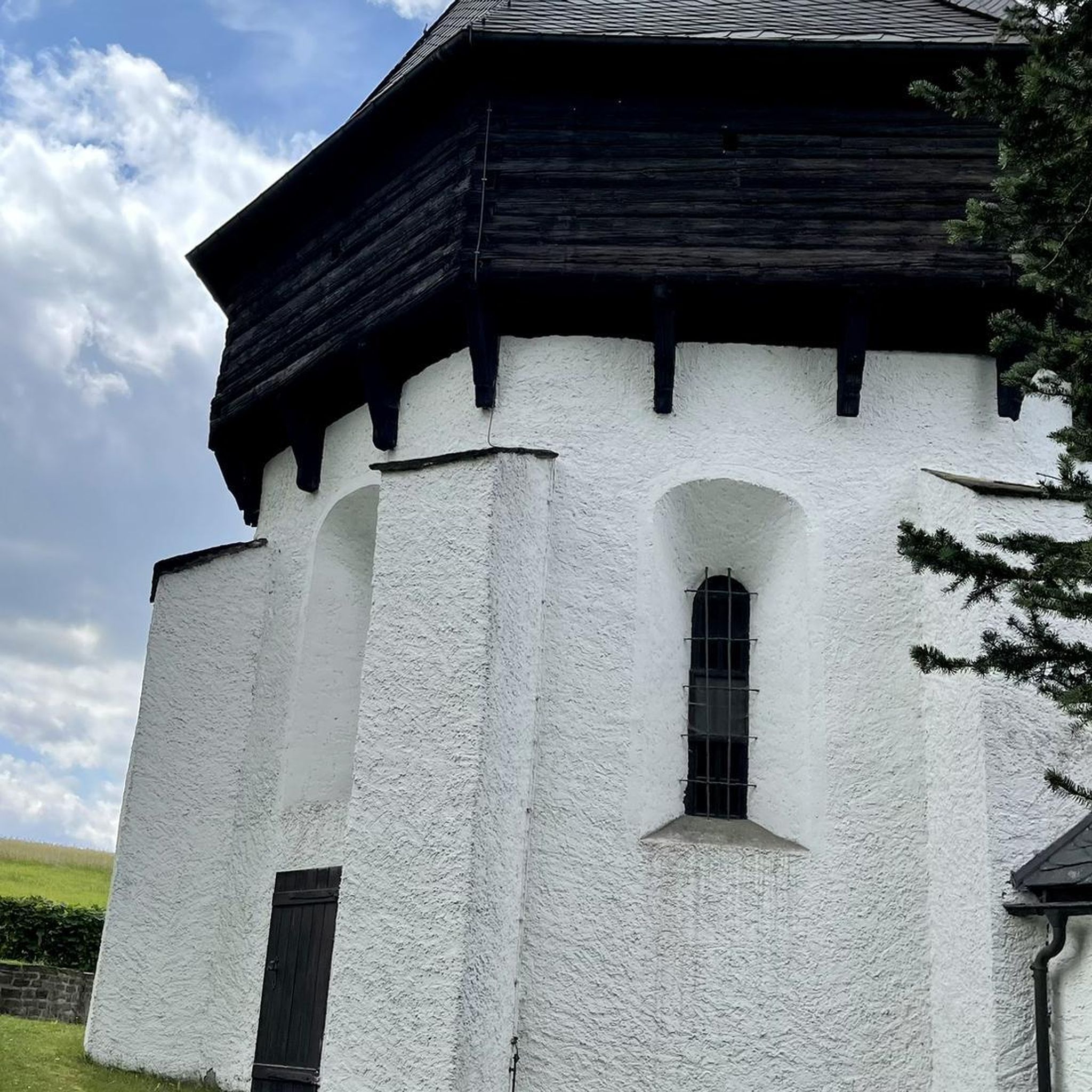
Definitely make a detour here !!! Beautiful chapel!
1
0
Frequently Asked Questions
What kind of natural monuments can I expect to find around Gladbach?
Gladbach's natural monuments are primarily protected nature reserves and significant historical sites that blend with the natural landscape. You'll find diverse ecosystems like woodlands and wetlands, stream valleys, and areas with unique geological formations. These areas are valued for their ecological importance and offer tranquil natural experiences.
Are there any natural monuments with historical significance in the region?
Yes, several natural monuments around Gladbach have deep historical roots. For instance, the Werdelstein is a pillar-like rock block located at an ancient boundary, associated with local legends and potentially serving as a sacrificial stone. Additionally, the Barrow Group Im Friedbüsch is an extensive Iron Age burial mound field with over 40 documented mounds, offering a glimpse into ancient history.
Which natural monuments are suitable for families with children?
For a family-friendly outing, consider visiting the Viktoria Spring (Heckenmünster), which is surrounded by a beautiful pine forest and was historically used as a Roman bath. Another interesting spot is the Drift Boulder from the Lower Rhine Bay, a relic from the ice ages that offers a unique geological feature for children to marvel at.
What kind of outdoor activities can I do near these natural monuments?
The natural monuments around Gladbach are excellent starting points for various outdoor activities. You can explore numerous hiking trails, including easy options like the 'Sensory benches — Bruch – Bruch Castle loop' or 'View of Bruch from Galgenberg – Bruch Historic Oil Mill loop'. For more challenging routes, check out the Easy hikes around Gladbach guide. Mountain biking and running trails are also available, with options like the 'View of Bruch from Galgenberg – Historic Water Wheel in Bruch loop' for MTB enthusiasts, detailed in the MTB Trails around Gladbach guide.
Are there any natural monuments that are less crowded?
While specific crowd levels can vary, exploring the lesser-known nature reserves like the Viehstraße Nature Reserve or the Mühlenbachtal might offer a more tranquil experience. These areas are protected for their ecological value and provide peaceful environments for nature observation away from more popular spots.
What are the typical terrains like in Gladbach's natural monuments?
The terrain varies across Gladbach's natural monuments. You can expect mature woodlands, wetlands, and stream valleys in areas like Volksgarten-Bungtwald-Elschenbruch and Knippertzbachtal. Some reserves, such as Viehstraße, feature oak and moor birch forests with unique historical 'Flachskuhlen' (flax pits) and even small heathland areas. Paths are generally well-maintained for walking and cycling, especially along river sections like the Niersbruch.
Can I find circular walks around the natural monuments?
Yes, many of the nature reserves and areas surrounding natural monuments are ideal for circular walks. For example, the Niers Cycle Path offers pleasant routes along the Niers river, which can be adapted for circular walks. You can find various loop trails for hiking and running in the Easy hikes around Gladbach and Running Trails around Gladbach guides.
What is the best time of year to visit the natural monuments in Gladbach?
The natural monuments in Gladbach, being largely nature reserves and outdoor sites, are enjoyable throughout the year. Spring brings blooming flora, summer offers lush greenery, autumn showcases vibrant foliage, and winter provides a serene, quiet atmosphere. For comfortable walking and cycling, spring and autumn are often ideal due to milder temperatures.
Are there any ancient burial sites among the natural monuments?
Yes, the region is home to significant ancient burial sites. Besides the Barrow Group Im Friedbüsch, which is an extensive Iron Age burial mound field, you can also visit the Six burial mounds near Binsfeld. These Celtic burial mounds are located near the Celtic castle ruin Wachenbach and offer a fascinating historical experience within a natural setting.
What makes the nature reserves in Gladbach special?
Gladbach's nature reserves, such as Volksgarten-Bungtwald-Elschenbruch, Knippertzbachtal, and Niersbruch, are special because they protect diverse habitats including forests, wetlands, and stream valleys. They are crucial for maintaining ecological balance, supporting local flora and fauna, and offering peaceful escapes for recreation and nature observation. Some even feature unique historical elements like the 'Flachskuhlen' in Viehstraße Nature Reserve.
What should I wear when visiting the natural monuments?
Given the varied terrain and outdoor nature of these sites, it's advisable to wear comfortable, layered clothing suitable for the weather conditions. Sturdy walking shoes or hiking boots are recommended, especially if you plan to explore trails in the nature reserves or visit sites like the Werdelstein, which can involve walking on uneven ground.
Most popular routes around Gladbach
Most popular attractions around Gladbach

Get inspired with the komoot mobile app


Explore more
Extend your search for the best caves by checking out these guides of the top ones around Gladbach:
