Top 20 Natural Monuments around Bischheim
Best natural monuments around Bischheim include a variety of natural features within and bordering the area. Bischheim, located near Strasbourg, offers access to green spaces and waterways, such as the Ill River and the Plan d'eau de la Ballastière. These sites provide opportunities for outdoor activities and represent remnants of the region's natural landscape. The area is characterized by its blend of natural beauty and recreational facilities.
Best natural monuments around Bischheim
- The most popular natural monuments is Adlerbogen Viewpoint…
Last updated: June 24, 2026
Adlerbogen Viewpoint
Highlight • Viewpoint
Showing Translation
Tip by

Königsstuhl (Donnersberg summit)
Highlight • Summit
Showing Translation
Tip by
Sign up now to discover places like this
Get recommendations on the best single tracks, peaks, & plenty of other exciting outdoor places.
Sign up for free
Hirtenfels Viewpoint
Highlight • Viewpoint
Translated by Google •
Tip by

Hauck's Quarries
Highlight • Structure
Translated by Google •
Tip by

Wildenstein Ruins
Highlight • Castle
The distinguishing features of the cowslip, among others the primrose flower, are the …
Translated by Google •
Tip by

Sign up for free to discover even more natural monuments around Bischheim.
Sign up for free
Already have an account?
Start today with a free account
Your next adventure awaits.
Login or Signup

Tips from the Community

Nature is taking back bit by bit!
1
0


The Hauck'sche quarry is one of 16 sandstone quarries in the Flonheim area. The emergence of the Flonheim sandstone goes back to the time of the "Rotliegend" approx. 290 million years ago. The light yellow color, partly interspersed with dark brown and black iron rinds (limonite), gives the Flonheim sandstone its unique appearance. The Flonheim sandstone was already quarried by the Romans and probably used for country houses, temples and tombstones. Excavations at the former Roman fort in Alzey bear witness to this. Over the centuries, the sandstone was used for numerous buildings in Flonheim, e.g. for the former Augustinian monastery, the defensive wall and the historic town hall. However, the Flonheimer sandstone was not only a popular building material in Flonheim, but throughout the entire region. The stonemason trade reached its peak in the 17th and 18th centuries. You can still admire this today in the magnificent baroque inns and town houses with their unique door portals. The evangelical market church and the bear pharmacy bear witness to a second boom in the sandstone industry around the turn of the century (1900). Flonheim sandstone was also used in the construction of Cologne Cathedral in the 19th century.
5
0

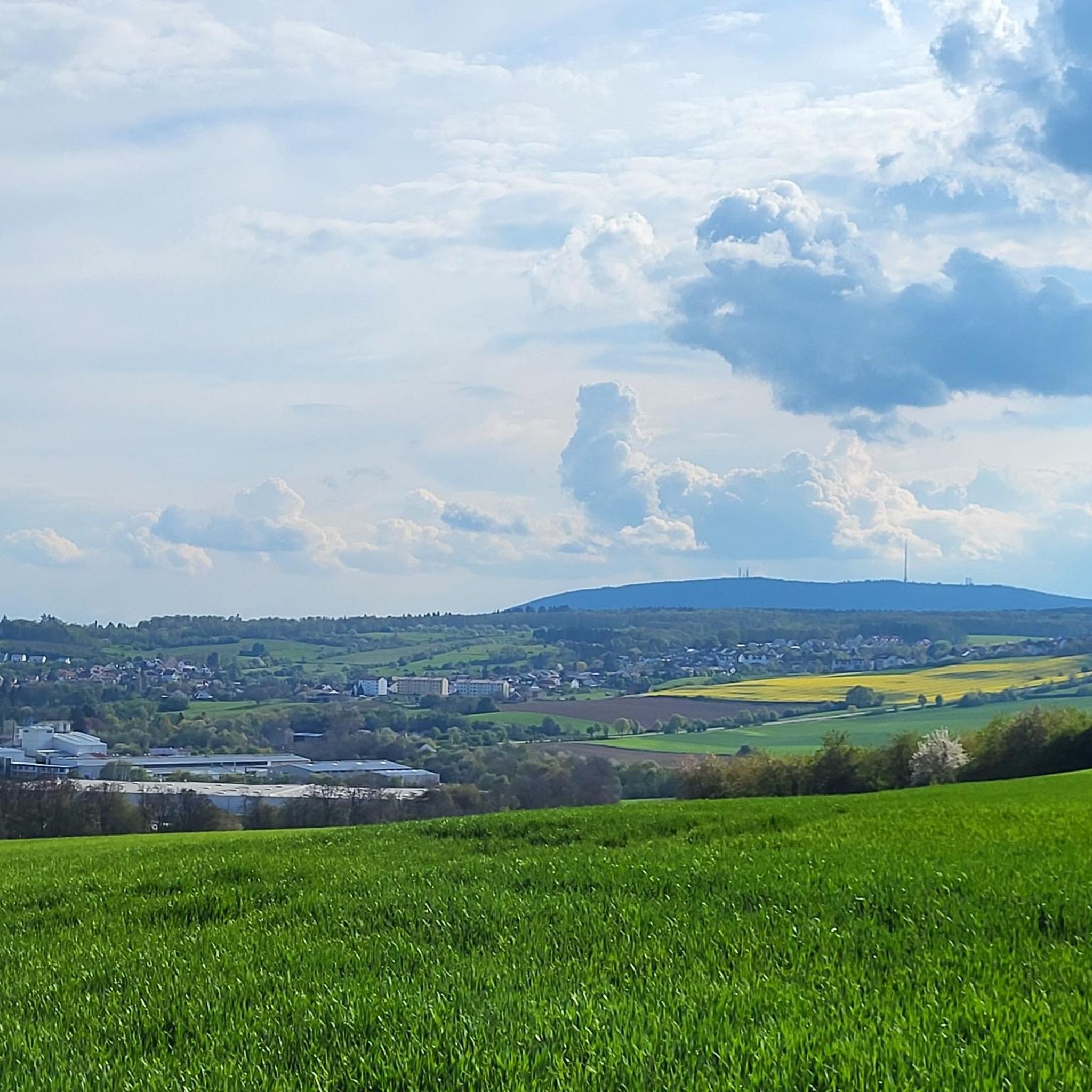
There is a shelter at the Hirtenfels. From there you have a great view of the surroundings and the Palatinate Forest. Right next to it is the Kosakenfels.
11
0

The Hirtenfels with its 630m above sea level is well integrated into a beautiful hiking tour from Dannenfels over the Adlerbogen and Ludwigsturm. From the summit of the Hirtenfels you have a wonderful view of the Palatinate.
9
0

Also installed in Cologne Cathedral, so it is yet another cultural highlight on the Hiwweltour 👍🏻
0
0

Not much to see of this castle - still worth seeing, this enchanted place! https://youtu.be/QU4gA5UjPoA
3
1

history Nothing is known about the exact period when the castle was built. The castle was first mentioned in a document in 1276 when the complex passed to his daughter Lukardis after the death of Philip V von Bolanden. Thereafter, further mentions were always made in connection with a change of ownership, so the castle came into the possession of King Albrecht von Habsburg between 1304 and 1308 through an exchange for the Gleichen Castle, in 1321 King Friedrich the Handsome locum Wildenstein enfeoffed to Count Philipp von Sponheim- Dannenfels and finally in 1328 she became an afterfief of the Counts of Leiningen. Presumably it was destroyed in the Thirty Years War (1618–1648). In 1657 the castle was already described as a ruin. In 1938 the ruin was owned by the municipality of Albisheim. Excavations took place in 1963, during which crossbow bolts, arrow and spearheads as well as a Romanesque key were found. Today the castle is located in the Dannenfels district. Source and more information: https://de.wikipedia.org/wiki/Burg_Wildenstein_(Pfalz)
5
0
Frequently Asked Questions
What are the primary natural attractions directly in or bordering Bischheim?
Bischheim offers two main natural attractions: the Plan d'eau de la Ballastière and sections of the Ill River. The Plan d'eau is a protected natural area, ideal for swimming and recreation, while the Ill River provides green spaces for leisurely walks.
What activities can families enjoy at the Plan d'eau de la Ballastière?
The Plan d'eau de la Ballastière is well-suited for families. During summer, it's a popular spot for supervised swimming, sunbathing, and barbecues. It also offers sports facilities like table tennis and basketball, a fitness trail, and often hosts youth activities and free swimming lessons for children in July and August.
Are there any historical natural monuments in the broader region around Bischheim?
Yes, the broader region features sites like Hauck's Quarries, an impressive historical site where sandstone was quarried by Romans and used for centuries in local architecture. Another is Wildenstein Ruins, a castle ruin with a rock path and historical significance.
What kind of views can I expect from natural monuments in the area?
The region offers several viewpoints with expansive vistas. The Adlerbogen Viewpoint provides beautiful views over the Zellertal and Worms to the Odenwald. From Hirtenfels Viewpoint, you can see the surrounding area and the Palatinate Forest. The Königsstuhl (Donnersberg summit), the highest point of the Palatinate, also offers breathtaking views after an ascent.
What outdoor activities are available near Bischheim's natural monuments?
Beyond the immediate natural monuments, the area around Bischheim is excellent for various outdoor activities. You can find numerous routes for cycling, gravel biking, and mountain biking. For cycling, explore routes like the Pfrimm Valley Viaduct loop. For gravel biking, consider the Steinbacher Pond loop. Mountain bikers can enjoy trails such as the View from Drosselfels loop. You can find more details on these activities in the Gravel biking around Bischheim, Cycling around Bischheim, and MTB Trails around Bischheim guides.
Is the Ill River in Bischheim suitable for walking or other activities?
Yes, the Ill River borders Bischheim and its adjacent green spaces offer peaceful backdrops for leisurely walks. While the most famous sections are within Strasbourg, the river's presence in Bischheim contributes to the local natural environment, providing a tranquil setting away from urban traffic. You can learn more about the river's significance at The banks of the River Ill.
What is the best time to visit the Plan d'eau de la Ballastière?
The Plan d'eau de la Ballastière is particularly popular during the summer months (July and August) when designated areas are open for supervised swimming, and various recreational activities and youth programs are often available. The water quality is regularly monitored during this period.
Are there any natural monuments that are also significant for their ecological value?
The Wildenstein Ruins are notable not just for their historical aspect but also for a significant occurrence of true cowslip, a protected medicinal plant. The Plan d'eau de la Ballastière is also a protected natural area, representing a remnant of the original Ried landscape with floodable meadows and wooded riverbanks.
What do visitors appreciate most about the natural monuments around Bischheim?
Visitors frequently highlight the stunning views from locations like the Adlerbogen Viewpoint and the sense of accomplishment from reaching the Königsstuhl (Donnersberg summit). The historical depth of sites like Hauck's Quarries and the peaceful, recreational opportunities at the Plan d'eau de la Ballastière are also highly valued.
Are there any natural monuments that offer facilities for visitors?
Yes, the Hirtenfels Viewpoint includes a shelter, providing a protected rest area. The Plan d'eau de la Ballastière offers a beach, barbecue areas, and sports facilities like table tennis and basketball, making it a well-equipped spot for leisure.
Can I find easy walking routes near the natural monuments in Bischheim?
The green spaces along the Ill River in Bischheim offer opportunities for leisurely and easy walks. The Plan d'eau de la Ballastière also has a fitness trail and pathways suitable for relaxed strolls around the water, providing a tranquil setting for outdoor enjoyment.
Most popular routes around Bischheim
Most popular attractions around Bischheim

Get inspired with the komoot mobile app


Explore more
Extend your search for the best caves by checking out these guides of the top ones around Bischheim:
