Top 20 Natural Monuments around Duingen
Best natural monuments around Duingen are located in Lower Saxony, Germany, a region characterized by a diverse natural landscape. The area offers opportunities to experience unique geology, flora, and fauna. Duingen's surroundings feature ancient forests, significant geological sites, and individual protected trees, providing varied natural attractions. These sites showcase the region's natural heritage and offer insights into its ecological and geological history.
Best natural monuments around Duingen
- The most popular natural monuments is Ebersnacken Tower, a viewpoint that offers…
Last updated: April 26, 2026
Ebersnacken Tower
Highlight • Viewpoint
Translated by Google •
Tip by

Löns Tower on Thüster Berg
Highlight • Viewpoint
A tower in honor of Hermann Löns
This tower stands at about the highest point of …
Translated by Google •
Tip by

Sign up now to discover places like this
Get recommendations on the best single tracks, peaks, & plenty of other exciting outdoor places.
Sign up for free
Lippold's Cave
Highlight • Cave
About an hour west of Alfeld, at the village of Brunkensen, lies the Lippoldshöhle. It consists of several rooms, one of which is called the kitchen, another is …
Translated by Google •
Tip by
Rothestein Cave
Highlight • Cave
Translated by Google •
Tip by

Upper Cliff Trail (Lüerdissen Cliffs, Ith)
Highlight • Trail
Translated by Google •
Tip by

Sign up for free to discover even more natural monuments around Duingen.
Sign up for free
Already have an account?
Start today with a free account
Your next adventure awaits.
Login or Signup
Other adventures around Duingen

Tips from the Community

The Rothestein Cave is a special highlight here. It's open from April to September. The climb is probably not suitable for everyone. Maybe I'm too tall for it. 😅
5
0
The story of the Rothestein Cave is interesting and exciting!
5
0

The natural ridge path along the Ith cliffs leads through the most beautiful nature and is peppered with vantage points for fantastic views. Good physical condition and surefootedness are a basic requirement for large parts of the path, however, especially when the paths become narrow trails. The winding paths, the constant ups and downs, which can make the path an exhausting challenge, should not be underestimated.
0
0

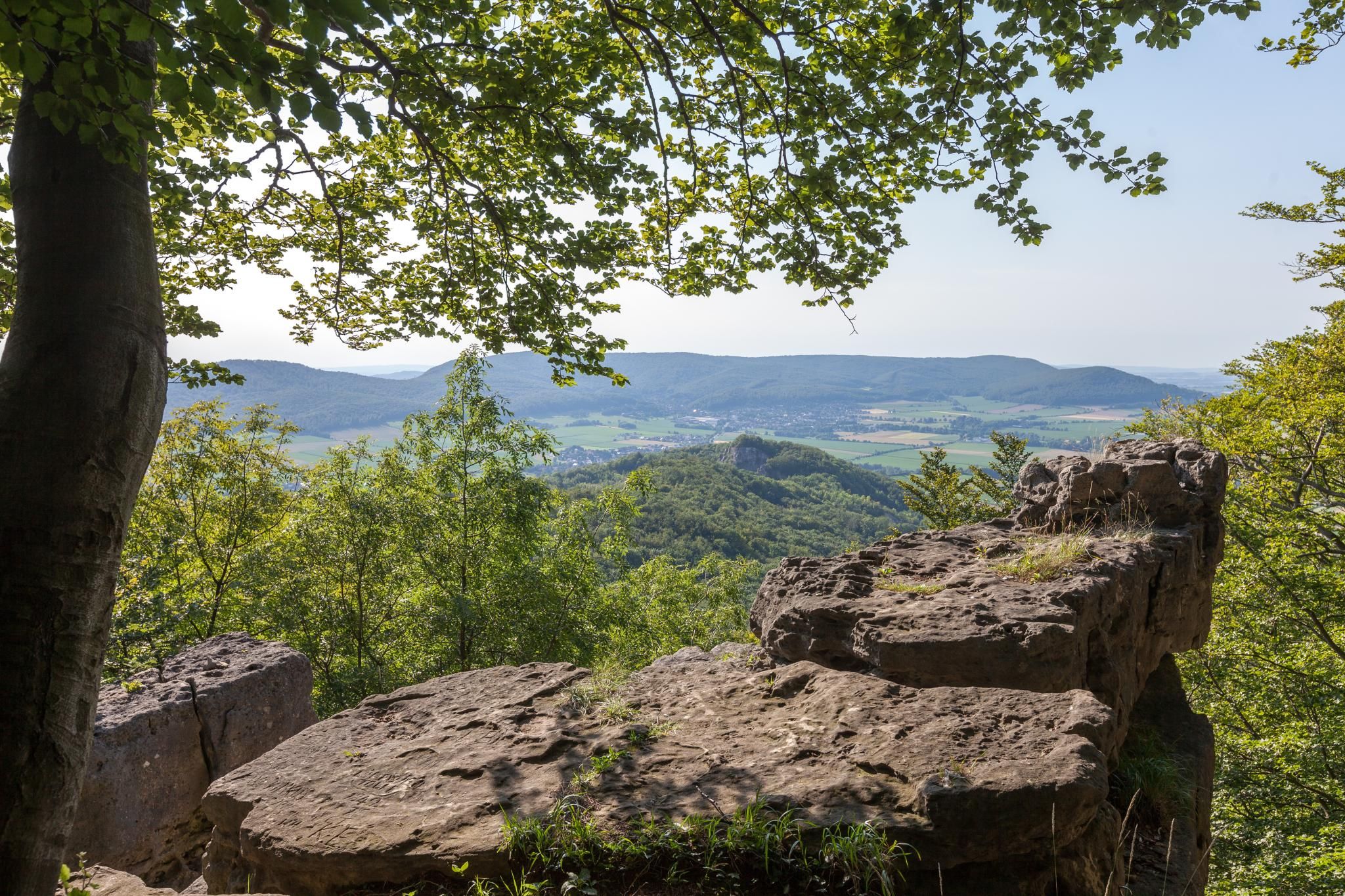
Great view in the middle of the 555 square kilometer Solling-Vogler Nature Park. In the low mountain range, which consists primarily of red sandstone, there are around thirty mountains, eight of which are over four hundred meters high. The view from the Ebersnacken Tower is even more impressive.
0
0

The cliff path is a true hiking gem. It goes through the dense, old beech forests of the lth on mostly fine, narrow paths. And by the way, you walk past wonderful grotesque rock formations that run the entire way. The cliffs are sometimes small, sometimes they offer wonderful views and sometimes they are so big that you can climb them. A really worthwhile path.
0
0

Passed by here on our 5th Ith-Hils-Weg stage.
6
0

Not overcrowded, sturdy shoes recommended. Again and again magnificent views.
1
0

In the season when the cave is accessible (April 1st - September 30th) you should take the chance and go inside. The narrow, long corridor conveys an exciting cave feeling. Today, however, one can no longer really imagine how cult sacrificial rituals took place here in the Bronze Age. Alfred Wollemann examined this cave for the first time in 1853 and found shards of pots, bones and tools made of bronze. The finds have been scientifically assigned to the Bronze Age. His descriptions of human sacrifices and cultic acts are now considered to be reliable.
7
1
Frequently Asked Questions
What unique natural features can I explore in Duingen?
Duingen offers a diverse natural landscape. You can explore the geological significance of the Sand Quarry in Duingen, which showcases stratigraphy from the Tertiary-Pliocene and Miocene periods. The region is also home to several individual natural monuments, including ancient trees like the Königseiche (King's Oak) at Duingen Borberg, a beautiful Linde (Linden Tree) in Hoyershausen, and striking Blutbuche (Copper Beech) trees in Lübbrechtsen and Weenzen Ost.
Are there any historical natural monuments or sites in the Duingen area?
Yes, several natural monuments in Duingen have historical significance. The Rothestein Cave is notable for archaeological finds from the Bronze Age, suggesting ancient cultic rituals. The Lippold's Cave is steeped in local legend, said to be the hideout of a robber named Lippold. Additionally, within the Duinger Wald Nature Reserve, you'll find the 'Königsallee,' a historic 'Hutewald' (wooded pasture) where cattle have roamed freely for centuries, contributing to the landscape's ecological balance.
What kind of wildlife can I expect to see in Duingen's natural areas?
The Duinger Wald Nature Reserve is a significant protected area known for its diverse ecosystem. Visitors might encounter wildlife such as lynx, wildcats, various forest bats, and several woodpecker species. The ancient oak and beech stands provide a rich habitat for these animals.
Are there family-friendly natural monuments or trails around Duingen?
Yes, several natural monuments and nearby routes are suitable for families. The Ebersnacken Tower and Löns Tower on Thüster Berg are both categorized as family-friendly viewpoints, offering rewarding experiences. For easy walks, consider routes like the 'Bruchsee – Bruchsee (Duingen) loop from Sollberg' which is an easy 9.5 km cycling route, or the 'Kiosk at Bruchsee – Bruchsee loop from Duingen' which is an easy 9.8 km cycling route. You can find more family-friendly options in the hiking guide for Duingen.
What are the best hiking opportunities near Duingen's natural monuments?
Duingen offers excellent hiking opportunities. You can explore challenging trails like the Upper Cliff Trail (Lüerdissen Cliffs, Ith), which runs along impressive cliffs. For cave exploration, consider the demanding routes to Lippold's Cave or Rothestein Cave. Other popular hiking routes include the 'Narrow Path Along the Lake – Bruchsee, Duingen loop from Weenzen' (moderate, 10.3 km) or the 'Hexenkanzel (Witch’s Pulpit) Rock Formation – Rock Arch (Ith) loop from Sollberg' (moderate, 10.5 km). Find more hiking routes in the hiking guide for Duingen.
Can I go cycling or gravel biking near the natural monuments?
Absolutely! The Duingen area provides various cycling and gravel biking routes. For cycling, you can try the 'Lippold's Cave – View of Osterwald loop from Sollberg' (moderate, 39 km) or the 'Godenauer Angelteiche – Leine Valley and Sieben Berge loop from Duingen' (moderate, 33.2 km). Gravel biking enthusiasts might enjoy the 'Hilskamm Trail Signpost – View of Eimen and Wenzen loop from Kaierde' (moderate, 20.5 km). Explore more options in the cycling guide for Duingen and the gravel biking guide for Duingen.
When is the best time of year to visit the natural monuments in Duingen?
The best time to visit depends on your interests. For cave exploration, note that the Rothestein Cave is only accessible from April 1st to September 30th, as it serves as a winter storage for bats. Generally, spring and autumn offer pleasant temperatures for hiking and exploring the forested areas like the Duinger Wald Nature Reserve, with vibrant foliage in autumn. Summer is ideal for longer days and enjoying viewpoints, while winter can offer unique, quiet landscapes for those prepared for colder conditions.
Are there any caves I can visit in the Duingen region?
Yes, Duingen is home to two notable caves. The Rothestein Cave is a long, dark cave that can be visited from April 1st to September 30th. It requires good flashlights and non-slip shoes. The Lippold's Cave, west of Alfeld, consists of several rooms and is accessible, though a flashlight is essential, and you may need to crawl at the entrance.
Where can I find impressive views of the landscape around Duingen?
For panoramic views, head to the Ebersnacken Tower, located in the heart of the Solling-Vogler Nature Park, offering clear vistas in all directions. Another excellent spot is the Löns Tower on Thüster Berg, which provides a 360-degree view that can extend as far as the Brocken in the Harz Mountains on clear days. The Upper Cliff Trail (Lüerdissen Cliffs, Ith) also offers scenic viewpoints along its path.
What makes the Duinger Wald Nature Reserve special?
The Duinger Wald Nature Reserve is a 326-hectare protected area characterized by ancient oak stands, often mixed with red beech. It features deeply incised streams and diverse substrates, supporting a specialized ecosystem. A unique highlight is the 'Königsallee,' a historic 'Hutewald' (wooded pasture) where cattle graze freely, maintaining a traditional landscape. It's an excellent place for experiencing well-preserved forests and diverse wildlife.
Are there any less crowded natural monuments to visit in Duingen?
While popular sites can attract visitors, the individual natural monuments like the ancient Königseiche (King's Oak), the Linde (Linden Tree) in Hoyershausen, or the Blutbuche (Copper Beech) trees in Lübbrechtsen and Weenzen Ost often offer a more tranquil experience. These venerable trees provide peaceful spots for reflection and appreciation of nature's beauty, away from more frequented trails or viewpoints.
Most popular routes around Duingen
Most popular attractions around Duingen

Get inspired with the komoot mobile app


Explore more
Extend your search for the best caves by checking out these guides of the top ones around Duingen:
