Top 20 Natural Monuments around Hisel
Best natural monuments around Hisel are found in the Bitburg-Prüm district of Rhineland-Palatinate, Germany. While Hisel itself is a small village, its surrounding region is rich in notable natural attractions. These natural features showcase the diverse geological and ecological beauty of the Eifel region. The area offers varied landscapes, geological wonders, and rich biodiversity for exploration.
Best natural monuments around Hisel
- The most popular natural monument is Fraubillenkreuz, a man-made monument and natural monument that is a menhir fashioned…
Last updated: June 24, 2026
Fraubillenkreuz
Highlight • Monument
Translated by Google •
Tip by

Roter Puhl Sandstone Cliffs on the Enz
Highlight • Natural Monument
Translated by Google •
Tip by

Sign up now to discover places like this
Get recommendations on the best single tracks, peaks, & plenty of other exciting outdoor places.
Sign up for free
Roter Puhl
Highlight • Natural Monument
Translated by Google •
Tip by

Marien Chapel and Madonna in the 700-year-old oak near Neuerburg
Highlight • Religious Site
Translated by Google •
Tip by

Stone Cist Graves Holsturm
Highlight • Historical Site
Translated by Google •
Tip by

Sign up for free to discover even more natural monuments around Hisel.
Sign up for free
Already have an account?
Start today with a free account
Your next adventure awaits.
Login or Signup
Tips from the Community

The Roman burial ground of Holsthum (Römisches Gräberfeld von Holsthum) in the German Eifel, located near the Schankweiler Klause, houses special sarcophagi from Roman times. The graves are situated on a slope in the forest above the village of Holsthum. They date from the early 2nd century AD. These are Gallo-Roman graves, whose burial chambers are constructed from vertical sandstone slabs. They look like small houses, hence the designation 'sarcophagi' or 'flat graves'. Urns with the ashes of the deceased and grave goods were placed in these sarcophagi. One of the seven graves is a striking, larger stone sarcophagus. Some graves were covered with roof- or house-shaped stones, including an obelisk-shaped stone and a stone in the shape of a truncated pyramid. The burial ground is considered the cemetery of a nearby Roman farm (villa rustica).
0
0

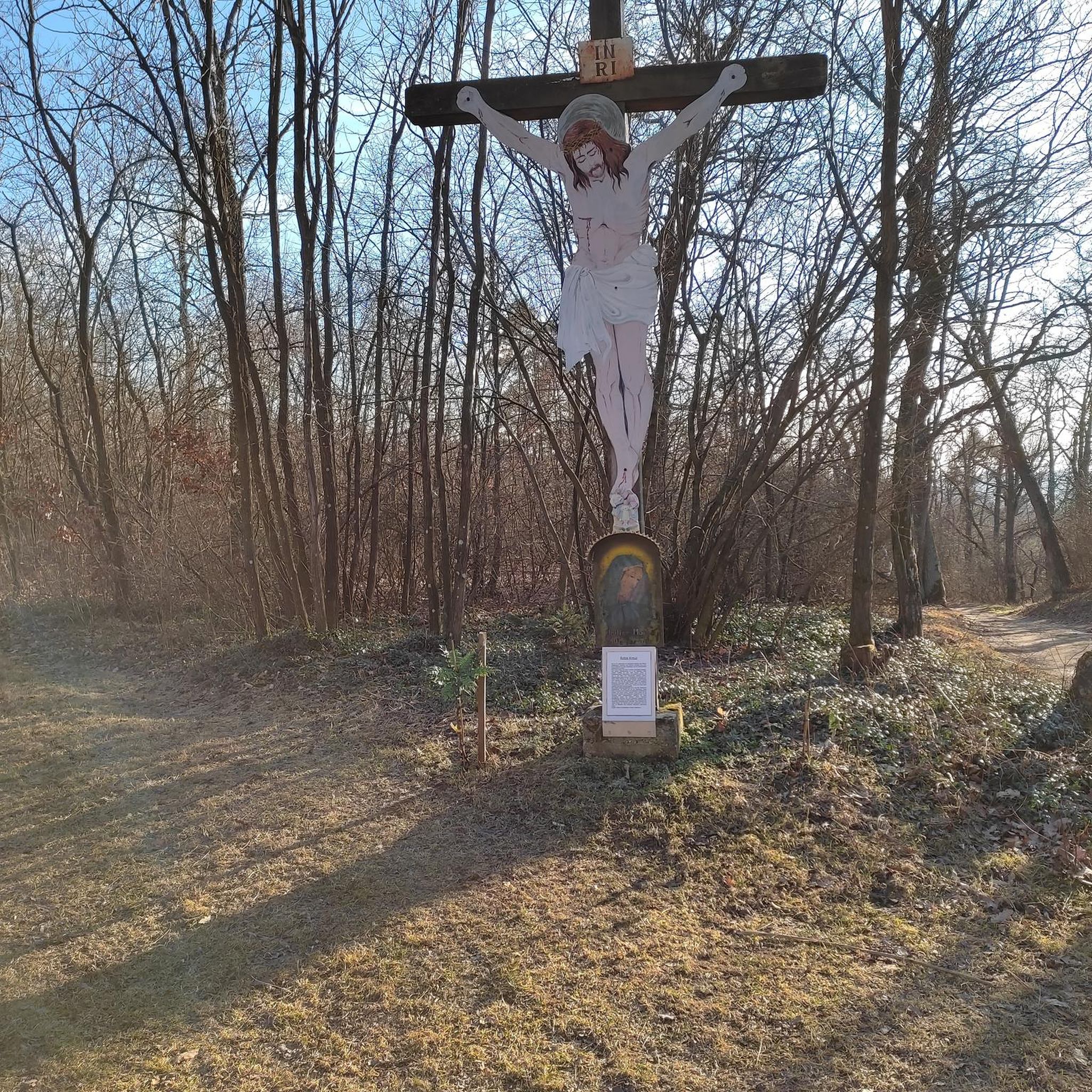
The menhir stands northwest of Ferschweiler in the forest at a crossroads of hiking trails. The Fraubillenkreuz is a menhir that is now about 3.30 meters high and has been reworked into the shape of a cross. It is estimated that it used to be over 4 meters high. The menhir was probably reworked into a cross during the Christianization of the region in the 9th century. According to legend, it was the Irish wandering monk St. Willibrord from the Echternach monastery himself who carved it. In addition, niches were carved into both flat sides of the menhir, apparently for figures of saints. Source: https://tw.strahlen.org/praehistorie/rheinlandpfalz/ferschweilerkreuz.html
5
0
At the "Roter Puhl" the Enz has cut into the slope covered with beech trees at a considerable height. Here the rock of the middle Bunter sandstone from the Triassic period stands in bright orange-red colors. These deposits in river and delta areas are around 220 million years old. Source: https://www.naturpark-suedeifel.de/a-roter-puhl
1
0

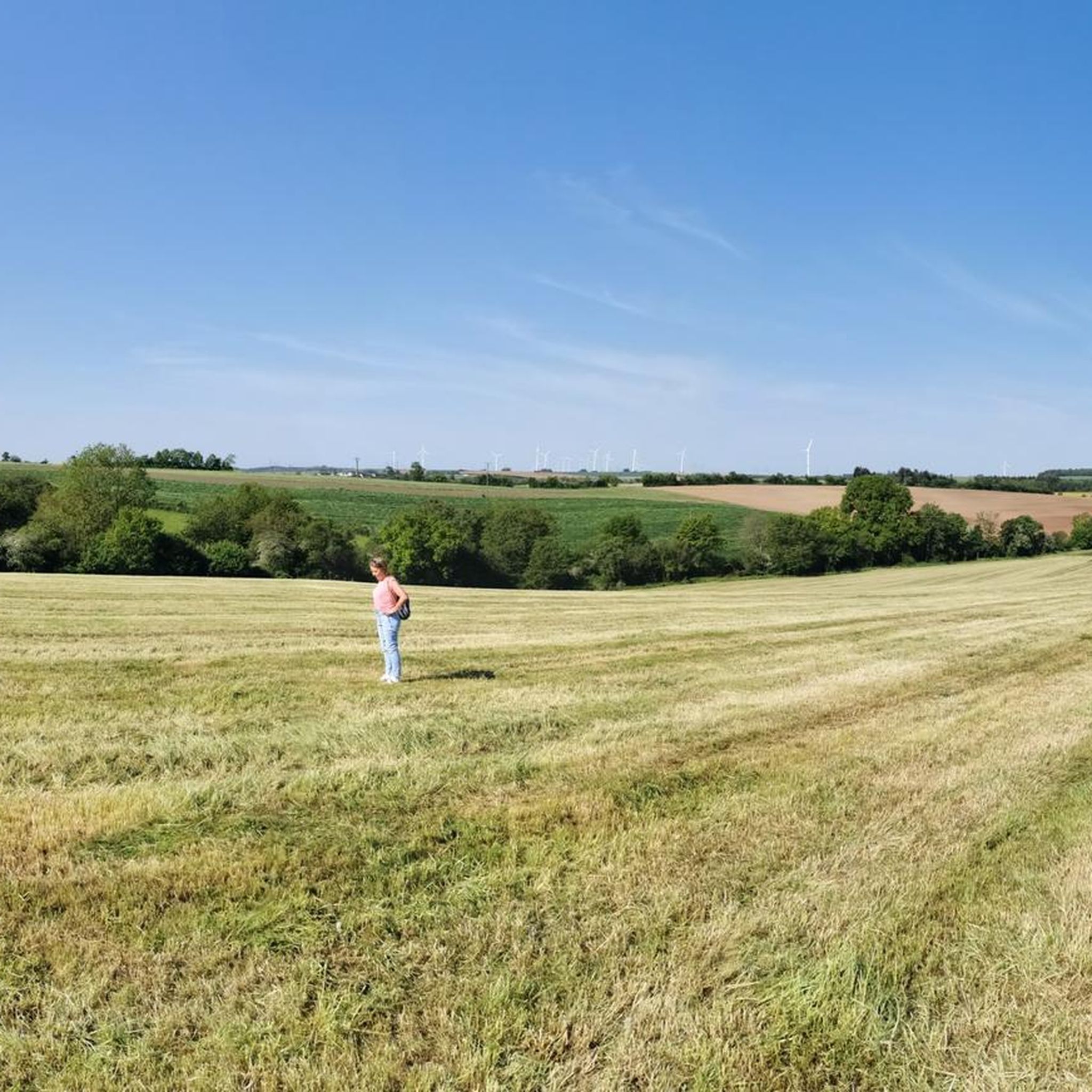
This historic cross on the path is over 2m high! There is a very nice opportunity to take a break here. Table and bench. There is also a small shelter nearby.
5
2

At the "Roter Puhl" the Enz has cut the beech slope at a stately height. Here, in bright orange-red colors, the middle red sandstone rock of the Triassic geologic age can be seen. These deposits in river and delta areas are about 220 million years old. The oblique stratification of the sandstone visible in the bedrock in alternating layers with horizontal strata and gravel bands testifies to the different flow conditions of the primordial waters. The arch's shape is the result of thousands of years of exposure to water from the meandering Enz River. The surface of the rock face is still subject to constant weathering, in places the rock is slightly more porous. An interesting insight into the floor structure can be obtained in the upper part. The overlying Earths here only reach a thickness of less than a meter. Natural crevices provide nesting and breeding grounds for the kingfisher, which is native to the area.
7
0
Unfortunately, the website that is indicated on the metal plate with explanations is no longer accessible. A pity.
2
1
Above the castle complex is the pilgrimage site of the Neuburg citizens: The 46 cm tall Madonna, a replica of the Altötting Madonna from the 17th century donated by Kuno von Falkenstein, stands in a 700-year-old oak tree. Age and candle smoke have colored the statue of the Madonna dark brown, almost black. Station paintings of the Seven Sorrows of Mary, created by sculptor J. Hess in the 19th century, lead to this lonely pilgrimage site. https://neuerburg-eifel.de/index.php/stadt-neuerburg/wandern
1
0
The burning candles in the little chapel light up the tree opposite. At least that's how it looks when you approach in the dark from the other side of the creek valley.
1
0
Frequently Asked Questions
What are some of the most unique natural monuments to explore around Hisel?
Beyond the well-known spots, the region offers several unique natural monuments. You can visit the Fraubillenkreuz, an ancient menhir estimated to be about 5,000 years old, which was later fashioned into a cross. Another fascinating site is the Roter Puhl Sandstone Cliffs on the Enz, where you can see impressive red sandstone rock faces, over 220 million years old, carved by the Enz river.
Are there any natural monuments suitable for families with children?
Yes, several natural monuments are family-friendly. The Biersdorf Reservoir offers beautiful landscapes and paths perfect for a leisurely stroll with children. Additionally, the Marien Chapel and Madonna in the 700-year-old oak near Neuerburg provides an interesting historical and natural spot, featuring a hollowed-out ancient oak tree that children might find intriguing.
What kind of geological features can I expect to see in the natural monuments around Hisel?
The region is rich in diverse geological features. You'll encounter ancient sandstone formations, such as the 220-million-year-old red sandstone cliffs at Roter Puhl. The nearby Teufelsschlucht (Devil's Gorge) also showcases towering, moss-covered rock faces formed from a 200-million-year-old seabed, creating a unique and captivating landscape.
Are there opportunities for hiking or walking near these natural monuments?
Absolutely. The natural monuments around Hisel are excellent starting points for various outdoor activities. You can find numerous hiking and walking routes that incorporate these sites. For example, the MTB Trails around Hisel guide offers routes like the 'Red Rock at Puhl – Neuerburg Tunnel loop from Mettendorf' which passes by the Roter Puhl sandstone cliffs. Many paths around the Biersdorf Reservoir are also ideal for walking.
What cycling routes are available near the natural monuments?
The area provides excellent cycling opportunities. For road cyclists, the Road Cycling Routes around Hisel guide includes routes like the 'Bitburg Reservoir – Biersdorf Reservoir loop from Niederraden', which takes you past the Biersdorf Reservoir. Gravel biking enthusiasts can explore routes such as the 'Fraubillenkreuz – Dillinger Bridge loop from Stockem' found in the Gravel biking around Hisel guide, passing by the ancient Fraubillenkreuz.
What is the best time of year to visit the natural monuments around Hisel?
The Eifel region, where Hisel is located, offers beauty throughout the year. Spring and autumn are particularly popular for hiking and exploring, with pleasant temperatures and vibrant foliage. Summer is ideal for enjoying the landscapes around the Biersdorf Reservoir, while winter can offer a serene, snow-covered experience of the rock formations, though some paths might be more challenging.
Are there any natural areas known for their biodiversity near Hisel?
Yes, the Irsental – Tal der Schmetterlinge (Valley of Butterflies) nature reserve is renowned for its exceptional biodiversity. It's home to an impressive array of insect species, including over 544 species of large butterflies, many of which are on the Red List of Rhineland-Palatinate. This makes it a significant site for nature enthusiasts and entomologists.
What historical or cultural significance do some of these natural monuments hold?
Many natural monuments in the region are intertwined with history. The Fraubillenkreuz, for instance, is an ancient menhir from Celtic times, later Christianized into a cross, with legends linking it to Saint Willibrord. The Marien Chapel and Madonna in the 700-year-old oak near Neuerburg also combines natural beauty with historical and religious significance.
What do visitors enjoy most about the natural monuments around Hisel?
Visitors frequently praise the diverse landscapes and unique geological formations. Many appreciate the peaceful paths around the Biersdorf Reservoir for relaxation and scenic views. The striking red sandstone cliffs at Roter Puhl are often highlighted for their impressive appearance and as part of engaging gorge hikes. The historical depth of sites like the Fraubillenkreuz also leaves a lasting impression.
Are there any dramatic gorges or rock formations to explore?
Absolutely. The Teufelsschlucht (Devil's Gorge) near Ernzen is a prime example, offering a dramatic experience with its narrow passages and towering, moss-covered rock faces. Another impressive site is the Grüne Hölle (Green Hell) in Bollendorfer Schweiz, a gorge featuring bizarre rock formations carved by the Sauer and Prüm rivers, including a narrow passage with 15-meter-high vertical walls.
Is there parking available at the natural monuments?
While specific parking details vary by location, most popular natural monuments and trailheads in the region, such as those near the Teufelsschlucht or the Biersdorf Reservoir, typically have designated parking areas nearby. It's advisable to check local signage upon arrival for the most accurate information.
Are the natural monuments around Hisel generally dog-friendly?
Many natural areas and trails around Hisel are dog-friendly, allowing you to enjoy the outdoors with your canine companion. However, it's always recommended to keep dogs on a leash, especially in nature reserves or areas with wildlife, and to observe any specific local regulations or signage at each monument.
Most popular attractions around Hisel

Get inspired with the komoot mobile app


Explore more
Extend your search for the best caves by checking out these guides of the top ones around Hisel:
