Top 20 Natural Monuments around Rockeskyll
Natural monuments around Rockeskyll are located within Germany's Vulkaneifel district, an area known for its geological features. The landscape is shaped by ancient volcanic activity, presenting a diverse range of natural formations. This region provides opportunities to observe geological processes and explore sites with historical significance.
Best natural monuments around Rockeskyll
- The most popular natural monuments is Dreimühlen Waterfall, a waterfall that continuously grows due to limescale deposits. This artificial waterfall, formed by merging streams during railway construction, is…
Last updated: October 11, 2026
Dreimühlen Waterfall
Highlight • Waterfall
Translated by Google •
Tip by

Buchenloch Cave
Highlight • Cave
Translated by Google •
Tip by

Sign up now to discover places like this
Get recommendations on the best single tracks, peaks, & plenty of other exciting outdoor places.
View of Gerolstein from the Munterley
Highlight • Viewpoint
Translated by Google •
Tip by
Gerolsteiner Dolomiten Rock Formations
Highlight • Natural Monument
+ animal species found: bat
+ plant species found: …
Translated by Google •
Tip by

Millstone Cave at Nerother Kopf
Highlight • Cave
The millstone cave consists of lava boards and is an artificial cave in the Vulkaneifel, Rhineland-Palatinate. It was created by the production of …
Translated by Google •
Tip by

Sign up for free to discover even more natural monuments around Rockeskyll.
Already have an account?
Start today with a free account
Your next adventure awaits.

Tips from the Community

The so-called Dreimühlen waterfall is also known as the Nohn waterfall. The name Nohn waterfall comes from the waterfall's proximity to the town of Nohn. The houses on the outskirts of Nohn are only a few hundred meters above the waterfall. Most people talk about the Dreimühlen waterfall, however. The name Dreimühlen comes from a former castle called Dreimühlen. Today, however, only the remains of the walls are said to remain. We looked for the former castle on our trip, but couldn't find anything of it. The waterfall in the Eifel is located between the towns of Üxheim, Kerpen and Nohn. Although the other large towns in the Eifel are not located here, many visitors come here. Some of them travel especially to visit the waterfall. The Dreimühlen waterfall is one of the most visited Eifel attractions. Almost every holidaymaker in the area comes to the waterfall at least once during their Eifel vacation. In addition, many day tourists travel from outside, making it the most visited waterfall in the Eifel. They all want to see the unique natural wonder.
18
1

https://de.m.wikipedia.org/wiki/Gerolsteiner Dolomiten The tour was really beautiful... It won't be the last time I'm there ❤️
9
0

The great rocks rise impressively in front of us. Just great to experience something like this here. The name Gerolsteiner Dolomites speaks for itself.
12
1

The trail leads to the 'Buchenloch Cave' which lies at the far edge of the Munterley Plateau. This was created 1.8 million years ago from a millimeter-wide crack in the rock massif and was used by people in the Neolithic Age 300,000 years ago.
12
1
Almost 400 million years ago, where the Gerolsteiner Dolomites rise today, there was a subtropical shallow sea with a huge reef that is one of the oldest reefs on earth. This particularly beautiful and attractive hiking trail with scenic and geological features takes the hiker into an exciting past of our planet with beautiful views from Munterley and Hustley into the Kylltal.
10
1
"With an area of around 102 hectares, the area around the Gerolstein Dolomites has been designated a nature reserve since 1990. + animal species found: bat + plant species found: juniper, orchids, characteristic plants, calcareous grassland, woodrush beech forest, woodruff beech forest, orchid calcareous beech forest Around 380 million years ago, there was a warm, subtropical shallow sea here, in which mighty reefs of stromatoporoids - relatives of sponges - and corals formed. After the dolomitization, sinking and folding of the rocks, the Devonian deposits were lifted out again. This created today's Gerolstein Dolomites, which rise steeply above the Kyll valley north of the center of Gerolstein. The rocks "Hustley", "Munterley", "Drohende Ley", "Große Kanzel" and "Auberg" characterize the cityscape even from afar and form the landmark Gerolsteins. The most famous peak of the Gerolstein Dolomites is the "Munterley" - with a height of 482 meters - and offers a breathtaking view over Gerolstein, the Kyll valley and far into the Volcanic Eifel. This view was obviously also enjoyed by Stone Age people who settled here 30,000 years ago, as evidenced by stone tools and bones found in the nearby Buchenloch cave. Visit to the Gerolstein Dolomites can be perfectly combined with hiking the rock path - the northern part of the "Gerolstein Dolomites Eight". The almost eight-kilometer-long circular tour offers many magical places and geological traces." https://www.eifel.info/a-gerolsteiner-dolomiten
13
0
"With an area of approx. 102 hectares, the area around the Gerolsteiner Dolomites has been a nature reserve since 1990. + occurring animal species: bat + occurring plant species: juniper, orchids, character plants calcareous grassland, grove rush-beech forest, woodruff-beech forest, orchid-limestone-beech forest Around 380 million years ago there was a warm, subtropical shallow sea here, in which mighty reefs of stromatopores - relatives of sponges - and corals formed. After the dolomitization, sinking and folding of the rocks, the Devonian deposits were lifted out again. Today's Gerolsteiner Dolomites were formed, which rise steeply above the Kylltal north of the center of Gerolstein. The rocks "Hustley", "Munterley", "Drohende Ley", "Große Kanzel" and "Auberg" characterize the cityscape from afar and form the landmark of Gerolstein. The most famous summit of the Gerolsteiner Dolomites is the "Munterley" - with a height of 482 meters - and offers a breathtaking view over Gerolstein, the Kylltal and far into the Vulkaneifel. Stone Age people, who settled here 30,000 years ago, obviously enjoyed this view, as evidenced by stone tools and bones found at the nearby Buchenloch Cave. Visiting the Gerolsteiner Dolomites can be perfectly combined with hiking the Felsenpfad - the northern part of the "Gerolsteiner Dolomiten Acht". The almost eight-kilometer round tour offers many magical places and geological traces." https://www.eifel.info/a-gerolsteiner-dolomites
10
0
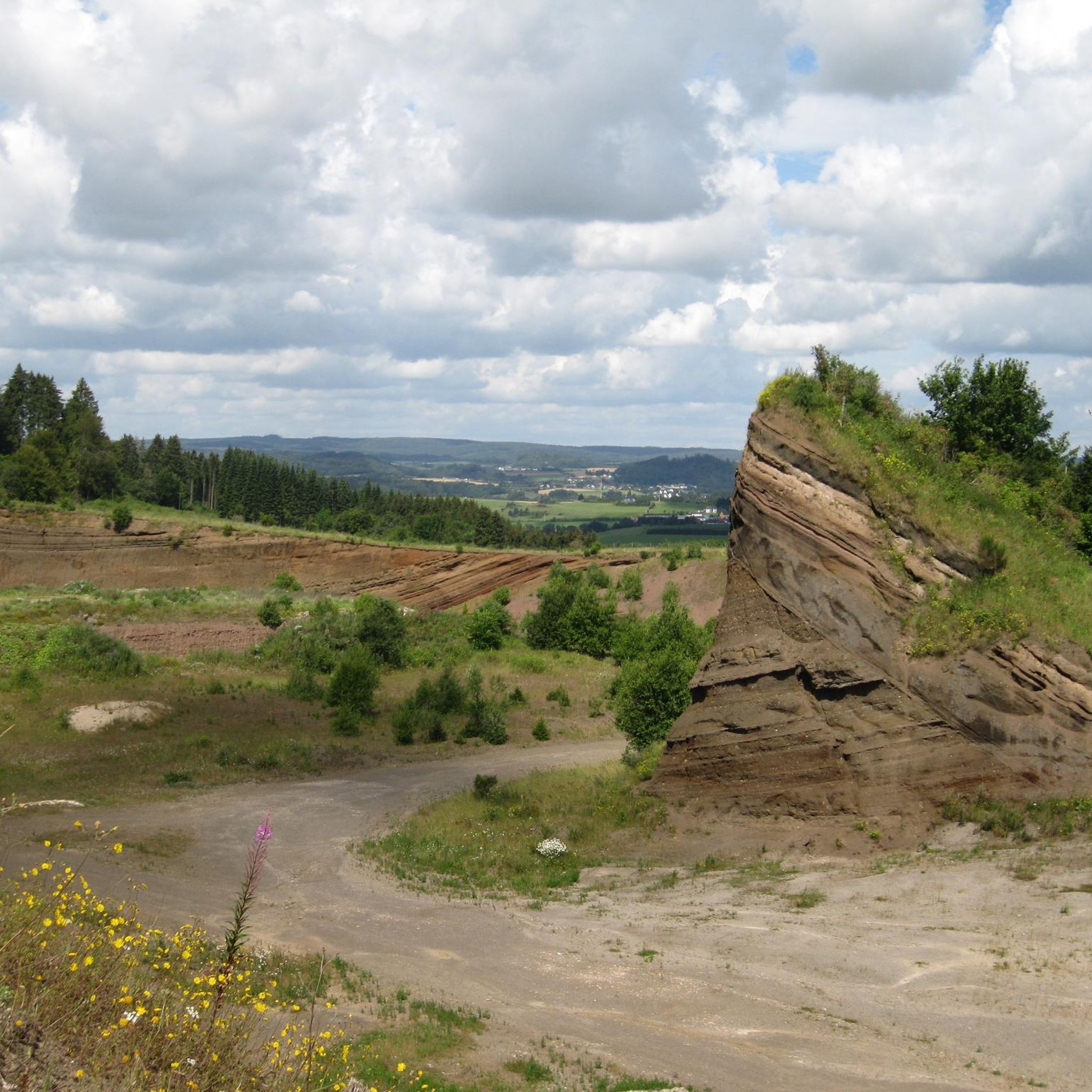
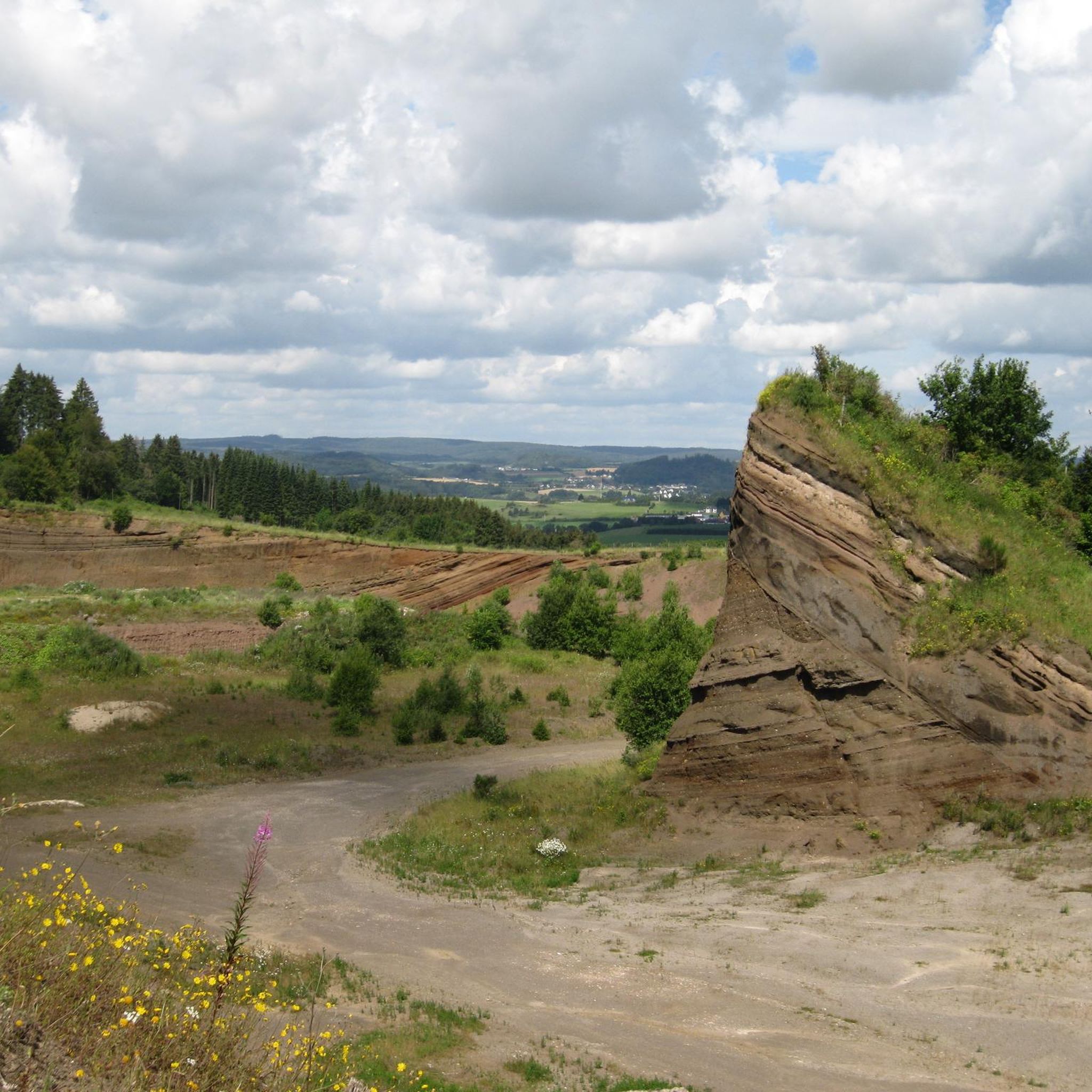
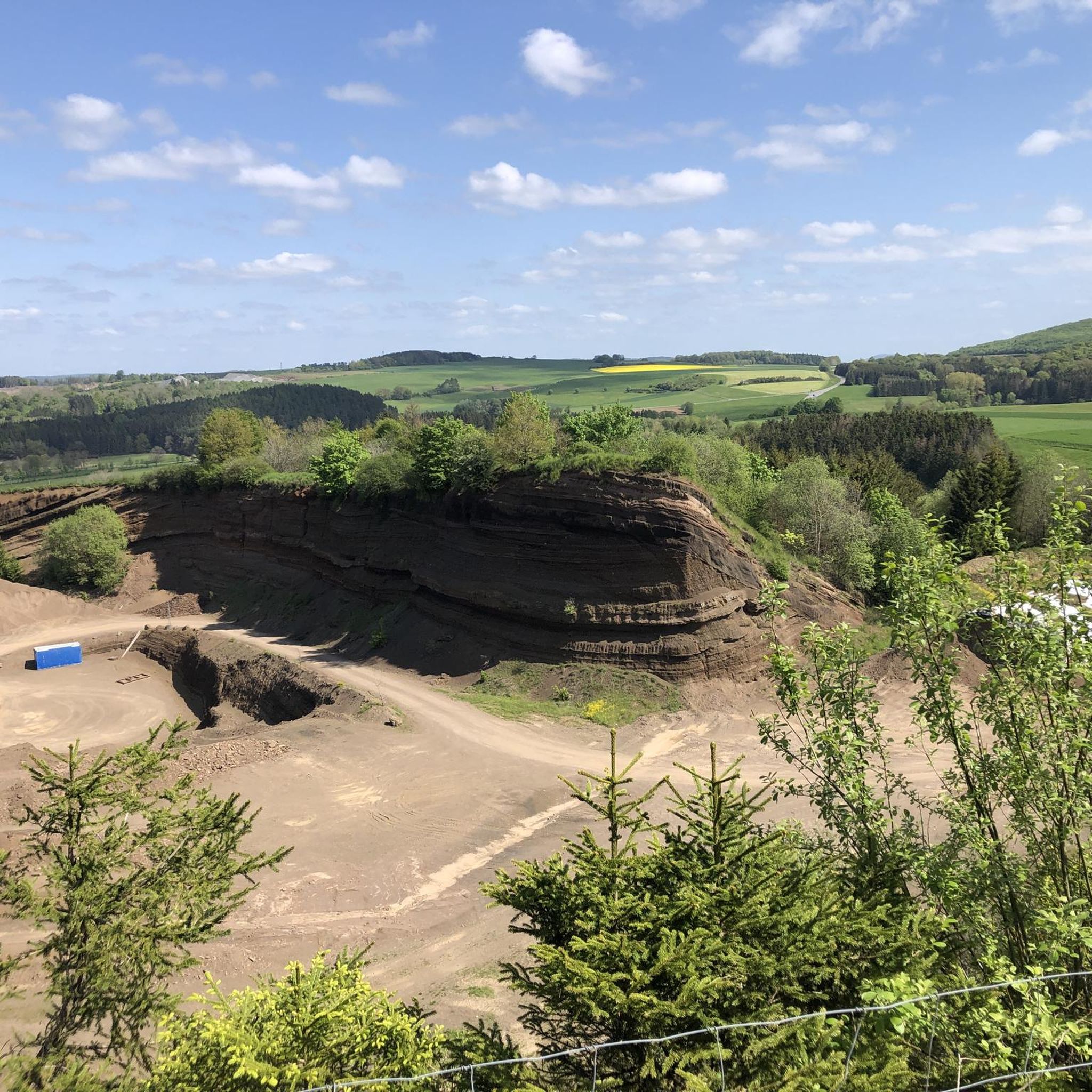
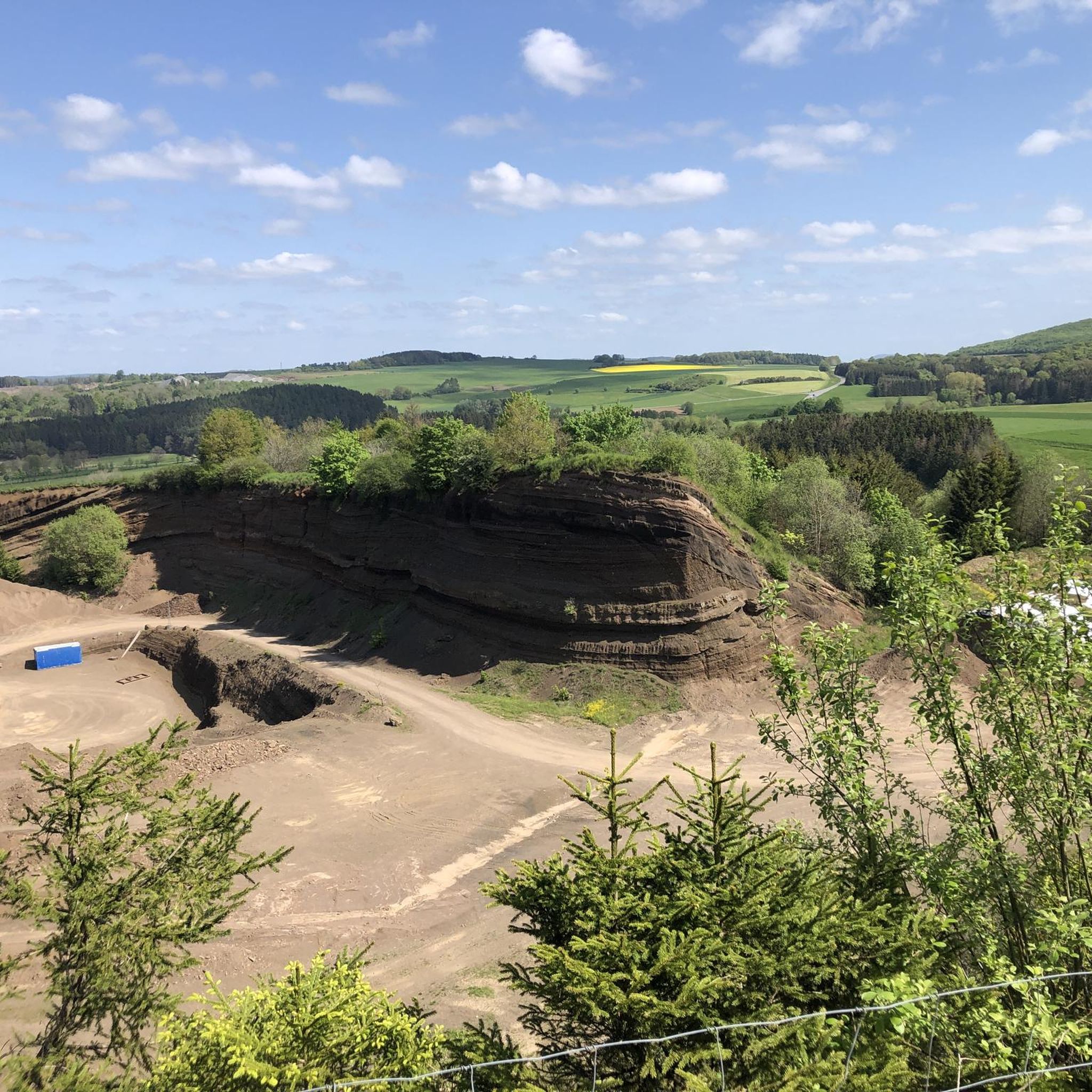
The Nerother Kopf is an extinct volcano of recent date. It was formed about 15,000 years ago when the earth broke up here and glowing magma welled up from the depths of the earth. At that time, a fracture zone formed in the earth rock, which formed the origin of the volcanic chain "West Eifel". https://www.neroth.de/tourismus/nerother-kopf
6
0
Frequently Asked Questions
What unique geological features can I explore around Rockeskyll?
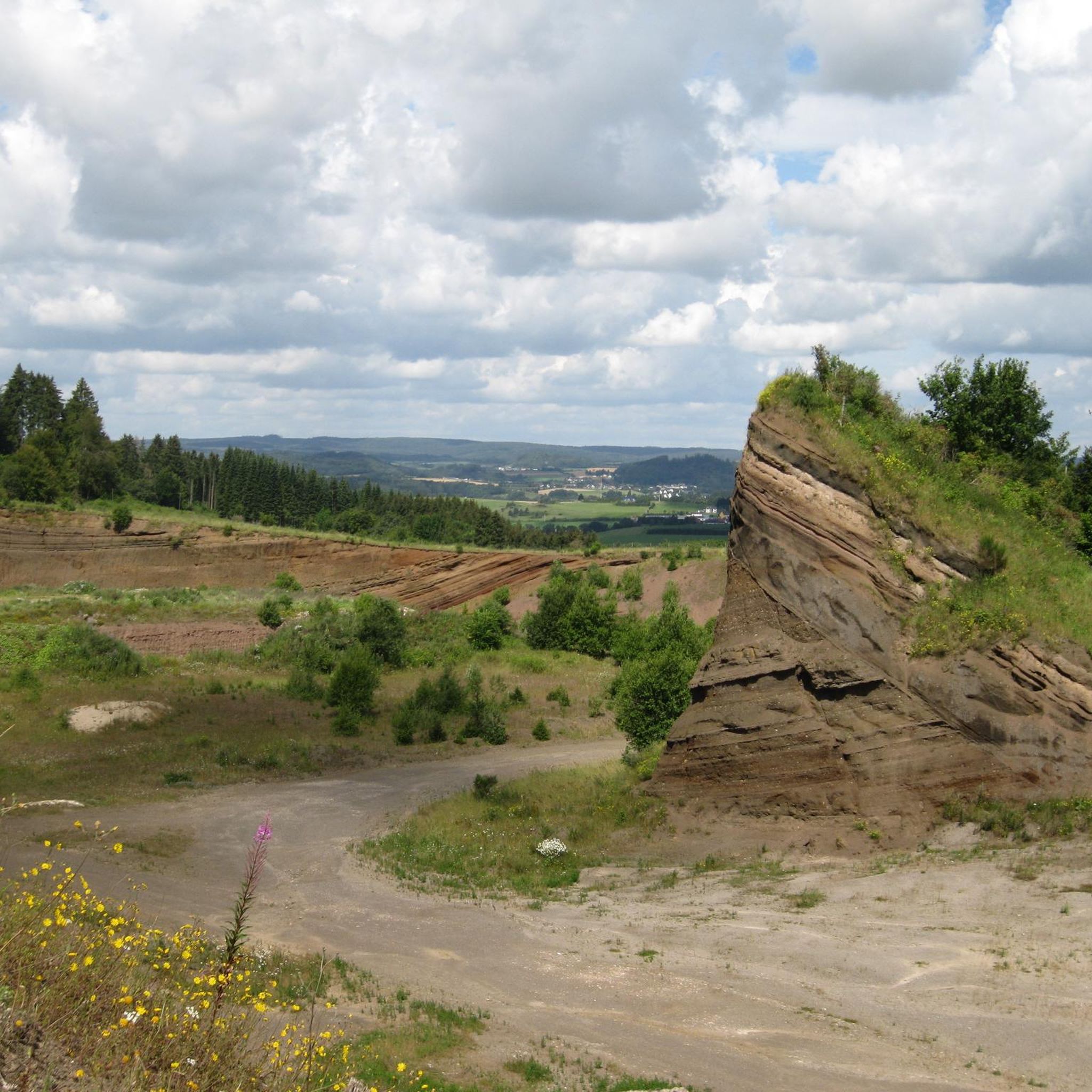
The region is rich in volcanic and ancient marine geological formations. You can explore the Gerolsteiner Dolomiten Rock Formations, which are ancient reef structures formed 380 million years ago. Another significant site is the Rockeskyller Kopf, an extinct volcanic complex that openly displays all stages of its development from steam explosions to lava flows.
Are there any family-friendly natural monuments to visit near Rockeskyll?
Yes, several natural monuments are suitable for families. The Dreimühlen Waterfall is easily accessible and fascinating due to its continuous growth from limescale deposits. The View of Gerolstein from the Munterley also offers breathtaking views and is part of the Gerolsteiner Dolomites, which are considered suitable for children.
Where can I find historical sites related to the natural landscape?
The Millstone Cave at Nerother Kopf is a fascinating historical site. This artificial cave was created by the historical production of millstones from lava boards, offering a tangible connection to the region's volcanic past and industrial history. You can still find unfinished millstone blanks inside.
What kind of outdoor activities can I do near the natural monuments?
The area around Rockeskyll offers diverse outdoor activities. You can find numerous routes for road cycling, general cycling, and mountain biking. For example, there are moderate to difficult road cycling routes, scenic cycling tours, and challenging MTB trails that pass by many natural attractions.
Are there any caves to explore in the Rockeskyll area?
Yes, the region features intriguing caves. The Millstone Cave at Nerother Kopf is an artificial cave formed from lava boards, requiring a flashlight to explore its 18-meter depth. Additionally, the Buchenloch Cave, about 30 meters long, is freely accessible and known for Ice Age findings, though it's closed in winter to protect hibernating bats.
What is special about the Dreimühlen Waterfall?
The Dreimühlen Waterfall, also known as the Nohner Waterfall, is unique because it continuously grows due to limescale deposits. It's an artificial creation, formed by merging streams during railway construction, and the former railway line now serves as a scenic cycling and hiking trail for easy access.
Can I learn about ancient marine life in this volcanic region?
Absolutely. The Gerolsteiner Dolomiten Rock Formations are remnants of a 380-million-year-old Devonian reef. These rocks formed from calcareous sediments in a warm, shallow sea, creating structures from corals and stromatopores, offering a glimpse into ancient marine ecosystems.
What kind of views can I expect from the natural monuments?
Many natural monuments offer extensive views. From the Munterley, part of the Gerolsteiner Dolomites, you can enjoy a fantastic panorama over Gerolstein and the beautiful Kylltal. The Rockeskyller Kopf also provides insights into the volcanic landscape.
Are there any natural monuments that showcase the region's volcanic past?
Yes, the entire Vulkaneifel district is defined by its volcanic history. The Rockeskyller Kopf is an excellent example, being an extinct volcanic complex that reveals the stages of its formation. The Millstone Cave at Nerother Kopf is also located on an ancient volcanic hill, with the cave itself being carved from lava boards.
What do visitors particularly appreciate about the natural monuments around Rockeskyll?
Visitors frequently praise the unique geological insights and scenic beauty. The 'self-growing' nature of the Dreimühlen Waterfall is a popular highlight, and the Gerolsteiner Dolomiten Rock Formations are often cited as offering some of the most beautiful tours in the Eifel with breathtaking views.
Is there a good time of year to visit the natural monuments?
While many sites are accessible year-round, spring and autumn offer pleasant temperatures for hiking and exploring the outdoor monuments. For caves like the Buchenloch Cave, it's important to note that they should not be entered between October 1st and March 31st to avoid disturbing hibernating bats.
Most popular routes around Rockeskyll
Most popular attractions around Rockeskyll

Get inspired with the komoot mobile app


Explore more
Extend your search for the best caves by checking out these guides of the top ones around Rockeskyll:
