Top 20 Natural Monuments around Trabitz
Natural monuments around Trabitz, a municipality in Bavaria, Germany, offer diverse geological features and ecological significance. The area is characterized by unique basalt cones, granite massifs, and protected nature reserves. These natural monuments provide opportunities for hiking, climbing, and wildlife observation. Trabitz's landscape presents a variety of natural attractions for exploration.
Best natural monuments around Trabitz
- The most popular natural monuments is Waldeck Castle Ruins, a castle ruin located on a 641-meter-high basalt cone. This site offers panoramic views…
Last updated: October 11, 2026
Rauher Kulm Lookout Tower
Highlight • Viewpoint
Nicolaus Apel built a wooden observation tower as early as 1807. There was a movable gold-plated sun above …
Translated by Google •
Tip by

Circular rampart at Rauher Kulm
Highlight • Historical Site
Translated by Google •
Tip by

Sign up now to discover places like this
Get recommendations on the best single tracks, peaks, & plenty of other exciting outdoor places.
Waldeck Castle Ruins
Highlight • Castle
Translated by Google •
Tip by

Robbers' Rock
Highlight • Climb
Translated by Google •
Tip by

Osprey and White-tailed Eagle Observation Point, Großer Rußweiher
Highlight • Viewpoint
Translated by Google •
Tip by

Sign up for free to discover even more natural monuments around Trabitz.
Already have an account?
Start today with a free account
Your next adventure awaits.

Tips from the Community

Burgstall Rauhenkulm There are no reliable sources regarding the origin of the high medieval castle. Although the deed of foundation of the Benedictine monastery Michelfeld from 1119 states that Bucco de Culmen of Leuchtenberg had a residence on one of the two Kulms. He would thus be the first scientifically documented lord of the castle. However, it is unclear whether Rauhe Kulm or Kleine Kulm is meant. It is conceivable, but unlikely, that it was a building in the village of Kulmain. Excavations have brought shards, arrowheads, crosses, and coins from this period to light. According to Losert, the construction of the Rauher Kulm rampart was part of Emperor Otto I the Great's strategy to contain the impending danger from the Hungarians. Sandstone, timber framing, and bricks were used in the construction of the castle around 950. In addition to military use, the castle was also inhabited by women and children, as evidenced by various finds, including several spindle whorls, a weaving sword, and a large iron knife. Burgrave Friedrich III of Nuremberg acquired the castle, including the associated places, from the Landgraves of Leuchtenberg in 1281. The former tower was part of the margravial signaling system. During the Second Margravial War under Margrave Albrecht Alcibiades, the castle, as well as the Schlechtenkulm castle on Kleine Kulm, was destroyed in 1554. Before the destruction, both castles were besieged for about a year by troops from the imperial cities of Nuremberg, Bamberg, Würzburg, and Bavaria under the command of the electoral district administrator Hans Umseher von Waldeck, and the inhabitants were starved. The fortress commander von Heydenab surrendered the fortress on Rauhen Kulm on June 28, 1554. Afterwards, it was blown up with screws, the triple walls were razed and destroyed. Stones from the medieval ramparts of both castle sites were later used in part to reinforce the city walls of Neustadt. Today, only traces of the terrain are visible of the Burgstall Rauhenkulm. Remains of the surrounding rampart and the location of the tower in close proximity to the current observation tower are recognizable. The cartographer Johann Christoph Stierlein created the first very accurate topographical map of the mountain with the ruin. Source: www.wikipedia.de
5
0

Slightly hidden and off the main route is a spectacular rock formation that is obviously popular with climbers.. existing anchors speak volumes!
5
1
Already well visible from the foot of the rock, the summit cross
8
1


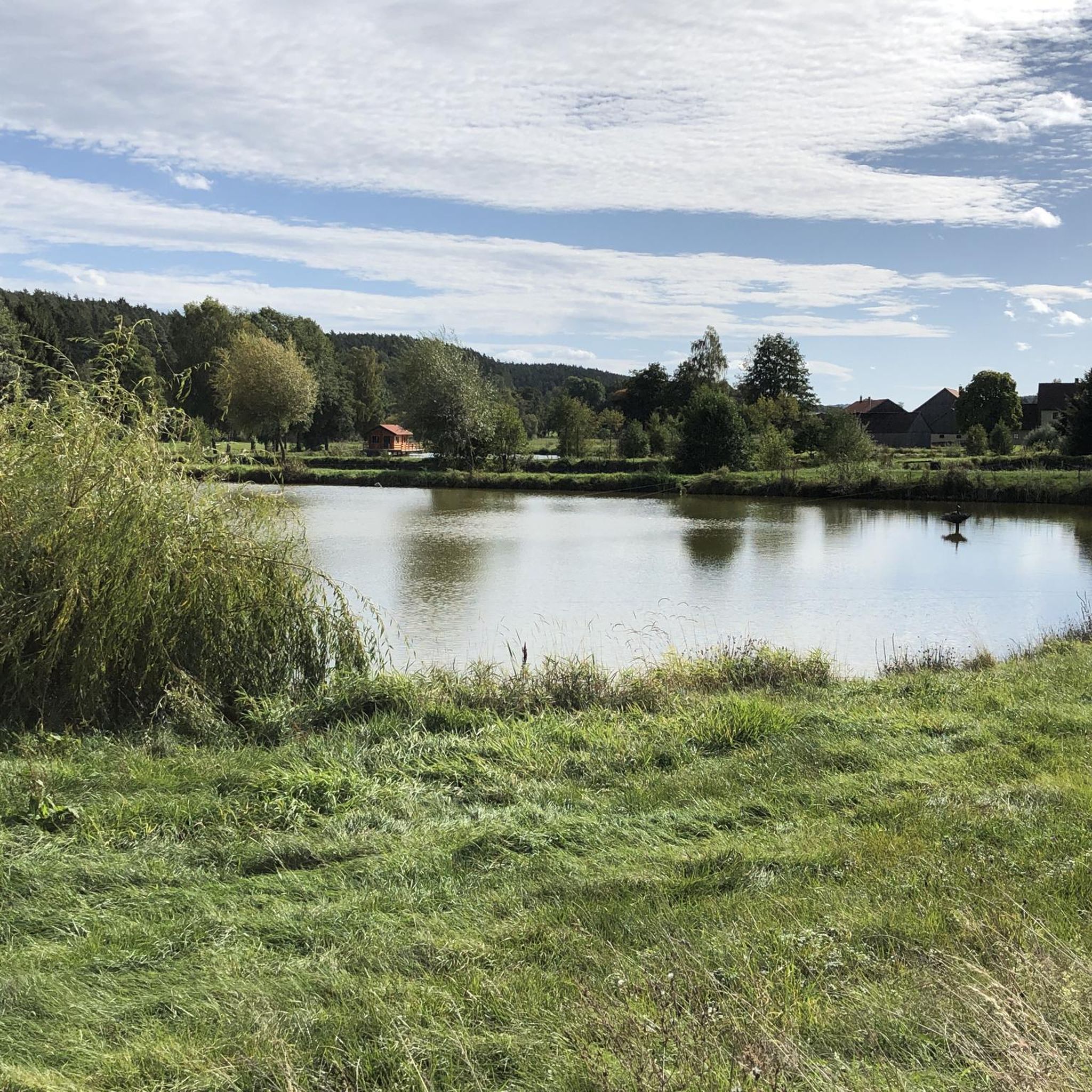
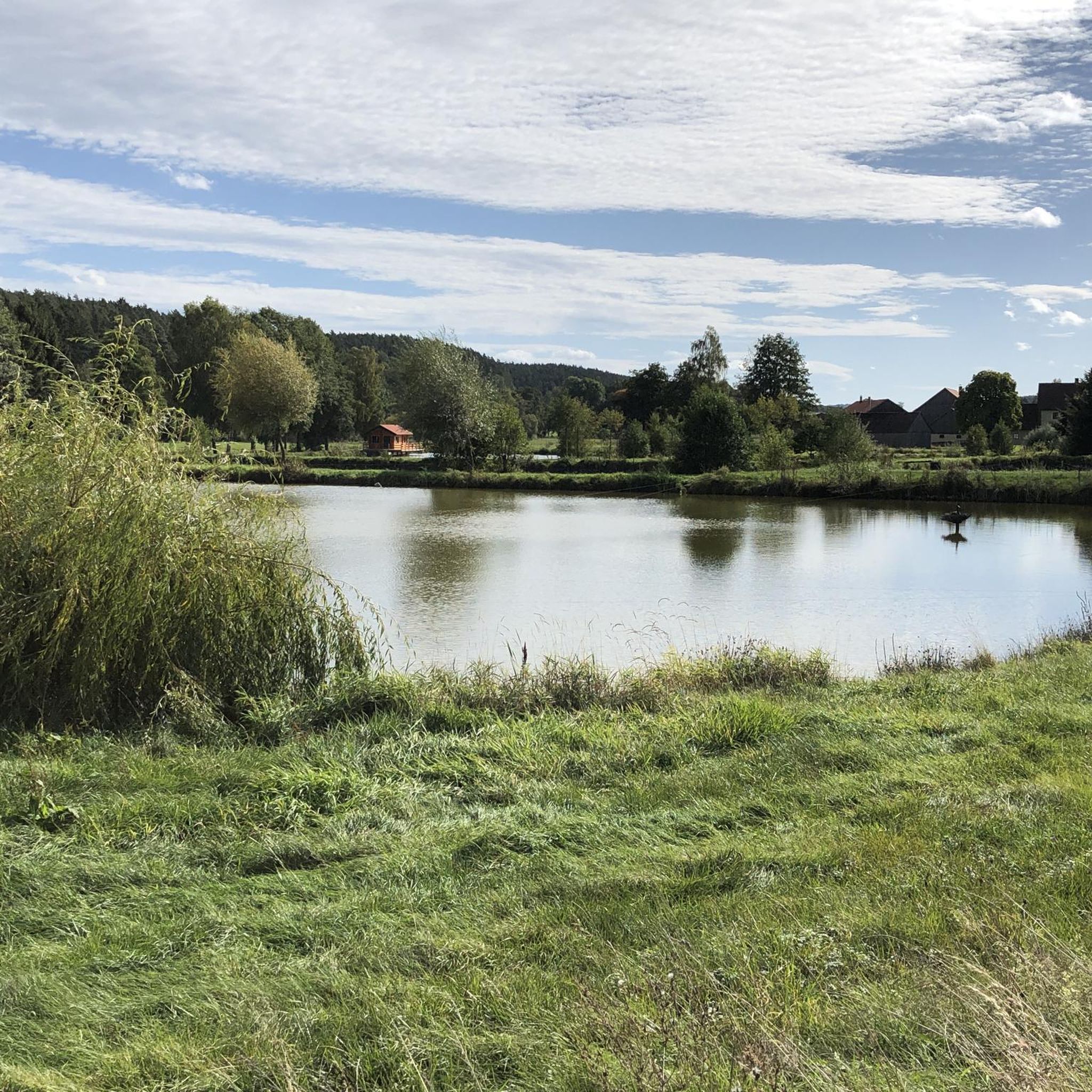
Dam that separates the large and small Rußweiher - beautiful view of both ponds
2
0

The rampart on the Rauher Kulm is a fortification at the foot of the Rauher Kulm. Gate area of the rampart Area disturbed by quarrying The Rauher Kulm, as a basalt mountain in the otherwise flat surroundings, was already visited by people in prehistoric times. The rampart made of basalt blocks runs around the foot of the mountain. Finds point to the Bronze Age, the Celts, the time of the Carolingians and the Slavic settlement chambers. Fighting took place during the time of the Hungarian invasions. Even if the rampart has been disturbed by later interventions, including the creation of an English garden across the entire mountain or the mining of the basalt in quarries, the course can be recognized from the basalt boulders. There is a lower main rampart with at least two gate areas and another fortified area at medium height. The hilltop castle is, however, classified as largely late medieval. Several burial mounds are also known. It is assumed that the settlement was located within the protective wall, so that it was not just a refuge. The predominantly stone remains were reinforced by wooden structures, among other things. There is evidence of post-and-slot walls, kennel-shaped walls and additionally secured gate areas. The cartographer Johann Christoph Stierlein made a drawing of the Rauher Kulm and recorded both the rampart and the hilltop castle.[1] The rampart was researched at the beginning of the 20th century by Adalbert Neischl on behalf of the Nuremberg Natural History Society and Hugo Obermaier, who completed Neischl's work. Hans Losert has been carrying out excavations for over ten years and is responsible for the scientific analysis.
1
0

The ring wall itself dates back to the time of the Celts and probably served as a refuge or place of worship. The remains of the ramparts are still clearly visible and make for an exciting exploration tour. The climb to the summit is a bit strenuous, but the view and the historic atmosphere definitely make the effort worthwhile.
4
0

A basalt cone about 641 meters high around five kilometers east of Kemnath made history. One of the oldest castles in the Upper Palatinate was located on its summit. Waldeck Castle was first mentioned in documents in 1124. The castle complex has been excavated and restored for several decades. The Waldeck Local History and Culture Association has contributed a large part to this. Regular services are held at the St. Ägidius open-air chapel, and theater performances are also held here every year on an open-air stage with 300 seats. Performances by the Upper Palatinate State Theater are now part of the permanent cultural program.
19
0
Frequently Asked Questions
What are some of the most popular natural monuments to visit around Trabitz?
Visitors frequently enjoy the Waldeck Castle Ruins, situated on a basalt cone offering phenomenal views. Another popular spot is Robbers' Rock, a large granite massif known for climbing. The nature reserve Between Großer Rußweiher and Rußloheweiher is also highly regarded for its rare bird species.
Are there any natural monuments around Trabitz with historical significance?
Yes, the Circular rampart at Rauher Kulm is a notable site. This basalt cone features a historical circular rampart with finds dating back to the Bronze Age and Celtic times, adding a layer of historical intrigue to its natural landscape. The Waldeck Castle Ruins also stand on a historically significant basalt cone, home to one of the oldest castles in the Upper Palatinate.
What kind of geological features can I expect to see among Trabitz's natural monuments?
Trabitz is known for its unique geological formations. You can explore impressive basalt cones, such as the one hosting the Waldeck Castle Ruins and the Circular rampart at Rauher Kulm. These basalt slopes are valuable habitats for numerous animals and rare plants. Additionally, the region features large granite massifs like Robbers' Rock.
Are there family-friendly natural monuments or activities around Trabitz?
Absolutely. The Waldeck Castle Ruins are considered family-friendly, offering an easy ascent and a wonderful all-round view. The nature reserve Between Großer Rußweiher and Rußloheweiher and the Osprey and White-tailed Eagle Observation Point, Großer Rußweiher are also great for families, providing opportunities for bird watching and enjoying nature.
Where can I go for bird watching near Trabitz?
The Between Großer Rußweiher and Rußloheweiher nature reserve is an excellent spot for bird watching. It's one of Bavaria's oldest and most valuable nature reserves, known for rare bird species. The Osprey and White-tailed Eagle Observation Point, Großer Rußweiher specifically offers opportunities to observe ospreys, which are rare breeding birds in Bavaria, often with an observation scope available.
What kind of hiking trails are available around the natural monuments in Trabitz?
Around the Circular rampart at Rauher Kulm, you'll find a well-developed network of paths winding through varied mixed forests and old beech stands. These include both well-paved forest trails and natural hiking trails, offering diverse experiences. For more hiking options, you can explore various routes in the region, such as those found in the Natural Monuments around Trabitz guide.
Are there opportunities for climbing near Trabitz's natural monuments?
Yes, Robbers' Rock is a popular destination for climbers. This large granite massif offers various climbing routes with difficulty levels ranging from 3 to 9, making it suitable for a wide range of climbers.
What do visitors particularly enjoy about the natural monuments around Trabitz?
Visitors frequently highlight the phenomenal panoramic views from elevated natural monuments like the Waldeck Castle Ruins. The unique geological formations, such as the basalt cones and granite massifs, are also a major draw. Many appreciate the well-maintained hiking trails and the rich biodiversity, especially the rare bird species found in the nature reserves.
What outdoor activities can I do near the natural monuments around Trabitz?
Besides hiking and climbing, the area around Trabitz offers various cycling opportunities. You can find routes for touring bicycles, such as the 'View of Speinshart Monastery – Rauher Kulm Lookout Tower loop from Trabitz' in the Cycling around Trabitz guide. There are also numerous MTB trails and gravel biking routes available, like the 'Rußweiher Lake, Eschenbach – Eschenbach Old Town loop from Pressath' in the MTB Trails around Trabitz guide.
What makes the Rauher Kulm a significant natural monument?
The Rauher Kulm, a basalt cone, is highly significant for several reasons. It has been protected as a natural monument since 1909 and designated as a nature reserve under European standards (FFH). In 2013, it was even voted Germany's most beautiful natural wonder. Its exposed basalt slopes provide a valuable habitat for numerous animals and rare plants, including approximately 90 different lichens and mosses. It also offers panoramic views and features a historical circular rampart.
Is there a good time of year to visit the natural monuments in Trabitz?
The natural monuments around Trabitz can be enjoyed throughout much of the year. Spring and autumn offer pleasant temperatures for hiking and exploring the trails around sites like the Circular rampart at Rauher Kulm. Summer is ideal for bird watching at the Großer Rußweiher nature reserve, especially to observe breeding ospreys. The panoramic views from places like the Waldeck Castle Ruins are stunning in clear weather, regardless of the season.
Most popular routes around Trabitz
Most popular attractions around Trabitz

Get inspired with the komoot mobile app


Explore more
Extend your search for the best caves by checking out these guides of the top ones around Trabitz:
