Top 20 Natural Monuments around Witzmannsberg
Best natural monuments around Witzmannsberg offer a diverse landscape for exploration. The region features 20 natural monuments, providing insights into its geological formations and river systems. These natural attractions are ideal for outdoor activities, showcasing the area's unique natural heritage. Witzmannsberg's terrain includes forests, rock formations, and river valleys, making it a destination for those interested in natural landscapes.
Best natural monuments around Witzmannsberg
- The most popular natural monuments is Wackelstein (Rocking Stone), a natural_monument where a huge stone…
Last updated: June 24, 2026
Wackelstein (Rocking Stone)
Highlight • Natural Monument
Translated by Google •
Tip by

Little stone chapel
Highlight • Natural Monument
Translated by Google •
Tip by

Sign up now to discover places like this
Get recommendations on the best single tracks, peaks, & plenty of other exciting outdoor places.
Sign up for free
Translated by Google •
Tip by

Ilz Trail in the Obere Ilz Nature Reserve
Highlight • Trail
Translated by Google •
Tip by

Geistlicher Stein
Highlight • Summit
Translated by Google •
Tip by

Sign up for free to discover even more natural monuments around Witzmannsberg.
Sign up for free
Already have an account?
Start today with a free account
Your next adventure awaits.
Login or Signup
Tips from the Community

Geological observation Numerous rock outcrops with strong "Wollsack" weathering can be found in the entire area. During the Tertiary period, the rock was deeply weathered. Only in the area of more compact granite domes could the weathering not progress so quickly. During the Quaternary period, the weathered layers were eroded. Only the intact rock areas remained. The rock ensemble of rounded granite blocks near the "Steinernes Kirchlein" forms small hollows, niches, and rock passages. Bavarian State Office for the Environment (LfU). https://www.umweltatlas.bayern.de/standortauskunft/rest/reporting/sb_geotope/generate?additionallayerfieldvalue=272R028
0
0

The Geistlicher Stein (Spiritual Stone) of Ringelai: A Valuable Geotope At the Geistlicher Stein, several imposing rock cliffs, rising up to 40 meters from the slope, offer a beautiful view to the southwest into the valley basin of Ringelai. The rocks, composed of granitic-granodioritic dark diatexites ("palites": tectonically deformed rocks of the mylonite zone in the vicinity of the Pfahl fault zone), exhibit distinctive spheroidal weathering. The rock here has a granitic habit. Numerous large feldspar crystals are embedded in a coarse-grained matrix. Bavarian State Office for the Environment (LfU). https://www.umweltatlas.bayern.de/standortauskunft/rest/reporting/sb_geotope/generate?additionallayerfieldvalue=272R029
0
0

The starting point of the four-kilometer hike with 150 meters of elevation gain is the hiking car park in Entschenreuth (Zum Wackelstein, 94163 Saldenburg-Entschenreuth). There is also a bus stop in the village. We follow the well-signposted circular hiking trail 84 for the entire tour. From the car park, we begin the hike on a forest path toward the edge of the forest. Right at the beginning, we pass a meadow with numerous knapweeds, which bloom well into autumn. If you look closely, you can see that the bright pink blossoms are surrounded by brown, scaly bracts, which together look a bit like a pineapple. After a few hundred meters, the path branches off to the left into the forest. From here, it's a steady climb, with some very steep sections awaiting us on the way to the Wackelstein. At the edge of the forest, you can hear a veritable concert of birds, and the call and song of a coal tit mingles with the great tits. At first, the forest is particularly idyllic, with numerous pines mingling with the beeches and spruces. A closer look at the forest floor is also worthwhile, as the heather is currently in bloom here. Gradually, the path becomes steeper and steeper, and after a while, the pines give way to a beech forest with large, moss-covered stones. Once at the top, it's worth taking a detour to the right to the wobbling stone. Can you make the stone, which weighs an estimated 50 tons, wobble? It's worth trying! The information board there tells you all about the origins of such natural phenomena. After this detour, we head back west, continuing along the Red 84 trail. Now the path descends steeply and gently. After a quarter of an hour, we pass an impressive rock formation, the Stone Church. Once at the bottom, we rejoin the same forest path at the edge of the forest, which we follow back to the parking lot. https://www.bayerischer-wald.de/aktivitaeten/wandern/wandertipps/zum-wackelstein-bei-entschenreuth
3
0

The Stone Church is a rock formation. The weathered rocks form towers, crevices and caves. An iron cross is attached to one such cave. Hence the name Stone Church.
1
0

Very nice view, but if you climb on the rocks you should not be afraid of heights and should not be afraid of heights. A little further up there is also a wooden bench with a table.
0
0

Always a great hike to Geistliches Stein, no matter which direction you come from. We always enjoy going up there. The view is worth the effort in all seasons. Can also be reached by mountain bike via a few paths, provided you have good technology
1
1
Frequently Asked Questions
What are the most unique natural monuments to visit around Witzmannsberg?
Witzmannsberg is home to several unique natural monuments. One of the most remarkable is the Wackelstein (Rocking Stone), a geological phenomenon where a massive stone balances on another and can be made to shake. Another fascinating spot is the Little stone chapel, which features great stone formations and a small, hidden church within the rocks that visitors can explore.
Are there family-friendly natural monuments or trails in the Witzmannsberg area?
Yes, several natural monuments around Witzmannsberg are suitable for families. The Wackelstein (Rocking Stone) is a great experience, especially with children, as they can try to make the stone wobble. The Ilz Trail in the Obere Ilz Nature Reserve is also considered a fantastic hiking experience for all ages, with plenty to discover along the wild forest and river.
What kind of geological features can I expect to see among Witzmannsberg's natural monuments?
The natural monuments around Witzmannsberg showcase diverse geological formations. The Wackelstein (Rocking Stone) is a prime example of wool sack weathering, where a large boulder balances precariously. You'll also find imposing rock formations along the Ilz Trail and at the Little stone chapel. The Diebstein features cave-like cavities formed by 'semi-finished weathering,' offering insight into the region's geological dynamics.
Are there any historical or religious sites integrated with the natural monuments?
Yes, the Little stone chapel is a notable example, featuring a small church hidden within impressive rock formations. Additionally, the Diebstein has historical significance, with legends of it being a refuge for poachers and cattle rustlers, and it is part of a hiking trail that passes small chapels.
What hiking opportunities are available near the natural monuments in Witzmannsberg?
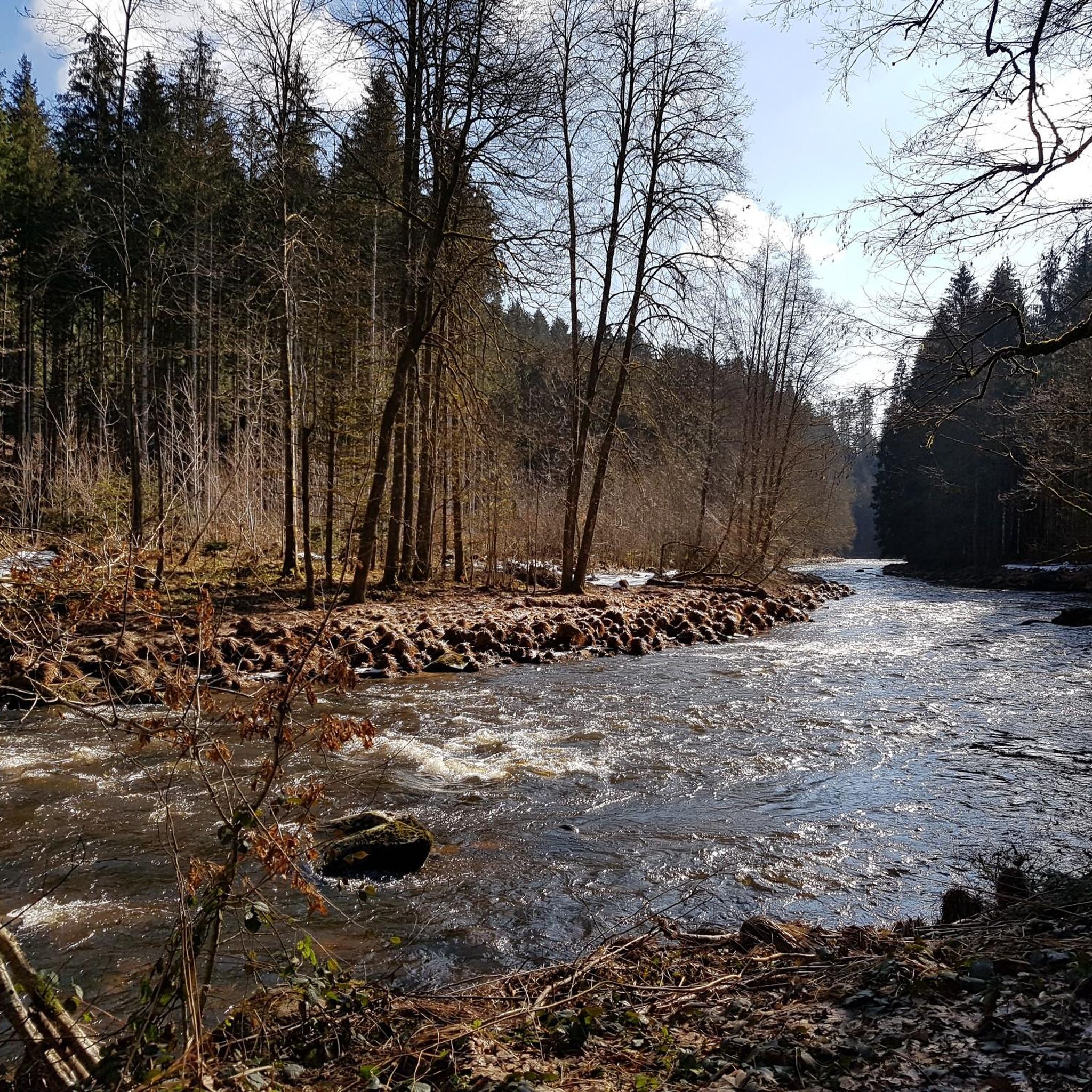
The region offers excellent hiking opportunities. The Ilz Trail in the Obere Ilz Nature Reserve is a fantastic path through wild forest and along the Ilz river, suitable for an easy hike. The Diebstein is also part of a popular hiking trail around Saldenburg and Thurmansbang. For more hiking options, you can explore various routes in the area, such as those found in the Hiking around Witzmannsberg guide.
Can I find viewpoints or scenic spots among the natural monuments?
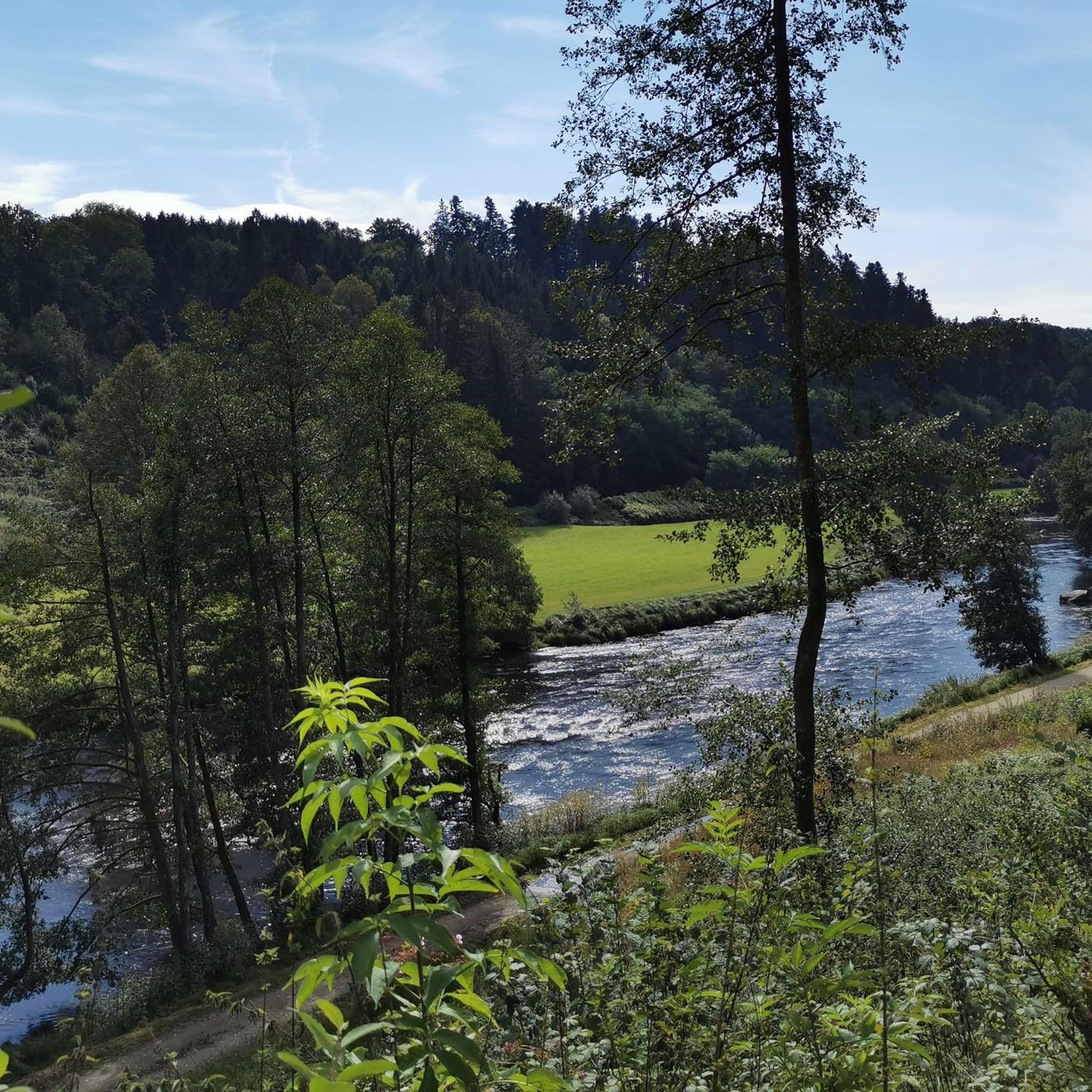
Absolutely. The Wackelstein (Rocking Stone) is situated in a forest setting that often provides scenic views. The Riverside rest area at the confluence of the Wolfsteiner Ohe and the Ilz offers a beautiful landscape view where two rivers meet, perfect for a break. The Little stone chapel also provides a unique viewpoint amidst its rock formations.
What outdoor activities, besides hiking, can I do near Witzmannsberg's natural monuments?
Beyond hiking, the Witzmannsberg area is great for cycling. You can find various routes for gravel biking and general cycling. Many of these routes pass through the natural landscapes where the monuments are located, offering a different perspective to explore the region's forests and river valleys.
What is the Ilz Trail like in the Obere Ilz Nature Reserve?
The Ilz Trail in the Obere Ilz Nature Reserve is a fantastic hiking experience. It leads through a wild forest, alongside the beautiful Ilz river, and past imposing rock formations. It's considered an easy hike that doesn't require special equipment, allowing you to fully immerse yourself in the natural impressions. The Goldsteig also runs along parts of this trail.
What makes the Wackelstein (Rocking Stone) so special?
The Wackelstein (Rocking Stone) is special due to its unique geological formation. It's a huge stone that balances on top of another, and with a bit of effort, one person can make it shake. This phenomenon is a result of wool sack weathering, where natural processes create these easily movable boulders. It's a fascinating sight and a fun experience, especially for families.
Is there a place to rest or take a break near the rivers in Witzmannsberg?
Yes, the Riverside rest area at the confluence of the Wolfsteiner Ohe and the Ilz is an ideal spot for this. It offers a beautiful landscape where the two rivers meet, complete with facilities and benches, making it perfect for taking a break while exploring the area on foot or by bike.
What can I expect when visiting the Diebstein?
The Diebstein is a natural monument featuring several large stones and small cliffs, including the Diebstein Cave. This cave was formed by 'semi-finished weathering' and offers an insight into the region's geology. Historically, it was known as a refuge for poachers. It's part of a popular hiking trail through tranquil forests, making it a powerful place for nature lovers and history buffs.
Most popular routes around Witzmannsberg

Get inspired with the komoot mobile app


Explore more
Extend your search for the best caves by checking out these guides of the top ones around Witzmannsberg:
