Top 20 Natural Monuments around Bever
Natural monuments around Bever offer diverse landscapes in the Upper Engadine region of Switzerland. The area features pristine environments, rich biodiversity, and opportunities for outdoor exploration. Geographic features include valleys, mountain passes, and alpine lakes, providing varied terrain for visitors. This region is characterized by its natural beauty and serves as a destination for those seeking connection with the natural world.
Best natural monuments around Bever
- The most popular natural monuments is Lej dals Chöds (Hahnensee), a lake that…
Last updated: October 11, 2026
Val Roseg
Highlight (Segment) • Gorge
Translated by Google •
Tip by

Ova da Bernina waterfall near Morteratsch
Highlight • Waterfall
The Cascada da Bernina waterfall trail
The waterfall trail is a short but extremely worthwhile adventure hike along the Cascada da Bernina. In just 600 …
Translated by Google •
Tip by

Sign up now to discover places like this
Get recommendations on the best single tracks, peaks, & plenty of other exciting outdoor places.
Lai da Palpuogna
Highlight • Lake
Showing Translation
Tip by

Lej dals Chöds (Hahnensee)
Highlight • Lake
Translated by Google •
Tip by

Julier Pass
Highlight • Mountain Pass
Translated by Google •
Tip by

Sign up for free to discover even more natural monuments around Bever.
Already have an account?
Start today with a free account
Your next adventure awaits.
Other adventures around Bever

Tips from the Community

Julier Pass, History (Pass height 2284 m above sea level) The column remnants exactly at the summit of the Julier Pass and the finds of Roman coins nearby point to a very early use of this Alpine crossing. The Septimer Pass, a few kilometers to the west, which was however steeper and more avalanche-prone, can certainly be considered a competitor. What is certain is that both were used intensively in Roman times. The Julier even with two-wheeled carts. In the age of packhorse trains, the Julier increasingly lost importance because the topography at the Septimer Pass was hardly a factor and, moreover, the detour via the Engadin was not necessary. With the construction of a cart track over the Septimer (1387), the Julier was definitively left behind. The Julier remained important for access to the Upper Engadin and the Bernina Pass. The actual road construction over the Julier took place between 1820 and 1826. In this phase of history, the Julier retained "the upper hand" over the Septimer. On the one hand, topographical reasons were decisive, and on the other hand, the canton could not afford to ignore the Engadin. This was the first road construction project in which the canton acted as the client. In the second half of the 19th century, various route adjustments followed, which became necessary due to the increasing feeder traffic for the Upper Engadin health resorts. The opening of the Albula Line of the Rhaetian Railway in 1903 caused car traffic over the Julier to collapse again. When the Federal Council put pressure on the Graubünden government in 1923 for a car-suitable transit route, the canton opted for the Julier route. Between 1935 and 1940, the pass road was renovated and was the first Alpine crossing to receive an asphalt surface. Today, the Julier is the most important, year-round open, northern access to the Engadin. Text / Source: Interessengemeinschaft Alpenpässe IAP, Postfach 11, Realp https://www.alpen-paesse.ch/de/alpenpaesse/julierpass/
13
0
Already in the Roman Empire around 2,000 years ago Already in the Roman Empire around 2,000 years ago, the Julier Pass was of great importance. At the pass summit, two columns of a Roman sanctuary still stand today. Today, the pass road over the Julier is the most important road connection to the Engadin and is passable all year round. In the vicinity of the Julier, you will find numerous hiking and biking routes on which the landscape can be ideally explored. From the Julierhospitz (pass summit 2284 m above sea level), the exploration tour or hike to the clear mountain lake Leg Grevasalvas begins. Text / Source: Graubünden Ferien, Alexanderstrasse 24, Chur https://www.graubuenden.ch/de/ausflugsziele/julierpass
13
0

The owners of the Hahnensee mountain restaurant also rent out this hunting lodge. We might try it next time (with a hot tub 😉
1
0

Wonderful view and delicious dessert buffet at Hotel Val Roseg
2
0
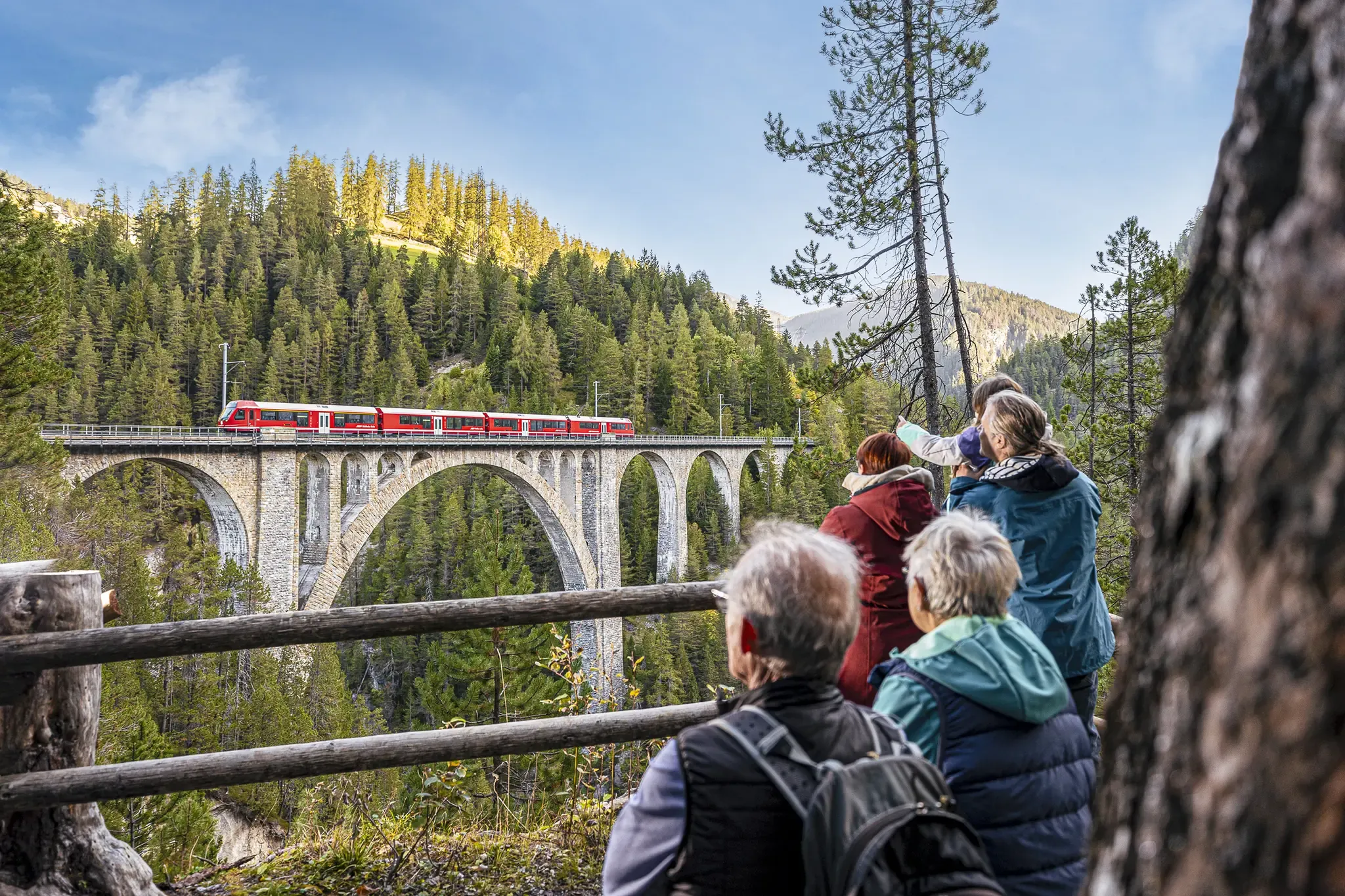
Cascada da Bernina waterfall trail The Cascada da Bernina waterfall trail The waterfall trail is a short but extremely worthwhile adventure hike along the Cascada da Bernina. In just 600 meters, it overcomes a total of 85 meters in altitude. This makes the nature all the more magnificent along the Ova da Bernina mountain stream, which rushes down into the valley over several cascades. The entrance is at the Morteratsch RhB station in the direction of the car park. From three viewing platforms you can watch the torrent make its way through the pristine mountain forest. Sometimes it falls foaming over rocks, sometimes it builds up to form natural whirlpools. On the first viewing platform, a railway viaduct on the Bernina line is at the center. On the other two platforms you can learn exciting things about hydropower and wine transport. Text / Source: Engadin Tourismus AG, Via Maistra 1, 7500 St. Moritz https://www.engadin.ch/de/bernina-glaciers/geniesser/cascada-da-bernina/
12
0

Very beautiful side valley with (still) views of the glacier(s)
2
0

Beautifully situated mountain lake above Sankt Moritz Bad. Since the lake can only be reached on foot, there are only a few tourists here.
2
0
Frequently Asked Questions
What are some of the most popular natural monuments around Bever?
The region around Bever boasts several highly-rated natural monuments. Among the most popular are Lej dals Chöds (Hahnensee), an idyllic mountain lake with a restaurant, and Lej Nair, known for its natural beauty and amenities like grilling spots. Another favorite is Lai da Palpuogna, a picturesque mountain lake near the Albula Pass.
Are there family-friendly natural monuments around Bever?
Yes, several natural monuments are suitable for families. Lej Nair is a great option, offering lawns and grilling wood. The Val Bever Fairy Tale Hike, which winds along the Beverin River, is also particularly popular and accessible for all ages. Lai da Palpuogna is another picturesque spot that invites lingering for families.
What kind of wildlife can I spot in the natural monuments around Bever?
The pristine environment around Bever is rich in biodiversity. In Val Bever, you might spot rare animal species like otters, which indicate healthy waterways. The alpine scenery also offers chances to see ibexes, marmots, bearded vultures, and eagles, especially in the higher mountain ranges and passes.
What outdoor activities can I do near these natural monuments?
The natural monuments around Bever are perfect for various outdoor activities. You can enjoy extensive hiking, cycling, and mountain biking. For hiking, consider routes like the 'View of Piz Bernina – Alp Muntatsch loop from Bever' or the 'Spinas Inn – Bever loop from Bever'. Cyclists can explore routes such as the 'Albula Gorge – Bergün/Bravuogn, post office loop from La Punt Chamues-ch'. Mountain bikers have options like the 'Albula Pass (2,315 m) – View of the Inn Valley loop from Bever'. You can find more details on these activities in the respective guides for hiking, cycling, and MTB trails around Bever.
What is the best time of year to visit the natural monuments around Bever?
The best time to visit largely depends on the activities you plan. For hiking and biking, the warmer months from late spring to early autumn (May to October) offer ideal conditions to explore the valleys, mountain passes, and lakes. While the Julier Pass remains open throughout winter, many trails might be covered in snow, making it suitable for winter sports enthusiasts rather than general hiking.
How can I reach the natural monuments around Bever by public transport?
Public transport is a great way to access many areas. Val Bever is notably car-free between Bever and Spinas, making it ideal for peaceful exploration on foot or by bike. The region is also located on the UNESCO World Heritage Albula line, and places like Preda, in the heart of Parc Ela, are easily accessible by train, offering a scenic journey on the Rhaetian Railway.
Are there any notable viewpoints or unique natural features among the natural monuments?
Absolutely. The region offers spectacular geological formations and panoramic views. The Julier Pass provides great panoramas in all directions. The Chamanna Jenatsch Hut, located at 2,651 meters above sea level, offers breathtaking views of the high Engadine valley and prominent mountain ranges like Bernina and Roseg. The Val Bever itself is characterized by the Beverin stream carving its way through rocky gorges, surrounded by floodplains and fens.
What do visitors enjoy most about the natural monuments around Bever?
Visitors frequently praise the tranquility and untouched nature of the area, especially in Val Bever, which offers a perfect escape for those seeking solitude and a deep connection with the natural world. The stunning alpine scenery, the chance to spot diverse wildlife, and the well-maintained trails for hiking and biking are also highly appreciated. Many find the lakes, like Lai da Palpuogna, to be 'pearls of nature' and ideal places to linger.
Are there places to eat or stay near the natural monuments?
Yes, there are options for refreshments and overnight stays. Lej dals Chöds (Hahnensee) has a restaurant. The Chamanna Jenatsch Hut, located in the farthest reaches of Val Bever, serves as a meeting point for hikers and offers the unique experience of spending a night in an alpine setting with spectacular views. Additionally, the villages in the Engadine region provide various accommodation and dining choices.
What is the difficulty level of exploring the natural monuments around Bever?
The difficulty varies depending on the specific monument and chosen activity. Val Bever offers trails like the Fairy Tale Hike that are accessible for all ages and skill levels. However, the broader alpine landscape includes challenging hikes and mountain biking tours, such as the Suvretta Loop or routes to the Chamanna Jenatsch Hut, which traverse impressive alpine terrain and require a good level of fitness. Many routes are rated moderate to difficult, so it's advisable to check specific trail details before heading out.
Are there any hidden natural gems near Bever worth exploring?
While Val Bever is well-known, its car-free sections between Bever and Spinas offer a truly tranquil and pristine experience, feeling like a hidden gem for those seeking solitude. The entire Parc Ela, Switzerland's largest nature park, which includes areas like Preda, is full of untouched landscapes and rich biodiversity, making it a treasure island for nature enthusiasts.
Most popular routes around Bever
Most popular attractions around Bever

Get inspired with the komoot mobile app


Explore more
Extend your search for the best caves by checking out these guides of the top ones around Bever:
