Top 20 Natural Monuments around Augustusburg
Best natural monuments around Augustusburg are situated within the picturesque Ore Mountains (Erzgebirge) in Saxony, Germany. The town is located on a ridge between the Zschopau and Flöha rivers, with the Schellenberg hill reaching 516 meters above sea level. This region features a natural landscape of forests, hills, and river valleys, providing opportunities for outdoor recreation and scenic appreciation. The Zschopau Valley, partially within Augustusburg's reach, offers forest paths and diverse landscapes for hiking.
Best natural monuments around Augustusburg
- The…
Last updated: June 23, 2026
Braunsdorf Weir
Highlight • Structure
The coffee racer is on tour again, Saturdays and Sundays from 11 a.m. to 5 p.m. at …
Translated by Google •
Tip by

Kunnerstein
Highlight • Mountain Hut
Translated by Google •
Tip by

Sign up now to discover places like this
Get recommendations on the best single tracks, peaks, & plenty of other exciting outdoor places.
Sign up for free
Confluence of the Zschopau and Flöha Rivers
Highlight • River
Translated by Google •
Tip by

Rose Garden
Highlight • Natural
Translated by Google •
Tip by

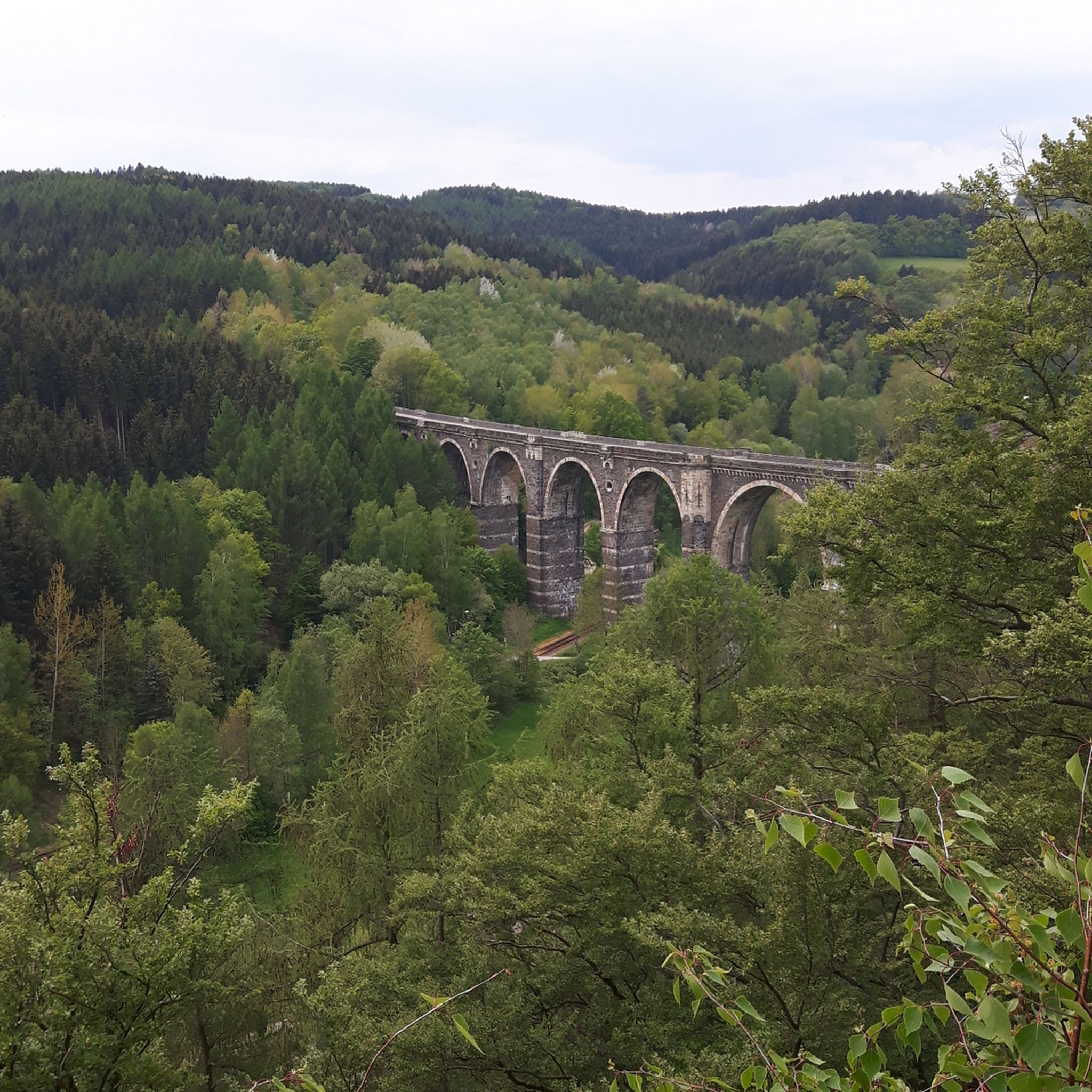
Bastei viewpoint overlooking the Hetzdorf Viaduct
Highlight • Viewpoint
Translated by Google •
Tip by

Sign up for free to discover even more natural monuments around Augustusburg.
Sign up for free
Already have an account?
Start today with a free account
Your next adventure awaits.
Login or Signup
Popular around Augustusburg


Tips from the Community

In 1904/05, Otto Werner transformed the approximately 30-meter-wide strip of land adjacent to the small pond, which had been owned by Messrs. Salzer, Herfurth, and Krumbiegel, into a rose garden, and the area from Metzer Straße (today: Heinrich-Lorenz-Straße) to Händelstraße into a narrow promenade. https://www.sachses-ruh.de/wir-über-uns/stadtpark/
1
0

Very beautifully laid out rose garden. It is regularly maintained and when the roses are in season you can admire lots of roses in all sorts of colors. There are also benches which are great for a rest but it is best to always have a sun hat with you as everything there is in the blazing sunshine.
1
1


That's a really nice view...if you make a quick stop here
3
1

Please have your camera ready.
5
1
The river rises in the Eastern Ore Mountains in the Czech Republic northwest of the village of Nové Město (New Town) and initially runs in a westerly direction. The source is only around one kilometer away from the source of the Wilde Weißeritz and the Freiberger Mulde. Confluence of the Flöha (right) into the Zschopau (left) In the Czech Republic, the Flöha is dammed in the Fleyh dam (Údolní nádrž Fláje). At Georgendorf (Český Jiřetín) it flows into Saxon territory, and immediately behind the border the Flöha is dammed again in the Rauschenbach dam. The Schweinitz border river flows into Hirschberg and the Flöha forms the border with the Czech Republic up to the Saigerhütte Grünthal. As it continues to the northwest, the Flöha flows through Olbernhau and Pockau, where its largest tributary, the Black Pockau, flows into its famous gorge valley. After a total of 67 km, the river flows into the Zschopau in the town of Flöha. Here it has a water flow of around 11 m³/s compared to a good 10 m³/s in the Zschopau.[5] Source: https://de.wikipedia.org/wiki/Fl%C3%B6ha_(Fluss
2
1

Flöha offers some beautiful views of the rivers, whether from the bike paths of the water or the various bridges or the confluence of the Flöha and Zschopau.
2
1

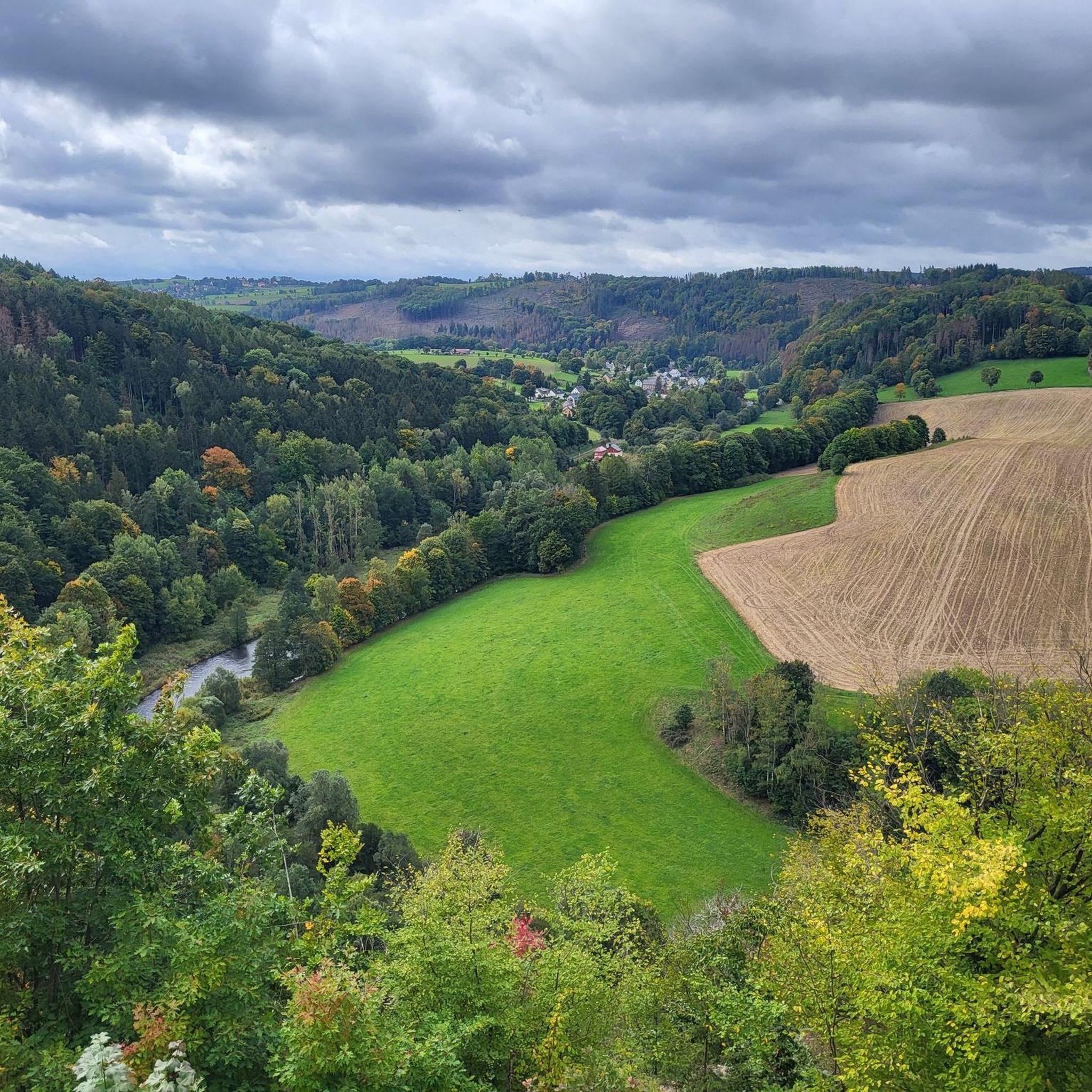
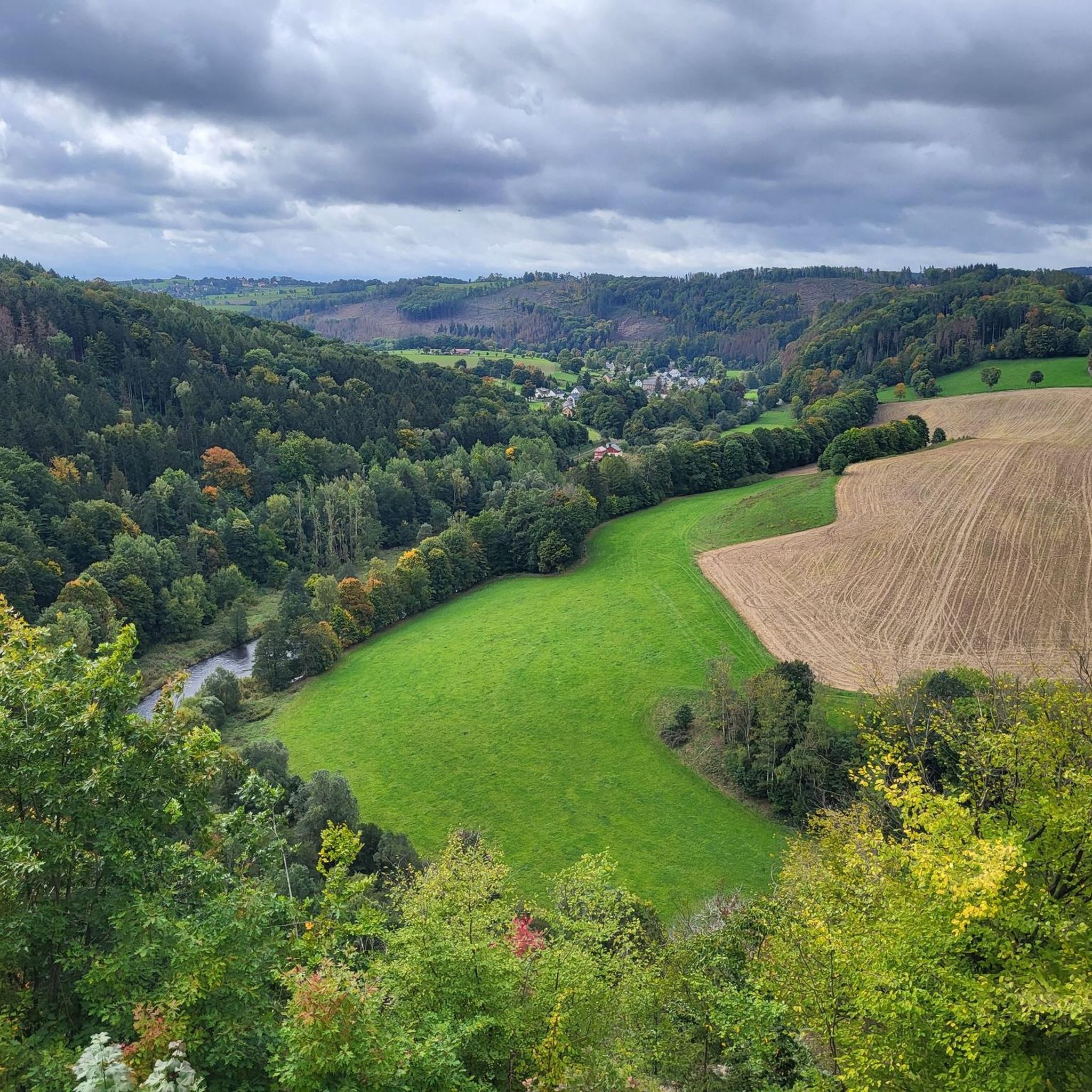
Really fantastic view of the Zschopau valley and a nice resting place for a break.
6
0
Frequently Asked Questions
What hiking opportunities are available near Augustusburg's natural monuments?
The region around Augustusburg, particularly the Zschopau Valley, offers a diverse network of hiking trails for all skill levels. You can find numerous routes, from leisurely strolls along the river to more challenging mountain tours. For specific options, explore guides like Easy hikes around Augustusburg or Hiking around Augustusburg, which feature trails like the "Erdmannsdorf Bridge – Kunnerstein loop" or the "Förstersteig – Kunnerstein loop."
Are the natural monuments around Augustusburg suitable for families?
Yes, many natural monuments in the area are family-friendly. For instance, the Castle Pond, Chemnitz is described as a nice place for all ages, offering views of a historic church. The Braunsdorf Weir provides a relaxing spot by the water, and Kunnerstein has a spacious shelter, making it a good resting place for hikers of all sizes.
What is the <a href="https://www.komoot.com/highlight/224479" target="_blank" rel="noopener">Braunsdorf Weir</a>, and what can I do there?
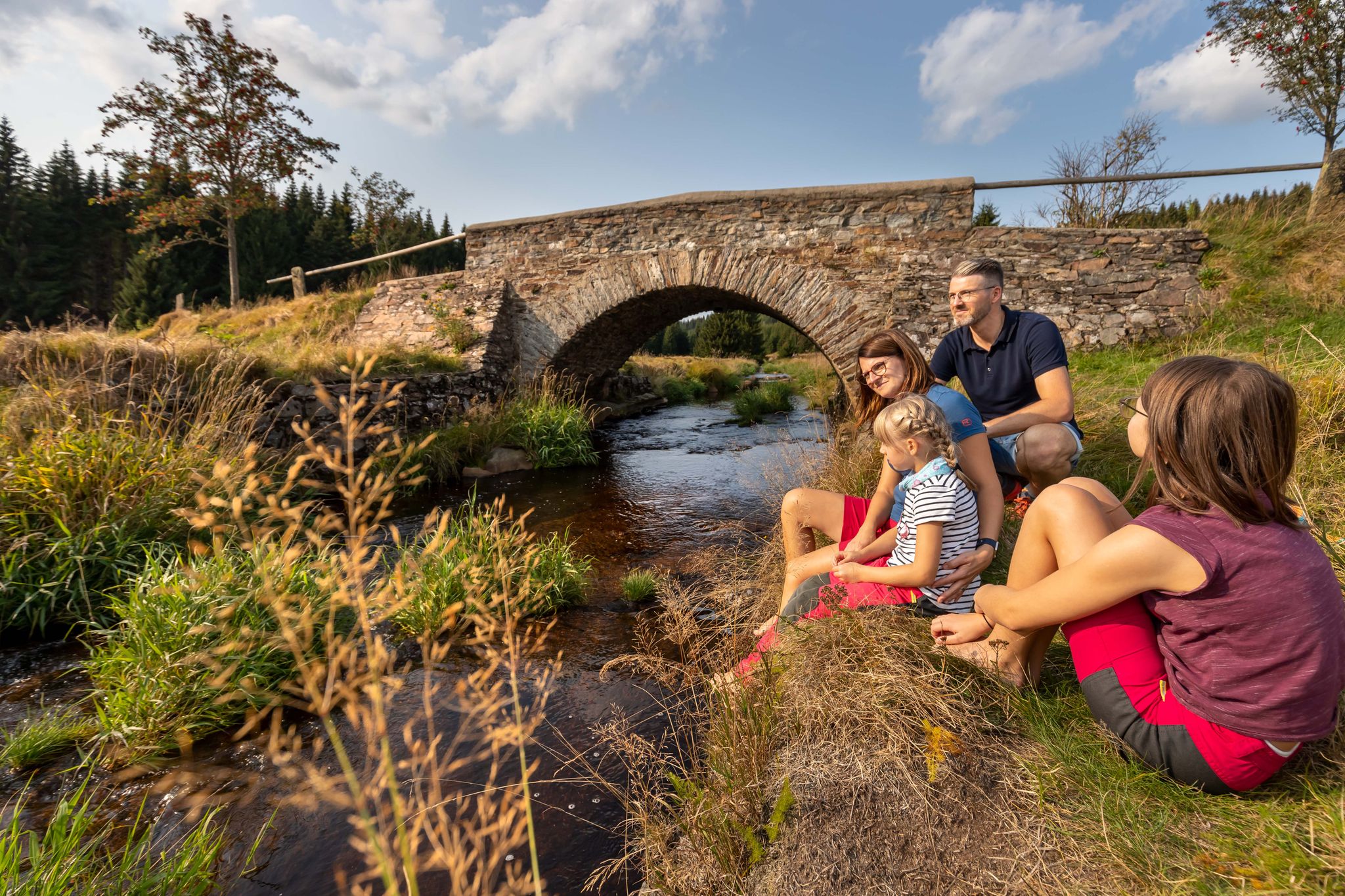
The Braunsdorf Weir is a popular natural monument where visitors can relax by the rushing water of the Zschopau river. It's an ideal spot to sit on the meadow, enjoy the sounds of nature, and unwind. Some visitors even bring coffee to enhance the peaceful experience.
Where can I find the best panoramic views of the natural landscape?
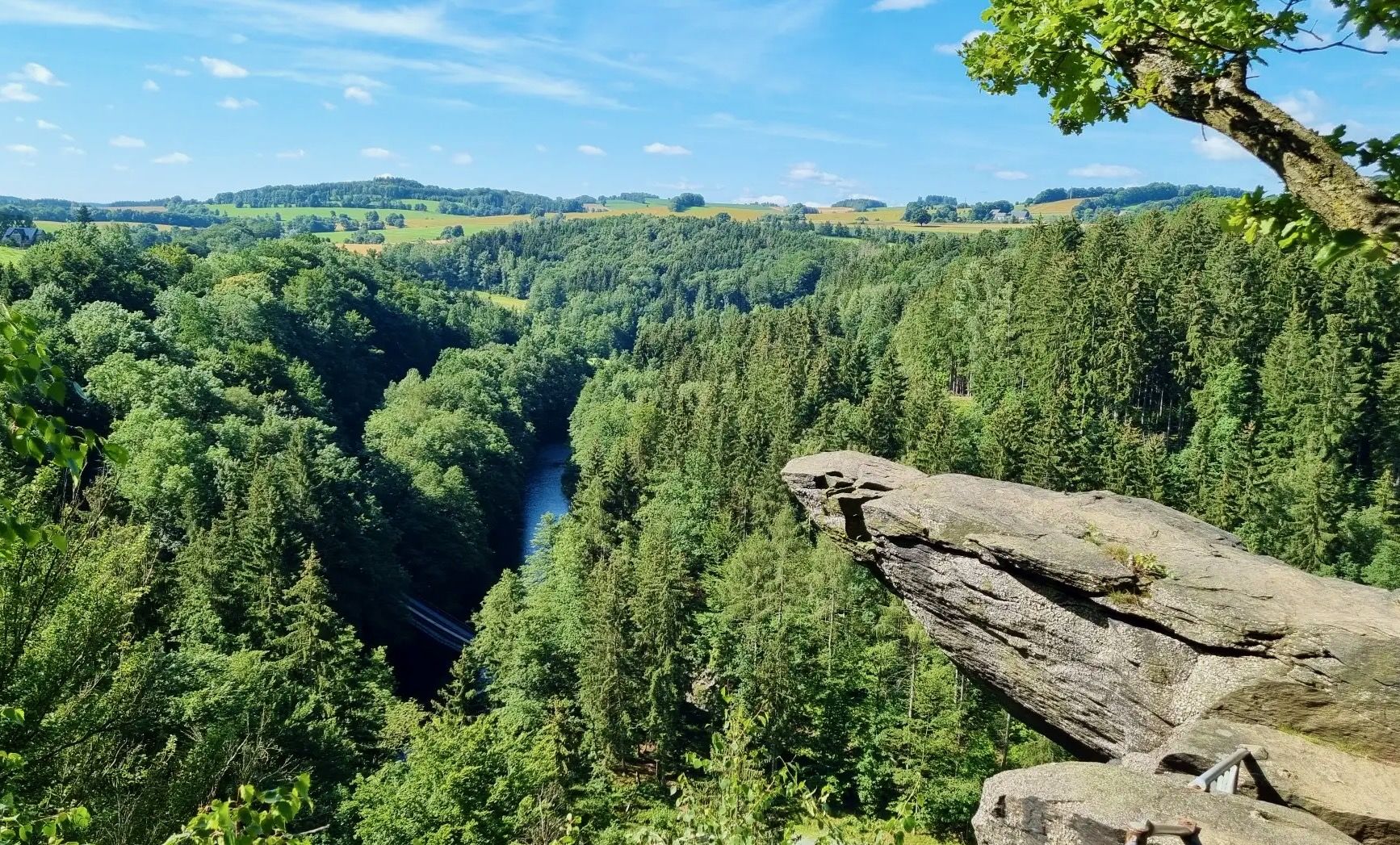
For stunning panoramic views, head to Kunnerstein. Located on the southern slope of the Schellenberg, it offers a wonderful vantage point over the Zschopau valley towards Hennersdorf and Kunnersdorf. The Schellenberg itself, at 516 meters above sea level, also provides expansive views of the Ore Mountains.
What other outdoor activities can I enjoy near these natural monuments?
Beyond hiking, the Augustusburg region is excellent for cycling. The Zschopau Valley and surrounding areas feature numerous routes for touring bicycles. You can find detailed cycling tours in guides like Cycling around Augustusburg, which includes routes such as the "View from the Hetzdorf Bridge – Alte Baumwolle Flöha loop."
What is special about <a href="https://www.komoot.com/highlight/4519223" target="_blank" rel="noopener">Castle Pond, Chemnitz</a>?
The Castle Pond, Chemnitz is a historic lake created in 1493 as a fish pond for a Benedictine monastery. It offers interesting views of a 15th-century castle church. While primarily a natural monument, it also has historical significance and is a pleasant spot for a stroll.
What do visitors particularly enjoy about the natural monuments in this region?
Visitors frequently praise the tranquility and scenic beauty. Many enjoy sitting by the rushing water at the Braunsdorf Weir, appreciating the views from Kunnerstein, and the overall idyllic natural setting for relaxation and outdoor activities. The region's diverse landscape and well-maintained paths are also highly valued.
Are there any unique natural features like river confluences to visit?
Yes, you can visit the Confluence of the Zschopau and Flöha Rivers. This spot offers a nice place for a rest or picnic, where you can observe where the two rivers meet. A very narrow hiking trail leads along the Zschopau to this confluence, providing a pleasant walk.
What kind of natural features define the Augustusburg area?
The Augustusburg area is characterized by its picturesque natural landscape within the Ore Mountains. Key features include scenic river valleys, particularly the Zschopau and Flöha, rolling hills, dense forests, and various viewing rocks. These elements combine to offer diverse opportunities for outdoor activities and natural appreciation.
Is the <a href="https://www.komoot.com/highlight/4527409" target="_blank" rel="noopener">Rose Garden</a> a natural monument, and what can I expect there?
The Rose Garden in Chemnitz, while a cultivated garden, is recognized as a natural monument due to its historical significance and natural beauty. Laid out in 1904/05, it features a strictly geometrically designed garden with symmetrical paths and a diverse collection of roses. It's a beautiful spot to enjoy a profusion of roses, though cycling is not permitted within the garden itself.
When is the best time of year to visit the natural monuments around Augustusburg?
The natural monuments around Augustusburg can be enjoyed throughout the year, with each season offering a different charm. Spring brings blooming flora, summer is ideal for hiking and cycling in lush greenery, autumn showcases vibrant fall colors, and winter offers a serene, often snow-covered landscape for quiet walks. The Zschopau Valley is particularly refreshing in warmer months.
Most popular routes around Augustusburg
Most popular attractions around Augustusburg

Get inspired with the komoot mobile app


Explore more
Extend your search for the best caves by checking out these guides of the top ones around Augustusburg:
