Top 4 Natural Monuments in Coastal National Park
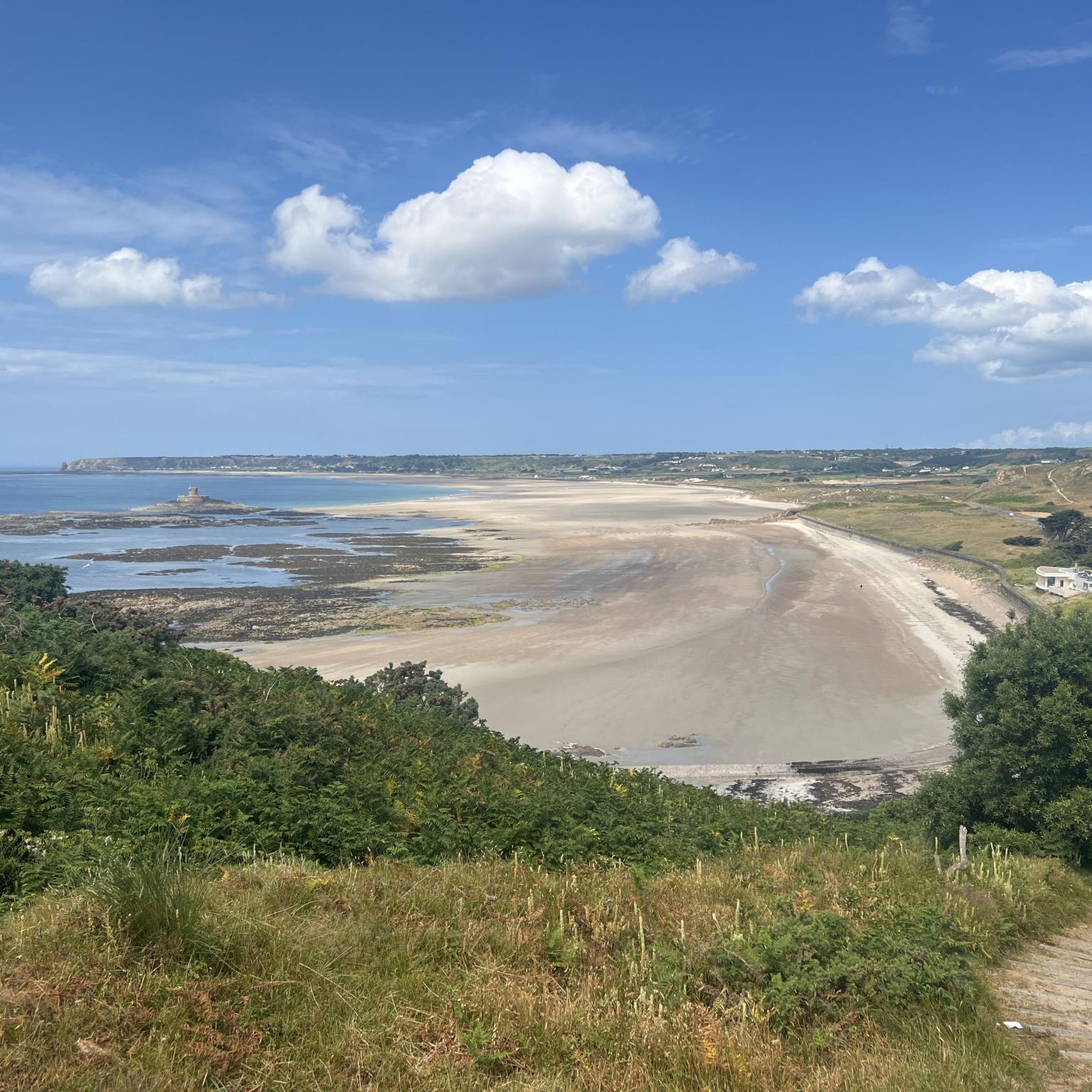
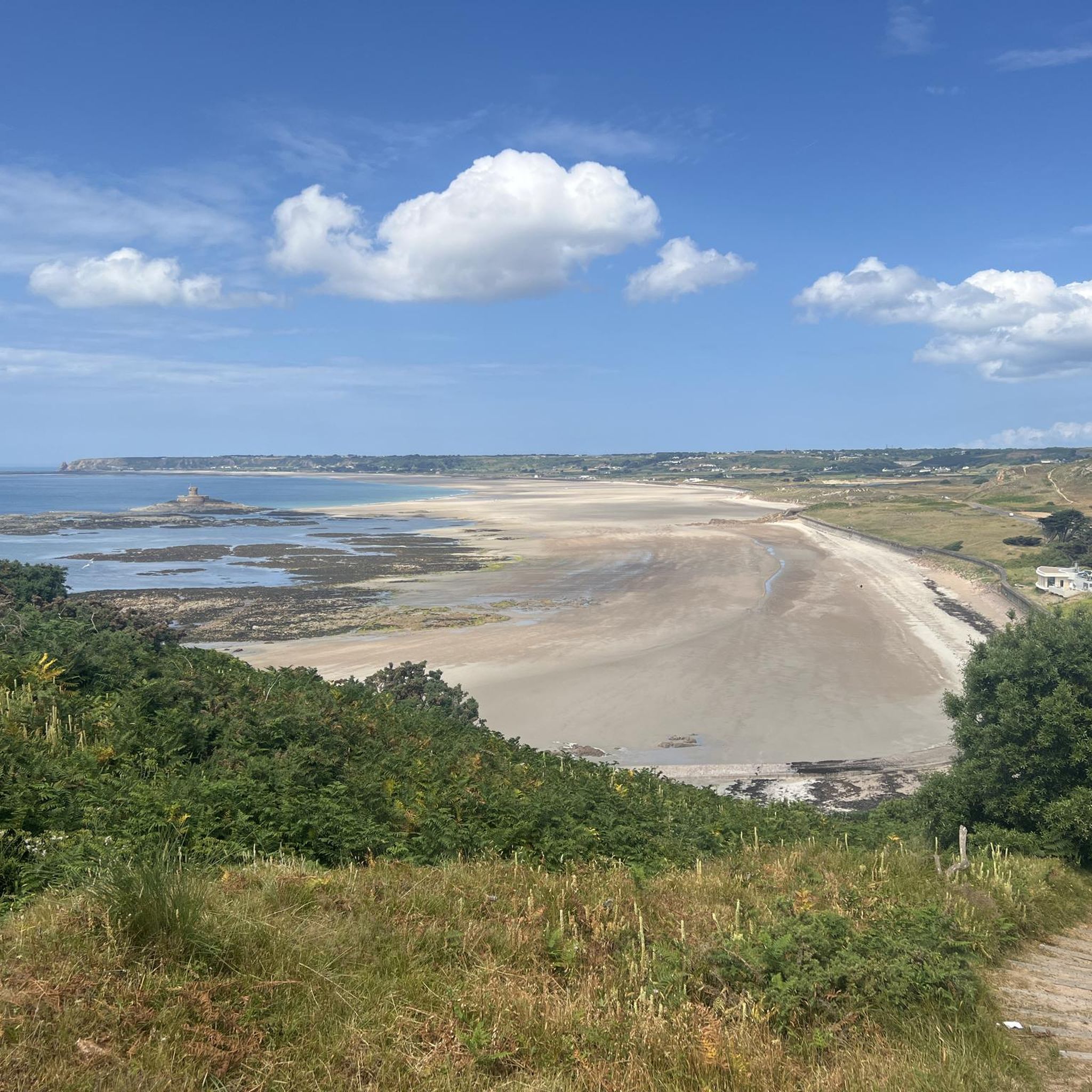
Best natural monuments in Coastal National Park protect diverse marine and terrestrial ecosystems, featuring dramatic coastal cliffs, ancient geological formations, and significant archaeological sites. The park's landscape is shaped by its coastal environment, offering insights into both natural processes and human history. It is home to unique natural monuments, including towering rock formations, extensive sand dunes, and historical structures.
Best natural monuments in Coastal National Park
- The most popular natural monuments is Le Pinacle and Les Landes Cliffs, a…
Last updated: July 5, 2026
Le Pinacle and Les Landes Cliffs
Highlight (Segment) • Natural Monument
Translated by Google •
Tip by

Les Blanches Banques Standing Stones and Burial Chamber
Highlight • Historical Site
Tip by
Sign up now to discover places like this
Get recommendations on the best single tracks, peaks, & plenty of other exciting outdoor places.
Sign up for free
The Pinnacle
Highlight • Historical Site
Tip by

Les Landes Boardwalk
Highlight • Bridge
Translated by Google •
Tip by

Start today with a free account
Your next adventure awaits.
Login or Signup
Tips from the Community

A wooden bridge over a swamp keeps feet dry and protects the toads. Toads are the identifying animal of the people of Jersier.
1
0

Historic site: Two earth and rubble ramparts habe been attributed to the neolithic/chalcolithic periods and a third to the Bronze Age. Before the Bronze Age, a copper axe found proves that this site was also inhabited during the Copper Age period. Iron Age occupation is attributed by six pieces of iron found at this place. In Roman times, a Gallo-Roman temple was built here. Extensive, careful excavations have brought hundreds of artifacts from the five different peoples to light.
0
0

Great coastal path
0
0

In addition to this Burial Chamber there are a total of >>> 3 Standing Stones (Menhirs) <<< in these dunes! Have fun finding them! 😉 The three menhirs or standing stones are: the Broken Menhir and Little Menhir close to the Ossuary and the Great Menhir on rising ground 350 metres to the south (2850-1500BC) They were all excavated and restored during the 1920s. It is not known whether these stones had a ritual use or whether their function was entirely practical, perhaps as boundary markers. Source: jerseyheritage.org
0
1
The Ossuary (Burial Chamber): This Chalcolithic rectangular cist grave (2850-2250BC) was excavated in 1923 and partially reconstructed in 1972. It contained the disarticulated remains of around twenty individuals. The human remains consisted mainly of skulls and long bones which suggests that the site was a repository for bodies that had been exposed and de-fleshed elsewhere. Two decorated pots called Jersey Bowls were found in the grave.
0
1
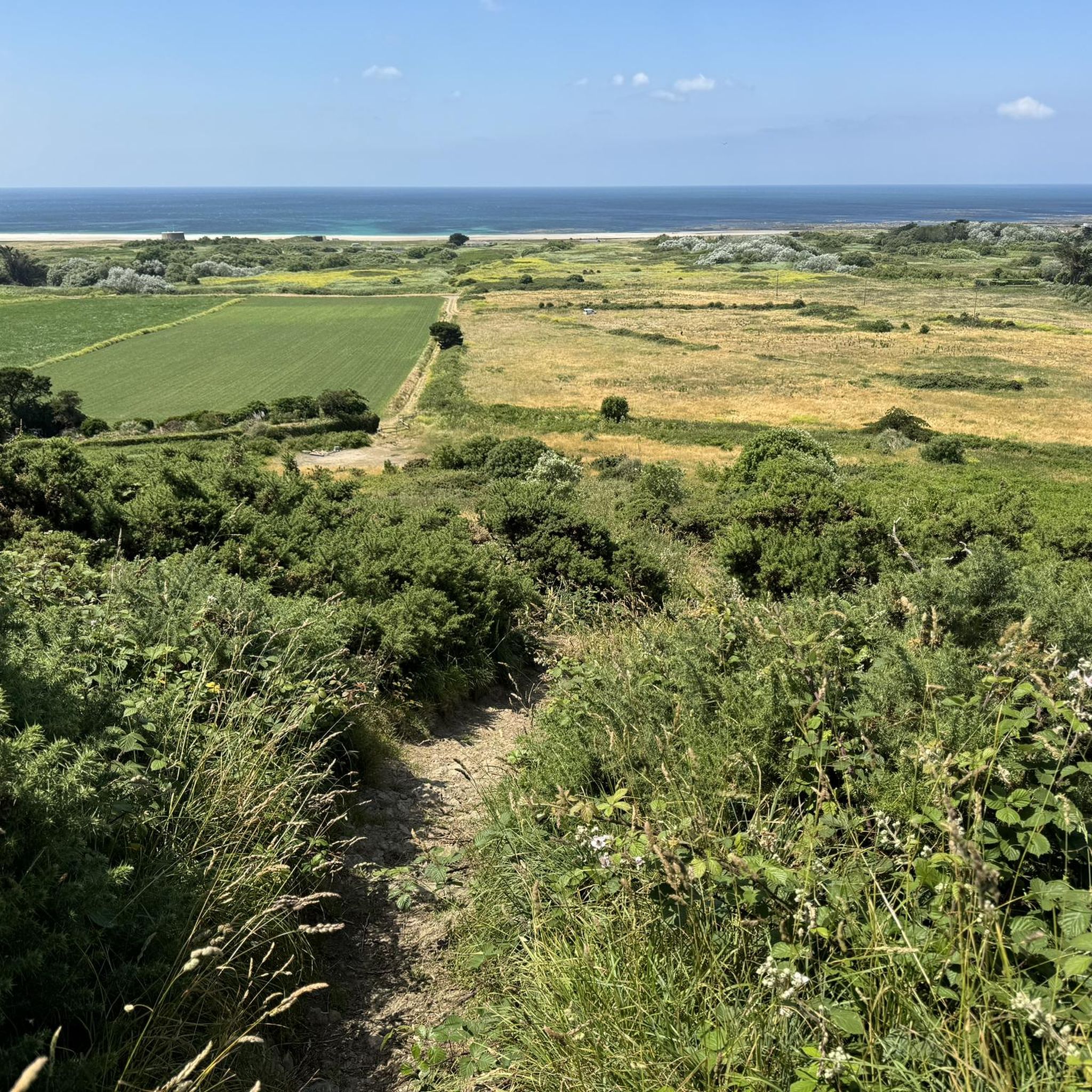
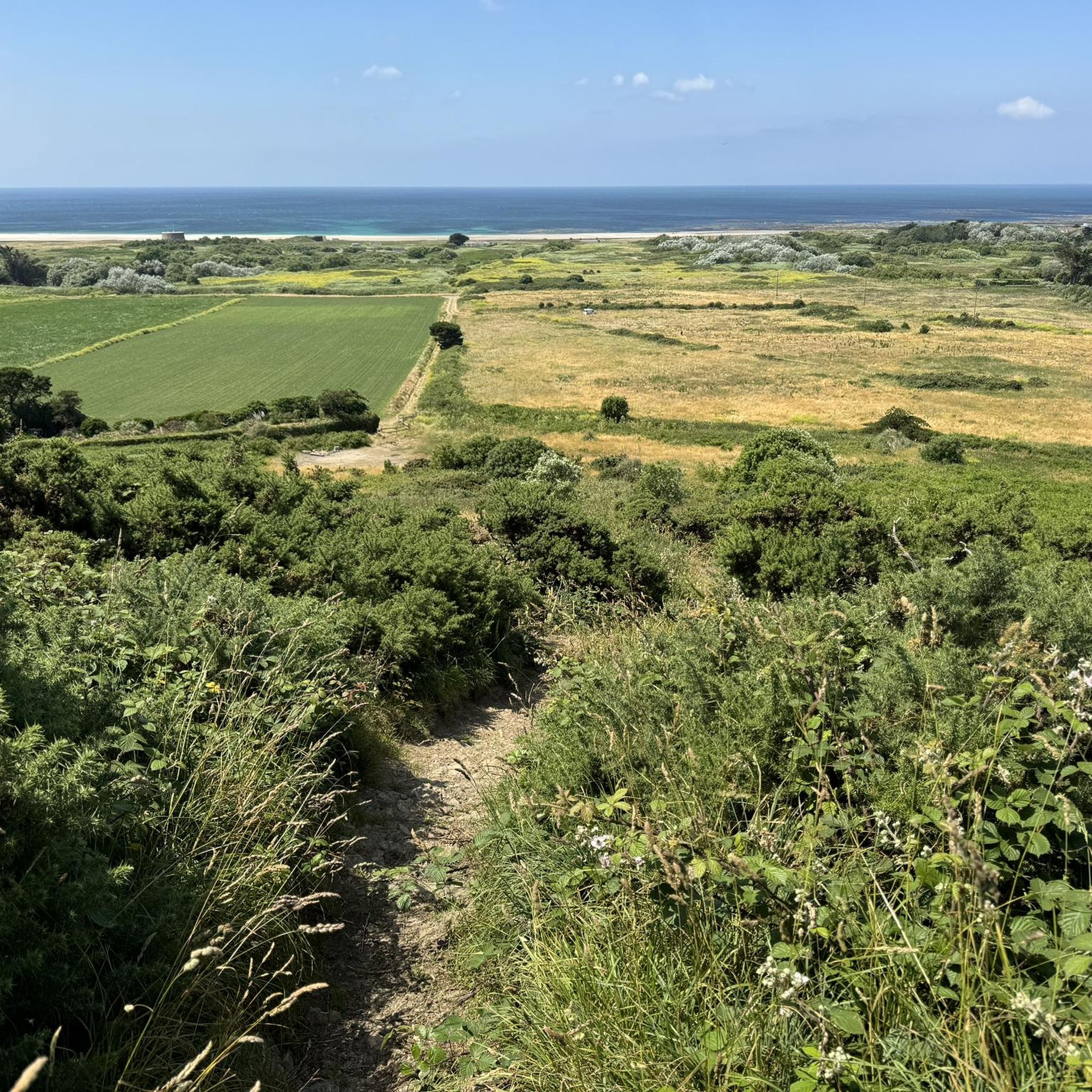
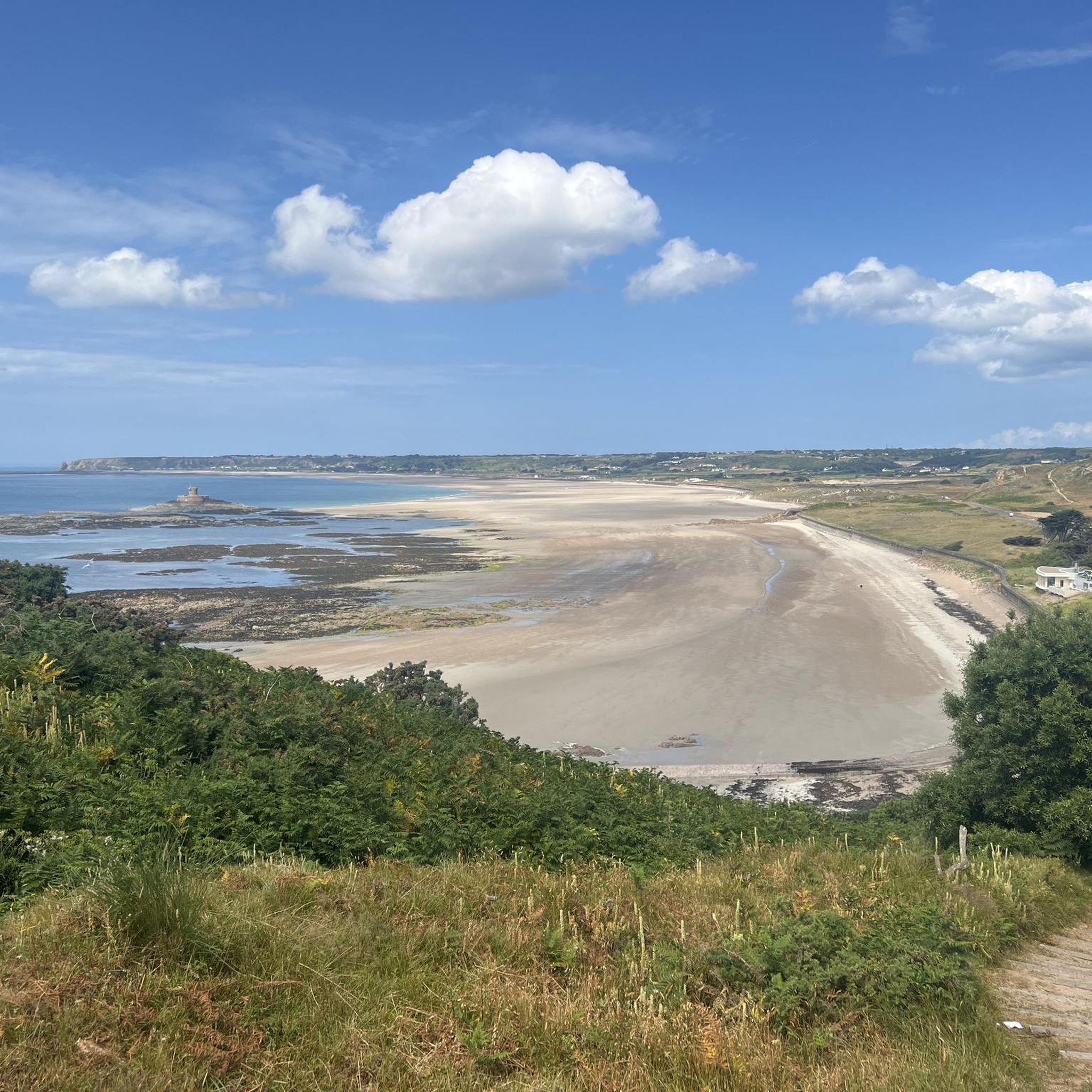
The sand dunes of St Ouen’s Bay are recognised as among Europe’s most important sand dunes. Les Blanches Banques, as they are called, are designated as a site of special interest (SSI) because of their special zoological, botanical, archaeological and historical features. As the most extensive area of sandy soils in Jersey, the dunes support good populations of many animals and plants not found elsewhere in Jersey. The site is mostly publicly owned and covers 1.15 km², from the marram grass-covered seaside dune, back towards the scrubby wooded valleys at Les Quennevais. The earliest likely settlers of Les Blanches Banques were the Neolithic (6,000-4,500 years ago) and their flint scatters can be found outside rabbit burrows to this day. Evidence of settlers since this early date include several menhirs or standing stones and a burial chamber known as the Ossuary where the jumbled bones of 20 people have been uncovered. For more information please see blog.gov.je
0
0
MP3 (MP standing for Marinepeilstände und Meßstellen or Naval Coastal Artillery Direction and Range-finding Position) naval observation tower is one of 3 such towers constructed during the occupation of the Germans during WWII. Of those 3 this one uniquely had a large radar array installed on top, capable of detecting targets over 160 km away.
0
0
This stretch of coast has a lot to offer, with the cliffs, the "Les Landes" sanctuary, Plémont Bay, the "Pinacle", the remains of the "Battery Moltke", Grosnez Castle etc.
0
0
Frequently Asked Questions
What are the most notable natural monuments in Coastal National Park?
Coastal National Park is home to several unique natural monuments. You can explore the dramatic Le Pinacle and Les Landes Cliffs, featuring a 60-meter high rock formation and stunning coastal views. Another significant site is Les Blanches Banques Standing Stones and Burial Chamber, which includes extensive sand dunes and ancient megalithic structures. Don't miss The Pinnacle, an area rich in archaeological finds from various historical periods, or the accessible Les Landes Boardwalk, which protects local wildlife.
What kind of natural features can I expect to see in Coastal National Park?
The park's natural monuments showcase a diverse range of features. You'll find dramatic coastal cliffs and unique rock formations, such as those at Le Pinacle and Les Landes Cliffs. The region also boasts extensive sand dune systems, particularly at Les Blanches Banques, which are recognized for their ecological importance. Additionally, you can experience unique ecosystems like the swamp protected by the Les Landes Boardwalk.
Are there any historical natural monuments in Coastal National Park?
Yes, several natural monuments in Coastal National Park have significant historical and archaeological importance. Le Pinacle, a prominent rock, served as an early place of worship, and the surrounding Les Landes Cliffs contain remnants of Atlantic Wall fortifications. Les Blanches Banques features Neolithic flint scatters, an Ossuary (burial chamber), and three ancient standing stones (menhirs). The Pinnacle is an archaeological site with evidence of occupation from the Neolithic to Roman times, including earth ramparts and a Gallo-Roman temple.
Are there family-friendly natural monuments in Coastal National Park?
Yes, the Les Landes Boardwalk is an excellent family-friendly option. This wooden bridge allows for easy access over a swamp, keeping feet dry and offering a chance to observe local wildlife, including toads, which are significant to the region. The sand dunes at Les Blanches Banques also offer open spaces for exploration, though care should be taken around archaeological sites.
What outdoor activities can I do near these natural monuments?
The area around Coastal National Park's natural monuments offers a variety of outdoor activities. You can find numerous hiking trails, including routes like the 'Grosnez Castle Ruins – Plémont Bay loop' or 'St. Ouen's Bay – Grosnez Castle Ruins loop'. For cyclists, there are road cycling routes such as the 'St. Aubin’s Harbour – Saint-Aubin’s Bay Promenade loop' and mountain biking trails like the 'St. Ouen's Bay – La Corbière Lighthouse loop'. You can find more details on these activities in the Waterfall hikes, Road Cycling Routes, and MTB Trails guides for Coastal National Park.
Are there hiking opportunities near the natural monuments?
Absolutely. The natural monuments are often integrated into scenic hiking routes. For instance, the area around Le Pinacle and Les Landes Cliffs offers trails with stunning views and historical sites like Grosnez Castle. You can explore various routes, from easy loops like 'Piemont Bay – Plémont Bay loop' to more challenging ones like 'St. Ouen's Bay – Grosnez Castle Ruins loop'. For a comprehensive list of trails, refer to the Waterfall hikes in Coastal National Park guide.
What is the best time to visit Coastal National Park's natural monuments?
While specific data for Coastal National Park isn't available, coastal national parks generally offer unique experiences year-round. Spring and autumn often provide pleasant weather for hiking and exploring, with fewer crowds. Summer is ideal for enjoying the beaches and marine life, though it can be busier. Winter can offer dramatic, rugged beauty, especially along the cliffs, but requires appropriate gear for colder, potentially wetter conditions. Always check local weather forecasts before your visit.
Can I spot wildlife near the natural monuments?
Yes, the diverse ecosystems around the natural monuments provide opportunities for wildlife spotting. The sand dunes at Les Blanches Banques are a designated site of special interest due to their special zoological and botanical features, supporting unique animal and plant populations. The Les Landes Boardwalk was specifically built to protect toads, offering a chance to see these amphibians in their natural habitat. Coastal areas are also generally good for birdwatching.
Are there any hidden gems or lesser-known natural monuments worth exploring?
While the main highlights are well-known, the extensive sand dunes of Les Blanches Banques themselves can feel like a hidden gem due to their vastness and ecological significance. Beyond the main burial chamber, actively searching for the three distinct standing stones (menhirs) within these dunes offers a unique exploration. The broader Les Landes sanctuary, mentioned in connection with Le Pinacle and Les Landes Cliffs, also holds many smaller, less-trafficked natural and historical points of interest.
What geological features are prominent in Coastal National Park?
The park is characterized by its dramatic coastal geology. You'll encounter towering cliffs and unique rock formations, such as the 60-meter high menhir-shaped rock at Le Pinacle. The coastline features rugged terrain sculpted by centuries of ocean activity. Additionally, the extensive sand dune systems at Les Blanches Banques represent dynamic geological processes of sand accumulation and erosion, forming a significant natural landscape.
Is public transport available to reach the natural monuments?
Specific public transport details for each natural monument are not provided in the guide data. However, many coastal national parks offer limited public transport options, often requiring a combination of buses and walking to reach more remote areas. It's advisable to check local transport schedules and routes for Coastal National Park before planning your visit. For broader regional information, you might find resources on the Pembrokeshire Coast National Park website helpful for general coastal park planning, though specific to a different region.
Most popular routes in Coastal National Park
Most popular attractions in Coastal National Park

Get inspired with the komoot mobile app


