Top 5 Natural Monuments around Wick
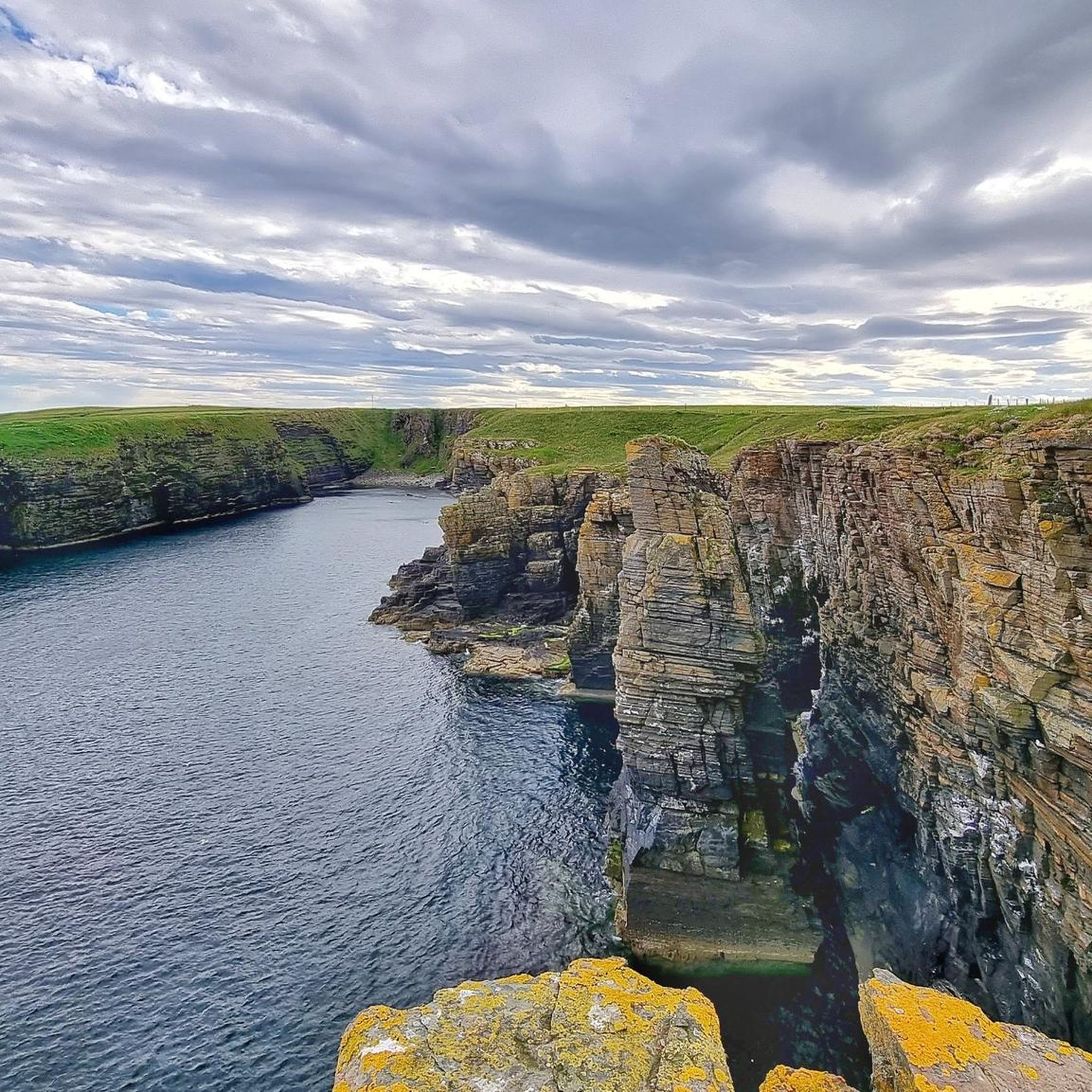
Natural monuments around Wick offer a diverse landscape on Scotland's rugged northeast coast. The area features dramatic coastal formations, significant geological sites, and historical structures set within striking natural environments. These locations provide insights into the region's natural history and offer opportunities for exploration. The landscape is characterized by its cliffs, sea stacks, and unique rock formations shaped by the North Sea.
Best natural monuments around Wick
- The most popular natural monuments is Castle Sinclair Girnigoe, a natural monument…
Last updated: August 24, 2026
Castle Sinclair Girnigoe
Highlight • Natural Monument
Tip by

Whaligoe Steps
Highlight • Structure
Translated by Google •
Tip by

Sign up now to discover places like this
Get recommendations on the best single tracks, peaks, & plenty of other exciting outdoor places.
Sign up for free
Old Wick Castle
Highlight • Castle
Tip by

Stack o' Brough Natural Arch
Highlight • Natural Monument
Tip by

Whaligoe Steps and Harbour
Highlight • Natural Monument
Tip by

Sign up for free to discover even more natural monuments around Wick.
Sign up for free
Already have an account?
Start today with a free account
Your next adventure awaits.
Login or Signup
Other adventures around Wick

Tips from the Community

Not much to see anymore, but you can get in.
0
0
A very steep staircase leads down. Unfortunately, no lift back up.
0
0
A well-preserved ruin with numerous information boards.
0
0

What a great little castle. Amazing to see it still standing after so many years. Very cool little place to visit and explore the ruins - never quite seen anything like it.
2
0

The stairs are quite steep, so you should not be afraid of heights.
0
0

The path to the viewpoint is now very easy, you no longer have to go around the valley (there is a comfortable path with wooden steps and a bridge). However, there can be a nasty wind at the top of the ledge, there are no railings!
0
0

From the paid parking lot, you can reach the ruins via an easy path. Access to the ruins is generally free, and there is a donation box at the entrance. After exploring, you should also pay a visit to the lighthouse.
4
1

Castle Sinclair Girnigoe is a complex of ruined stone structures built and modified over a 200-year period by the Sinclair earls of Caithness, historically one of northern Scotland’s most powerful families. It is located about 3 miles north of Wick on the east coast of Caithness, Scotland, on a rocky promontory jutting out into the North Sea. It comprises the ruins of two castles: the 15th-century Castle Girnigoe, and the early 17th-century Castle Sinclair, which was built as an extension of the earlier castle and connected by a drawbridge over a ravine. The castle was the seat of Clan Sinclair and witnessed several conflicts and intrigues, such as the imprisonment and death of John Sinclair, Master of Caithness, by his own father in 1582, and the siege and capture of the castle by George Sinclair of Keiss in 1680. The castle was abandoned after the siege and fell into decay. It is now owned by the Clan Sinclair Trust and undergoing restoration and archaeological research3. Castle Sinclair Girnigoe is a historic and scenic landmark that showcases the engineering and natural beauty of Scotland.
4
1
Frequently Asked Questions
What are some unique natural features to explore around Wick?
The Wick area is rich in unique natural features. You can visit the Stack o' Brough Natural Arch, known for its large tunnel hole through a tall rock rising from the North Sea. Another significant geological site is the Grey Bools, located along the cliff tops south of Wick, which features remarkable accumulations of large flagstone boulders deposited by powerful storm waves, offering insight into the immense power of the North Sea.
Which natural monuments near Wick are considered historical sites?
Several natural monuments around Wick are deeply intertwined with history. Castle Sinclair Girnigoe, a complex of ruined castles on a rocky promontory, dates back to the 15th century. The Whaligoe Steps are a unique historical monument, a steep descent of 330 steps to a disused 18th-century harbor. Additionally, Old Wick Castle, known as 'The old man of Wick', is believed to be one of Scotland's oldest castles, dating to the 12th century and perched dramatically on a rocky outcrop.
Are there hiking opportunities near the natural monuments around Wick?
Yes, there are numerous hiking opportunities. For instance, you can explore routes like the 'Noss Head Lighthouse to Ackergil Harbour via Castle Sinclair Girnigoe' or the 'Wick Centre to Stack o' Brough'. Many trails offer coastal views and access to these sites. You can find more details and routes in the Hiking around Wick guide.
Can I find easy walks to natural monuments near Wick?
Absolutely. Several natural monuments are accessible via easy walks. For example, the path to Castle Sinclair Girnigoe from its paid parking lot is generally easy. You can also find easy routes like 'Wick Centre to Stack o' Brough' or 'Newtonhill Community Wood loop'. For more options, check the Easy hikes around Wick guide.
Are the natural monuments around Wick suitable for families?
Many natural monuments around Wick are family-friendly. Castle Sinclair Girnigoe is listed as family-friendly, offering an engaging historical experience in a dramatic setting. While some sites like the Whaligoe Steps involve a challenging descent, others provide easier access and open spaces for exploration, making them suitable for families with varying activity levels.
What should I wear when visiting the natural monuments around Wick?
Given Wick's location on Scotland's rugged northeast coast, it's advisable to dress in layers. Sturdy, waterproof footwear is highly recommended, especially for sites like the Whaligoe Steps or coastal walks where conditions can be damp. A waterproof and windproof outer layer is essential, as the weather can change quickly and be quite blustery, particularly near the sea cliffs.
What is the best time of year to visit the natural monuments around Wick?
The best time to visit is generally during the warmer months, from late spring to early autumn (May to September), when the weather is milder and daylight hours are longer. This period offers better conditions for coastal walks and exploring the outdoor sites. However, the dramatic landscapes can be particularly striking on a windy day with waves crashing, offering a different, powerful experience.
Is there parking available at the natural monuments around Wick?
Parking is typically available at or near the major natural monuments. For example, Castle Sinclair Girnigoe has a paid parking lot from which you can access the ruins. It's always a good idea to check specific access details for each site you plan to visit, but generally, you'll find designated parking areas.
How long should I plan for a visit to the natural monuments?
The duration of your visit can vary depending on the site. For a site like Castle Sinclair Girnigoe, you might spend 1-2 hours exploring the ruins and enjoying the views. The Whaligoe Steps descent and ascent, plus time at the harbor, could take 1-1.5 hours. For multiple sites or longer coastal walks, plan for a half-day or full-day excursion.
What kind of unique historical experiences do the natural monuments offer?
The natural monuments around Wick offer a blend of natural beauty and profound history. At Whaligoe Steps, you can descend 330 steps carved into the cliff face, imagining the lives of 18th-century fishwives. Old Wick Castle, one of Scotland's oldest, allows you to step inside its ancient ruins and connect with centuries of history. The Cairn of Get, though ruinous, provides a glimpse into prehistoric burial practices with its impressive orthostats.
Where can I see dramatic coastal architecture and views near Wick?
For dramatic coastal architecture and sweeping views, head to Noss Head Lighthouse, just north of Wick. Built in 1849, the lighthouse itself is a striking landmark, but its setting offers excellent photo opportunities and a peaceful place to enjoy the rugged beauty of the North Sea coastline. The area provides fantastic coastal walks with expansive vistas.
What other outdoor activities can I do near the natural monuments around Wick?
Beyond hiking, the coastal areas around Wick offer opportunities for running and exploring. You can find various running trails, such as the 'Wick to Trinkie Baths loop' or routes around the Wick Harbour Lighthouse. These activities allow you to experience the dramatic coastal scenery and fresh sea air. More details can be found in the Running Trails around Wick guide.
Most popular attractions around Wick

Get inspired with the komoot mobile app


Explore more
Extend your search for the best caves by checking out these guides of the top ones around Wick:
