Top 8 Natural Monuments in Meerdaalwoud
Natural monuments in Meerdaalwoud include a variety of geological features and ancient forest ecosystems within this national forest near Leuven, Belgium. As part of the Brabantse Wouden National Park, it is Flanders' largest deciduous forest, characterized by diverse tree species and historical sites. The area features natural elevations, ancient trees, and unique geological formations.
Best natural monuments in Meerdaalwoud
- The most popular natural monuments is Tomberg Summit — Bench and Gazebo, a summit that stands at 102.5 meters above sea level. This site features an open heathland area with a bench under a gazebo, and historically, forest law was decreed here.
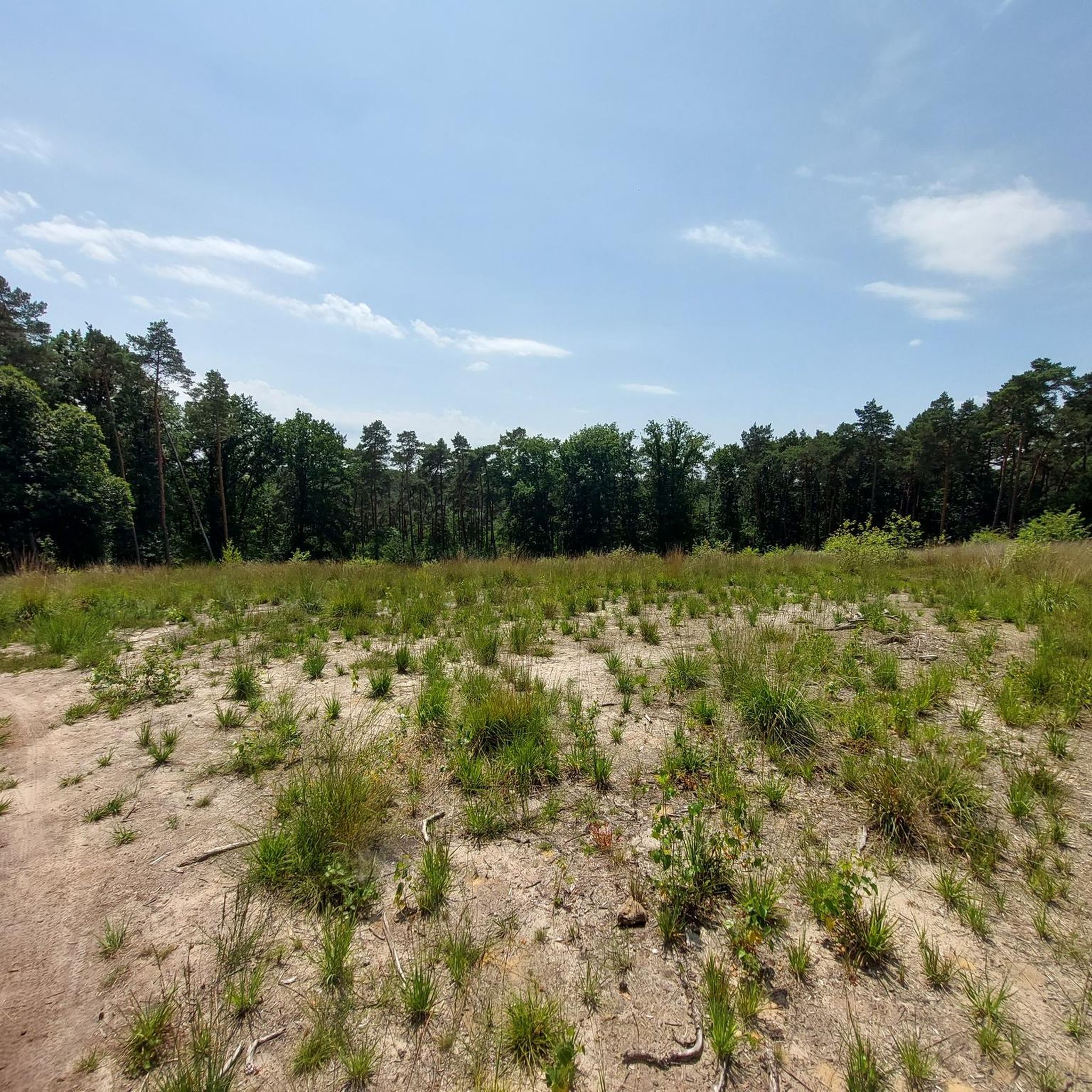
- Another must-see spot is Tomberg Hill and Bench, a viewpoint that is the second highest point in the forest at 102 meters. It is a natural elevation, a dune mound formed millions of years ago, where visitors can find a bench surrounded by heathland and ferns.
- Visitors also love Hollow Way Near Pier Slot Spring, Nationaal Park Brabantse Wouden, a natural monument characterized by old beech trees. This natural sunken road is located near the Pier Slot Spring, which historically provided drinking water.
- Meerdaalwoud is known for its ancient trees, natural elevations, and historical geological features. Visitors can explore a variety of natural monuments, including ancient oak trees, the Tomberg summit, and historical hollow ways.
- The natural monuments in Meerdaalwoud are appreciated by the komoot community, with over 129 upvotes and 48 photos shared across 8 highlights.
Last updated: June 30, 2026
Tomberg Summit — Bench and Gazebo
Highlight • Summit
Translated by Google •
Tip by

Tomberg Hill and Bench
Highlight • Viewpoint
Translated by Google •
Tip by

Sign up now to discover places like this
Get recommendations on the best single tracks, peaks, & plenty of other exciting outdoor places.
Sign up for free
Tiense Groef
Highlight • Historical Site
Official: "The so-called 'Tiense groove' is a rectilinear ditch that runs straight through the forest from West to East. It is a witness to a completely different era in the history of the forest. In some places it is above ground than in others places suddenly dive up to three meters deep into the ground again. One hundred years ago, archaeologists first conducted scientific research into the unique phenomenon. Some saw it as a funerary road from the Stone Ages, others as an exploitation road for iron mining, but today it is generally accepted. that we are dealing with the route of a local Roman road, a diverticulum. The Romans liked to bury their dead along the road, and the presence of 7 tumuli or Roman burial mounds along the groove also support the theory groeb, Tiense groove or Oude Tiensche weg give us a hint that this road was the connection with the Roman vicus of Tienen. Outside the forest the road was integrated into later paths and streets, but in the forest it fell out of use. We don't know exactly when, but it is certainly not marked on any historical map. Finds of ceramics, roof tiles and building materials also suggest the presence of a Roman farm, a so-called villa rustica, along the road. The fields belonging to this villa stretched across the southeast side of the forest. Archaeological and soil science research has shown that the forest was intensively used as an agricultural area in Roman times." And you can read that at onroerenderfgoed.be/archeologische-fietstocht-heverlee
The Tiense Groef is also where the play bridge with nets is located. Ideal for playing the Gaul.
Translated by Google •
Tip by
Pier Slot Spring
Highlight • Natural Monument
You can read everything about the history of the source and its use on the information board that was placed near the nameplate.
Translated by Google •
Tip by
Hollow Way Near Pier Slot Spring, Nationaal Park Brabantse Wouden
Highlight (Segment) • Natural Monument
Translated by Google •
Tip by
Sign up for free to discover even more natural monuments in Meerdaalwoud.
Sign up for free
Already have an account?
Start today with a free account
Your next adventure awaits.
Login or Signup

Other adventures in Meerdaalwoud

Tips from the Community

Here you already have the feeling of the Ardennes...
4
0

Source Pier Slot was no longer a source because the groundwater had been too low for a long time, but efforts have been underway for years to revalue/restorate the source. See, among others, at https://achterdoechelen.be/2023/10/14/de-pier-slot-bron-komen-eraan/ You can read everything about the history of the source and its use on the information board that was placed near the nameplate.
7
0
The last sunken road before you reach the village center of Sint-Joris-Weert (or conversely the first one if you leave there). The source of Pier Slot is also located here. If you see sandbags lying around: a flood is not coming; However, they are working on an erosion control test setup here.
6
0
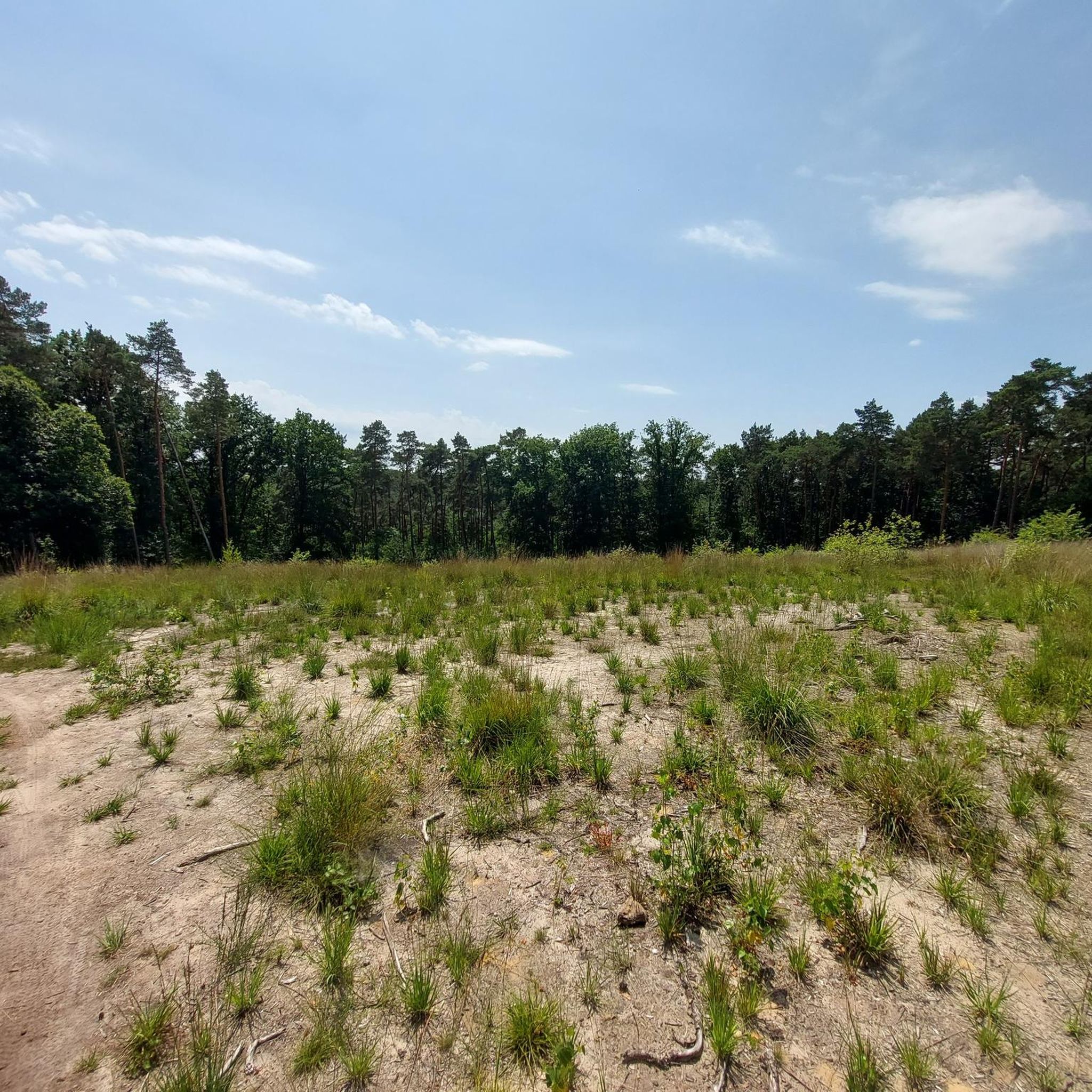
On top of the dune hill that is the Tomberg you will find a - currently partly broken - bench around an ever-growing tree where you can sit under. There is an information board and you are surrounded by heathland, a piece of grassland, sandy roads and during this period a beautiful sea of ferns.
6
0
The Tomberg is the second highest place in the forest (102 m). It is not a prehistoric burial mound (or tomb) as our ancestors thought, but a natural elevation, a dune mound that millions of years ago, together with the Mommendeel mound, actually protruded above the sea at that time. It is here that the illustrious forest court sat for hundreds of years. In the Middle Ages, every free man was in principle allowed to hunt without restriction in forests, meadows and swamps. The big exception were the free forests, the private forests of the dukes. Meerdaalwoud was such a free forest and hunting rights belonged exclusively to the Duke of Arenberg. At first the forest court was itinerant and justice was administered in the various villages. Later, a special building was erected here on the Tomberg for the court hearings. Later still, a hearing was held at Heverlee castle. The punishments were not lenient, but it is thanks to that forest justice that the forest still exists today and has not been sacrificed to the needs of the farmers and citizens in the area. The forest right came to an end with the arrival of the French in 1795. You can read this - and much more - at https://www.onroerenderfgoed.be/archeologische-fietstocht-heverlee
5
1
The Tomberg is the second highest place in the forest (102 m). It is not a prehistoric burial mound (or tomb) as our ancestors thought, but a natural elevation, a dune mound that millions of years ago, together with the Mommendeel mound, actually protruded above the sea at that time. It is here that the illustrious forest court sat for hundreds of years. In the Middle Ages, every free man was in principle allowed to hunt without restriction in forests, meadows and swamps. The big exception were the free forests, the private forests of the dukes. Meerdaalwoud was such a free forest and hunting rights belonged exclusively to the Duke of Arenberg. At first the forest court was itinerant and justice was administered in the various villages. Later, a special building was erected here on the Tomberg for the court hearings. Later still, a hearing was held at Heverlee castle. The punishments were not lenient, but it is thanks to that forest justice that the forest still exists today and has not been sacrificed to the needs of the farmers and citizens in the area. The forest right came to an end with the arrival of the French in 1795. You can read this - and much more - at https://www.onroerenderfgoed.be/archeologische-fietstocht-heverlee
7
0
Around here you see what looks like some kind of valley. The deep ditch is sometimes above ground and sometimes underground. Generally accepted explanation of the phenomenon that you might not even notice if it weren't for the information board: there was once a local Roman road here. Official: "The so-called 'Tiense groove' is a rectilinear ditch that runs straight through the forest from West to East. It is a witness to a completely different era in the history of the forest. In some places it is above ground than in others places suddenly dive up to three meters deep into the ground again. One hundred years ago, archaeologists first conducted scientific research into the unique phenomenon. Some saw it as a funerary road from the Stone Ages, others as an exploitation road for iron mining, but today it is generally accepted. that we are dealing with the route of a local Roman road, a diverticulum. The Romans liked to bury their dead along the road, and the presence of 7 tumuli or Roman burial mounds along the groove also support the theory groeb, Tiense groove or Oude Tiensche weg give us a hint that this road was the connection with the Roman vicus of Tienen. Outside the forest the road was integrated into later paths and streets, but in the forest it fell out of use. We don't know exactly when, but it is certainly not marked on any historical map. Finds of ceramics, roof tiles and building materials also suggest the presence of a Roman farm, a so-called villa rustica, along the road. The fields belonging to this villa stretched across the southeast side of the forest. Archaeological and soil science research has shown that the forest was intensively used as an agricultural area in Roman times." And you can read that at https://www.onroerenderfgoed.be/archeologische-fietstocht-heverlee The Tiense Groef is also where the play bridge with nets is located. Ideal for playing the Gaul.
7
0
The bench is partly broken, the gazebo is a bit outdated, but it remains wonderful under that tree with a view of heather and ferns. Especially at this time of year, this is a wonderful place for those who love quiet places full of ferns that strive to become the largest and have the most beautiful shades of green. Some of the small paths at the base of the hill are near small stretches of water with life. Those seeking peace and quiet come here outside busier periods to enjoy a jungle of ferns in a wonderful open space. The views from the paths below to the ferns on the hillsides demand beautiful photos.
5
0
Frequently Asked Questions
What unique natural features can I explore in Meerdaalwoud?
Meerdaalwoud is home to a variety of unique natural features. You can discover ancient oak trees, some over 300 years old with circumferences exceeding 5 meters, alongside diverse tree species like winter oaks, hornbeams, and towering beeches. The forest also features open heathland areas, such as around the Tomberg Summit, and natural springs like the Minnebron, which historically provided drinkable water.
Are there any historical natural monuments in Meerdaalwoud?
Yes, Meerdaalwoud has several natural monuments with historical significance. The Tomberg Summit, for instance, is not only a natural elevation but also a site where forest law was decreed for hundreds of years. Another notable historical feature is the Tiense Groef, a deep, rectilinear ditch believed to be the route of a local Roman road, complete with nearby Roman burial mounds.
What is the highest point in Meerdaalwoud and what can I find there?
The Tomberg Summit is the second highest point in Meerdaalwoud, standing at 102.5 meters above sea level. It is a natural elevation, a dune mound formed millions of years ago. At the summit, you'll find an open heathland area adorned with ferns and a bench under a gazebo, offering a peaceful spot for reflection and views of the surrounding natural landscape.
Can I find any natural springs or water sources in Meerdaalwoud?
Yes, you can find the Pier Slot Spring in Meerdaalwoud. This natural spring historically provided drinking water to inhabitants. While efforts are underway for its revaluation, it remains a significant natural feature within the forest. The Minnebron is another natural spring known for providing drinkable water.
Are there any interesting trails or paths related to natural monuments?
Absolutely. You can explore the Hollow Way Near Pier Slot Spring, a beautiful natural sunken road characterized by old beech trees. This trail is located near the historical Pier Slot Spring and offers a unique walking experience through the forest's natural contours.
What kind of wildlife can I expect to see in Meerdaalwoud?
Meerdaalwoud is a haven for wildlife. It hosts the oldest roe deer population in Flanders, often spotted at dusk. Birdwatchers might spot rare woodpecker species, and the forest is home to various insects like the stag beetle and map butterfly. The presence of the pine marten has also been observed, making it a rich area for nature observation.
What outdoor activities can I do near the natural monuments in Meerdaalwoud?
Meerdaalwoud offers a range of outdoor activities. You can enjoy easy hikes on trails like the 'Narrow beech avenue – Country Lane loop' or 'Bivouac Zone De Steenberg – Meerdaalwoud bivouac area loop'. For cyclists, there are road cycling routes, including the 'Pater Damiaan Bridge – Horst Castle loop', and gravel biking options such as the 'Meerdaal Forest and Heverlee Forest loop'. You can find more details on these activities in the Meerdaalwoud guides.
Are there family-friendly options or activities in Meerdaalwoud?
Meerdaalwoud is generally family-friendly, offering opportunities for nature walks and exploration. The forest's diverse ecosystem and wildlife spotting can be engaging for children. Additionally, the 'Pad van Ad' features tree sculptures carved from deceased oak trees by local artist Ad Wouters, providing a unique blend of art and nature that can be enjoyable for families.
What do visitors enjoy most about the natural monuments in Meerdaalwoud?
Visitors particularly appreciate the tranquility and natural beauty of Meerdaalwoud's natural monuments. The Tomberg Summit is often highlighted for its peaceful atmosphere, especially when surrounded by ferns, offering a wonderful open space for quiet reflection. The ancient trees and diverse forest environment also contribute to a majestic and immersive experience.
When is the best time to visit Meerdaalwoud to see its natural monuments?
Meerdaalwoud offers beauty throughout the year. Spring brings vibrant new growth and blooming undergrowth like lily of the valley. Summer provides lush greenery and opportunities for wildlife spotting. Autumn transforms the forest with spectacular colors from its deciduous trees, making it a particularly scenic time to visit. Even in winter, the ancient trees and quiet atmosphere offer a unique charm.
Are there specific hiking trails to reach the Tomberg Summit?
While there isn't one single designated trail named 'Tomberg Summit Trail', the summit is accessible via various paths within Meerdaalwoud. Many easy hikes in the area will lead you close to or directly to the summit. You can explore routes like the 'Bivouac Zone De Steenberg – Meerdaalwoud bivouac area loop' or other easy hikes listed in the Easy hikes in Meerdaalwoud guide, which often pass by this significant natural elevation.
Most popular routes in Meerdaalwoud
Most popular attractions in Meerdaalwoud

Get inspired with the komoot mobile app


Explore more
Extend your search for the best caves by checking out these guides of the top ones in Meerdaalwoud:
