Top 8 Natural Monuments around Caneças
Best natural monuments around Caneças include notable natural sites with significant geological and historical features. The region is historically significant for its role in Lisbon's water supply, featuring natural springs and waterways that shaped its infrastructure. The area offers diverse landscapes for exploration, including the ancient Dolmen of the Large Stones, a megalithic structure from the Late Neolithic period. These sites provide opportunities to observe unique geological formations and historical remnants within a natural setting.
Best natural monuments around Caneças
…Last updated: June 29, 2026
Eduardo VII Park Viewpoint
Highlight • Viewpoint
Translated by Google •
Tip by

Anços Waterfall and Old Mill Ruins
Highlight • Waterfall
Tip by

Sign up now to discover places like this
Get recommendations on the best single tracks, peaks, & plenty of other exciting outdoor places.
Sign up for free
Anços Waterfall
Highlight • Waterfall
Translated by Google •
Tip by

Caves of Vale da Calada
Highlight • Cave
"The small village of Olelas, twenty or so kilometers from Lisbon, to the Northwest, and about 800m east of the Sabugo station, on the …
Translated by Google •
Tip by

Campo de Lapiás de Negrais
Highlight • Natural Monument
Translated by Google •
Tip by
Sign up for free to discover even more natural monuments around Caneças.
Sign up for free
Already have an account?
Start today with a free account
Your next adventure awaits.
Login or Signup

Tips from the Community

Eduardo VII Park stretches like a large green ribbon up the hill, offering plenty of space to breathe with its lawns and paths. From the top, you have a stunning view across Avenida da Liberdade all the way down to the Tagus River. Perfect for a quiet break, a picnic, or a relaxing stroll in nature right in the heart of Lisbon.
4
1

Eduardo VII Park is one of Lisbon's most iconic green spaces, located just north of Marquis of Pombal Square and Avenida da Liberdade. It's an ideal place to stroll, relax, and enjoy spectacular views of the city.
9
0

Lisbon's central park was named as a tribute to the English monarch Edward VII, who visited Lisbon in 1903, five centuries after the Anglo-Portuguese Alliance. It ascends one of the city's hills and provides a wonderful view from the top. It's made up of symmetrical box hedging and a variety of plants, most of them found inside a cool and heated greenhouse from the 1930s, which is filled with exotic species from tropical climates. This greenhouse is one of the most important green spaces in Lisbon, considered an authentic living museum, with its small lakes and waterfalls, statuary, and hundreds of species of plants.
6
0

From above you can enjoy the view of the city and slowly walk down
4
0

...a beautiful park with a wonderful view 👀
5
0

Very beautiful place that deserves a visit, especially after the rainy season. The waterfalls are fed by Ribeira de Mourão, which once ran water all year round. Currently in the summer months the waterfalls have little or no water. According to what I heard from a local elder, the causes for the little water that runs in the area in the summer months may not be just natural, but the diversion made for industrial uses further upstream, next to the springs.
3
0

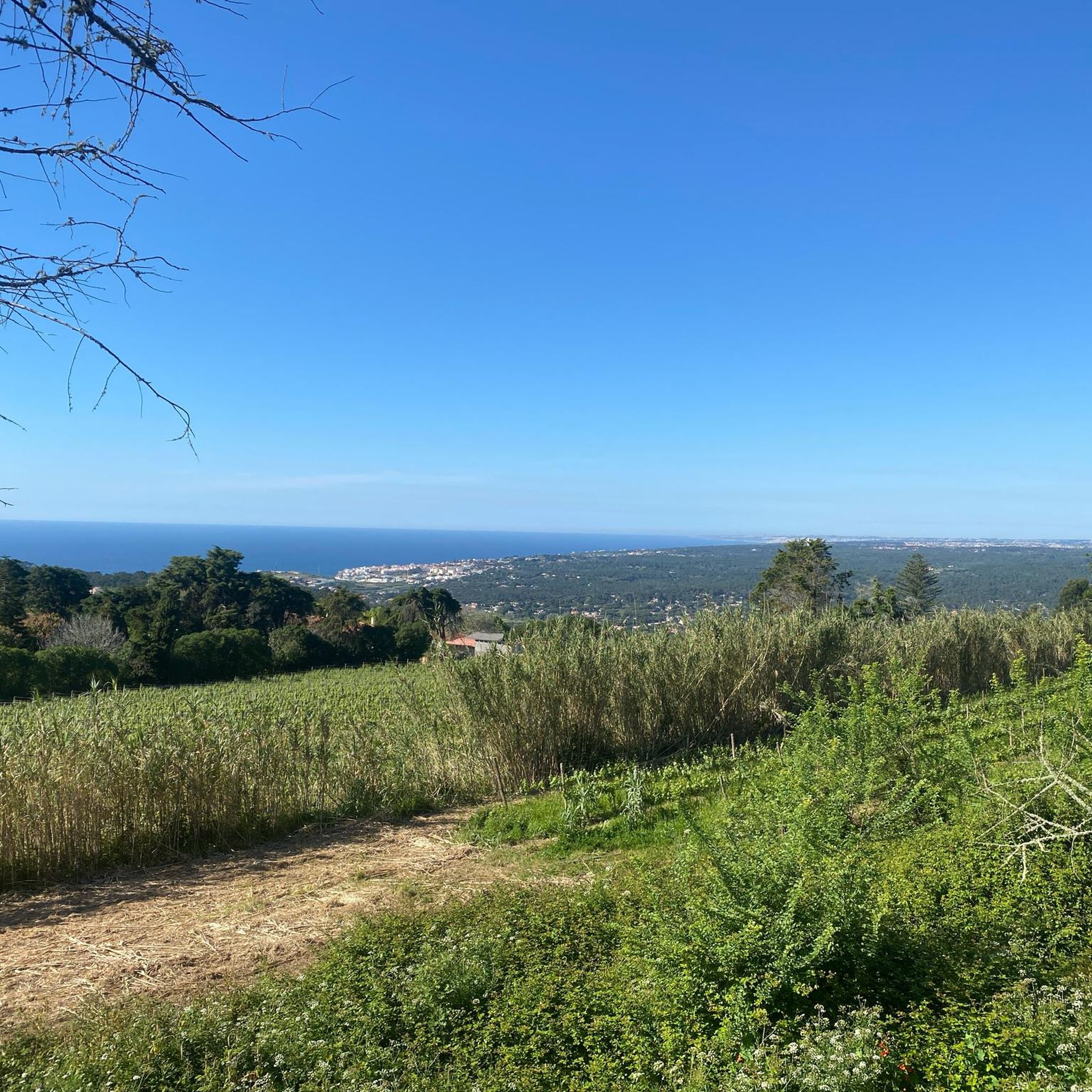
from here you have almost the most beautiful view of the city
3
0

Necropolis caves of Vale da Calada: "The small village of Olelas, twenty or so kilometers from Lisbon, to the Northwest, and about 800m east of the Sabugo station, on the West railway line, to which it is connected by a path, is located at an altitude of 200m on a terrace on the slope of the Serra de Olelas, a series of small, extremely rocky hills, the northernmost of which can be seen the geodesic pyramid of the same name. Northeast of Olelas, between Cabeço do Norte and do Sul, Picôto, is excavated, as we said, a narrow valley called Vale da Calada, with steep slopes where the rock is bare in the upper parts and covered with kermes in the upper parts. lower altitudes. It is even this aspect that distinguishes the two hillocks from neighboring lands, which on the contrary are well used in different cultures and with some trees, making them stand out remarkably in the landscape for those visiting Sabugo station. These two rocky massifs, neatly cut out by the erosion that sculpted countless anfractuosities in them, have on their flanks that form the valley the three aforementioned caves of unequal importance. On the southern slope of the valley, Cova da Raposa, the largest of the three caves, has its double opening facing North and giving on a small terrace cut in half by a curious natural arch, carved in the rock, resembling a butante arch of a Gothic cathedral , quite wide at the top and tapering towards the base that deviates from the plumb to the west side." The two caves are separated, from the mouth to about 4m inland, by rock perforated on both sides and at various points by small openings, which cross it. Cova do Biguino, is a more regular cave, located on the north slope with the mouth facing southwest and opening onto a small terrace at a height greater than 10m above the Cova da Raposa border." - Removed from the website of the Union of Parishes of Almargem do Bispo, Pêro Pinheiro and Montelavar.
1
0
Frequently Asked Questions
What unique geological features can I explore around Caneças?
The area around Caneças offers fascinating geological sites. You can visit Pedreira do Aires, an abandoned limestone quarry significant for its abundant rudist fossils and large silex nodules, indicating its use for tools in prehistoric times. Another interesting site is the Caves of Vale da Calada, which are ancient necropolis caves with unique rock formations.
Are there any natural monuments suitable for families with children?
Yes, several natural monuments are family-friendly. The Lake Garden within Monsanto Forest Park offers a tranquil space with benches, ideal for relaxation and picnics. The expansive park itself provides plenty of room for children to explore. Additionally, the Eduardo VII Park Viewpoint is easily accessible and offers impressive city views, suitable for all ages.
Where can I find scenic viewpoints near Caneças?
For panoramic views, the Eduardo VII Park Viewpoint is a popular choice, offering expansive vistas of Lisbon. Within Monsanto Forest Park, the Trail of the Six Quarries also provides various lookout points with views of Lisbon, the Tagus River, and the Atlantic Ocean. The Caves of Vale da Calada also offer a viewpoint.
What historical natural sites are there to visit?
The region has natural sites with historical significance. The Pedreira do Aires is not only geologically important but also an archaeological site due to the presence of silex nodules used for tools in the 4th and 3rd millennia BC. The Anços Waterfall and Old Mill Ruins combine natural beauty with the remnants of an old mill, offering a glimpse into past industrial activity. The Trail of the Six Quarries in Monsanto Forest Park winds through ancient limestone quarries that were actively exploited for centuries.
Are there hiking opportunities near these natural monuments?
Absolutely. The Trail of the Six Quarries within Monsanto Forest Park is a distinctive circular hiking route that allows you to explore former industrial sites now reclaimed by nature. For more hiking options, you can find various trails in the area, including easy loops like the 'Hiking loop from Quinta da Fonteireira' or 'Caves of Vale da Calada – Gruta das Olelas loop from Abelheira'. You can explore more hiking routes in the Hiking around Caneças guide.
What other outdoor activities can I do near the natural monuments?
Beyond hiking, Monsanto Forest Park, which hosts the Lake Garden and the Trail of the Six Quarries, is excellent for cycling and bird-watching. If you're interested in running, there are several routes available, such as the 'Running loop from Odivelas'. For road cycling enthusiasts, options like the 'Waterfall Mural – Forca Viewpoint loop from Odivelas' offer longer rides. Discover more options in the Running Trails around Caneças guide or the Road Cycling Routes around Caneças guide.
Is Monsanto Forest Park easily accessible from Caneças?
Yes, Monsanto Forest Park is often referred to as the 'green lung' of Lisbon and is easily accessible from Caneças and its surroundings. It's a vast park offering a significant natural escape close to the city, making it convenient for visitors to reach by car or public transport.
What do visitors enjoy most about the natural monuments around Caneças?
Visitors particularly appreciate the blend of natural beauty and historical insight. Many enjoy the tranquil atmosphere of places like the Lake Garden, finding it an ideal spot for a break. The impressive views from the Eduardo VII Park Viewpoint are also highly rated. The unique geological formations and the historical context of sites like Pedreira do Aires and the old mill ruins at Anços Waterfall also captivate many explorers.
Are there any natural monuments that are wheelchair accessible?
Yes, the Eduardo VII Park Viewpoint is noted for its accessibility, allowing visitors in wheelchairs to enjoy the expansive views of Lisbon. While many natural trails may have varied terrain, this viewpoint offers a good option for those seeking accessible natural monuments.
What is the best time of year to visit the natural monuments around Caneças?
The natural monuments around Caneças can be enjoyed year-round, but spring (March to May) and autumn (September to November) offer the most pleasant weather for outdoor activities like hiking and exploring. During these seasons, temperatures are mild, and the landscapes are vibrant. Summer can be hot, especially for longer trails, while winter can bring rain, which can enhance waterfalls but make some paths muddy.
Can I bring my dog to the natural monuments and trails?
Many natural areas and trails around Caneças are dog-friendly, especially within larger parks like Monsanto Forest Park. However, it's always recommended to keep your dog on a leash and clean up after them to ensure a pleasant experience for all visitors and to protect the local wildlife. Specific rules may vary, so check local signage.
Are there any waterfalls to visit near Caneças?
Yes, the Anços Waterfall and Old Mill Ruins is a notable site. It features a beautiful waterfall and the remnants of an old mill, providing a cool and refreshing spot. It's particularly impressive after rainfall, though water levels can be lower in drier months.
Most popular attractions around Caneças

Get inspired with the komoot mobile app


Explore more
Extend your search for the best caves by checking out these guides of the top ones around Caneças:
