Top 3 Natural Monuments around Grad Imotski
Best natural monuments around Grad Imotski include unique karst lakes and a distinctive river, situated in the Dalmatian hinterland of Croatia. The region is characterized by its geological formations, such as deep sinkholes and a river with consistent hydrological features. These sites offer geological marvels and are integral to the local landscape.
Best natural monuments around Grad Imotski
- The most popular natural monuments is Swimming spot at Modro Jezero (Blue Lake), a lake that offers opportunities for swimming in…
Last updated: May 1, 2026
Swimming spot at Modro Jezero (Blue Lake)
Highlight • Lake
Translated by Google •
Tip by

Red Lake (Crveno Jezero)
Highlight • Lake
Translated by Google •
Tip by

Sign up now to discover places like this
Get recommendations on the best single tracks, peaks, & plenty of other exciting outdoor places.
Sign up for free
View of Blue Lake (Modro Jezero)
Highlight • Viewpoint
Tip by

Gray Lake (Suho Jezero)
Highlight • Lake
Translated by Google •
Tip by

Start today with a free account
Your next adventure awaits.
Login or Signup
Tips from the Community

Deepest lake in Croatia 🇭🇷 and one of the deepest karst lakes in the world.
20
0

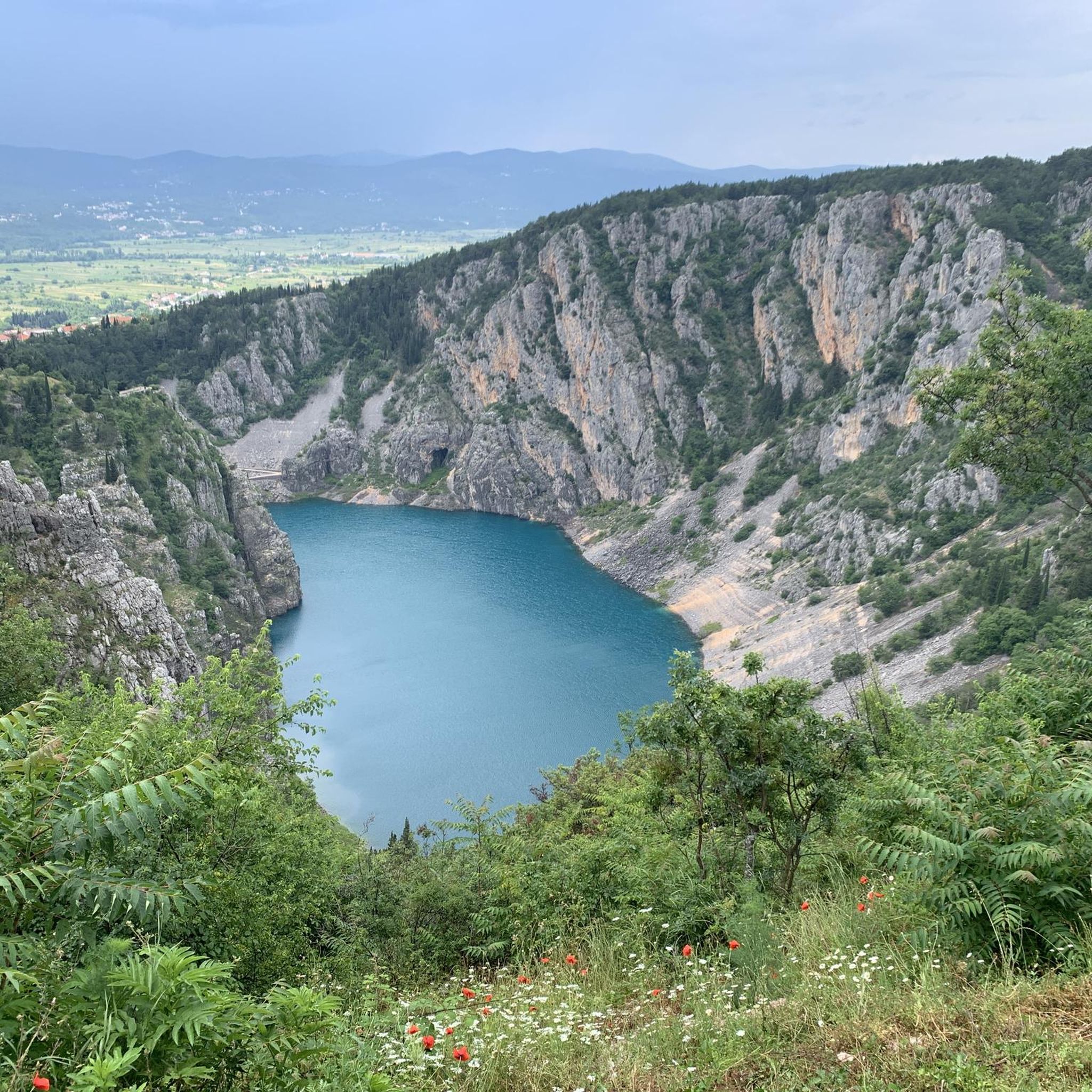
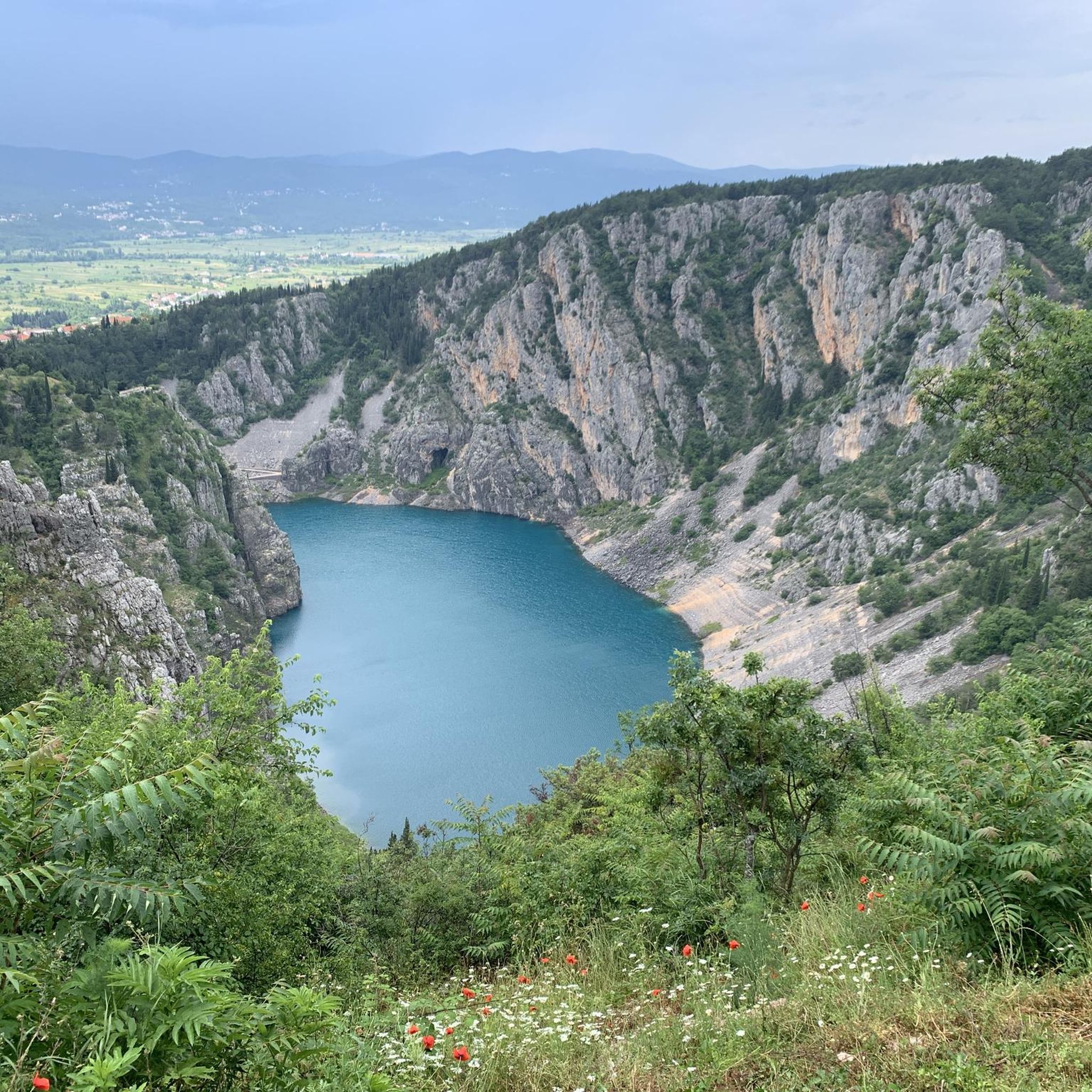
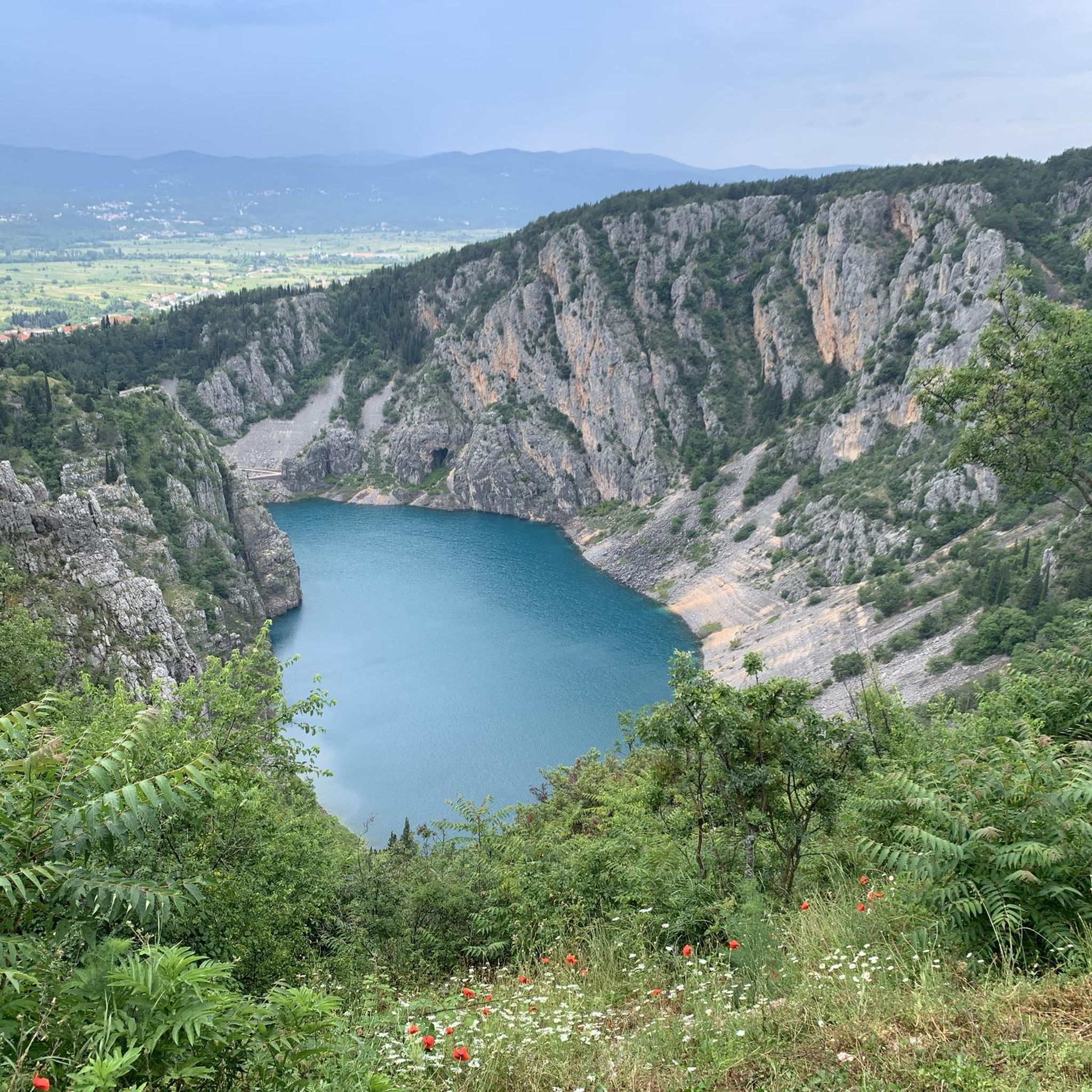
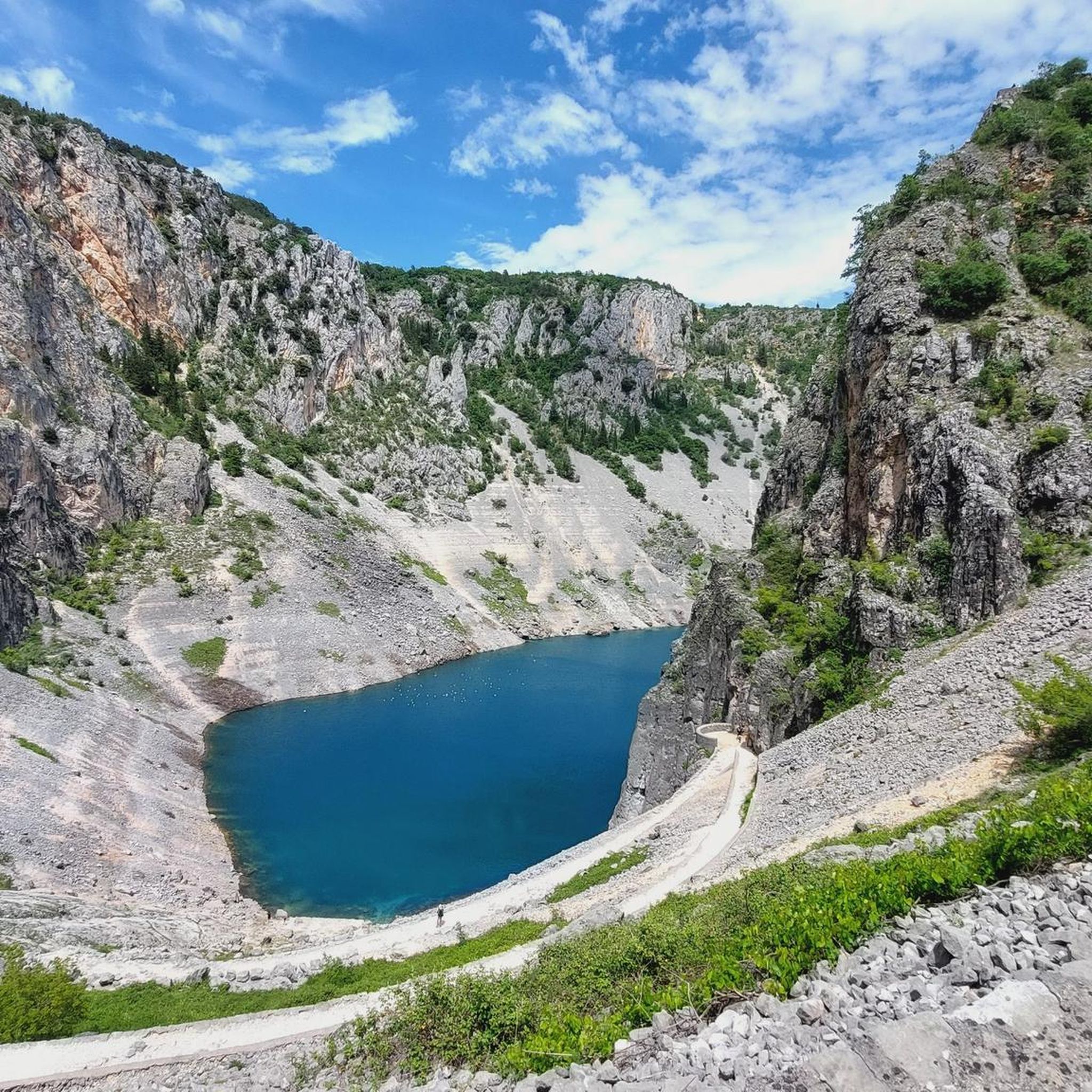
The Blue Lake, or Modro Jezero, in Imotski is a stunning natural wonder renowned for its striking azure waters and dramatic surrounding landscape. Nestled within a deep karst sinkhole, the lake captivates visitors with its vibrant blue hue, which shifts in intensity depending on the sunlight and the season. The lake is framed by steep cliffs, creating a breathtaking contrast between the vibrant water and the rugged limestone walls. Surrounded by lush greenery and wildflowers, the area is a haven for nature lovers and hikers, offering numerous trails that provide stunning views of the lake from various vantage points. In the warmer months, the lake's water level can fluctuate significantly, revealing sandy beaches at its edges and inviting locals and visitors alike to enjoy its beauty. The calm surface often reflects the sky, enhancing the lake's ethereal quality.
0
0

The effort of traveling to Imotski to hike to this special place pays off: on the one hand the view into the depths and on the other hand the view of the Biokovo massif to Sv. Jure is impressive!
2
0

Definitely take bathing suit the lake is an absolute highlight
1
0

The water level of the lake varies greatly. In May it was really bright blue - very good to see from the lookout point on the trail above the bathing area.
1
0
This is a dry karst lake - unlike the Blue and the Red Lake very close, whose water depth reaches over 200m.
1
0
Frequently Asked Questions
What are the most prominent natural monuments to visit in Grad Imotski?
The most prominent natural monuments in Grad Imotski are the stunning Blue Lake (Modro Jezero) and the dramatic Red Lake (Crveno Jezero). The Blue Lake is known for its vibrant blue waters and seasonal swimming opportunities, while the Red Lake is a geological marvel, one of Europe's deepest sinkholes, famous for its reddish cliffs.
Can I swim in the lakes around Grad Imotski?
Yes, you can swim in the Blue Lake (Modro Jezero). A road leads down to the lake, making it a popular spot for locals and visitors to enjoy its crystal-clear freshwater. Swimming is generally not possible at the Red Lake due to its sheer, inaccessible cliffs.
What makes the Vrljika River a unique natural monument?
The Vrljika River is unique because its hydrological and geological features remain consistent along its 23-kilometer course, originating from five distinct springs. It's vital for the region's freshwater supply and agriculture, and its spring area is protected as an ichthyological reserve due to its high water quality and endemic fish species.
Are there family-friendly natural monuments around Grad Imotski?
Yes, the Blue Lake (Modro Jezero) offers family-friendly viewing points and, when water levels permit, access to its shores for swimming. The descent to the lake is manageable, making it suitable for families to enjoy the natural beauty.
When is the best time to visit the natural monuments in Grad Imotski?
The best time to visit is typically during the warmer months, from late spring to early autumn (May to September). During this period, the Blue Lake's water levels are usually suitable for swimming, and the weather is ideal for exploring the viewpoints and surrounding areas.
What kind of outdoor activities can I do near these natural monuments?
The area around Grad Imotski's natural monuments offers various outdoor activities. You can find numerous hiking trails, including routes connecting the Blue Lake and Red Lake. There are also options for road cycling and general cycling, allowing you to explore the beautiful karst landscape.
Are there hiking trails around the Blue Lake and Red Lake?
Yes, there are several hiking trails that offer stunning views of both the Blue Lake and Red Lake. Popular routes include loops around the Blue Lake itself and trails connecting the Blue Lake to the Red Lake, providing moderate difficulty options for explorers.
What unique geological features can I observe at the Imotski lakes?
The Imotski lakes are prime examples of karst topography. The Blue Lake is a deep sinkhole with fluctuating water levels, sometimes hosting football matches when dry. The Red Lake is one of Europe's deepest collapse dolines, known for its towering, iron-oxide-stained cliffs and immense depth. Both formed from collapsed cave ceilings.
Is there parking available at the Red Lake viewpoint?
While specific parking facilities are not detailed, viewpoints for the Red Lake are generally accessible by car, and visitors typically find spots near the main viewing areas. It's advisable to check local signage upon arrival.
What do visitors enjoy most about the natural monuments in Grad Imotski?
Visitors frequently praise the breathtaking views, especially the vibrant blue hue of the Blue Lake and the dramatic scale of the Red Lake. The opportunity to swim in the Blue Lake's crystal-clear waters is a highlight for many, as is the unique geological experience these sites offer.
Are there any lesser-known natural monuments in the region?
Beyond the famous Blue and Red Lakes, the region also features the Gray Lake (Suho Jezero). Unlike its water-filled counterparts, this is a dry karst lake, offering a different perspective on the area's geological formations.
Can I find information about the lakes' history and legends?
Yes, both the Blue and Red Lakes are steeped in local history and legends. The Blue Lake has tales of fairies, while the Red Lake is associated with the legend of Gavan's estate. You can often find more detailed information about these stories from local guides or information boards in the area, or by visiting Visit Imota.
Most popular attractions around Grad Imotski

Get inspired with the komoot mobile app


Explore more
Extend your search for the best caves by checking out these guides of the top ones around Grad Imotski:
