White Sands National Park
White Sands National Park
Top 7 Natural Monuments in White Sands National Park
Best natural monuments in White Sands National Park are found within the world's largest gypsum dunefield, located in the Tularosa Basin of New Mexico. This unique landscape features vast expanses of white gypsum sand, which remains cool to the touch even on hot days due to its properties. The dunes are constantly shifting, creating an ever-changing environment that supports a diverse ecosystem adapted to these conditions. The park also protects Ice Age fossilized footprints, offering a glimpse into ancient life.
…Last updated: April 25, 2026
Alkali Flat Trailhead, White Sands National Park
Highlight • Trail
The white gypsum sand …
Tip by

Alkali Flat Trail Overlook
Highlight • Viewpoint
Tip by
Sign up now to discover places like this
Get recommendations on the best single tracks, peaks, & plenty of other exciting outdoor places.
Sign up for free
Dune Life Nature Trail
Highlight (Segment) • Trail
Tip by
Backcountry Camping Trail
Highlight (Segment) • Trail
Tip by
Lake Lucero
Highlight • Lake
Tip by
Sign up for free to discover even more natural monuments in White Sands National Park.
Sign up for free
Already have an account?
Start today with a free account
Your next adventure awaits.
Login or Signup
Popular around White Sands National Park
Tips from the Community

Recommended as a beginner's path. Nevertheless, bring water!
0
0

Really beautiful!!
1
0

Early morning hiking to avoid the heat. Ok for dogs early in the day with water.
0
0

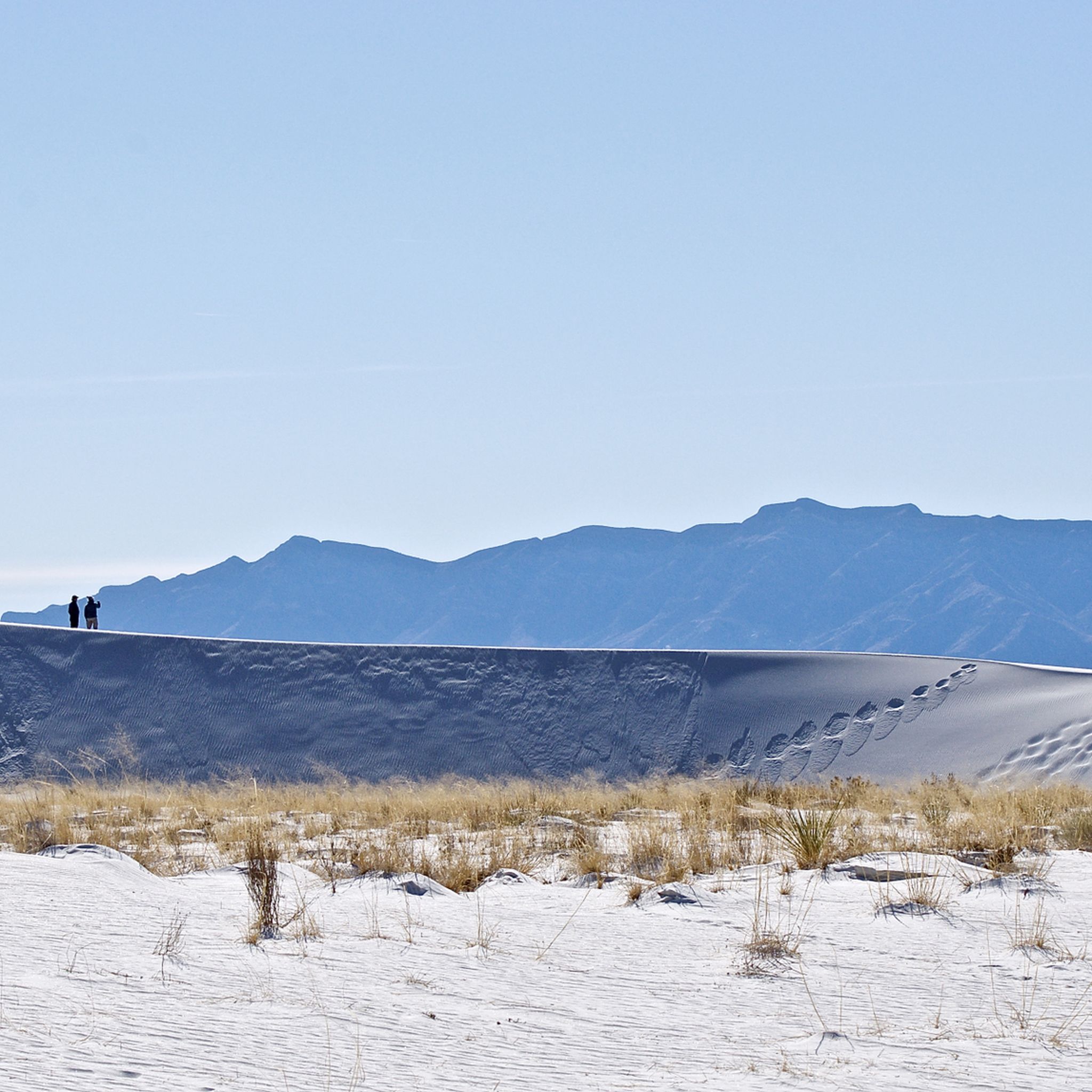
At the summit of the dunes hikers are treated to a view of the San Andres Mountains to the west. The white dunes that stretch across the valley mark the site of an ancient lake, Lake Otero, which evaporated after the last ice age to create selenite crystals that eroded into fine white gypsum sand.
0
0
The Alkaline Flat Trail includes a few dune climbs, and is best hiked clockwise so the second half is downhill. Bring a sled for the dunes! The white gypsum sand in the park is formed from the erosion of selenite crystals, an alkaline substance and the trail's namesake.
0
0
The Backcountry Camping Trail takes hikers up a couple sand dunes and offers views into the vast white expanse of the park. Bring a sled for the dunes!
0
0
The Dune Life Nature Trail explores the diversity of flora and fauna that thrive on the unique ecosystem at the fringe of the white gypsum dunes. Look for signs of small nocturnal mammals, birds, and reptiles!
1
0
Lake Lucero is a dried lakebed most of the year, but it fills with water after rainfall or snowmelt. 12,000 years ago there White Sands National Park was covered by Lake Otero, which evaporated and left behind selenite crystals. The erosion of these crystals created the white gypsum sand of the dunes. At Lake Lucero, this process is still visible and hikers will find crystals over a foot long arranged in large formations.
1
0
Frequently Asked Questions
What unique geological features can I explore in White Sands National Park?
White Sands National Park is home to the world's largest gypsum dunefield, a truly unique geological formation. Unlike typical sand, the gypsum here remains cool to the touch even on hot days. You can also visit Lake Lucero, a dried lakebed where the process of gypsum crystal formation is still visible, with crystals sometimes over a foot long.
Are there family-friendly trails among the natural monuments in White Sands National Park?
Yes, the park offers family-friendly options. The Dune Life Nature Trail is a great choice, exploring the diverse flora and fauna that thrive in this unique ecosystem. It's an excellent way for families to learn about the desert environment.
What is the best time of year to visit White Sands National Park to explore its natural monuments?
The gypsum sand does not absorb heat, making the dunes comfortable to walk on even during warm days. However, for the most pleasant experience, especially for longer hikes like the Alkali Flat Trail, early mornings are recommended to avoid the peak heat, particularly if you're visiting with dogs.
What kind of wildlife and plant life can I expect to see in the dunefields?
Despite the seemingly harsh environment, the park supports a diverse ecosystem found nowhere else in the northern Chihuahuan Desert. The Dune Life Nature Trail specifically highlights the adapted vegetation and wildlife, including signs of small nocturnal mammals, birds, and reptiles. The park also hosts a thriving population of African oryx.
Are there any historical or ancient sites within White Sands National Park?
Yes, White Sands National Park protects the globe's most extensive collection of Ice Age fossilized footprints, some dating back 21,000 to 23,000 years. These offer a fascinating glimpse into ancient life in the Tularosa Basin.
What are some popular hiking trails to experience the natural monuments?
The Alkali Flat Trail is a popular 5-mile loop that takes visitors deep into the dunes, offering stunning, untouched scenery. For a different perspective, the Backcountry Camping Trail offers views into the vast white expanse of the park. You can find more hiking options in the Hiking in White Sands National Park guide.
What are the difficulty levels of trails exploring the natural monuments?
Trails vary in difficulty. The Alkali Flat Trail includes dune climbs and is considered intermediate. The Backcountry Camping Trail is also intermediate. For easier options, consider the Easy hikes in White Sands National Park guide, which lists routes like the Interdune Boardwalk.
Can I bring my dog to explore the natural monuments?
Yes, White Sands National Park is generally dog-friendly. The Alkali Flat Trail Overlook is noted as dog-friendly, especially for early morning hikes with water. Always ensure your pet is on a leash and you carry enough water for both of you.
What should I wear when visiting the natural monuments in White Sands National Park?
Given the desert environment, it's advisable to wear comfortable, breathable clothing. Sun protection like hats, sunglasses, and sunscreen is essential. While the sand stays cool, sturdy closed-toe shoes are recommended for hiking to prevent sand from getting in and to protect your feet.
Are there any viewpoints to admire the vastness of the dunefields?
Absolutely. The Alkali Flat Trail Overlook provides stunning views of the San Andres Mountains to the west and the expansive white dunes. The Dunes Drive also offers several parking areas and trailheads for exploration and breathtaking vistas.
What is the significance of the San Andres Mountains visible from the park?
The San Andres Mountains, visible from viewpoints like the Alkali Flat Trail Overlook, mark the site of an ancient lake, Lake Otero. This lake evaporated after the last ice age, leaving behind selenite crystals which eroded to form the fine white gypsum sand that makes up the dunefields today.
What activities can I do besides hiking among the natural monuments?
Beyond hiking, visitors often enjoy sand sledding down the soft slopes of the dunes. The park also offers opportunities for photography, especially at sunrise or sunset when the dunes transform with soft hues. The Dunes Drive allows for scenic drives into the heart of the gypsum dunes.
Most popular routes in White Sands National Park
Most popular attractions in White Sands National Park

Get inspired with the komoot mobile app


